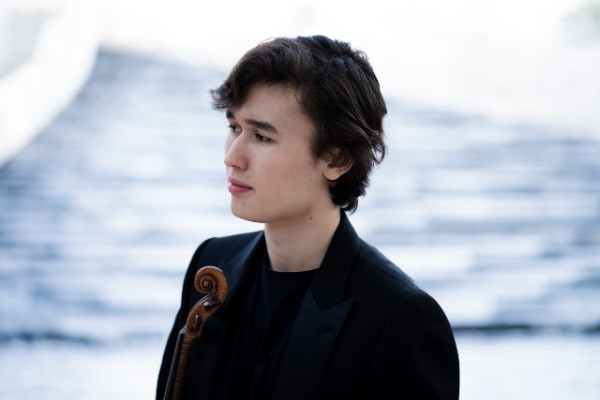
Pavel Kolesnikov, born on 25 February 1989 in the Siberian city of Novosibirsk, never expected to become a prize-winning pianist. In fact, he studied both the piano and the violin for ten years before focusing on the piano.
He had a normal childhood, went to a normal school, and considered himself lucky that his path was directed towards music. Sviatoslav Richter was his first musical idol, but it was Teodor Currentzis, who was appointed music director of “Musica Aeterna” in Novosibirsk in 2004.

Pavel Kolesnikov
Kolesnikov studied at the Moscow Conservatory but also in Brussels and London. Since such a variety of different teachers and teaching traditions engender varying opinions on all matters of subjects, Kolesnikov had to constantly evaluate and come up with his own ideas and solutions.
And it was with this particular mindset that Kolesnikov went to compete at the Honens International Piano Competition in 2012.
Pavel Kolesnikov plays Schumann: Kinderszenen Op. 15
Esther Honens’ Vision
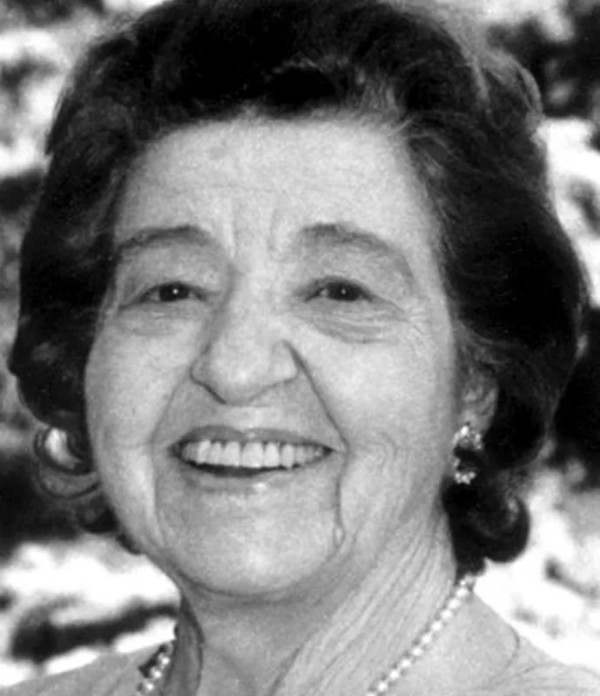
Esther Honens
As competitions go, Honens is a relative newcomer to the playing field. Esther Honens, a Canadian philanthropist, entrepreneur, and amateur pianist, created a $5 million endowment to host an international piano competition in her hometown of Calgary in 1991.
Although she was terminally ill, she was able to watch the inaugural competition in 1992. From the very beginning, Honens differs from other competitions in its determination to find the “Complete Artist.” In a word, they are looking at individuals beyond their ability to play the piano.
A glance through the terms of reference identifies what Honens is looking for, namely “a thoughtful interpreter, a consummate collaborator, an awe-inspiring virtuoso, a communicator, a risk-taking explorer, a dreamer.”
Pavel Kolesnikov plays Beethoven: Piano Sonata No. 14 in C-sharp minor, Op. 27, No. 2
Beyond the Practice Room
To be part of the competition, you must be between the ages of 20 and 30, be informed by “a wide cultural context,” and have “a fascination for life outside the practice studio.” But not enough, as participants must be “citizen artists who are skilled in the business of music, able to recognise and seize opportunities, knowledgeable about self-care, effective communicators, and socially conscious.”
That seems like a lot to ask, but every three years, fifty quarterfinalists are chosen from a rather large pool of international applicants. The quarterfinals are held in New York and Germany, with ten pianists selected to move on to the semifinals in Calgary.
The current semifinal round includes music by a composer the competitor deemed underrepresented, and from there it is all narrowed down to three finalists, who compete for a substantial monetary award and a three-year career development program. In 2012, the competition still favoured a single laureate format, meaning that only one competitor was declared the winner.
Pavel Kolesnikov plays Chopin: Prelude Op. 28, No. 15 “Raindrop”
Victory in Calgary
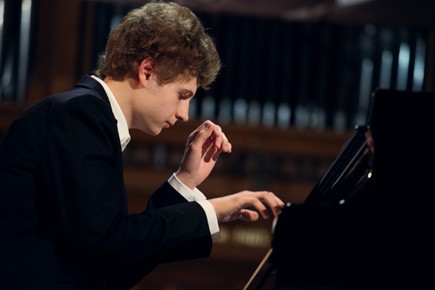
Pavel Kolesnikov
And the declared winner of the 2012 Honens International Piano Competition was Pavel Kolesnikov, who received 100,000 Canadian dollars for his efforts and shortly thereafter signed a recording contract with Hyperion.
For his solo recital, Kolesnikov played the Beethoven Sonata No. 14 in C-sharp minor, Op. 27, No. 2, the Kinderszenen Op. 15 by Robert Schumann, and the B-minor Sonata by Frédéric Chopin.
For his collaborative performance, Kolesnikov teamed up with cellist Johannes Moser in Mendelssohn’s Cello Sonata No. 2, and in the Final he performed Tchaikovsky’s Piano Concerto No. 1.
Pavel Kolesnikov plays Tchaikovsky: Piano Concerto No. 1 in B-flat minor, Op. 23
A Festival of Voice
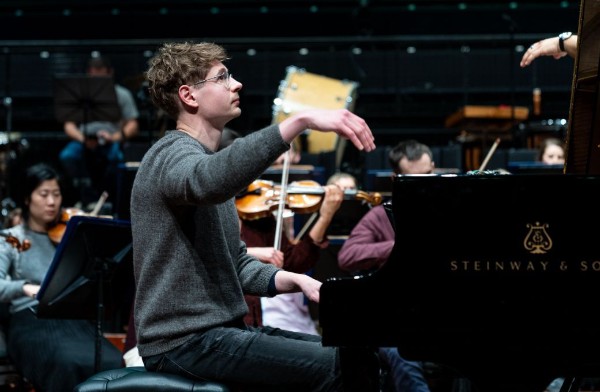
Pavel Kolesnikov
The president and artistic director of the Honens Competition said, “the jury’s choice of Pavel Kolesnikov—a thoughtful and inquisitive young musician—is a testament to Honens’ commitment to discover musicians with an original voice.” And he added, “I’m more convinced than ever that Honens is a festival of music and not a traditional knock-em down competition.”
Kolesnikov remarked that “most competitions reward the person who doesn’t make mistakes,” and that is “completely wrong.” He also suggested that Honens felt “more like a festival than a competition,” and that he hoped it would be a place that “might want to hear my voice.”
The impact of his win was measurable, as he made major debuts in North America and Europe, and developed long-term recording projects. As such, winning Honens validated Kolesnikov’s approach of sustaining and developing a distinctive musical voice.
For more of the best in classical music, sign up for our E-Newsletter