Korean pianist Minsoo Sohn is today regarded as one of the world’s leading pedagogues. Currently on the faculty of the New England Conservatory, his students include Yunchan Lim, winner of the 2022 Van Cliburn Competition and one of today’s most sought-after young pianists. Yet Sohn is distinguished as a pianist in his own right: his relatively modest discography reveals playing of the highest calibre, not least in a thoughtful and compelling cycle of the complete Beethoven sonatas. His performances and masterclasses earlier this year at Shenzhen’s Verbier Festival left a profound impression, affirming his stature as both artist and teacher. Shortly after his return to the United States, I had the pleasure of speaking with him at length for nearly two hours.
Russell Sherman: A Way of Living
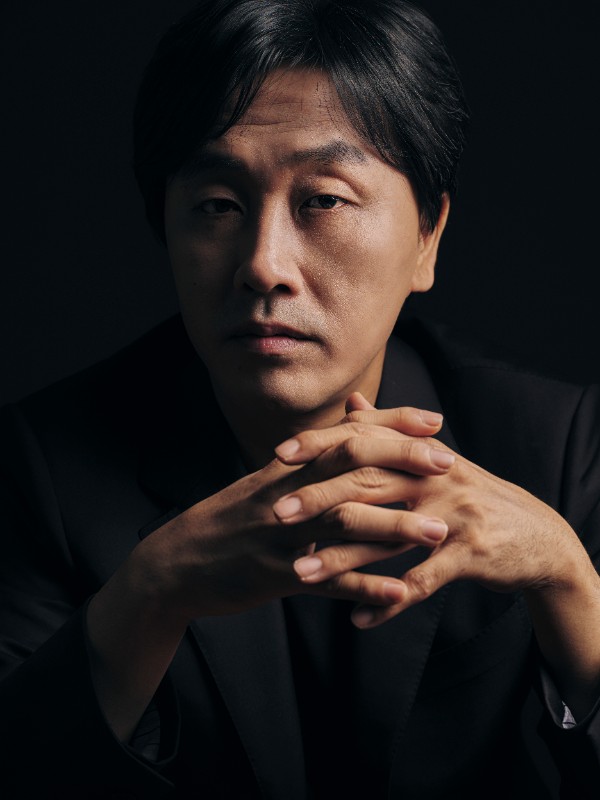
Minsoo Sohn © Shin joong Kim / IMG Artists
Born in Korea in 1977, Sohn grew up in an open-minded family that encouraged a wide range of interests—he once imagined becoming an athlete or a doctor. It was a “coincidence” that his family moved from Daegu to Seoul, leading him to audition for an arts high school. Until that point, he had “never thought of pursuing the path of a pianist.” Yet once immersed in that environment, something “stirred” in him: he began listening widely and thinking seriously about music.
While Sohn acknowledges that his cultural and musical identity was rooted in Korea from an early age, it was his years at the New England Conservatory that truly shaped him as both pianist and pedagogue. After a year at the Korea National University of Arts studying with Daejin Kim and Kyung-Sook Lee, “Fate” led him to Boston—and to his teachers, Russell Sherman (1930-2023) and his wife, Wha Kyung Byun.
Russell Sherman plays Chopin’s Nocturne No.5 in F Sharp major Op.15 No.2
Sohn considers himself “an eternal disciple” of Sherman—always “Mr. Sherman.” “If I start talking about my teacher, it can be endless.” And he speaks with an unmistakable sense of nostalgic longing. “I would love simply to sit with him, have tea, and talk about life—sports, politics, anything. It pains me that he is no longer here.” Yet in a way, Sohn is still “in conversation with him every day.” “It’s been more than twenty years since my last lesson with him, but his presence stays. Whenever I face unanswered questions, I ask myself: what would Mr Sherman have thought? Not only musical questions, but all these human predicaments one encounters in life.”
Private lessons with Sherman were hardly convenient: Sohn and his fellow students would travel over an hour to reach his home. Yet the effort was insignificant compared to what they gained: “I learned so much just by being near him—and by witnessing his approach to life and music.” Sherman was no ordinary teacher, and indeed an extraordinary one. “He was never limited to one way of playing. He embraced every possibility—he could transform very easily.”
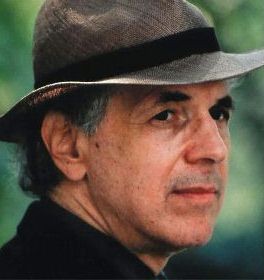
Russell Sherman
Educated at Columbia University, Sherman absorbed a broad, interdisciplinary culture, which deeply informed his teaching. He encouraged his students to engage with other arts, nature, and the wider world. “One of the first assignments he gave us was to read Dante’s Inferno, attend a lecture, and write an essay. He asked one student to grow a plant and keep a diary of its development. He would take us to the zoo to listen to how animals roar or sing. When Marcel Marceau came to Boston, it was mandatory to attend and write about the performance.”
Sherman was revered for his erudition and eloquence. “He was a man of vocabulary—always complaining that our diction was too limited.” Unlike many musicians, Sherman believed that anything one can express in music should also find expression in words. No doubt, on each visit to Sherman’s home, Sohn would find him immersed in reading. “It became my ritual to notice what he was reading, find that book, and add it to my own shelf.”
His musical philosophy was as expansive as his pedagogy. Sohn recalls Sherman’s dissatisfaction with a well-known pianist who claimed to settle on a single interpretation of a work: “Mr. Sherman did not believe one could fix an idea in music. He asked us to keep our eyes open, always—to be completely liberated.”
In fact, inspiration was everywhere in Sherman’s vision. In the middle of a lesson, he might suddenly stop and ask students to observe the curve of a tree branch, the sound of a bird, a passing animal, or the “layers of colour in a sunset,” drawing parallels with musical colour.
For Sherman, playing the piano was not simply an act of performance, but a confrontation with life itself. “When he sat at the piano, he faced all human experience—he would cry, lament, and feel an unbridled sense of joy, anger, or passion. He envisioned all these feelings.” The complexity of human emotion was central to Sherman’s teaching: “Being caught up in perfecting a one-dimensional way of playing a piece was something he couldn’t stand.”
“Pianists are Painists”
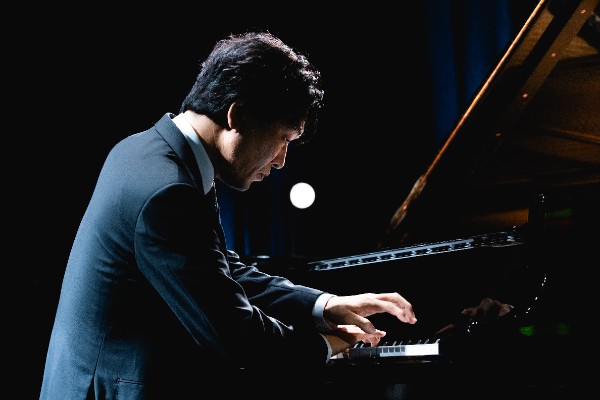
Minsoo Sohn © Shin joong Kim / IMG Artists
At a masterclass in Shenzhen this February, Sohn told a student, “pianists are painists”—a line that struck me deeply. I learned during the interview that this was actually a quote from Sherman. “He said this because he knew the nature of human life. We often forget that. There are glimpses of joy, but much of life is marked by suffering—publicly and privately. We try to avoid it, but most of the time music is the outcome of suffering.”
Sohn reflects further: “I believe most musicians I admire would agree with this sentiment. Composers confront suffering in their own ways. Of course, there are moments of light—but they are often accompanied by darkness. We realise how small we are before music. This gives us the sense of real pain in the search for an answer. It is a constant struggle—adjustment, questioning—trying to come closer to an answer.”
Bach-Siloti Prelude in B Minor
At the heart of Sherman’s aesthetic lay not certainty, but the pursuit of it—what he called “a quest.” “Shortly before he passed away, I was driving him to a concert. He said in the middle of the journey: ‘My last word at the end of my life should be a quest.’ It was something he carried within him—the search for identity, for freedom, for an ideal world in music.”
This sense of quest also defines Sherman’s view of performance. “Why are live performances necessary? Perhaps because of their irreplaceability—and their imperfection. They acknowledge that we are not perfect. In performance, drama comes alive. As a performer, or as some presence of a prophet, one can lead the listener through a vast dramatic landscape that the composer created, tension and release interchanging. It is a search for truth.”
Human language itself seems to carry an inherent sense of pain. The word passion, I suggested, could signify both love and suffering; from this painful love arises compassion. Sohn, in return, recalled that Sherman always emphasised two qualities above all: compassion and charity. He was, Sohn says, “a man deeply charitable to his surroundings.” Even distant tragedies, such as an earthquake in Pakistan, would elicit immediate and heartfelt responses in his lessons.
Beethoven, Bach, and the Search for an Answer
Like his teacher, Sohn sees music as a universal language—one that preserves humanitarianism in an increasingly fragmented world. “Today, people tend to believe firmly in one idea and resist change. That divides us. In a world dominated by loud, assertive speakers, repetition can begin to resemble truth.” At this stage of his life, he has devoted himself particularly to Bach and Beethoven, whose music he regards as “a profound testament.” Beethoven’s Ninth Symphony, for instance, speaks of “brotherhood—how to communicate, to reconcile, to listen to one another.”
In music’s endless search for answers, Sohn speaks of two guiding ideas: “pain” and “vulnerability.” “They are both connected with imperfection. We must cherish our vulnerability. Every performance should contribute to an open-ended dialogue. If someone speaks with absolute certainty, I lose interest—there are already too many certain opinions in life.”
I asked if the arioso dolente of Beethoven’s Op. 110 offers a moment of such vulnerability, and Sohn agrees immediately. Like many, he hears in it a reference to “Es ist Vollbracht” (“It is finished”; Sohn’s translation “I have accomplished”) in Bach’s St. John Passion. “Beethoven may have felt that the end was near. He devoted himself to intense writing to deliver all his messages. I wouldn’t say he placed himself in Christ’s position—but he felt the weight of suffering. ‘I have done enough; I have accomplished.’ Then, in the fugue, there is a kind of prayer—an image of angels at the gates of heaven. It is profoundly humane, profoundly vulnerable.”
Sohn plays Beethoven’s Op. 110
The dramatic arc of the sonata’s final movement—almost like a mini-cantata—is perfectly captured by Sohn in his recording. My comment triggered more heartfelt responses. “My first inspiration for that movement is deeply connected to St. John Passion. At its core lies suffering, and the search for a kind of utopia. In the coda, it is the culmination of everything—the fugue unfolding through an exhaustive use of augmentation and diminution. But I don’t believe it is a triumphant end, even though sometimes it could be interpreted triumphantly. It is a revelation of what we ultimately face at the end of a beautiful journey.”
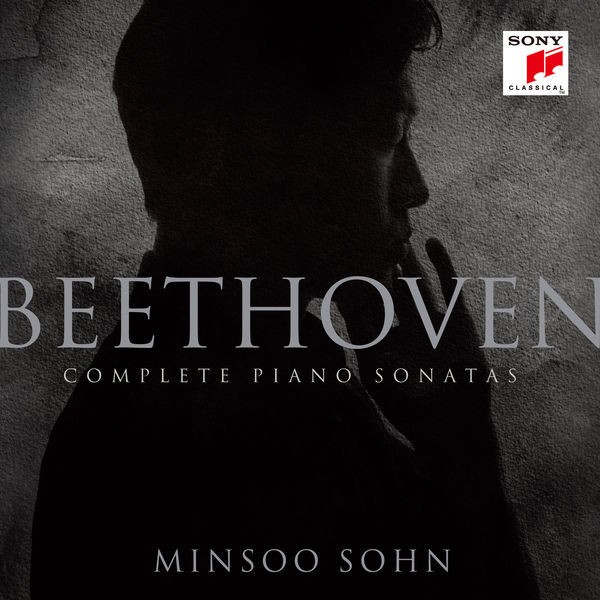
Sherman was the first American to record the complete Beethoven piano sonatas and concertos; Sohn, for his part, has set down a complete sonata cycle within a relatively modest discography. One naturally wonders whether something of Sherman’s Beethoven carries through into Sohn’s own interpretations. He resists the idea: “It is in my blood, in my heart—I remember how he played many particular passages deeply—but I don’t think I play anything like him. By the way, he never played the same way twice. Beethoven’s music grows within myself. It is impossible to explain how Mr Sherman is reflected in my interpretation. He is a north star—I try only to remain close to that radiant light.”
Sherman’s teaching, in fact, rejected imitation altogether. “He would be the first to be disappointed if his students resembled his playing. He taught us a way of living, a way of seeing—not specific musical instructions. Even when he demonstrated, it was never ‘the answer.’ He hated casual playing. He wanted meaning in every moment—even every rest. He showed us his path, but never allowed us to follow it. We had to find our own.”
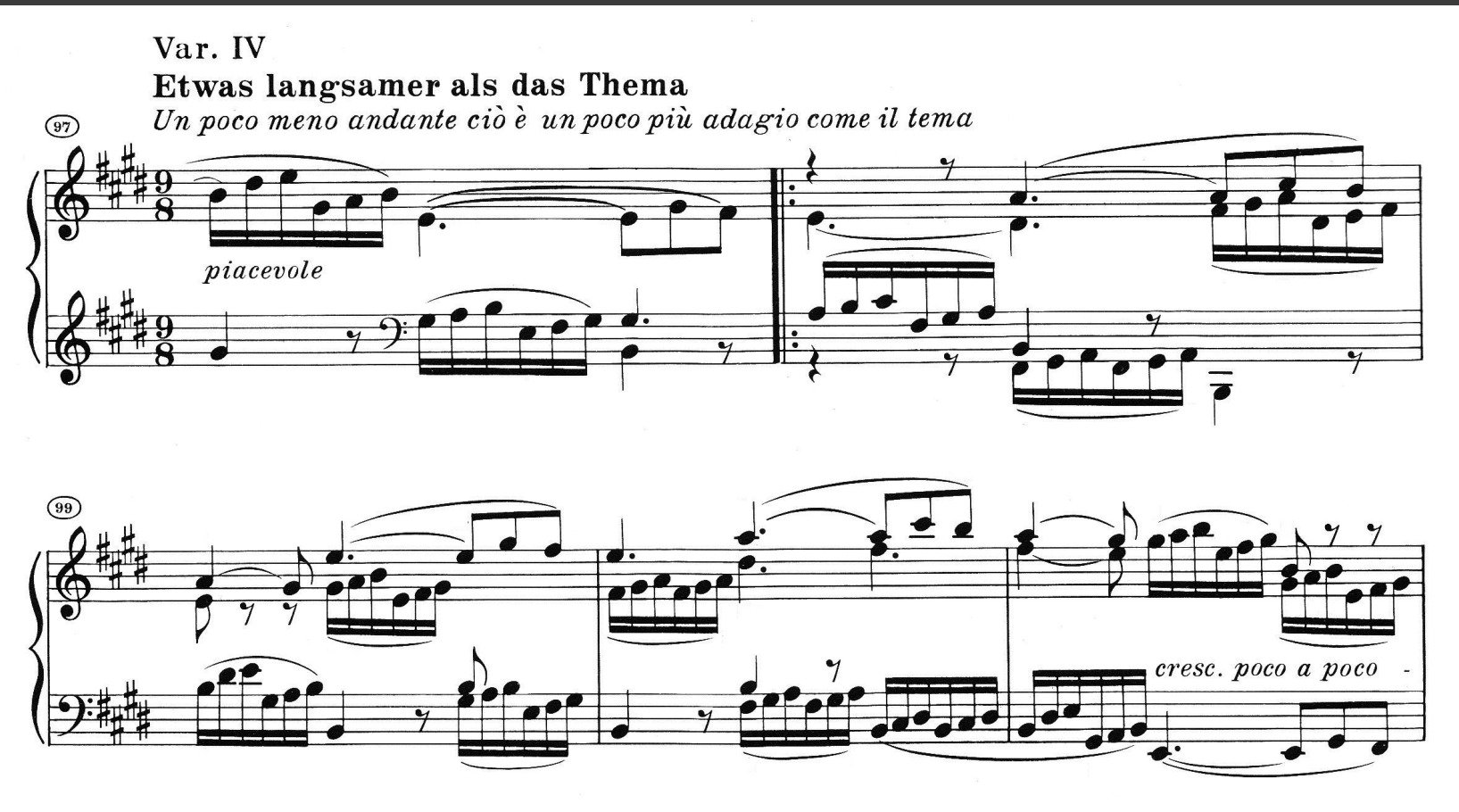
One memory of Sherman remains particularly vivid for Sohn. Shortly before his final concert at the age of 88, Sherman spoke to Sohn about Beethoven’s Op. 109: “He had played it since he was sixteen—for over seventy years. I myself had heard him perform it more than ten times. Yet he told me he spent ten hours practising just the fourth variation—just ascending and descending lines, not technically challenging. He discovered something entirely new. He said he felt stupid to have not explored it more deeply before. There is no end to our search for an answer. That is perhaps the fate of being a pianist.”
Teaching Without Answers
As a professor at NEC—his alma mater and the very institution where Sherman once taught—Sohn has established himself as a highly regarded pedagogue. Yet my compliment was met with immediate hesitation: “I don’t agree with the assumption that I’m a great teacher. What I try to do is share my experience as a pianist—that’s something I never hold back from my students. We communicate; sometimes we even ask questions together. It’s not always about the answer, but about provoking the question—the starting point of many discoveries through simple curiosity. Of course, one can ask questions that are unnecessary or obsolete. But I try to find those that are truly meaningful.”
Much of what he has learned from Sherman continues to shape his own teaching, forming a living lineage across generations. “I tell my students about everything that happened between Mr Sherman and me all the time. That’s probably why they feel close to him, even though they never met him—they think of him almost as a grandfather figure. A large part of my teaching is sharing his lessons, his playing, his life.”
Like Sherman, Sohn resists prescriptive authority. “I never assume that I already know a piece—that applies to my own practice as well. The moment I fix a single way of looking at the music, I lose interest in teaching. I want to be responsive, to hear what my students have to say in their own search. Out of my experience—and sometimes out of certain ideas or philosophies—I offer something back. That openness is perhaps the greatest gift Mr Sherman gave me. You are allowed to change your mind. In fact, I often feel I learn more from my students than they do from me. It forces me constantly to re-examine my own foundations.”
As an educator, Sohn rejects rigid technical doctrines that ignore physical individuality. “I don’t think there is one ‘right’ way—we all have different bodies: the shape of our hands, arms, torso, even how we stabilise ourselves. The mind must lead, but the body is the foundation.”
Accordingly, he tailors his teaching to each student. “I’m not a predictable teacher.” Some require flexibility—to become more open, resilient, spacious in their thinking. Others, perhaps more sensitive, must learn how to engage with tension. “Tension is never complete on its own—it must be balanced by release and tenderness. That is the law of life. It’s how we breathe: tension and release. For some students, I focus very closely on this—how to use tension and release in the arm, the hand, even in the breath. Others may be too restless at the keyboard; then I have to remind them that if the mind is too busy, understanding becomes difficult.”
Technical guidance is by no means neglected. Sohn acknowledges a more “practical side” in his teaching—perhaps differing from Sherman, who “never talked about fingering.” “When you practise the most demanding repertoire, there are specifics. Sometimes we discuss fingering at length—though ideally, it should be discovered individually. Fingering is deeply personal. Occasionally, I see obvious issues—not because they make the playing worse per se, but because they distort phrasing and the lyrical line.”
He also reflects on the technical examples of pianists from the so-called “golden era”: “Lipatti, for example, spoke of the flexibility of the thumb—he asked students to practise scales using only the thumb, to develop its legato. Busoni believed in minimising movement, using the fourth and fifth fingers more efficiently. Horowitz sometimes used a completely flat hand to create depth of tone. Others may crawl their fingers like a cat catching prey.”
After such discussions, Sohn poses a more fundamental question: “What is technique? It is not about skill alone—it is about virtue, about being a complete artist. In a sense, technique is inseparable from artistry itself.” He jokes, “I would rather speak of the ‘technique of being in love’!” Technique is discussed only when really necessary. “If you are destined to become a pianist—which I consider one of the most demanding professions—you must ultimately figure things out for yourself. It comes from desire: the urge to discover. That is what creates genius—a profound determination rooted in love and passion for music.”
“To quest,” I suggested. “To quest—and for a quest,” Sohn replied.
Yunchan Lim and Individuality
Yunchan Lim
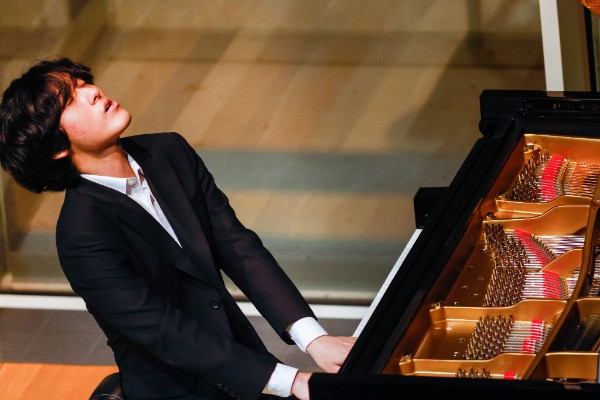
At this point, I raised the subject of Yunchan Lim, whose meteoric rise has stirred both admiration and debate. “He would vehemently disagree with being called a genius,” Sohn notes, though his pride in this student is unmistakable. “My students must surpass me—that is how we evolve. Not merely as pianists, but as human beings. Each generation should deepen and refine what came before.”
Yunchan Lim – Franz Liszt: Liebestraum No. 3 “Love Dream” [Encore]
In Lim’s case, Sherman’s influence has been transmitted indirectly. “Through all the stories I’ve shared, he has come to see Mr Sherman as a kind of lighthouse. In our work together, we try to strip away what is unnecessary. Yunchan has developed his own perspective, his own musical world. Despite his youth, his maturity can be astonishing—never one-dimensional, always layered in thought.”
Sohn once worried about the pressures of Lim’s schedule. “Not exposure itself, but the lack of time and space to grow. Constant travel can unsettle the mind—it becomes difficult to cultivate something inwardly. But he has never lost that exploratory spirit. He continues to seek new repertoire, new ideas. He is now on his own path. I am grateful that what my teachers gave me resonated with him. He has never pursued fame or success for their own sake.”
I suggested that some qualities in Sohn’s own playing seem magnified in Lim’s, alongside strikingly personal traits. Sohn agreed: “Yunchan is a breath of fresh air in our musical world where individuality can easily give way to uniformity.” He encourages that independence. “I let him be what he is.”
“What does it mean to be individual, to be independent?” Sohn contemplates. “Ultimately, you must hold on to your own imagination—your inner vision. That is the one thing you can truly cling to in music. You may be influenced by many teachers, many interpreters—but imitation will never lead you there. Your foundation must come from within. People say you play who you are, or that you play as you speak—and I believe that is true. That is why Mr Sherman’s teaching was so profound: it was never about being a pianist. It was about understanding life, and opening oneself to it.”
For more of the best in classical music, sign up for our E-Newsletter