Ludwig van Beethoven was one of the greatest composers who ever lived, but he was also a human being, and one who was famously prickly.
Friends, rivals, patrons, and even family members often found themselves embroiled in sundry fights and quarrels with him.
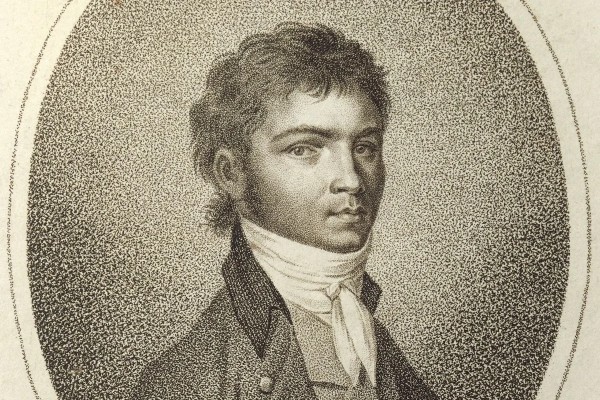
The young Beethoven
From clashing with his teacher Joseph Haydn as a headstrong twentysomething, to storming out on his patron Prince Lichnowsky in a thunderstorm, to waging an all-consuming custody battle against his sister-in-law Johanna, Beethoven’s feuds reveal much about the human side of the great composer.
Today, we’re looking at some of Beethoven’s most famous feuds and what they tell us about the man behind the music.
Ludwig van Beethoven v. Joseph Haydn
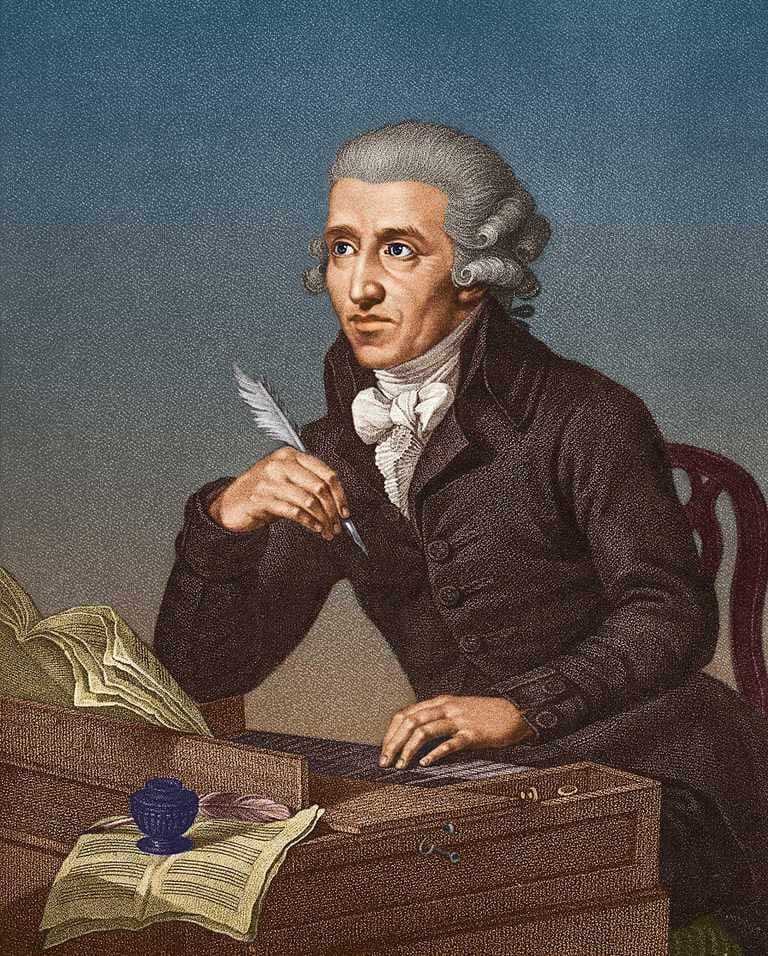
Joseph Haydn
Ludwig van Beethoven met Joseph Haydn as a young man when Haydn traveled through his hometown of Bonn.
Haydn was impressed by the young man’s musicianship, inviting Beethoven to come study with him.
Beethoven moved to Vienna in late 1792 and began taking lessons from Haydn.
However, Haydn was overwhelmed by his own work at the time, and Beethoven didn’t feel like he was a priority.
Soon, Beethoven started going to other teachers behind Haydn’s back.
In 1795, when Beethoven was twenty-four, he published his Opus 1: a set of three piano trios.
Haydn suggested that Beethoven include “pupil of Haydn” on the title page. Beethoven was miffed at the suggestion, even though it appears that Haydn genuinely meant no offence and was just trying to increase the likelihood of the trios’ commercial success.
Beethoven’s Piano Trio Op. 1, No. 3
That summer, the three trios were performed at the palace of a patron named Prince Lichnowsky.
Getting through all three took over ninety minutes. By the end of the performance, Haydn’s attention was wandering, and he expressed doubts about the appeal of the third.
Beethoven interpreted that criticism as jealousy. He vented to his friend Ferdinand Ries that he had never learned anything from Haydn.
Fortunately, in the end, the feud never boiled over. As Beethoven matured, he grew to admire Haydn more and more. That admiration culminated at a tribute concert held in honour of Haydn’s 76th birthday in 1808, where Beethoven knelt and kissed Haydn’s hands.
Ludwig van Beethoven v. Antonio Salieri
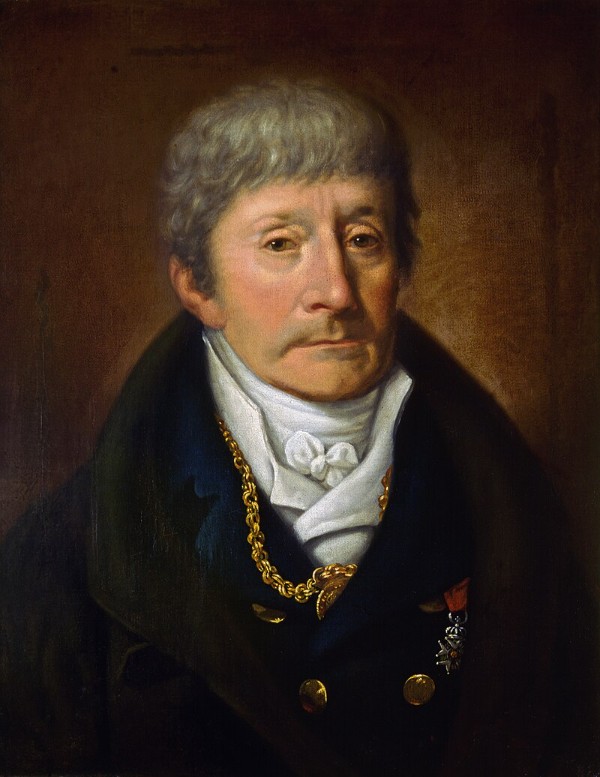
Antonio Salieri painted by Joseph Willibrord Mähler
In early nineteenth-century Vienna, theatre space tended to be monopolised by the most lucrative type of live music: opera.
There were relatively few days when big theatres could be rented out by musicians for orchestral performances.
The night of 22 December 1808 was one of those dates, and two important orchestral concerts ended up being booked that night.
The first was a charity concert for the widows and orphans of musicians, sponsored by an organisation called the Tonkünstler-Societät (Society of Musicians). If musicians who were part of the society didn’t play scheduled concerts, they could be fined. Consequently, many of Vienna’s best musicians were at this charity performance.
The second concert was a monster performance conducted by Beethoven. It began at 6:30pm and lasted for four hours, and featured the premieres of some of his most important works, including the fifth and sixth symphonies, as well as the fourth piano concerto.
Beethoven’s Symphony No. 5
Beethoven was furious when he found out about the timing of the charity concert. He blamed his colleague Antonio Salieri for the double-booking, calling him “my most active opponent, [who] played me a horrible trick.”
There’s no evidence that the elderly Salieri had any role in trying to sabotage Beethoven’s concert, and the feud eventually cooled. In fact, in 1822, Beethoven actually improvised on themes from a Salieri opera at one performance.
Ludwig van Beethoven v. Daniel Steibelt
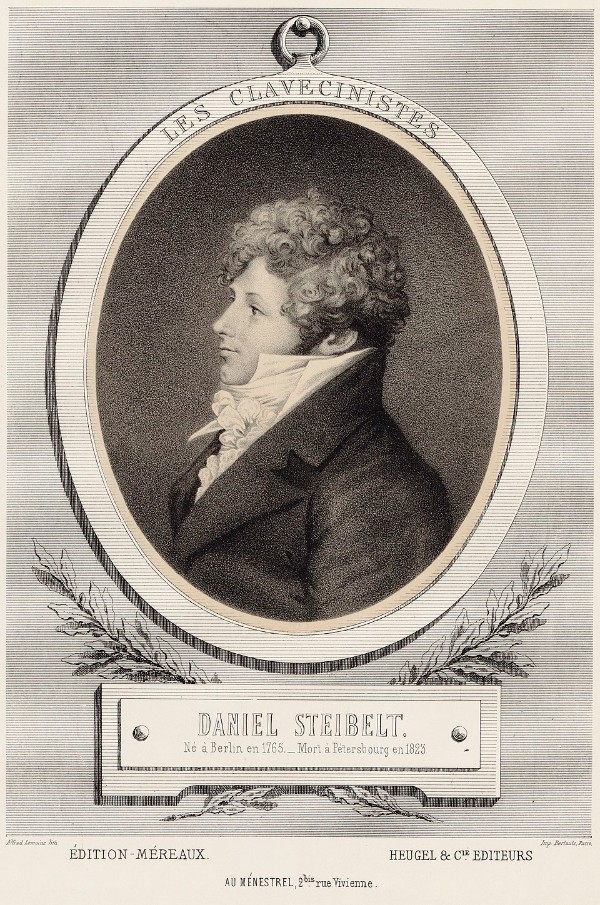
Daniel Steibelt
Daniel Steibelt was a composer and traveling virtuoso pianist who visited Vienna in 1800.
It was there that he challenged Beethoven to a piano duel, to be held in the house of Count Moritz von Fries, one of the richest men in Europe.
We don’t have any contemporaneous first-hand account of how the battle went, but this is how Beethoven’s friend Ferdinand Ries described it decades later.
During the first round, Beethoven played a work by Mozart, while Steibelt played a work by Haydn. Beethoven won this round.
During the second round, they each improvised on themes provided to them by the other. Beethoven won that, too.
The final round was sightreading a new piece written by the other man. Steibelt sightread Beethoven’s eleventh piano sonata, to applause.
Beethoven’s Piano Sonata No. 11
Steibelt then attempted to throw Beethoven off by giving him the score to a cello sonata, not a piano sonata, to sightread.
Annoyed at the attempt to undermine him, Beethoven turned the score upside down, read it backwards, and began successfully improvising on the inverted themes…for a full half hour.
Steibelt left in a fury before the battle could officially be called for Beethoven. He also left Vienna, period, never to return.
Ludwig van Beethoven v. Prince Karl Lichnowsky
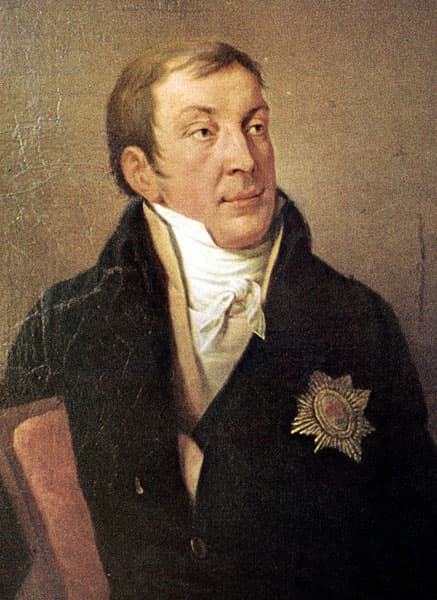
Prince Karl Lichnowsky, 1800
Prince Karl Lichnowsky was one of Beethoven’s first patrons in Vienna. He was an amateur composer himself and had supported Mozart before Mozart’s death in 1791 (then sued him when Mozart couldn’t pay back his loan, but that’s a story for another day).
When Beethoven arrived in Vienna in 1792, the 21-year-old Beethoven visited Lichnowsky bearing a letter of recommendation from a nobleman named Count Waldstein. Impressed, Lichnowsky invited Beethoven to stay in an apartment in his palace.
To thank him for the kindness, Beethoven dedicated several important works to Lichnowsky, including his Pathetique Sonata, the second symphony, and his first three piano trios.
However, Beethoven did not take Lichnowsky’s financial support as a reason to support him back unconditionally.
In 1806, during the Napoleonic Wars, Beethoven and Lichnowsky were visiting the prince’s country estate together. One night, the prince asked Beethoven to perform for invading French soldiers, joking that he could have him arrested if he refused.
Beethoven, whose early infatuation with Napoleon had faded, was deeply insulted by the suggestion and refused to placate his benefactor.
In fact, in a scene fit for a movie, he stormed out into a thunderstorm with the newly completed score to the Appassionata Sonata tucked into his coat. You can still see the water stains on it today.
According to legend, the following morning, Beethoven wrote to Lichnowsky, “There are many princes and noblemen. There is only one Beethoven.”
Sticking to his guns, Beethoven cut off contact with his benefactor – and one-third of his income.
Beethoven’s Piano Sonata No. 23, Mov. 3, “Appassionata”
Ludwig van Beethoven v. Johanna van Beethoven
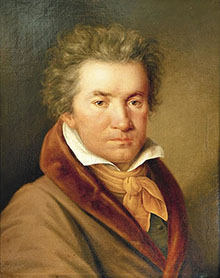
Kaspar Anton Karl van Beethoven, Beethoven’s brother
The ugliest feud of Beethoven’s life was with Johanna van Beethoven, the wife of his brother Karl.
The couple married in May 1806; she gave birth to their son Karl, Jr., three months later.
Beethoven had always felt protective of his younger siblings, given their father’s violent alcoholism and the early death of their mother.
Those protective dynamics, combined with the out-of-wedlock pregnancy, made Ludwig and Johanna enemies from day one. Beethoven went so far as to nickname Johanna the “Queen of the Night”, a reference to a villain in a Mozart opera.
In 1811, the relationship ruptured further. Johanna was accused of staging the robbery of an expensive necklace, which landed her in legal trouble. It came out during the trial that the couple was deep in debt. Worse, even after Johanna served time in prison, they continued spending.
The following year, another disaster struck when Karl, Sr., came down with a case of tuberculosis. Within a few years, he was dead. Beethoven felt that he had no other choice but to step in and support Karl’s family financially during this time.
A few days before his death, Karl changed his will to switch guardianship of Karl, Jr., from Beethoven alone to Beethoven with Johanna as co-guardian. Karl wrote:
“The best of harmony does not exist between my brother and my wife. God permit them to be harmonious for the sake of the child’s welfare. This is the last wish of the dying husband and father.”
His wish was delusional. Of course, as soon as Karl was buried, Johanna and Beethoven began fighting harder than ever…especially once the childless Beethoven began to consider Karl, Jr., his adopted son.
Karl, Jr., grieving the loss of his father and the estrangement from his mother, hated living with his tempestuous, often emotionally unavailable uncle.
During the last few years of his life, much of Beethoven’s mental, emotional, and creative energy was sapped by the court case and raising Karl, and his musical output dipped.
In 1826, at the age of twenty, Karl Jr. attempted suicide. He told police: “I became worse because my uncle wanted me to be better.”
This was a complicated relationship that neither man ever came to peace with, all rooted in that bitter feud with Johanna.
Beethoven died in the spring of 1827. Karl died of liver disease in 1858. Johanna outlived them both, dying in 1869.
Conclusion
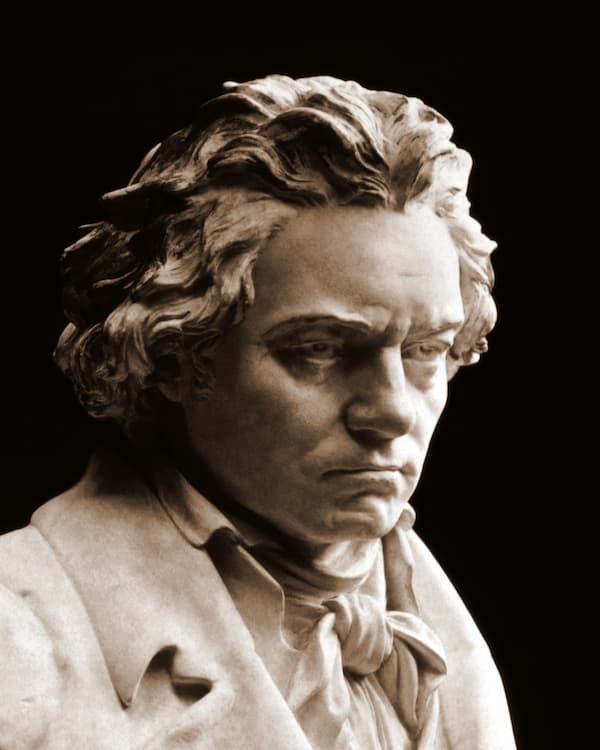
Photograph of bust statue of Ludwig van Beethoven by Hugo Hagen
Beethoven’s feuds were sometimes petty and sometimes profound, but all of them revealed something about his essential humanity.
In the end, these feuds may have left scars, but they also highlighted the fierce, sometimes off-putting independence that defined both Ludwig van Beethoven’s life and art.
For more of the best in classical music, sign up for our E-Newsletter