Franz Schubert (1797-1828) lived the quintessential life of an urban bachelor. He rejected the restraints and dependence of family life and found sustenance and camaraderie in a close, but ever-changing circle of friends.
Perpetually short of money, he lived with various roommates, hung out in pubs and drank heavily. Schubert flirted with leftist political movements, women and men, and frequented brothels for sexual gratification.
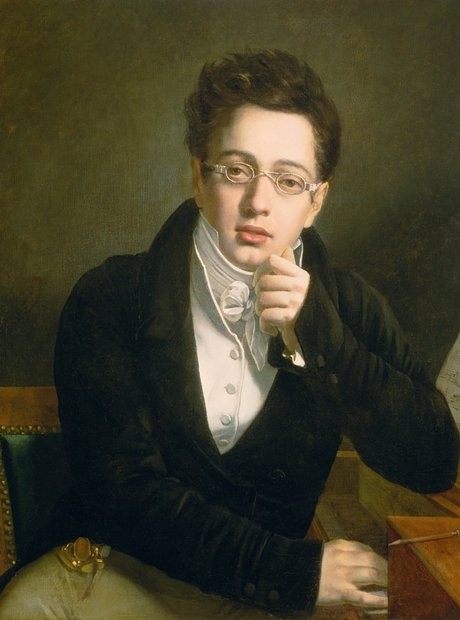
The young Schubert
At the age of 11, serving as a choirboy in the imperial court chapel, he cemented friendships that would last well into his adult life. And he would participate in numerous private and informal gatherings within his circle of friends, freely exploring art, politics, literature and music.
Eventually dubbed “Schubertiade,” these meetings featured poetry readings, dancing, and other sociable pastimes. To commemorate Schubert’s passing on 19 November 1828, let’s meet the lawyer and musician Anselm Hüttenbrenner (1794-1868), whose reputation as a friend of Schubert has suffered severely from the assertions surrounding his role in the history of the “Unfinished” Symphony.
Franz Schubert: 13 Variations on a Theme of Hüttenbrenner, D. 576
Kindred Spirits
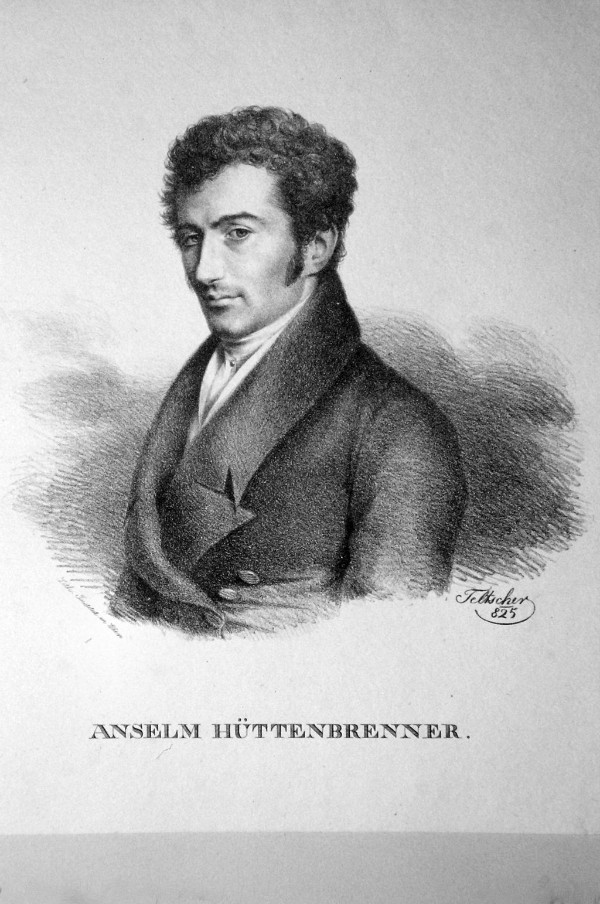
Anselm Hüttenbrenner
Franz Schubert first met Anselm Hüttenbrenner in 1815, while both were studying with Antonio Salieri. Hüttenbrenner hailed from the city of Graz, and he had initially studied law at the University.
He was an accomplished pianist and, by 1815, started composing songs and piano pieces. As a recognised student of Salieri, he took part in the 50th Jubilee Celebration, and with his brother Josef became friendly with Beethoven and Schubert.
Their shared passion for music and composition soon brought Schubert and Hüttenbrenner together. In fact, Hüttenbrenner offered a memorable portrait of Schubert in his late teens. He writes, “Schubert’s outward appearance was anything but striking or prepossessing. He was short of stature, with a full, round face, and was rather stout. His forehead was very beautifully domed.”
“Because of his short-sightedness, he always wore spectacles, which he did not take off even during sleep. Dress was a thing in which he took no interest whatever, and listening to flattering talk about himself, he found downright nauseating.“
Schubert inscribes his “Trauerwalzer” D. 365 with the playful dedication, “Written down for my dear fellow coffee, wine, and punch drinker Anselm Hüttenbrenner, the world-famous composer.”
Franz Schubert: “Trauerwalzer,” D. 365
At The Piano Together
Hüttenbrenner was more than a friend to Schubert; he was also one of his most devoted collaborators. A skilled pianist and meticulous musician, Hüttenbrenner arranged Schubert’s symphonies for piano, ensuring that the music could circulate more widely in an age when orchestral performances were rare.
He took care that Schubert’s works were properly engraved and even corresponded with foreign publishers on his behalf, acting as an informal advocate and protector of his friend’s art. The two men frequently sat side by side at the piano, playing four-hand compositions with a shared sense of delight and ease.
Schubert admired Hüttenbrenner’s purity of tone and expressive touch, as well as his astonishing facility at sight-reading, qualities that made their musical companionship both joyful and inspiring.
As a composer, Hüttenbrenner wrote operas, sacred and secular vocal music, symphonies, overtures, chamber music, keyboard music and solo songs. Very few of his works were published, but most do survive in manuscript.
Anselm Hüttenbrenner: Piano Sonata in E Major, Op. 16 (Todd Crow, piano)
The Hidden Symphony
![Franz Schubert, Anselm Hüttenbrenner and Johann Baptist Jenger, [c.1827]](https://interlude-cdn-blob-prod.azureedge.net/interlude-blob-storage-prod/2025/11/Jenger_Huttenbrenner_and_Franz_Schubert_drawing_by_Joseph_Teltscher_1827_processed.jpg)
Franz Schubert, Anselm Hüttenbrenner and Johann Baptist Jenger, [c.1827]
Anselm Hüttenbrenner’s reputation as a friend of Schubert has suffered severely from his role in the history of the “Unfinished” Symphony. So what is the actual story? We do know that the Music Society in Graz bestowed upon Franz Schubert an honorary membership in the Steiermärkischer Musikverein.
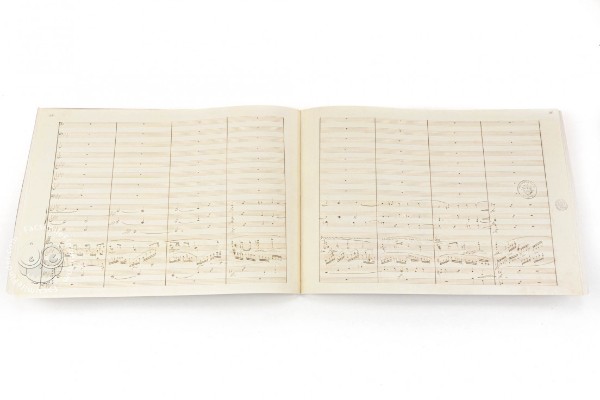
Schubert gave the manuscript of the symphony to Josef, probably in 1823, to pass on to Anselm as a token of thanks. The music consisted of two complete symphonic movements and the first two pages of the start of a Scherzo. The rest of the Scherzo was discovered after Schubert’s death, but the finale movement has never been found.
Anselm was appointed director of the Steiermärkischer Musikverein in 1825, but was unsuccessful in his application for the post of assistant Kapellmeister at the Imperial Court in 1826. He did visit the dying Beethoven in 1827, and hosted Schubert in Graz a year later. However, Hüttenbrenner never showed the manuscripts of the symphony to the music society, and he certainly never had the work performed.
At the age of 76, Hüttenbrenner finally revealed the score to the conductor Johann von Herbeck. Herbeck was flabbergasted and premiered the two completed movements on 17 December 1865 in Vienna, while substituting the last movement of Schubert’s 3rd Symphony as the finale.
The music critic Eduard Hanslick was in the audience and wrote, “When, after a few introductory bars, clarinet and oboe sound a sweet melody on top of the quiet murmuring of the strings, any child knows the composer and a half-suppressed exclamation “Schubert” ran through the hall.”
Franz Schubert: Symphony No. 8 in B minor “Unfinished”
Hüttenbrenner’s Memoirs
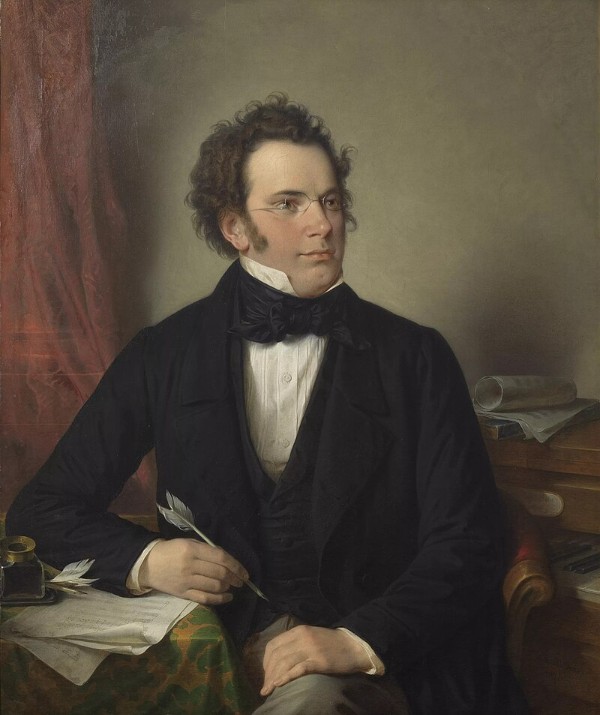
Franz Schubert
In 1854, Franz Liszt is reported by recent scholarship to have requested that Anselm Hüttenbrenner set down his recollections of Franz Schubert. This appeal came at a time when Schubert’s reputation, while growing, had not yet reached the broad international recognition it enjoys today.
Liszt, deeply engaged in the promotion and preservation of contemporary composers’ legacies, appears to have recognised the unique value of Hüttenbrenner’s firsthand knowledge. To be sure, Hüttenbrenner was well placed to provide insight into the composer’s character, habits, and creative processes.
The resultant work was titled “Fragments from the Life of the Song Composer Franz Schubert, Reported by His Fellow Student Anselm Hüttenbrenner,” and the manuscript contains vivid personal recollections, offering both intimate anecdotes and broader reflections on Schubert’s artistry.
Despite Hüttenbrenner’s intention to transmit the memoir to Weimar, where Liszt was then based, the manuscript’s receipt is not definitively documented. It seems that the text did not enter circulation immediately, and as a result, its influence on contemporary perceptions of Schubert was initially limited.
Only later did musicologists such as Otto Erich Deutsch bring Hüttenbrenner’s recollections to wider scholarly attention, publishing them as a crucial primary source for the study of Schubert’s life and works.
While Hüttenbrenner’s memoirs, eventually published in 1906, provide a rare glimpse into the social and musical milieu in which Schubert composed, they have been deemed unreliable as source material by current musicology.
Anselm Hüttenbrenner: Wanderlied (Camerata Musica Limburg; Jan Schumacher, cond.)
Between Intimacy and Immortality
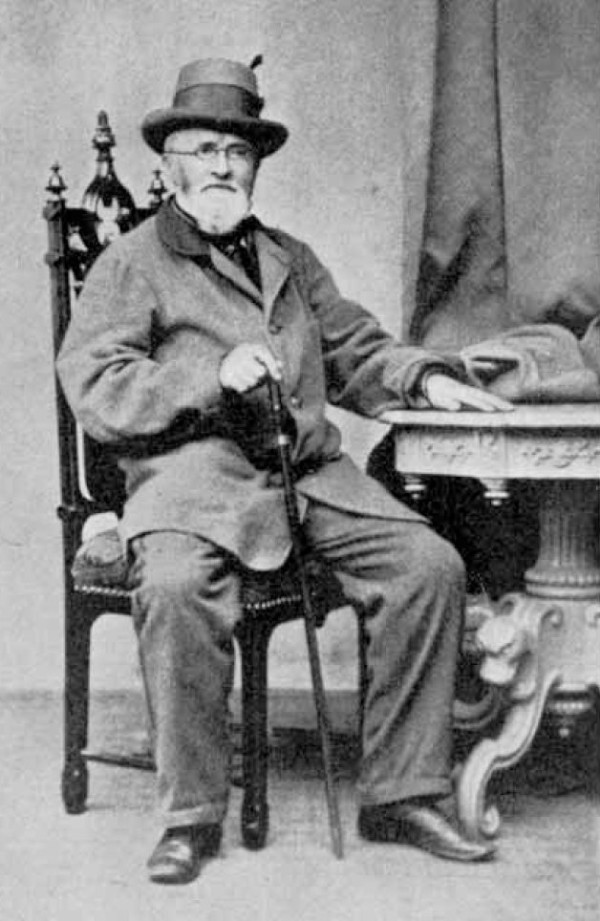
Anselm Hüttenbrenner
In reflecting upon the life of Franz Schubert, the figure of Anselm Hüttenbrenner emerges as both a friend and an intermediary in the preservation of the composer’s legacy. Their relationship exemplifies the intertwining of personal intimacy and professional collaboration that characterised Schubert’s social world.
At the same time, Hüttenbrenner’s role as custodian of the “Unfinished” Symphony demonstrates the complex consequences of private stewardship. While his long retention of the manuscript delayed its public reception, it ultimately ensured the survival of one of Schubert’s most significant compositions.
The Hüttenbrenner’s memoirs provide a unique, if imperfect, lens through which to view Schubert’s life, character, and creative environment. While the text must be approached critically, it does illuminate the social, artistic, and cultural contexts that shaped Schubert’s work.
Together, the collaborative, archival, and testimonial roles played by Hüttenbrenner reveal the multidimensional ways in which friendship, musical mentorship, and documentary preservation intersected in the formation of Schubert’s enduring legacy.
For more of the best in classical music, sign up for our E-Newsletter
Anselm Hüttenbrenner: Nachruf an Schubert in Trauertonen am Pianoforte (Wolfgang Brunner, fortepiano)