If you’re a classical music lover and you hear the name Schubert, you probably think of Franz: composer of the Trout Quintet, a number of famous symphonies, and, of course, Ave Maria.
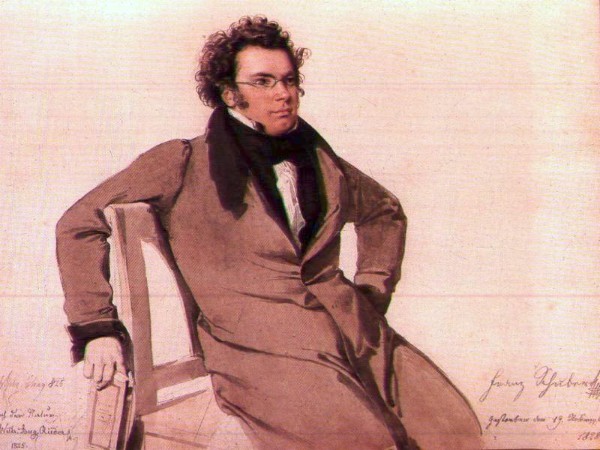
Franz Schubert
But did you know he had an older brother named Ferdinand who was also a composer? Ferdinand was an important figure in Franz’s life. In fact, we might not know Franz’s music at all today if it weren’t for Ferdinand.
So today we’re looking at the life of Ferdinand Schubert: his biography, the music he wrote, his relationship with his famous brother…and how he got away with claiming some of Franz’s work as his own.
Ferdinand and Franz Schubert’s Family Background
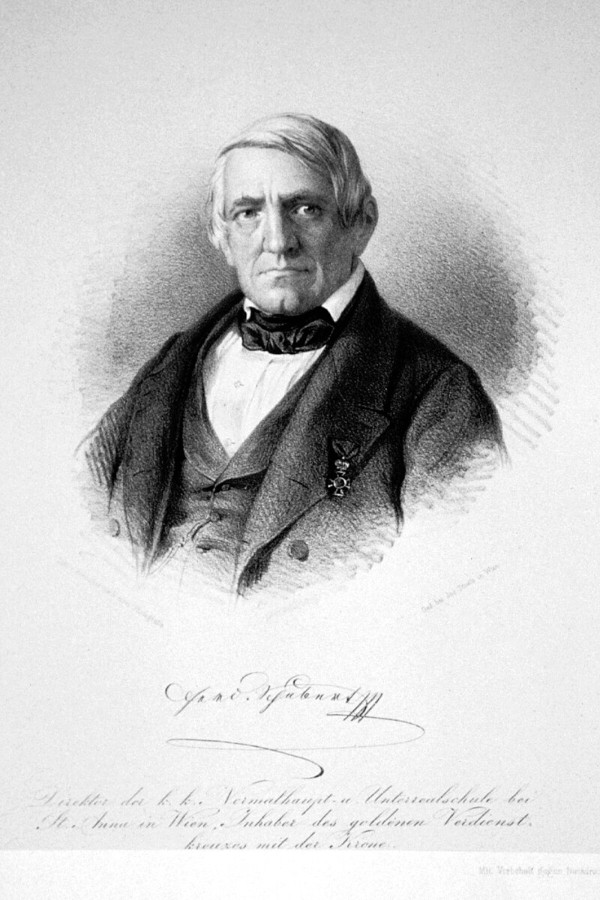
Ferdinand Schubert
Ferdinand was born on 18 October 1794 in Vienna, three years before Franz.
Their parents had fifteen children together; Ferdinand was the tenth, and Franz was the twelfth. Only four of their siblings would survive infancy.
Their father was a peasant’s son who had moved to Vienna a decade before Ferdinand’s birth to become a schoolmaster.
The household valued hard work and education, as well as music.
The Musical Educations of Ferdinand and Franz
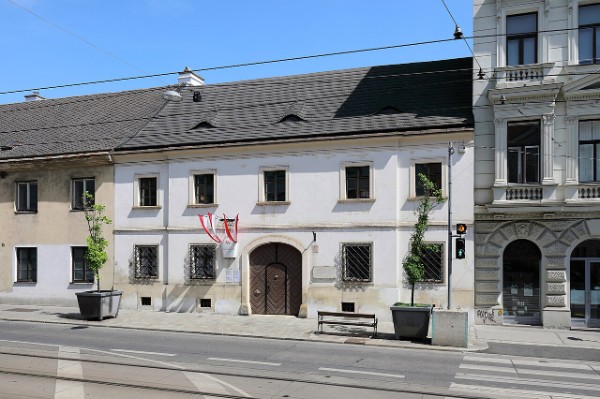
Schubert’s birthplace
Ferdinand and Franz’s respective musical educations were closely linked.
Ferdinand began his music studies with his father and older brother Ignaz, learning piano and violin.
Franz also took piano lessons from Ignaz. But within a matter of months, Franz learned all he had to teach.
Both brothers’ first lessons outside the house were taken from a teacher named Michael Holzer, who was also the organist at the local church.
Between the two brothers, Holzer was most astonished by Franz, going to their father with tears in his eyes to rave about his talent and how he seemed to know everything instinctively.
During the brothers’ childhood, the Schuberts started a family string quartet, with Ferdinand and Ignaz playing violin, Franz playing viola, and their father playing cello. Franz actually wrote his earliest string quartets for this family quartet.
Franz Schubert’s song “Gretchen am Spinnrade”, written when he was 17
Ferdinand’s Life as a Teacher
As a teenager, Ferdinand began a teaching career working under his father, eventually becoming an assistant teacher at a Viennese orphanage. In 1816, he became a full-time teacher there, and in 1820, he began teaching and leading a choir in the Alt-Lerchenfeld suburb.
Finally, in 1824, he was hired to teach at the St. Anna Normalhauptschule (St. Anna Normal Secondary School), which was both a secondary school and a teachers’ training college, and an institution he himself had once attended. He spent decades there, eventually becoming the director in 1851.
He also branched out into writing textbooks on mathematics and geography.
Ferdinand’s Life as a Performing Musician
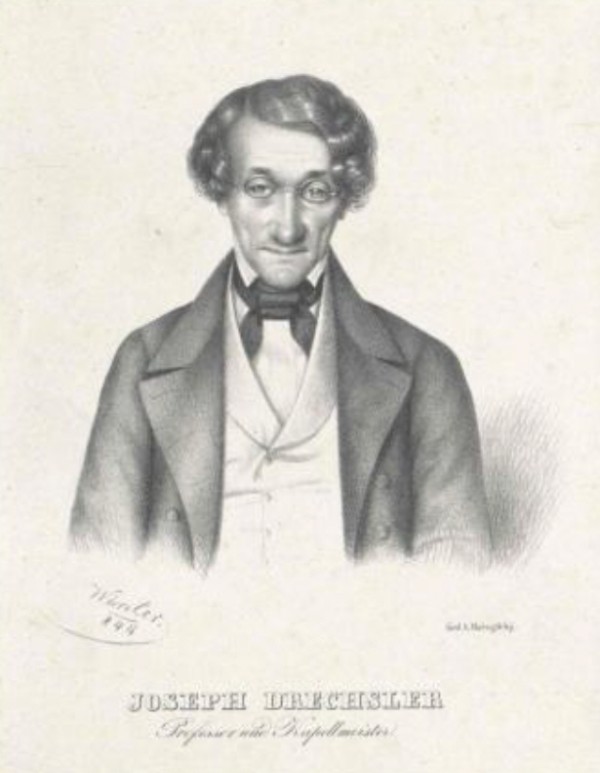
Joseph Drechsler
But Ferdinand wasn’t just interested in classroom teaching. Just like his brother, he was passionate about music. He ended up pursuing a number of musical side-hustles over the course of his life, working intermittently as a violinist, organist, and music teacher.
He studied music with organist and composer Joseph Drechsler (whose most famous student would be Johann Strauss II). By 1810, the year he turned sixteen, he became the organist at the Lichtentaler Parish in Vienna.
He even applied for a position of second court organist, but was ultimately rejected.
In the spring of 1827, he was serving as organist at Wahring parish church, where Beethoven’s coffin received its blessing. (Interestingly, Ferdinand Schubert designed Beethoven’s gravestone!)
Ferdinand Schubert’s Compositions…And How He Stole His Brother’s
Ferdinand was also a prolific composer.
Over the course of his life, he wrote more than ninety works, including a Requiem, four Masses, twenty-nine choruses, and a variety of songs, some of which were used for pedagogical purposes.
He also started passing off his brother’s works as his own.
In 1818, Ferdinand asked Franz to write a requiem. Franz responded with his Deutsches Requiem (D621).
Franz Schubert’s Deutsches Requiem
Ferdinand began claiming this work as his own, conducting it at the orphanage where he worked, and even using it in a music theory exam there! The work helped him win the job at Alt-Lerchenfeld.
He pushed his luck even farther in 1826, when he submitted it to the publisher Anton Diabelli & Co. for publication…under his own name.
Astonishingly, he did this for a number of works, not just the Deutsches Requiem.
Did Franz Know?
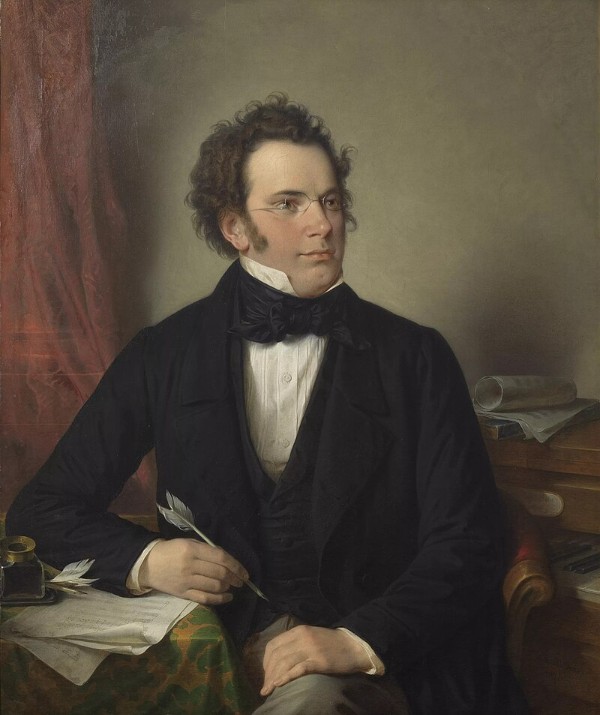
Franz Schubert
Of course, one has to wonder: did Franz know what Ferdinand was doing?
It seems that he did, and that Franz had no issue with it.
It certainly didn’t impact their relationship, which throughout the 1820s was deeply warm and affectionate.
In 1825, Ferdinand wrote to Franz, “You surely know how dear every moment spent in your company is to me.”
Franz’s Illness and Death, and Managing Franz’s Legacy
When Franz’s health began deteriorating, his doctor recommended moving in with Ferdinand, who helped to take care of him in his final illness.
“My brother [is] conscientiousness itself,” Schubert wrote to a friend on 12 November 1828. He died in Ferdinand’s apartment a week later at the age of 31.
Ferdinand Schubert’s Requiem, written in memory of his brother
After Franz’s death, Ferdinand took it upon himself to organise his prodigious brother’s works.
In 1835, advertisements appeared in newspapers in Vienna, Leipzig, and Paris, offering the performing rights to some of Franz’s works…with the income going to Ferdinand.
He needed the money. He married twice, and between those two marriages, he had a whopping 29 children. Twelve of these children survived to adulthood.
Consulting with Robert Schumann
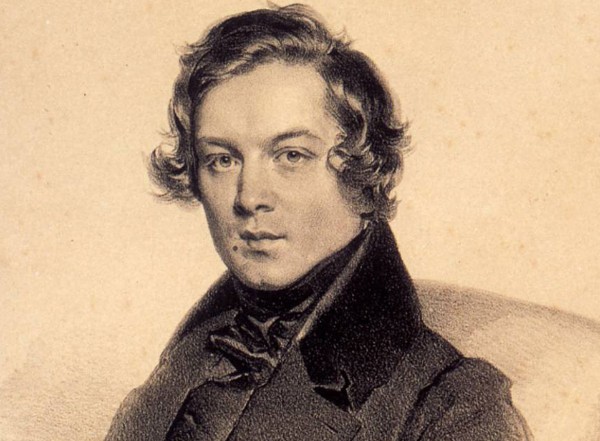
Robert Schumann
Around this time, composer Robert Schumann came to visit Ferdinand to see what undiscovered Schubert works were in the family archives.
Schumann was astonished to discover works like the “Great Symphony” and others in Ferdinand’s possession. He sent a score to Felix Mendelssohn to present at the Gewandhaus in Leipzig.
Franz Schubert’s Symphony No. 9 (“Great”)
Schumann also started pushing to get these works published. He wrote to his publisher Breitkopf & Hartel in January 1839:
“As far as payments are concerned, you would encounter modest demands… At the same time, Schubert’s brother cannot forgo payment altogether, for he is entirely without means, he is the father of eight children, and Schubert’s estate constitutes his sole property.”
As he was working to get his brother’s works published and performed, Ferdinand also put on concerts of his own works.
He also rearranged some of his brother’s music, sometimes to criticism. In February 1835, one critic wrote, “The trio consisted of the Erlking, the father, and the son, and the chorus took, as it were, the place of an audience joining in the performance. Such an arrangement is completely unacceptable.”
In 1828, after discussion, Ferdinand ended up selling a big chunk of his late brother’s output to music publisher Anton Diabelli. Diabelli’s publishing house would distribute Franz Schubert’s work for the next few decades.
Although Franz and Ferdinand had some surviving siblings, and technically Ferdinand wasn’t Franz’s only heir, everyone in the family seems to have deferred to Ferdinand’s choices, recognising his musical abilities and his close relationship with Franz.
Ferdinand Schubert’s Legacy
Ferdinand Schubert died in February 1859 at the age of 64 in Vienna. Three decades had passed since his brother’s death in his home.
Nowadays, if Ferdinand is remembered at all, it’s usually for claiming his brother’s work as his own.
However, it’s also worth remembering how close Franz was to him, how he provided a loving environment during Franz’s last illness, and how he spent the rest of his life working to preserve, publish, and popularise his brother’s music.
No great composer lived in a vacuum. Ferdinand Schubert is proof.
For more of the best in classical music, sign up for our E-Newsletter