Olivier Latry, titular organist of the Great Organ of Notre-Dame Cathedral in Paris, brings us an album of the organ music of the greatest of Protestant composers, J.S. Bach, on the Cavaillé-Coll organ of the very Catholic of cathedrals, Notre-Dame de Paris.
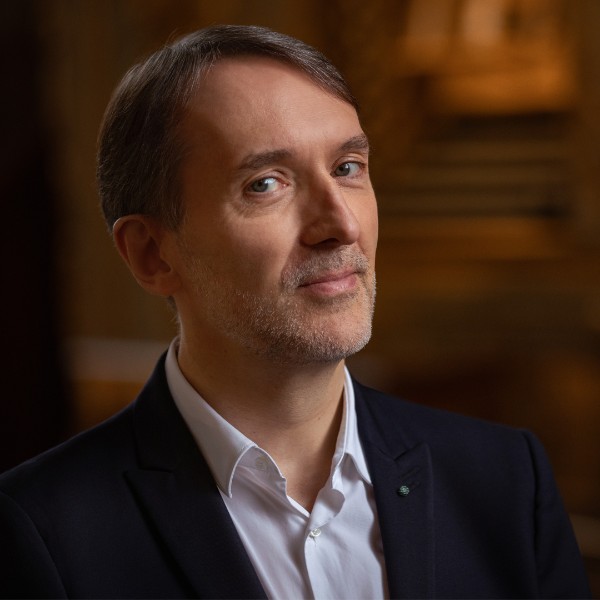
Olivier Latry
This recording, made in early 2019, was the last recording made on the great instrument before the calamitous fire of 15 April 2019 that destroyed the spire and roof of the building. The three pipe organs of the church received little damage but were removed from the church while it was being restored.
The 8,000 pipes of the organ were removed and cleaned as they had been soiled from all the soot and lead dust from the fire. The pipes in the Notre-Dame organ include 9 pipes that remain from the original 14th-century organ. Apparently, only one organ pipe, the single pipe of the Principal 32’ on the pedals, suffered damage in the fire. The cleaned organ had its debut with the reopening of the cathedral on 7 December 2024.
Olivier Latry has been one of the four titular organists of Notre-Dame de Paris since 1985 and brings his close knowledge of the Cavaillé-Coll organ to this recording. The position of titular organist at Notre-Dame is considered one of the most prestigious organist posts in France.
In addition to raising the initial red flag of performing Bach on the Notre-Dame de Paris organ, Latry also brings up the question of performing the works on ‘an instrument that is, to say the least, far removed from the Baroque and Classical style of organ building’. For him, however, this is all resolved when you consider the question of authenticity. For Latry, performers must play with the instruments of their time, and since the main organ is outstanding, there’s no reason to limit the repertoire that is played on it. He would rather talk about sincerity than authenticity.
The Bach works on this recording range from the Fantasia and Fugue in G minor, BWV 542, written between 1714 and 1720, and the Ricercare a 6, BWV 1079, from The Musical Offering, written in 1747. In that 40-year span, Bach wrote a lot of music, and we have examples such as the Fugue in G minor, BWV 579, the Chorale Choral Herzlich tut mich verlangen, BWV 727, and, most glorious of all, with the Cathedral’s 7-second reverb time, the magnificent Toccata and Fugue in D minor, BWV 565.
J.S. Bach: Pièce d’orgue, BWV 572
In our earlier discussion with Mr. Latry (“In Touch With Olivier Latry“), made just after the fire, he spoke about the necessity for live music, but that even in a recording, it was necessary for the performer to add something to the already-received knowledge of a work. Why repeat the past when we know so much more now and so many more capabilities?
This was the last recording made in the Cathedral before the fire. It was originally issued as an LP-only recording in 2019 and is now available as a CD and in digital format. As one writer noted, after the fire, a new, more symbolic dimension was added: even if the organ and the cathedral itself recovered most of their former splendour, this album will remain the final recording of a past that is inevitably over.
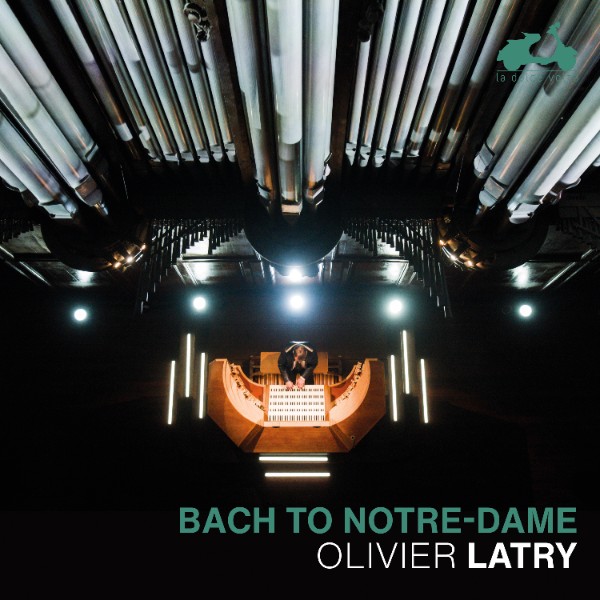
Bach: Bach to Notre-Dame
Olivier Latry, organist
La Dolce Volta LDV70
Official Website
For more of the best in classical music, sign up for our E-Newsletter