As an amateur pianist, sitting down to play Debussy feels like stepping into a shimmering dreamscape, where colours and textures swirl in a delicate dance. Each note dissolves into the next, like ripples on a moonlit lake, inviting me to surrender to a world of fleeting impressions rather than worrying about rigid structure.
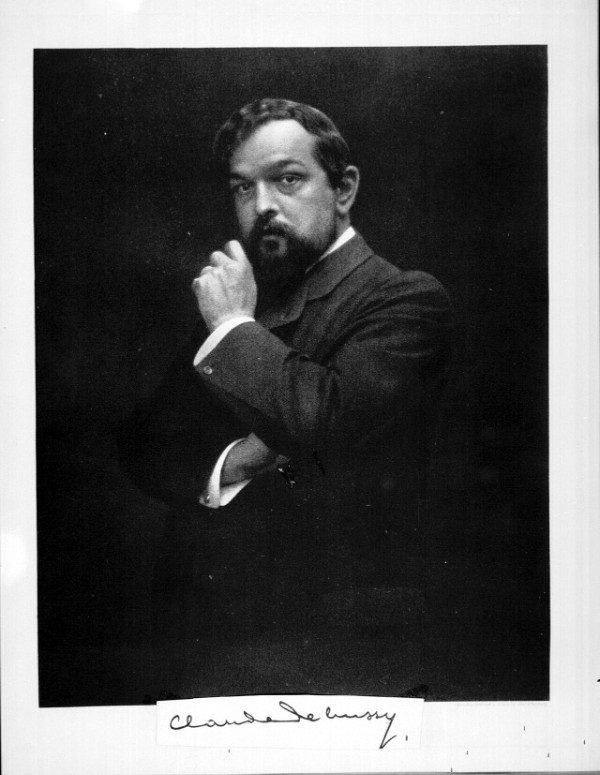
Portrait of Claude Debussy
The visionary French composer Claude Debussy was born on 22 August 1862 in a quiet suburb west of Paris. As a pianist, I can’t help but marvel at his tradition-breaking compositions whose innovative harmonies and evocative textures forever reshaped the landscape of Western music.
He once wrote to a friend, “I love pictures almost as much as music.” Debussy sought to paint pictures with tones and to create visions as yet unrecorded in music. It’s not surprising that his way of composing evolved in a manner normally associated with painters. Debussy did not like to be called an Impressionist, not because he didn’t understand the connection, but because he did not want to be categorised.
To celebrate Debussy’s birthday on 22 August, let’s explore Images, two sets of evocative piano pieces composed between 1901 and 1907.
Claude Debussy: Images, Book 1 “Reflets dans l’eau”
Images: Background Story
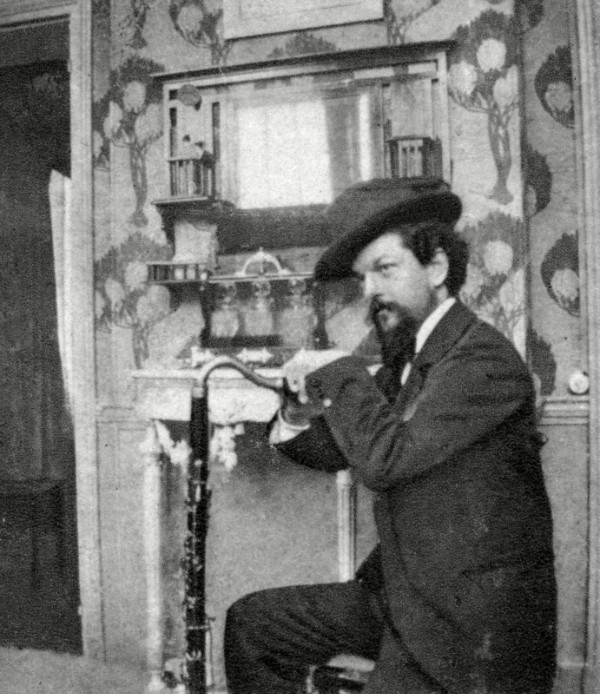
Claude Debussy, 1909
Debussy’s Images emerged during a period of intense creativity, when he was redefining the possibilities of the piano. Unlike structured forms, Images prioritizes atmosphere over narrative, evoking scenes and sensations with a fluidity that feels almost improvisatory.
As Paul Roberts notes “Debussy’s piano music is a liberation of sound from the constraints of traditional form, creating a new kind of musical rhetoric.” As the pianist and friend Marguerite Long wrote, “In these pieces, Debussy wanted freedom in interpretation, guided by intuition.”
Reflets dans l’eau (Reflections in the Water)
Water was one of the favourite subjects of Impressionist painters, and the same is true for composers like Debussy and Ravel. Apparently, Debussy referred to the opening motif of this image as “a little circle in water with a little pebble falling into it.”
This opening, with its cascading arpeggios and delicate trills creates a fluid, almost luminous soundscape. Notes blending into a hazy glow require a soft, almost weightless touch, all with very careful pedalling applied.
This piece is a shimmering, liquid dream, like sunlight glinting off a rippling lake. Its character is serene yet elusive. There is a sense of gentle melancholy beneath its luminous surface, as if the reflections hold fleeting memories.
It has been described as “a study in fluidity, where sound mirrors the play of light,” and it certainly invites a meditative calm, evoking a beautiful moment that is impossible to hold.
Hommage à Rameau
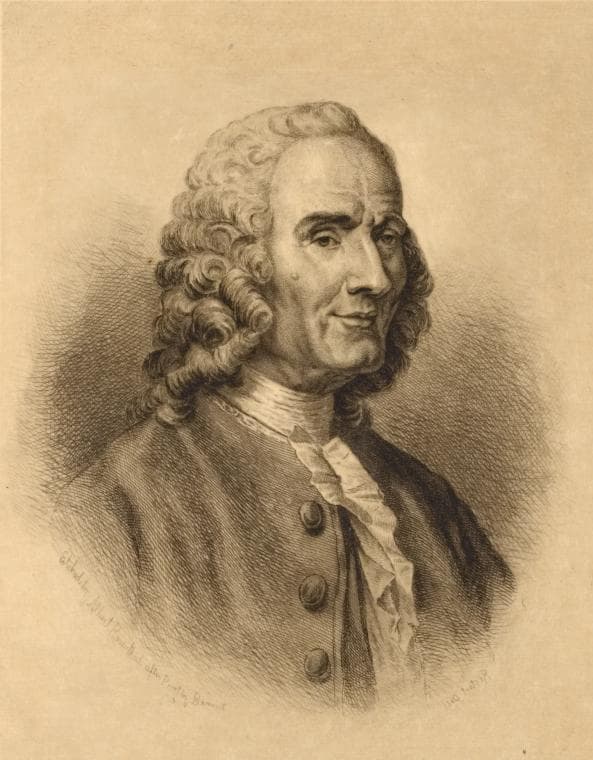
Jean-Philippe Rameau
Hommage à Rameau carries a noble, reflective character, like a quiet tribute to a forgotten era. Its stately sarabande rhythm feels like a slow, reverent dance, but Debussy’s hazy harmonies give it a dreamlike warmth, as if gazing at an old painting through modern eyes.
The character is one of dignified reflection, evoking the elegance of Rameau’s Baroque era while filtering it through Debussy’s impressionistic haze. The piece is structured as a sarabande, but Debussy transforms it into something less formal and more introspective.
Playing it feels like walking through a cathedral of memory, where each chord resonates with a sense of timeless respect. As a scholar writes, “Debussy pays homage not by imitating Rameau but by reimagining his spirit in a modern harmonic language.”
The overall mood is contemplative, neither mournful nor celebratory, like a quiet nod to a musical ancestor whose legacy continues to linger in the air.
Claude Debussy: Images, Book 1 – No. 2. Hommage a Rameau (Jean-Efflam Bavouzet, piano)
Mouvement
Mouvement is a whirlwind of perpetual motion, its relentless triplets evoking a spinning, kinetic energy. This burst of ceaseless energy becomes a study in pure motion, abstract yet vivid. Its crystalline clarity, its sharp and unyielding energy, feels like sunlight glinting off a spinning wheel.
It’s not really just about speed but about life, as it provides a sense of urgency and vitality that feels almost organic. It’s both a physical challenge and an emotional journey, requiring pianists to channel its restless spirit while keeping every note precise and sparkling.
The movement builds on a foundation of continuous, triplet-based figuration that drives the piece forward without pause. Its structure is deceptively simple, a single unbroken arc of motion that feels almost improvisatory.
The music unfolds in waves, with dynamic swells and subtle shifts in texture providing the illusion of spontaneity while maintaining a tight underlying framework. And the harmonies are like flashes of colour.
Claude Debussy: Images, Book 1 “Mouvement”
Book 1
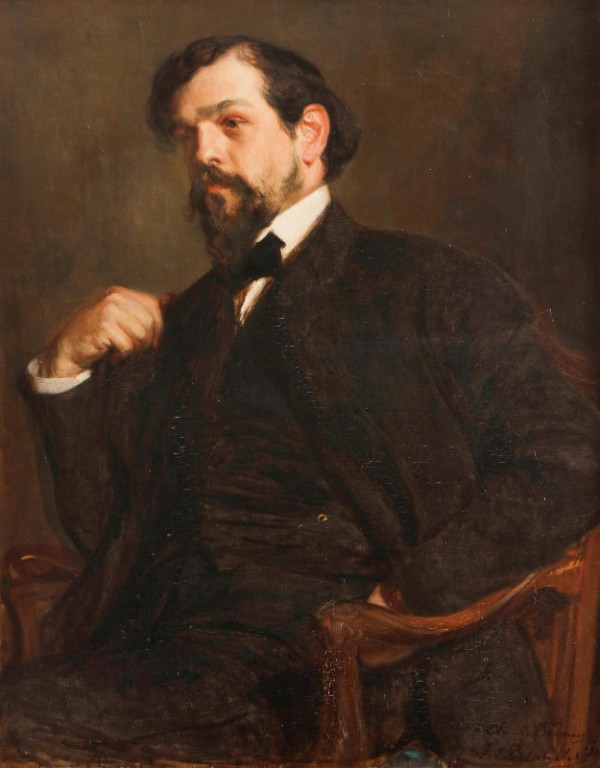
Claude Debussy
Claude Debussy conceived Images, Book 1 as a cohesive suite, with each movement contributing to an overarching exploration of colour, texture, and imagery. Although distinct in character and able to stand alone, the pieces are unified by their innovative harmonic language and evocative titles.
Debussy aimed to create a vivid sound world, as he noted to his publisher Jacques Durand. He expressed confidence that the three pieces would “hold together well, and would find a significant place in piano literature.”
Cloches à travers les feuilles (Bells Through the Leaves)
Debussy issued his second set of Images in 1907. And the character of Cloches à travers les feuilles is hauntingly serene, like a memory of bells carried on a gentle breeze. The music conjures a natural scene, perhaps a village church hidden in a leafy grove, where sounds blend into a dreamlike haze.
The piece captures the essence of sound filtered through space. It is a sonic impression of distance and atmosphere. It all has an introspective character, inviting quiet wonder and contemplation.
As a pianist, I am drawn to its stillness, with the magic lying in a sense of distance and ambiguity. The bells are never overt, creating a mood of mystery and nostalgia as if the music is recalling a moment just out of reach.
There is a constant interplay of light and shadow, with the bells’ resonance merging with the surrounding textures to create a unified sonic image. And with much of Debussy’s music, the pedal is a tool for colouring, not just sustaining.
Claude Debussy: Images, Book 2 “”Cloches à travers les feuilles”
Et la lune descend sur le temple qui fut (And the Moon Sets over the Temple That Was)
This is the most introspective of the Images, evoking a moonlit and ancient ruin with sparse and haunting phrases. Profoundly serene and evocative, it unfolds like a quiet meditation in a desolate moonlit landscape.
The piece is dedicated to Louis Laloy, an authority on oriental and ancient Greek music. Harmonically, the piece is rooted in pentatonic and modal scales, inspired by Debussy’s exposure to Javanese gamelan music at the 1889 Paris Exposition.
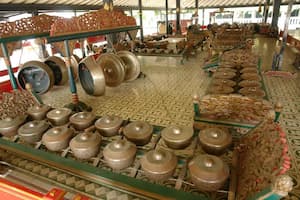
Gamelan
Debussy creates a sense of harmonic ambiguity that feels otherworldly, with a scholar writing, “the harmonies are like echoes, resonating in a vast, empty space. There is a sense of reverence and melancholy, as if tracing the outlines of a memory that is both distant and deeply personal.”
With its pungent dissonance and the floating nature of the sonorities, Debussy probably attempted to capture “the inexpressible, which is the ideal of all art.”
Claude Debussy: Images, Book 2 “Et la lune descend sur le temple qui fut”
Poissons d’or (Goldfish)
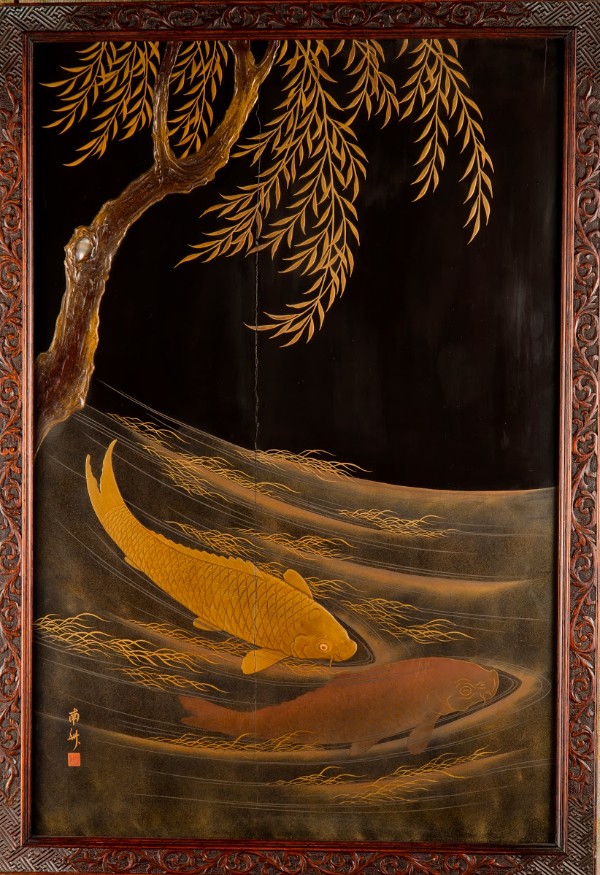
Poissons d’or
Inspired by a Japanese lacquer panel, Poissons d’or is a playful, darting dance of goldfish, full of skittering runs and sudden dynamic shifts. Erratic movements and delicate flourishes create a sense of joyful unpredictability, “capturing the fleeting iridescent quality of its subject without ever being literal.”
As a pianist, I feel like I’m caught in a game of chase, trying to mimic the quick and elusive dashes of the fish. But it’s not all playful, it is also elegant with the music blending humour and grace. François Lesure describes it as “a miniature masterpiece of suggestion, never literal but vividly evocative.”
Debussy’s Images feel like a journey through a gallery of sonic paintings, each movement a unique blend of colour, texture, and emotion that captures the ephemeral beauty of its subject. From shimmering ripples to the playful dance of a goldfish, these pieces challenge pianists to balance technical precision with poetic intuition.
Book 2
Also intended as a set, Book 2 is often seen as more refined and introspective. And with influences from gamelan music, it puts a greater emphasis on subtle timbres. Debussy presents an overarching artistic vision, binding the movement through shared musical, thematic, and aesthetic elements.
Debussy also composed a set of three Images for orchestra. This was originally intended as a two-piano sequel to Book 1 of the Images for solo piano.
Debussy’s genius lies in transforming the piano into a vessel for imagination, evoking vivid images with minimal means. Playing Images is a deeply personal act, a process of letting the music shimmer, without exaggeration, with life and spontaneity.
For more of the best in classical music, sign up for our E-Newsletter