
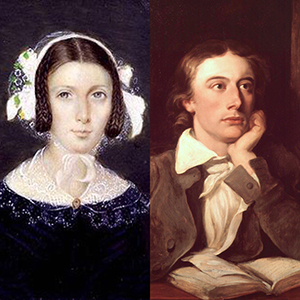
Fanny Brawne met John Keats at Wentworth Place in November 1818. She was described as “small, her eyes were blue and often enhanced by blue ribbons in her brown hair… She was not conventionally beautiful; her nose was a little
Poetry
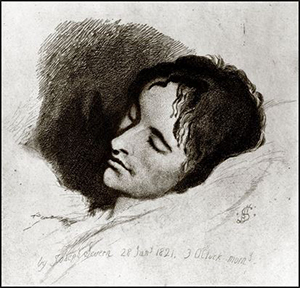
Tuberculosis, or consumption as it was known throughout the 19th century—decisively shaped the social history of Europe. Its impact on the artistic world was extremely powerful, with artists offering their own commentaries on the disease through painting, poetry and opera.

The English Romantic poet John Keats (1795-1821) tragically died from tuberculosis at the age of 25. Creating a profound body of work under the cloud of near-constant illness, Keats captured extreme emotions through an emphasis on natural imagery. In the
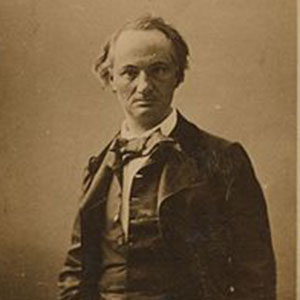
In 1936, Edna St. Vincent Millay and George Dillon published a translation of Baudelaire’s “The Flowers of Evil.” Trying to infuse the publication with a sense of authority, they asked the French poet, essayist, and philosopher Paul Valéry for an
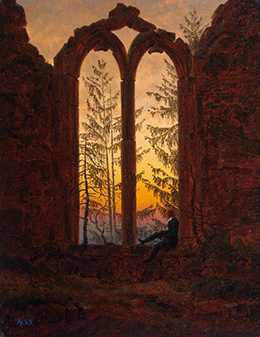
“La vie antérieure” (A former life) originates in Baudelaire’s Les Fleurs du Mal first published in 1857. The collection was reissued in 1861 and published for the final time in 1868 after Baudelaire died. Baudelaire is generally considered to be

Setting the poetry of Baudelaire to music is a highly complex undertaking. His poems have a complexity of thought and a richness of verbal music that almost defy the composer to add anything. Francis Poulenc, who devoured Baudelaire’s verse avidly
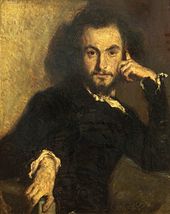
When Charles Baudelaire published his collection of poems entitled Les Fleurs du Mal (The Flowers of Evil) in 1857, he shocked an entire generation. “Candor and goodness are disgusting,” he wrote in the epilogue, describing his masterpiece instead as a
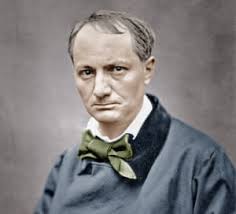
Charles Baudelaire (1821-1867), according to TS Eliot was the first modern poet, “the greatest exemplar in modern poetry in any language.” He produced unprecedented expressions of a complex sensibility and of modern themes within structures of classical rigor and technical