In they come, swaggering and posing, the heroes of the bull ring: the toreadors! In Bizet’s Carmen, the latest love of her life, Escamillo, appears in a procession to the bull ring in Act IV. Escamillo’s arrival and dallying with Carmen drive Don José to madness. In his last confrontation with Carmen, his career in the army in ruins, his former lover intent on someone else, he kills her and, of course, instantly laments her demise.
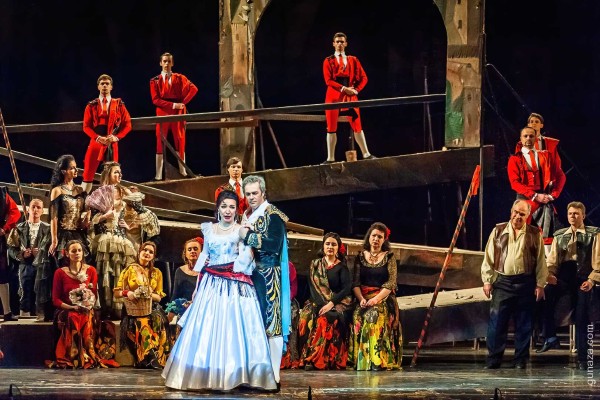
Carmen and the toreadors, 2024 (Ukrainian National Opera)
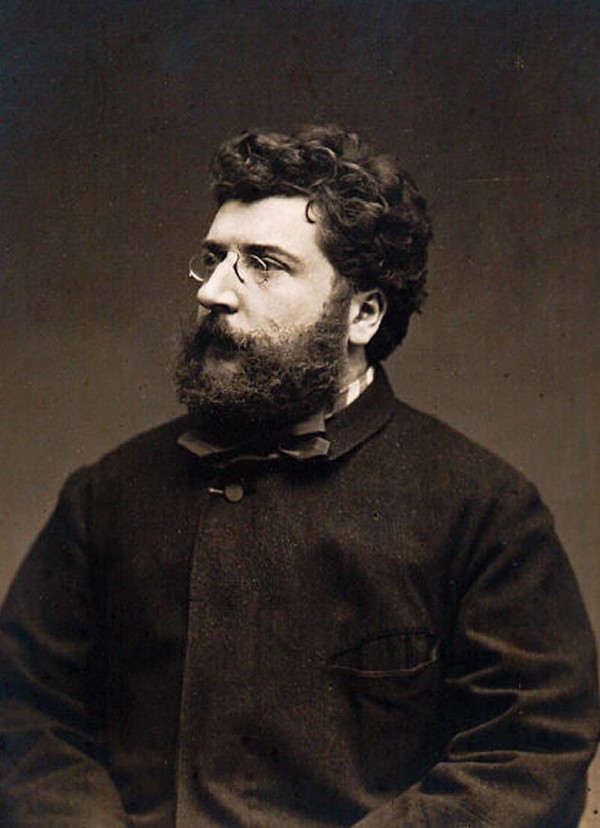
Georges Bizet, 1875 (Photo by Étienne Carjat)
Georges Bizet (1838–1875) was starting to reach success as a composer. He was a brilliant student at the Paris Conservatoire, was an outstanding pianist (although he rarely performed publicly), and after 3 years in Italy as the winner of the Prix de Rome, found that the Paris theatres didn’t have a taste for new compositions. His two operas that did reach the stage, Les pêcheurs de perles and La jolie fille de Perth didn’t find a following. Finally, he found Carmen, and in her arms found success.
Carmen had its premiere in March 1875, and Bizet died of a heart attack 3 months later. Carmen, with its dangerous themes of betrayal and murder, would go on to become one of the great successes of the opera stage, continuing to be staged today, 150 years after its premiere.
Attempting to save some of the music after Bizet’s death, his friend Ernest Guiraud created two orchestral suites, each using six numbers from the full opera. The end of Suite No. 1 is about the toreadors. Using music from the Prelude to Act I and from the Procession of the Toreadors in Act IV (Les voici! voici la quadrille des Toreros!), Guiraud brought out all the pomp and attitude of the bullfighters in this number.
Georges Bizet: Carmen Suite – VI. Les Toreadors

Dimitri Mitropoulos
This 1954 recording was made for radio in a broadcast from Carnegie Hall, New York, with Dimitri Mitropoulos leading the New York Philharmonic.
Athens-born Dimitri Mitropoulos (1896–1960) was musical from childhood, staging musical gatherings at home from age 11 and writing his first pieces of music. His first opera was staged when he was 23. After studying at the Athens Conservatory and in Brussels and Berlin, he was an assistant to Erich Kleiber at the Berlin State Opera. He was principal conductor of the Minneapolis Symphony Orchestra from 1937 to 1949 and moved to America in 1946. In 1949, he started working with the New York Philharmonic, becoming co-conductor with Leopold Stokowski and then sole music director in 1951. He changed the direction of the Philharmonic, making them more involved in commissioning new works and championing the music of Gustav Mahler. In 1958, his protégé, Leonard Bernstein, succeeded him at the Philharmonic. From 1954 to his death in 1960, he was also the principal conductor of the Metropolitan Opera. This recording of the Carmen Suites, broadcast in 1954, brings both aspects of his conducting career together: leading a great orchestra in the ‘musically incisive and dramatically vivid’ style he brought to the Met.
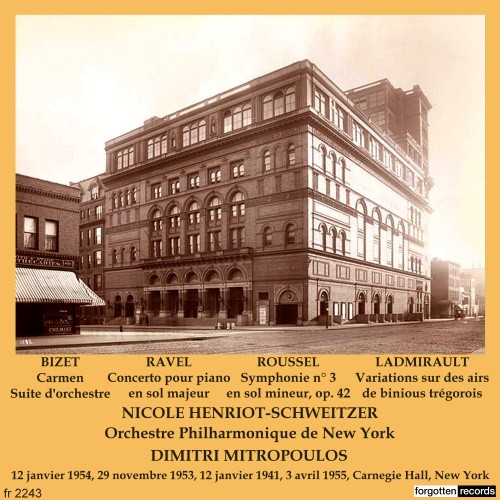
Performed by
Dimitri Mitropoulos
Orchestre Philharmonique de New York
Recorded in 1954
Official Website
For more of the best in classical music, sign up for our E-Newsletter