British composer Arnold Bax (1883–1953) started his musical life as a student at the Royal Academy of Music, graduating in 1905. Although an accomplished pianist, he did not pursue a performing career, helped by his personal income. He was captured by the idea of the Celtic world, and after his marriage to Elsita Sobrino, the daughter of soprano Luisa and pianist Carlos Sobrino, they moved to Dublin, where he wrote literary works under the name of Dermot O’Bryrne.
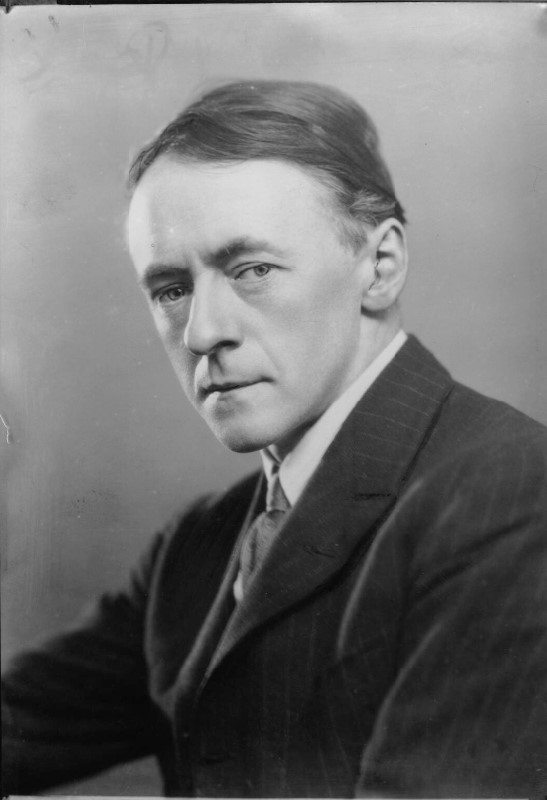
Arnold Bax
The Easter Rising of 1916 in Ireland brought out Bax’s Celtic soul, and he wrote about the happenings in his book of poetry, A London Ballad and Other Poems (1918), which was quickly banned in England. His work dedicated to Patrick Pease, one of the Rising’s leaders, In Memoriam Padraig Pearse (1916), was not performed during his lifetime.
His first major work for cello was Folk Tale, written in 1918. It was dedicated to the English cellist Felix Salmond (1888–1952), who had been Edward Elgar’s cellist of choice for his Cello Concerto, and performed in the premieres of Elgar’s String Quartet in E minor and Piano Quintet in A minor in 1919. Folk Tale marked Bax’s first mature work for cello and piano and was in line with other Celtic-themed orchestral works he recently completed: Spring Fire, November Woods, and Tintagel. It’s ‘full of dense restless textures and melodic unpredictability, luminous and dark in turn’, as one writer described it; at the same time, its harmonic journey is difficult and puzzling to the modern listener. The G minor tonality maintains to the end, and we’re left in a mournful world. The work was given its premiere in 1918, with Salmond on cello and Bax at the piano.
The Sonata for Cello and Piano of 1923 was given its premiere in 1924 with Beatrice Harrison on cello and Harriet Cohen at the piano, to outstanding reviews.
The Sonatina for Cello and Piano of 1923 was dedicated to Pablo Casals, although he’d never met him. Bax’s mistress, Harriet Cohen, had performed Bax’s Symphonic Variations in Barcelona, with Casals conducting. Despite Harriet’s efforts at getting the two men together, they never met.
Bax’s final work for cello and piano, the Legend-Sonata of 1943, was commissioned by cellist Florence Hooton. The premiere, at Wigmore Hall, was performed by Hooton with Harriet Cohen at the piano. If the outer movements are somewhat formulaic in their themes, it is in the slow movement that Bax shows his Romantic side, even in the middle of the 20th century. It is tied back to Bax’s Celtic music in its use of ‘Fand’s song of immortal love’, from Bax’s 1916 tone poem, The Garden of Fand when Fand, Lady of the Ocean, seduces the Irish hero Cuchulain.
Arnold Bax: Legend-Sonata for Cello & Piano, GP 352 – II. Lento espressivo
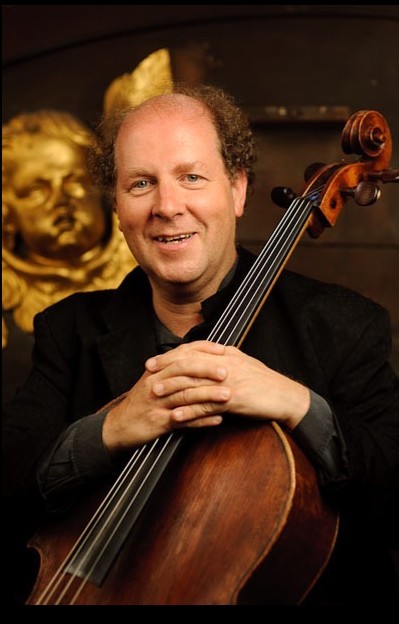
Alexander Baillie
The cellist on this recording of Bax’s complete music for cello and piano, Alexander Baillie, was inspired by hearing Jacqueline du Pré to teach himself the cello, at first playing by ear. He went to the Watford School of Music before attending the Royal College of Music in London. His recordings of Britten’s solo cello suites and cello sonata have come for strong international praise.
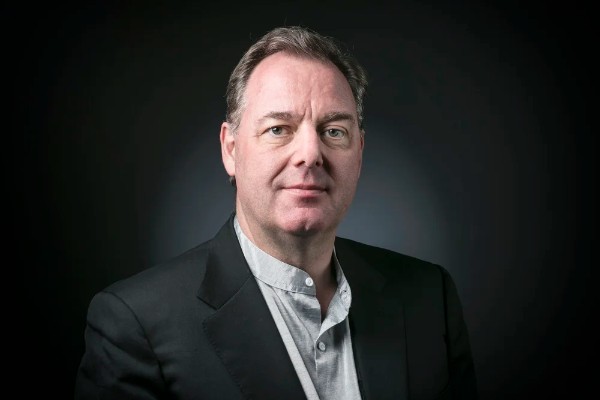
John Thwaites
Pianist John Thwaites has worked with Alexander Baillie for over 40 years and his performance on this recording reflects his long experience in music of the Romantic era, particularly Brahms.
The recording puts together music of utter beauty and charm, some clearly part of the Celtic twilight that Bax believed in and others more strongly grounded in his Romantic training.
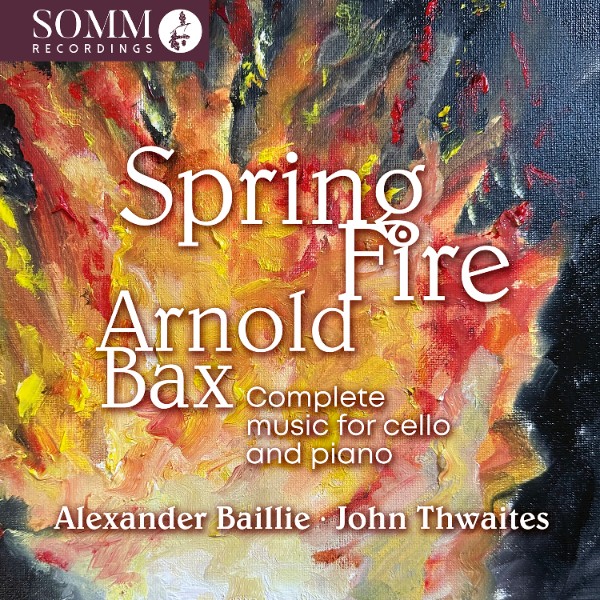
Spring Fire: Arnold Bax: Complete Music for Cello and Piano
Alexander Baillie, cello, and John Thwaites, piano
SOMME Recordings: SOMMCD 0704
Release date: 20 June 2025
Official Website
For more of the best in classical music, sign up for our E-Newsletter