Modest Mussorgsky (1839–1881), a member of the Russian group known as The Mighty Handful or The Five, was part of a circle that came together from 1856 to 1870 to create classical music in a distinctively Russian style. Instead of looking to Germany or France for musical inspiration, The Five thought that Russian poetry, folklore, and melodic gesture were distinct enough to create a national sound. The Five, consisting of Mily Balakirev, Alexander Borodin, César Cui, Modest Mussorgsky, and Nikolai Rimsky-Korsakov, were right in their belief in Russian style. Although the music of Balakirev and Cui no longer figures on most musical stages, Borodin, Mussorgsky, and Rimsky-Korsakov still hold firm places.
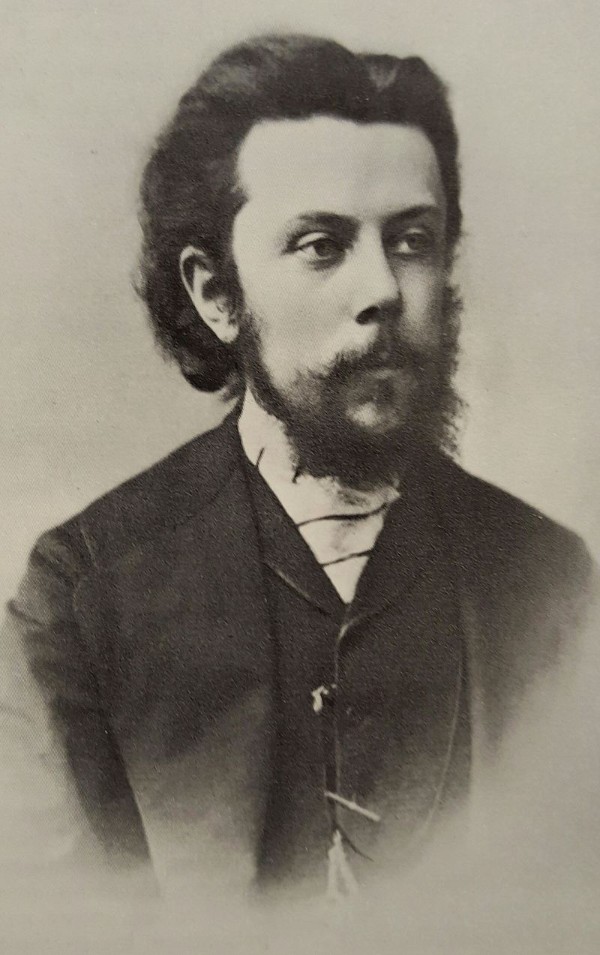
Modest Mussorgsky, 1865
Mussorgsky’s ‘musical picture’, St John’s Eve on Bald Mountain, took the idea of a Witches’ Sabbath happening on Bald Mountain on 23 June, St John’s Eve. It was composed in 1867, and, together with Rimsky-Korsakov’s Sadko, also of 1867, was the first tone poem by a Russian composer.
The work, written when he was just 28, was never performed in his lifetime, although he did reuse parts of it in later works. In 1886, five years after Mussorgsky had died, Rimsky-Korsakov revived the work, making an arrangement he called a ‘fantasy for orchestra’, and it is this version that most people are familiar with. Fifty years after Rimsky-Korsakov made his version, it was used in the animated film Fantasia (1940).
It wasn’t until 1968 that Mussorgsky’s work appeared in its original form, and it is slowly starting to be performed. The nine minutes of Rimsky-Korsakov’s edition become 11 minutes in Mussorgsky’s original, so 30% of the original was chopped by its editor. He sought to draw Mussorgsky back into the 19th-century style he knew, ignoring the innovations in Mussorgsky’s works, which are only now being recognised. This remains Mussorgsky’s great orchestral work, but we need to search out his vision.
Rimsky-Korsakov, though, did a tremendous service to his fellow Five. His dramatic shortening and removal of the ‘tone poem’ designation meant that he could do away with a real storyline and create a work that had a longer life as a fantasy.
St John’s Night (or St John’s Eve) celebrates the birthday of St John the Baptist. It is now commonly celebrated on 24 June, but used to be associated with the Summer Solstice on 21 June.
Mussorgsky, having heard a performance of Liszt’s Dance macabre, used a Russian legend as the basis for his work. Witches are meeting on Bald Mountain (Lysoy Gore), awaiting the arrival of Satan. On his arrival, they circle his throne, singing his praises. Their dance done, the witches wait for Satan to start their Sabbath, when he will choose his companion. It all ends when dawn signals the start of St John’s Day.
Modest Mussorgsky: St John’s Eve on Bald Mountain
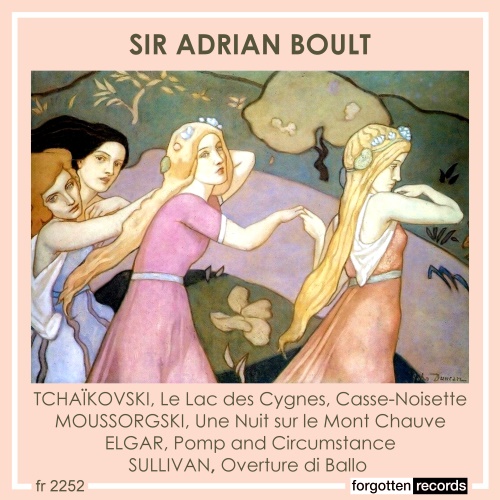
This recording was made in July 1960 at Kingsway Hall in London, with Adrian Boult conducting the New Symphony Orchestra. This orchestra was founded around 1948 to play on Decca recordings until about 1964.
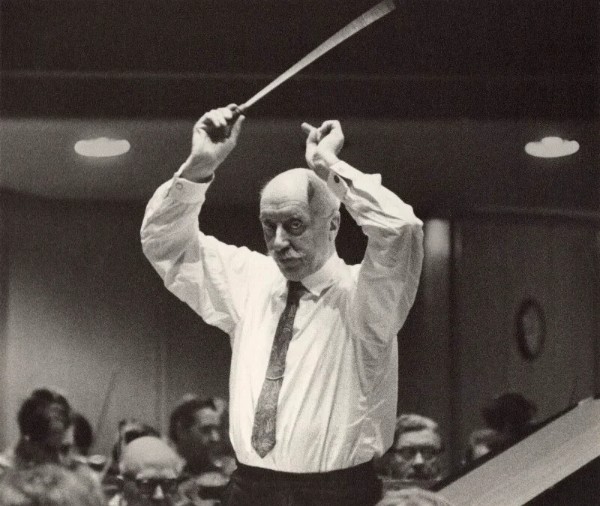
Adrian Boult
British conductor Adrian Boult (1889–1983) studied music in England and Leipzig and worked for both the Royal Opera House and for Sergei Diaghilev. He became conductor of the City of Birmingham Orchestra in 1924, but in 1930 became director of music for the BBC and founded their first orchestra. They were quickly considered one of the finest orchestras in Britain. Upon his retirement from the BBC in 1950, he became principal conductor of the other best English orchestra, the London Philharmonic, bringing them back up to the high standard they had held in the 1930s. He conducted them until 1978, despite retiring from conducting the LPO in 1957.
Performed by
Sir Adrian Boult
New Symphony Orchestra of London
Recorded in
1961
Official Website
For more of the best in classical music, sign up for our E-Newsletter