Jo Su-gyeong, better known in musical circles as Sumi Jo, was praised by conductor Herbert von Karajan as “a voice from above, and the best gift God has given.” Growing up, she idolised Herbert von Karajan, and she once jokingly suggested that she was closer to a poster of Karajan hanging in her tiny room than she was to her parents.
Born on 22 November in Changwon, Korea, Sumi Jo would go on to establish an international career and become one of the most celebrated coloratura sopranos of her generation.
To celebrate her birthday, let’s revisit the story of how a young singer’s admiration for Herbert von Karajan became an extraordinary musical encounter.
Sumi Jo sings Glière: Concerto for Coloratura and Orchestra
From Seoul to Italy
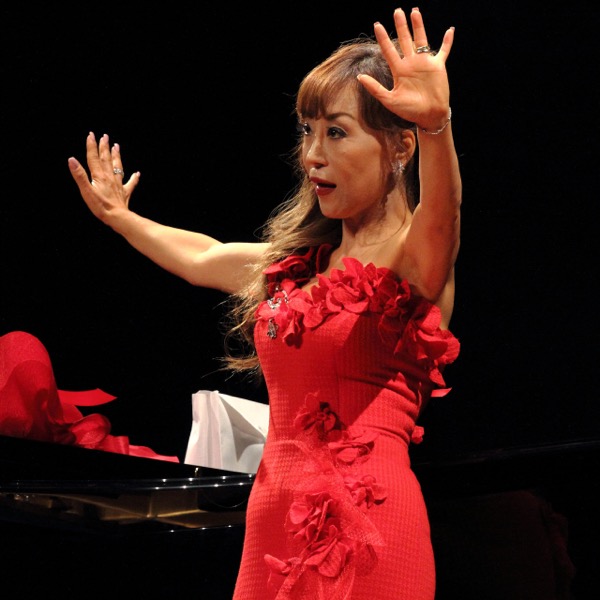
Sumi Jo
As a teenager, Sumi Jo admired all kinds of musical styles from around the world. As she explained, music is never about genres. She admired “even traditional music from the Middle East, South Asia, and Africa. By immersing myself in these various sounds and rhythms, I was able to be in touch with a wide range of cultures and artistries.”
Sumi Jo left for Italy after her first year at Seoul National University. She didn’t speak a word of Italian, but was immediately commended for her good Italian pronunciation and the fact that she seemed a natural bel canto singer.
Sumi Jo sings Donizetti: Linda di Chamounix, “O luce di quest’anima”
Meeting the Maestro
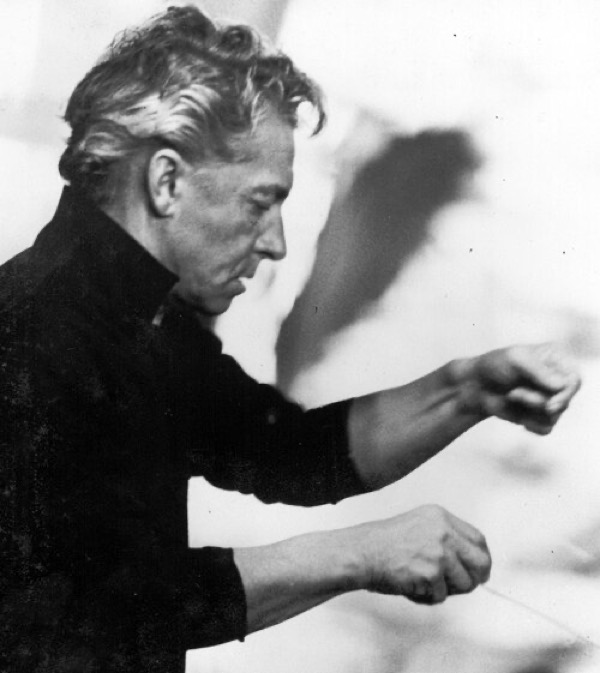
Herbert von Karajan
Sumi Jo recalled that she first met Karajan at an audition in 1986. “I think he had the sharpest and the most powerful gaze in the entire world. However, even such a gaze was softened at my presence. It all happened within the first minutes of our initial encounter.”
“So when I finally met the maestro in the flesh, I didn’t feel nervous whatsoever. I even touched his white hair and saw him up close to see if he was truly like the person from my old room’s photograph.”
Sumi Jo sings Rossini: Il Barbiere di Siviglia, “Una voce poco fa”
A Childhood Idol
Sumi Jo continued, “I was 22 or 23 when this meeting happened; I was young and fearless. I didn’t know anything about the world. Given my sociable personality, I rarely felt intimidated by people anyway. I think one way or another, Karajan took a great liking to me.”
While Sumi Jo remembers this meeting as having taken place in 1986, other accounts place it in 1987 or 1988, during auditions for the Salzburg Festival. In any event, Karajan was impressed, indeed, and immediately decided to include her in his cast for a recording of Un ballo in maschera.
Sumi Jo was cast as “Oscar,” the King’s young page, a role written for a coloratura soprano. Working alongside some of the most prominent singers of the period, she took part in the studio recording for Deutsche Grammophon, which took place in Vienna.
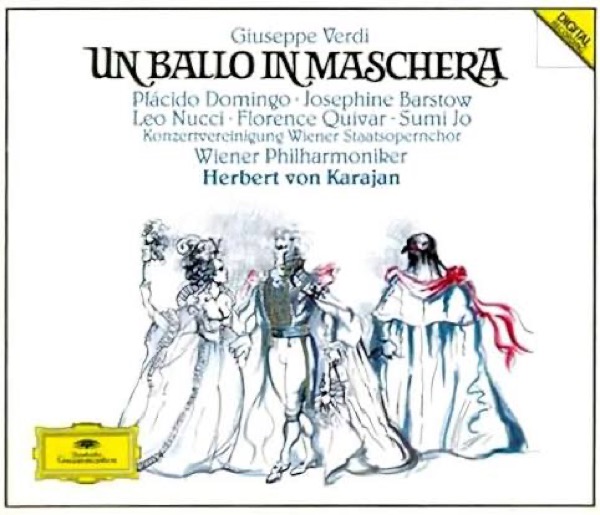
Sumi Jo and Herbert von Karajan, Un ballo in maschera
Sumi Jo sings Strauss: Ariadne auf Naxos, “Großmächtige Prinzessin…”
Knowing Her Own Voice
Apparently, Sumi Jo declined a request from Karajan to record Norma with him. Jo was worried about straining her voice, but Karajan apparently told her that her voice could be slightly enhanced using technology.
She recalls feeling uneasy about the modifications, “so I eventually had to tell the maestro my honest opinion. Still to this day, I cannot sing the lead in Norma… I am very careful about these things. Looking back at the 50 or so recordings I have made, I have never used technology to sing something I couldn’t naturally produce myself.”

Sumi Jo
Sumi Jo sings Puccini: Gianni Schicchi, “O mio babbino caro”
Lasting Echo
Sadly, Un ballo in maschera would be Karajan’s final opera recording. It was intended to accompany a new Salzburg Festival production, and Karajan planned to conduct the production himself.
He even attended a rehearsal on 15 July 1989, but died the following day at his home in Anif, near Salzburg. Sir Georg Solti took over the musical direction, and Sumi Jo recalls that her Salzburg debut “was a great joy, but at the same time a sad experience. I had to hold back the tears as I sang.”
In a 2013 interview for Korea.net, Sumi Jo concluded: “Stepping back to reflect on all these things, I think the relation between him and me was special.” And we are fortunate that we can still experience live performances by Sumi Jo. 2026 marks the 40th anniversary of her international career, and we are fortunate still to be able to listen to the voice that so impressed Herbert von Karajan.
For more of the best in classical music, sign up for our E-Newsletter