Sometimes, being too modest can work against you. In the case of Count Unico Wilhelm van Wassenaer (1692–1766), his refusal to put his name on his six Concerti armonici, published in 1740, has led to centuries of confusion about who composed them.
The works are for string and basso continuo and have been so popular that they have very rarely been out of print.
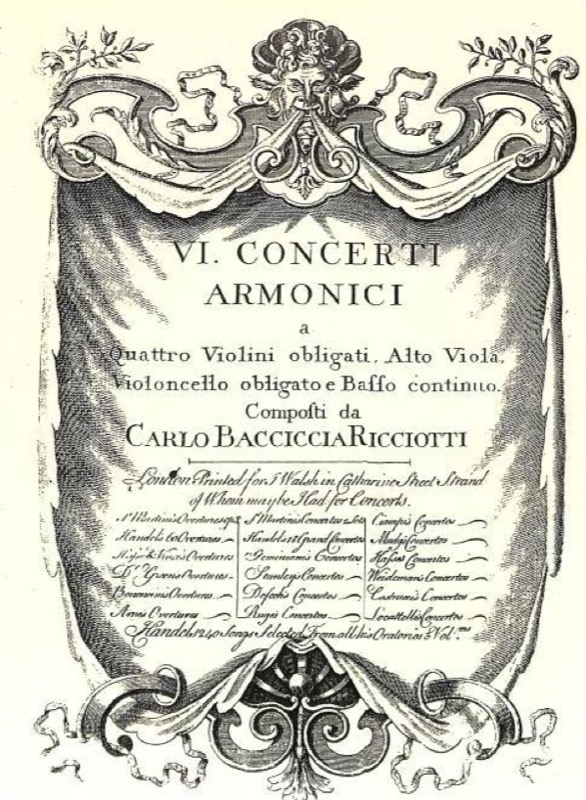
Title page of the VI Concerti armonici, 1740
The Concerti were first printed in The Hague by the Italian violinist Carlo Ricciotti (1681–1756), dedicated to Count Willem van Bentinck (1704–74), a distinguished Anglo-Dutch musical amateur. Ricciotti directed a French opera company in The Hague. Ricciotti and Bentinck were also part of a musical society that included the composer of the Concerti.
Unico Wilhelm van Wassenaer: Concerto Armonico No. 1 in G Major: II. Allegro (Innovation Chamber Ensemble; Richard Jenkinson, cond.)
Because the dedication is confusing, scholars have assumed the original author was the publisher, Ricciotti. Over the following decades, other composers, including Handel, J. A. Birkenstock, Fortunato Chelleri, and Willem de Fesch, were proposed. Still, the most popular choice was the Italian Baroque master Giovanni Battista Pergolesi (1710–1736). The amount of music [mis] attributed to Pergolesi would be a problem for musicologists for centuries.
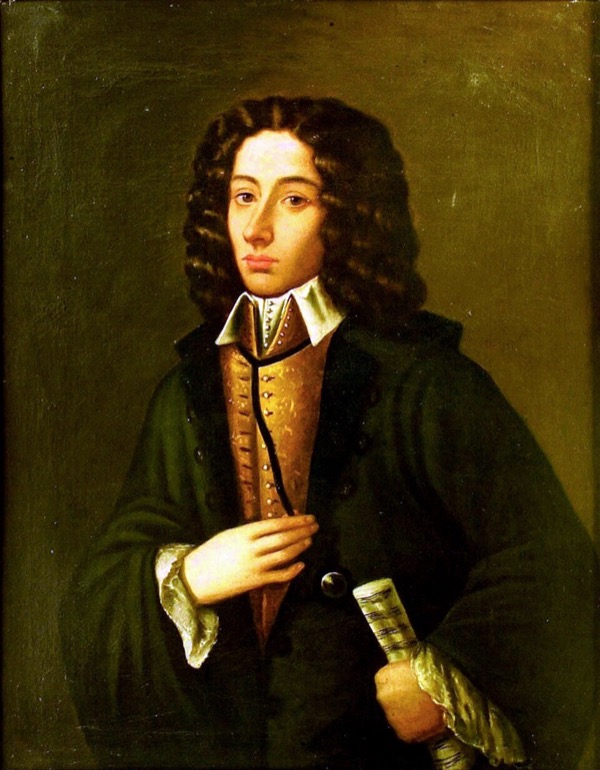
Domenico Antonio Vaccaro: Giovanni Battista Pergolesi (Museo Storico Musicale del Conservatorio Di Musica San Pietro A Majella)
The elements that made Pergolesi seem like the perfect composer were that the music, though published in the Netherlands, was Roman in style, with four violins (rather than the Vivaldian/Venetian style of three violins), and that its texture matched the Italian style of Corelli and Locatelli. In addition, the music quoted the Roman composer Palestrina.
Pergolesi’s identification as the author was so complete that the Concerti were published as part of his complete works. Because it was given authority as part of the complete works, the Concerti remained popular through the 19th century, and Igor Stravinsky used one movement for his neo-classical ballet, Pulcinella. Declaring Pulcinella as being ‘after Pergolesi’, Stravinsky used the third movement from the Concerto No. 2 as his ‘Tarantella’.
Igor Stravinsky: Pulcinella: Allegro alla breve – Tarantella (Seattle Symphony Orchestra; Gerard Schwarz, cond.)
Unico Wilhelm van Wassenaer: Concerto Armonico No. 2 in B-Flat Major: III. Largo affettuoso (Amsterdam Baroque Orchestra; Ton Koopman, cond.)
After all this misdirection, who composed this beloved set of Concerti? It took nearly 240 years to discover that the composer was not Pergolesi (or any other likely suspect) but Count Unico Wilhelm van Wassenaer (1692–1766). It is thought that he hid his identity not because he was a nobody, but because he was someone. His grandfather was Jacob van Wassenaer Obdam, supreme commander of the Dutch fleet in the Second Anglo-Dutch War, and his father was a general who served under Marlborough in the War of the Spanish Succession.
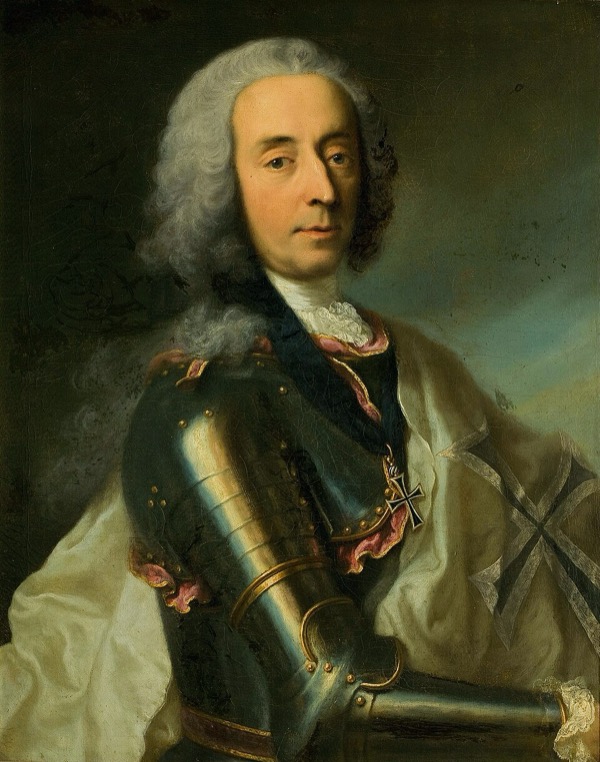
Georg Desmarées: Unico Wilhelm van Wassenaer Obdam, 1745
Unico studied law and worked in government, serving in diplomatic, military, and business posts. When he was young, he took the obligatory Grand Tour, visiting Germany, France, and perhaps Italy from 1717 to 1718. His musical skills were recognised even as he served as a member of the Dutch Admiralty and a Director of the East India Company.
Unico Wilhelm van Wassenaer: Concerto Armonico No. 3 in A Major: I. Grave sostenuto da capella: Canone di Palestrina – Adagio e forte (Amsterdam Baroque Orchestra; Ton Koopman, cond.)
In 1979, Dutch musicologist Albert Dunning spoke with colleagues in art history who told him about music manuscripts they had recently seen. Following their lead, Dunning examined these musical manuscripts at Twickel Castle in the Netherlands, the seat of the van Wassenaer family. What he discovered was not only a manuscript of the concerti but also a handwritten preface by Unico that proved his authorship and told how the works came to be published. Finally, a definitive identification of the composer!
Wassenaer wrote in his preface:
These concertos were composed at different times between 1725 and 1740. When they were ready, I took them along to the musical gathering organised in The Hague by Mr Bentinck, myself and some foreign gentlemen. Ricciotti played the first violin. Afterwards I allowed him to make a copy of the concertos. When all six were ready, he asked permission to have them engraved. Upon my refusal he enlisted the aid of Mr Bentinck, to whose strong representations I finally acquiesced, on condition that my name did not appear anywhere on the copy and that he put his name to it, as he did. Mr Bentinck wanted to dedicate them to me; I refused absolutely, after which he told Ricciotti to dedicate them to him. In this way these concertos were published against my wishes. Some of them are tolerable, some middling, others wretched. Had they not been published, I would perhaps have corrected their mistakes, but other business has left me no leisure to amuse myself with them, and I would have caused their editor offence.
It’s not really certain why Wassenaer fought identification with the works. Perhaps a gentleman of his standing wouldn’t associate with a commercial enterprise, or he knew the works could have used some correction. In any case, Ricciotti and Wassenaer’s performance at their musical society convinced Ricciotti to print the works.
Unico Wilhelm van Wassenaer: Concerto Armonico No. 5 in F Minor: IV. A tempo giusto (Amsterdam Baroque Orchestra; Ton Koopman, cond.)
Dunning brought out his new edition of the Concerti in 2003, based on the newly found manuscript, and this has brought renewed interest in these works, which were misidentified for so long. Wassenaer emerges as a composer who incorporated the new styles and techniques of his time into his music. The pieces blend early- and late-Baroque idioms, and, in some ways, look forward to the new Galant style. The string instruments are expertly handled. Although the first and second violins get most of the action, Wassenaer doesn’t shy away from true 7-part writing (4 violins, viola, cello, and bass), with each voice having its own authority. He includes fugues, canons, and even quotations from one of the most distinguished Roman composers, Giovanni Pierluigi da Palestrina, in both the 3rd and 5th concerti. The 5th Concerto also has an unusual movement done with muted strings.
As an example of a movement that blends Baroque and Galant style, consider the third movement of Concerto No. 4.
Unico Wilhelm van Wassenaer: Concerto Armonico No. 4: Largo affettuoso (Aradia Ensemble; Kevin Mallon, cond.)
In the first Concerto, Unico includes a cello obbligato part, highlighting its dark, rich sound.
Unico Wilhelm van Wassenaer: Concerto Armonico No. 1: Un poco andante (Aradia Ensemble; Kevin Mallon, cond.)
The Concerti weren’t Wassenaer’s only works; some recorder sonatas were (re)discovered and published in the 1990s, and they also serve to reinforce Wassenaer’s unique voice.
Unico Wilhelm van Wassenaer: Recorder Sonata No. 3: IV. Giga: Presto (Erik Bosgraaf, recorder; Francesco Corti, harpsichord)
The rediscovery of the authorship of a loved piece of music 239 years later is astonishing enough. Discovering a statement about the composer’s participation in Amsterdam’s musical life was another treat, giving us a unique view into the life of an 18th-century diplomat.
For more of the best in classical music, sign up for our E-Newsletter