‘We have to constantly stay curious’
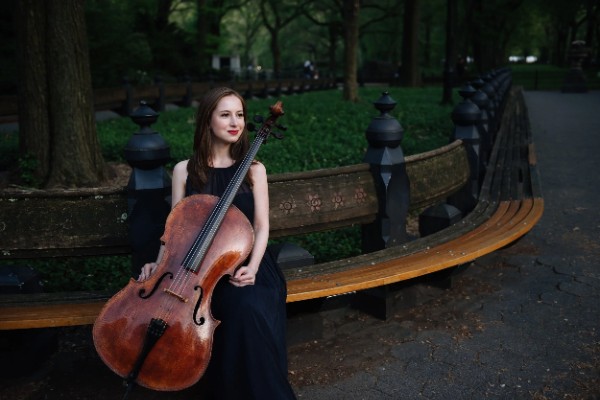
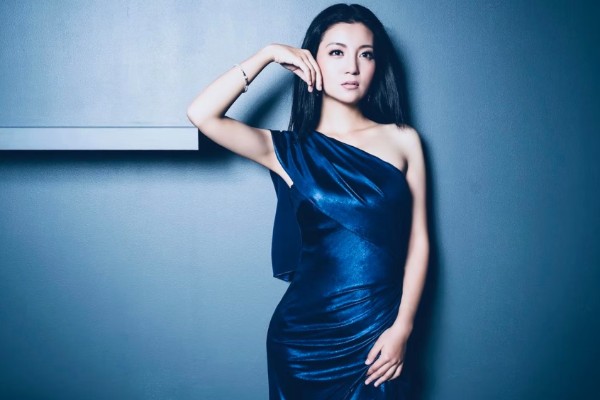
Juliette Herlin © Jiyang Chen
Contrast and exploration define the work of French cellist Juliette Herlin. Hailing from Paris and now based in Texas, a thriving teaching practice alongside a demanding calendar of performance engagements, diving wholeheartedly into music from the past and the present: it is clear that a bold musical curiosity is at the heart of everything she does.
Juliette is a member of the Aletheia piano trio with pianist Fei-Fei and violinist Francesca dePasquale, a group equally committed to contemporary commissions as to older works from the repertoire. The ensemble was formed when Juliette moved to the US to study almost 15 years ago, and she has been there ever since.
Growing up with a pianist mother and musicologist father meant that music was very much a part of Juliette’s life from the beginning. Her father, Denis Herlin, is editor-in-chief of the Œuvres complètes de Claude Debussy, and the music of Debussy features heavily in Juliette’s debut album with duo partner Kevin Ahfat. Dialogue casts a new perspective on Debussy’s music by pairing it with a composer not often associated with the impressionist master: Robert Schumann. The album received international attention, including features in The Strad and Gramophone magazines, and a second solo project is underway as we speak.
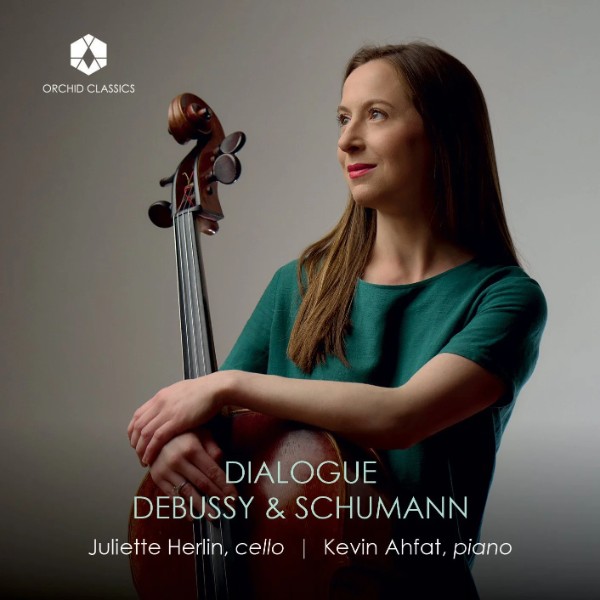
Juliette was recently appointed Assistant Professor of Cello at the School of Music at Texas Christian University, and has been building up a teaching studio in Fort Worth, where the department is based. Balance comes up a lot in our conversation: not just the balance between work and life, but also the symbiotic relationships that emerge from teaching and performing, and the balance and contrast that arise out of the exploration of Debussy and Schumann on her album.
How did you find your way to the States?
I was studying at the Paris Conservatoire, and they had a partnership with the University of Michigan, where [the cello professor] Richard Aaron was teaching. He came to give a class in Paris, and I really connected with him, and so I decided for my last year of masters at the time that I wanted to go abroad and see something different.
I first came to the US as an exchange student, and towards the end of my masters, I decided that I wanted to stay in the US. I went to Juilliard, kept studying, made my trio there, and then I decided that I really wanted to stay here. The trio was doing well, we had some nice opportunities, and I also met my husband here, so that played a part!
One thing led to another, and now it’s been 14 years since I came here.
Congratulations on your appointment as Assistant Professor of Cello at TCU’s School of Music. How are you finding living and working in Texas?
The professorship in Texas is a fairly recent thing, but I’ve been really enjoying teaching here and building my studio.
There is a strong cultural identity in Texas, the cowboy boots, all of that – it’s very different to growing up in Paris! The people have been very nice here. I feel very happy and fortunate to be given that support to build a studio here, at a very supportive university and with supportive colleagues.
The city of Fort Worth is actually one of the fastest-growing in the US. It’s very vibrant for the size of the city. We have a lot of great museums, great dining… a lot of big-city things in a small city!
Your roots are European, and also incredibly musical. How was it growing up around so much music at home?
My mother is a pianist and was teaching chamber music at the conservatoire, and my grandmother was a violinist, so we were very much a musical family! My sister used to play the violin, so we played a lot of chamber music early on.
I love chamber music, it’s probably my favourite thing in the world. I love collaborating with others, whether it’s with my trio now, my duo with Kevin [Ahfat], or other bigger ensembles as well. Chamber music was really part of my upbringing, so I really cherish those memories. I was born into it, loved it, and developed with it.
Did you always know you wanted to play the cello specifically, or did you start on a different instrument?
I think there was an influence of the ‘family trio’ – there was already a piano and violin, so the cello made sense, but I also loved the sound of the cello, and the register, the range. The cello seemed so unique, and it had the versatility – being able to play a beautiful bass line of a Haydn quartet and then playing a solo concerto.
I think that versatility, all those different roles that the cello could play, appealed to me. I did play other instruments, but the cello always had my heart.
Did you always know you wanted to be a musician?
Grittani Creative LTD
I think I always sort of knew. I went to a specialist music school as a child, and I think that solidified things. As a child, I may have wanted to be something else, like an archaeologist or something, but very soon after I started doing music more seriously, it kind of always felt like my path.
With that knowledge that I wanted music to be my profession, teaching then came into the equation, and that’s something that I really enjoy so much. I enjoy performing and trying to find my voice within that, and what I like to do within that, but I always tell my students that when I perform, it nourishes my teaching, and when I teach, it informs my practice.
I see these things as being very much complementary. I always knew I wanted to do music, and as I matured and grew, I think what it entails became more refined. The things that resonated with me took a different shape.
What were the things that changed for you during that process?
Experiencing chamber music and loving that, and then starting teaching, which I wasn’t doing as much of, definitely transformed into something.
It was especially during the Covid years when all my concerts got cancelled. I was already teaching a smaller studio and enjoying that, but that’s when I did a lot more teaching. I was thinking, ‘Ok, if I can actually enjoy teaching a wide range of levels for a lot of hours per week, all on Zoom, then I want it to be part of my career, to have that complementarity to my performing.’
Teaching was always something I wanted to do. I felt a lot of satisfaction whenever I was at the point of helping someone on their journey, getting inspired by that, and reflecting on my own playing and practice.
I think that year of the pandemic, when almost no performing was possible, moved the teaching aspect of my career forward. Now, I love having both hand in hand, and I feel very balanced that way. I think nowadays I couldn’t just do teaching or just do performing. Doing both nourishes my creativity, and I love that balance.
It was the perfect way into it, with that year to reflect and affirm that desire to pursue teaching more seriously. Having the teaching job has helped me to take on projects that I’m really passionate about in the long term. I can think a little less in the short term and focus on projects that I really want to do and that speak to me, and I think having that stability has helped me look at things that are more long-term and personal.
Rêverie for Cello and Piano (Claude Debussy) | Juliette Herlin & Kevin Ahfat
The album seems to be one such long-term and personal project. Can you tell us more about it?
As you can imagine, a first album is something you think about a lot. I think it could’ve gone in a lot of different directions. I was reflecting on which composers have stayed with me and who I’d always felt a connection to since very early on, which narrowed down to Debussy and Schumann. I was 20 when I left France, and I think the album has helped me to reconnect with my European roots.
My father’s work as a musicologist specialises in Debussy’s music. He published all the letters and headed the critical editions, so that aspect, plus the French quality of the music, really spoke to me.
I wanted to go back to things that have been with me and stayed with me for a long time. I’ve played the Debussy sonata a lot – I think it’s full of humour, elegance, beauty, and that was the cornerstone of the album.
I’ve always liked that singing quality of the cello. I don’t want to go into the cliché of the cello being the closest sound to the human voice, but there is that sort of lyricism that resonates with what I like to play and how I play.
Not a lot of people associate Debussy with Schumann, but to me, there were commonalities that I wanted to explore and that I wanted to perhaps surprise listeners with. They come from very different traditions, of course – Debussy was rejecting that Germanic influence – but I think there are some commonalities.
I love the lyricism in Schumann, the romantic quality, but also some of the humour and more fiery music. To me, those qualities in the music were complementary, and it’s how I came up with the idea of the dialogue between the two composers.
The world is tricky these days, and I wanted to also offer a moment of beauty with the more dreamlike transcriptions, but together with that humour and sarcasm that’s also present, not just lush music!
I felt that resonated with my artistic identity. It’s not just that, but I think as a first album, I wanted something that reflects what I love, music that really resonates with me. It’s not a novel repertoire – it’s been recorded a lot before – but that pairing had something that could shed light in a different way.
Do you have any ideas brewing for your next recording project?
I do, although I can’t say too much at the moment! It will be another pairing, another focus on two composers and the links between their worlds.
Rita Strohl, Solitude – Juliette Herlin & Michael Bukhman
You do a lot of contemporary collaboration, in addition to having studied baroque cello. Is this variety important to you in your career?
Contemporary composers often look back to baroque music, and I would love to have more of a baroque cello element to my career. I also want to continue working with living composers. There’s an album coming out of the trio I’m in, that features two premiere recordings of living composers; I find that part of my work very interesting and nourishing.
I think [my solo album] was a nice entry into who I am as a cellist and artist, but it’s not just that. I’m excited to show through different projects other things that I love to do and that are important to me.
I have a commissioning project I’m working on for next year to respond to the Beethoven sonatas. I’m commissioning a cello and piano piece that I’m premiering in 2027. That’s a big part of what I love to do, and my musical identity, in a way.
I think not having labels, not saying you specialise in this or that, and playing different repertoire enriches me as an artist. Some people love to dive into one thing, and I respect that, but for me, I get a lot of joy from the diversity. I keep challenging myself as a cellist to approach different repertoire and live through a different experience of the repertoire.
Working with living composers, for example, I find I always learn something. And it also helps when approaching older repertoire to have that collaboration. I find it very enriching, and I always try to find ways to keep nourishing myself as an artist; I think those very projects contribute to that.
I think it’s important to keep searching, to never think, ‘Ok, I know how to do this.’ I think that’s a quest you’re always on, to keep learning, to keep discovering new repertoire, and it just helps us to grow, to not feel that stagnation.
I try to convey to my students that we have to stay constantly curious.
What do you do in your spare time?
I love hiking. My husband and I love being in nature, which was a little easier when we lived in California than in Texas! But I still do a lot of walking daily. If I have an opportunity to do a long hike, that’s one of the first things I do.
I also enjoy cooking – making a good meal feels like home – and spending time with friends and family.
I used to play tennis as a child, but then I had to stop. Now I play pickleball, which is lighter on the arm and is a good way to be with friends, have fun and exercise a bit. I know tennis players hate it, but I think it’s really good fun!
I’m trying to carve more time for myself these days. It’s been so busy, and so I’m trying to balance things a little more.
For more of the best in classical music, sign up for our E-Newsletter