On 18 April 1936, Ottorino Respighi died from an inflammation of the inner layer of the heart in Rome. Respighi lived and worked during tumultuous political times, and his historicist interest in Italian music and the arts made him and his music immediately popular.
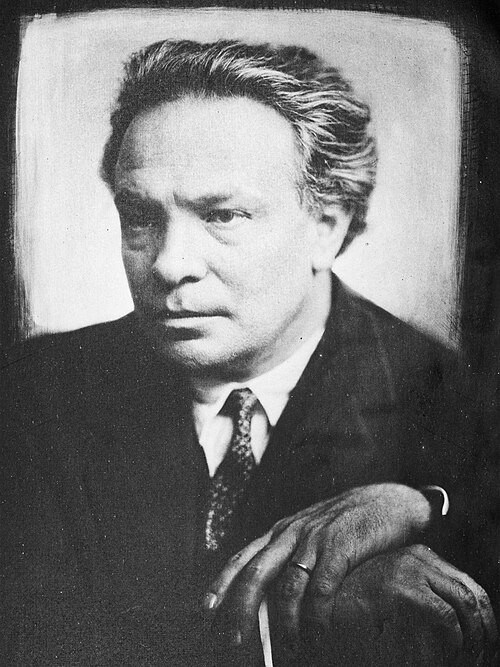
Ottorino Respighi, 1927
Primarily known for his lavishly orchestrated tone poems, Respighi’s music is captivating and easily accessible. His compositions are rich with sweeping melodies and dynamic contrasts, yet they never feel overly complex, inviting listeners into his world with ease.
By the mid-1920s, Respighi had achieved worldwide fame, and he travelled extensively, either conducting his own pieces or performing as a soloist for his piano compositions. As we mark his passing on 18 April, let us travel with Respighi to Brazil.
Ottorino Respighi: Concerto in modo misolidio
Respighi Abroad
Respighi made his first visit to the United States in December 1925 to attend the premiere performance of “The Pines of Rome” at Carnegie Hall. He also attended the world premiere of his “Concerto in modo misolidio,” conducted by Willem Mengelberg.
While his collaboration with Mengelberg was very cordial indeed, his relationship with Toscanini was rather reserved and guarded. Additional stops on this first tour included Philadelphia, Washington, Cleveland, Pittsburgh, and Chicago.
In May 1927, Respighi and his wife, Elsa, made their first visit to South America, including Brazil. He had been asked to conduct a series of concerts of his music, but found it difficult to communicate with an orchestra that was primarily used to accompany opera and zarzuela.
Impressions from Rio
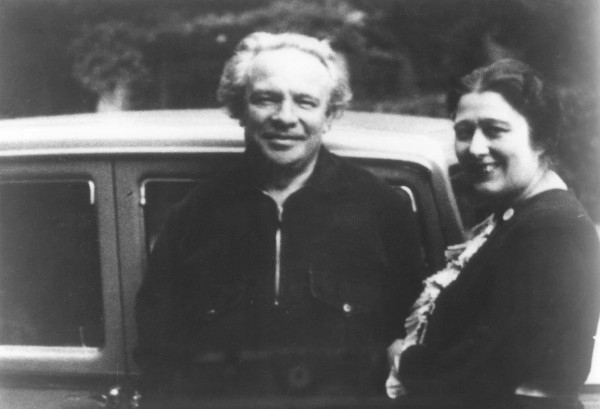
Ottorino Respighi and his wife Elsa
Their visit concluded with a concert in Rio de Janeiro. It was a great success, and Respighi was invited to return the following year. Like Darius Milhaud before him, Respighi had become fascinated with the folk and popular music of Brazil.
As such, he readily accepted a request from the orchestra to compose a “Brazilian Suite” that he would conduct the following year. Respighi promised a five-movement composition, but European obligations interfered, and he managed to sketch only three.
When Respighi returned to Rio in June 1928, he had finalised an orchestral work in three movements entitled “Impressioni brasiliane” (Brazilian Impressions). The work premiered in Rio, where it was apparently warmly received by the audience.
Ottorino Respighi: Impressioni brasiliane (Brazilian Impressions), P. 153 – No. 1. Notte Tropicale (Tropical Night) (London Symphony Orchestra; Antal Doráti, cond.)
First Impression
The first movement, titled “Notte Tropicale” (Tropical Night), was inspired by themes and rhythms Respighi noted down on journeys between Rio and the Tijuca district of the city with its mountainous tropical forest.
It is a slow and impressionistic nocturne with nostalgic echoes and fragments of Brazilian song. The music remains restrained and evocative, with muted brass and delicate percussion adding subtle colour.
The orchestration emphasises transparency, and there is no strong climax. Rather, after building a sensual atmosphere, the music fades, leaving an impression of a quiet night filled with exotic sounds.
Ottorino Respighi: Impressioni brasiliane (Brazilian Impressions), P. 153 – No. 2. Butantan (In a snake-garden near Sao Paulo) (London Symphony Orchestra; Antal Doráti, cond.)
The Snake Institute
The second movement is titled “Butantan,” which indicates a district in the city of São Paulo, and the Butantan Reptile Institute, a biomedical research facility used to collect snake serum.
The institute housed roughly 80,000 snakes, and it soon became a tourist attraction. Respighi visited the site, and according to his wife, found the sight of thousands of snakes extremely disturbing.
Respighi’s music graphically depicts these creatures with squeaking and crawling woodwinds, and the score is marked “slitheringly.” The whirring of the rattlesnakes was reproduced by a tambourine played with side-drum sticks. There is also a quotation of the “Dies Irae” from the Mass for the Dead, which hints at the traumatic experience.
Carnival Colours
The concluding “Canzone e Danza” paints a picture of a colourful street festival featuring dance tunes Respighi heard in Rio de Janeiro. A notable feature is Respighi’s use of the piano in the orchestra to provide the sound of chiming bells.
We find plenty of popular Brazilian tunes, but the ending returns to the nostalgic mood of the opening movement. To be sure, Respighi approached unfamiliar musical landscapes with curiosity and imagination.
The “Brazilian Impressions” capture a distinct mood and form a richly coloured portrait of Brazil. While audiences responded warmly, critics discovered little structural depth and little of the originality of his Roman tone poems.
For more of the best in classical music, sign up for our E-Newsletter
Ottorino Respighi: Impressioni brasiliane (Brazilian Impressions), P. 153 – No. 3. Canzone e Danza (Song and Dance) (London Symphony Orchestra; Antal Doráti, cond.)