3/4 is an interdisciplinary reimagining of Maurice Ravel’s La Valse for piano four hands, conceived and led by the Bose–Pastor Duo. In collaboration with choreographer Julio Arozarena and video artist Baptiste Leydecker, the project explores the score through the literary lens of Edgar Allan Poe, particularly his concept of the “Unity of Effect.” Combining live performance, choreography, and film, 3/4 seeks to create a deeper, multisensory engagement with Ravel’s work while revealing what the duo perceives as its urgent contemporary resonance.
La Valse, transcription for piano four-hands by Lucien Garban – Maurice Ravel
For pianists Pia Bose and Antonio Pastor, the project emerged from artistic restlessness rather than from a desire to experiment with multimedia. They had performed La Valse many times, and the work had become central to their four-hand repertoire. Yet despite repeated performances, including an appearance at the inaugural Roser Piano and Keyboard Alum Series at the University of Colorado at Boulder in 2023, they felt something essential remained elusive. “We felt our interpretation had yet to reach the work’s true core,” they explain. That dissatisfaction became the catalyst for 3/4.
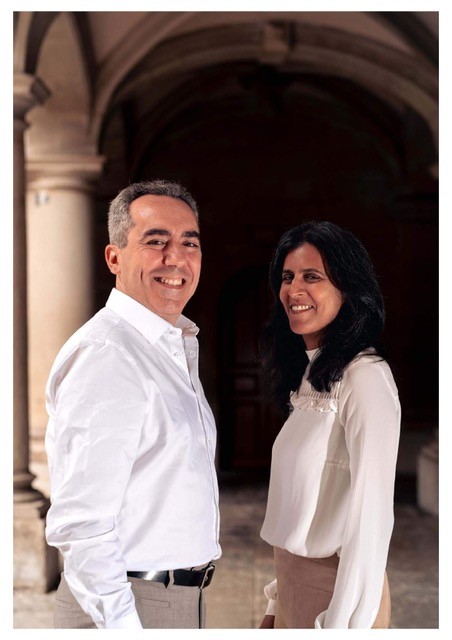
Bose–Pastor Duo © Arsène Gaillard
Their partnership itself was forged under pressure. Although they developed “a shared musical identity” while studying in Switzerland under Dominique Weber at the Haute École de Musique de Lausanne (site Sion), they did not perform together until years later in Colorado. In 2009, their professor, Andrew Cooperstock, unexpectedly invited them to perform at the George Crumb at 80 Festival with only days to prepare. “Navigating the challenges of four-hand piano playing under such exhilarating pressure revealed an immediate musical rapport,” they recall. By 2012, they had officially formed the Bose–Pastor Duo, and in 2013, winning Second Prize at the International Piano Duo Competition in Tokyo marked “the start of our regular concert career.” That history of trust and intensity laid the foundation for the artistic risks embodied in 3/4.
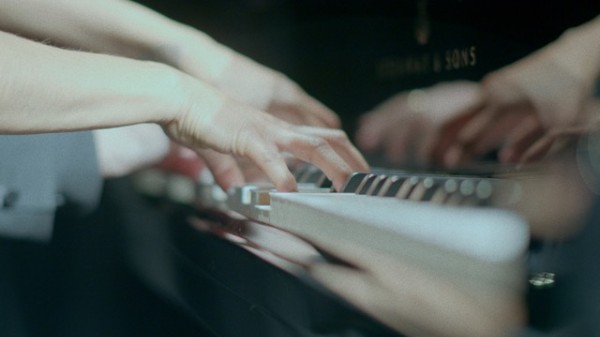
The decisive turning point came when they discovered Ravel’s documented admiration for Edgar Allan Poe. “Viewing the score through his ‘Unity of Effect’ revealed a meticulous intensification that redefined our perspective,” they explain. Through Poe’s principle that every element must contribute to a single cumulative emotional impact, they began to experience La Valse not merely as a waltz unraveling into chaos, but as a carefully constructed escalation. What once seemed like a gradual collapse revealed itself as deliberate inevitability.
“The collaboration for 3/4 was born from artistic necessity,” they emphasise. They were not seeking visual embellishment. They were searching for a way to embody the music’s psychological and structural intensity.
Working with choreography broadened their interpretive framework. “As pianists, we are trained to use the score, sound, rhythm, harmony, and structure as the basis for interpretation,” they explain. As four-hand pianists, they are used to achieving this through “complex coordination within the compact space of a single instrument.” What surprised them most during the project was “our capacity to adapt to a shared space beyond our intimate duo dialogue, shifting toward a more expansive and visceral approach.” The collaboration required them “to confront the music within a physical, moving environment that shaped the emotional landscape.”
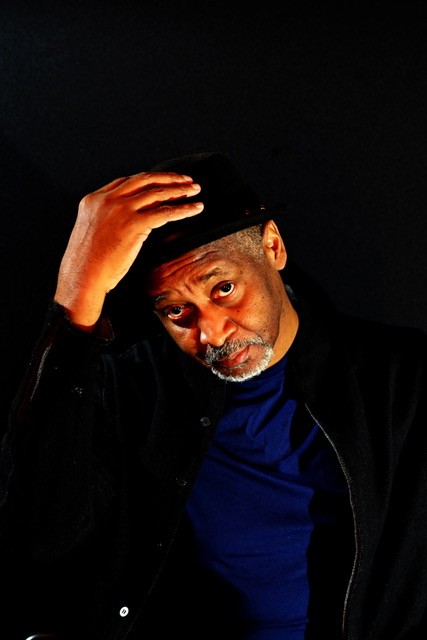
Julio Arozarena © Georges Braunschweig
Choreographer Julio Arozarena describes his decision to join the project as immediate. “My creative work is often fueled by the interplay between different art forms,” he explains. Encountering Ravel’s music “performed so magnificently by the Bose-Pastor Duo” and engaging with the developing visual concept were decisive. They gave him “the momentum to commit without a moment’s hesitation.” For him, the presence of live music was essential. “A live performance establishes a genuine bond between all the artists involved,” he says. It opens the door “to the unforeseen, the unexpected, and sometimes even the miraculous.” That unpredictability enriched the choreography and deepened the shared artistic risk.
The most transformative moment for the duo occurred during filming. “Being physically part of the choreography, as the video captured the whirling dualities of elegance and devastation, of calm and chaos, was incredibly intense.” Standing at the center while dancers moved around them with piercing eye contact created a visceral experience. “We felt we were absorbing the aftermath of the music’s volatility.” Coupled with the visual dimension, this reshaped how they heard the climax, revealing “a relentless, feverish energy that made the music and movement feel inseparable.”
Throughout the process, the music remained central. “Our interpretation of the score did not necessarily adapt to the movement; instead, it served as the unwavering anchor for the entire collaboration.” The dancers and visuals responded to the score, yet simultaneously “intensified the emotional landscape.” This synergy allowed them “to reach the raw, haunting core of the work,” pushing the performance beyond traditional concert boundaries.
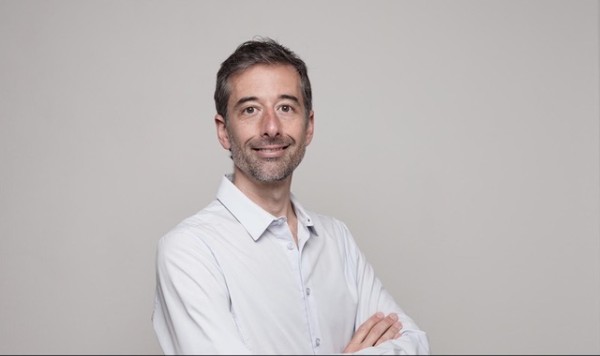
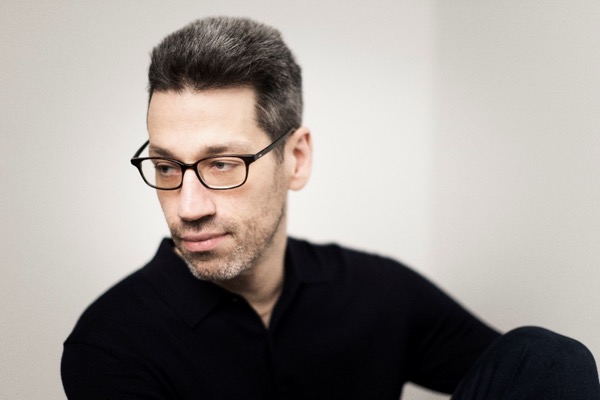
Baptiste Leydecker
For video artist Baptiste Leydecker, the collaboration began with what he calls “first and foremost, the human connection.” From his earliest exchanges with the duo, he was “captivated by their passion and enthusiasm.” Their “in-depth study of La Valse” and desire to illuminate the link between Ravel and Poe triggered “a very rich and intense visual universe.” He was particularly drawn to the nature of four-hand performance itself. “A piece played by four hands is captivating; it raises questions about the symbiotic relationship it demands: two artists simultaneously committing their sensitivity and talent to a single instrument.” Capturing that connection became central to his visual approach.
Technically, the process demanded extraordinary discipline from the pianists. “Particular attention was paid to the fidelity between the live performance and the studio master audio recorded beforehand,” Leydecker explains. Although the final result resembles a multi-camera broadcast, it was filmed with a single camera, requiring multiple successive takes. One of the greatest challenges for the duo was “replaying a score that exceeds eleven minutes, several times in a row, with the same level of intensity and precision.” It was, he emphasises, “a true performance.”
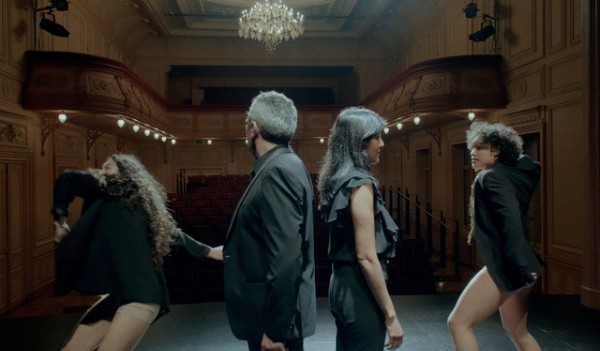
Performing in dialogue with choreography and camera heightened the duo’s sense of accountability. “We felt a deeper need for precision and clarity of intention,” they explain, “knowing that our live physical intensity had to align with our interpretative choices in the recording regarding every nuance of sound, phrasing, rhythm, and articulation.” This responsibility shifted their focus “from the intimate exchange we usually share as a duo toward a bold, outward, artistic statement.”
The impact of 3/4 extended beyond concert venues into the film festival circuit. The project has been selected to participate in the Berlin Lift-Off Online Film Festival, an achievement that highlights its international recognition among short films and video works. In addition, 3/4 was chosen as the Best Music Video at the Athens International Monthly Art Film Festival in Greece, affirming its impact not only as a music performance but as an audiovisual work that resonates across artistic communities.
For the Bose–Pastor Duo, 3/4 represents more than a single interdisciplinary project. It crystallises an evolving artistic philosophy. What began as a search for the true core of La Valse became a redefinition of their performance identity. “Interdisciplinary work has become vital to our mission,” they affirm. Through 3/4, they have not moved away from the piano, but deeper into it, allowing music to remain the unwavering anchor while inviting movement and image to reveal its most intense and haunting dimensions.
To know more about the Bose-Pastor Duo and their project 3/4, visit https://www.bosepastorduo.com.
For more of the best in classical music, sign up for our E-Newsletter