Dutch trombonist, conductor, and composer Johan de Meij (b. 1953) made his international name in 1988 with his first symphony, The Lord of the Rings. Since then, he had gone on to become a noted composer for wind orchestra.
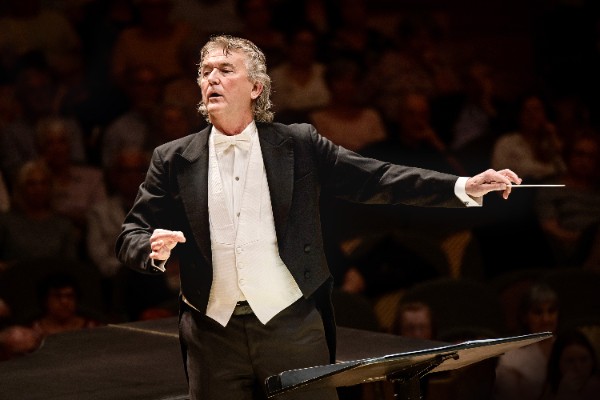
Johan de Meij
In his 1991 work Aquarium, Meij looks into the waters for both common and exotic sea creatures.
He opens with a trio of fish, starting with many people’s first Aquarium fish: the Neon Tetra. A freshwater fish from the streams of the Amazon basin in South America, its brightly coloured stripes make it visible to other tetra, particularly as one of its habitats is the blackwater streams, which are quite acidic. The fish has a light-blue back, a silver-white abdomen and two stripes: one iridescent blue that runs over its back and an iridescent red stripe that runs along its sides. The fish is partially transparent. At night, the blue and red stripes become grey or black as it rests; the colours return in the morning. This response to lighting conditions helps it survive.
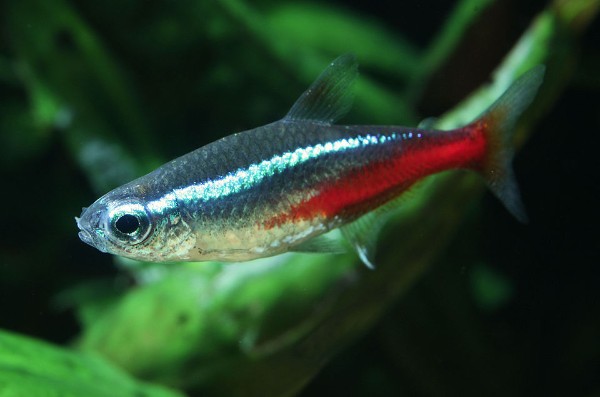
Neon Tetra, Paracheirodon innesi (Photo by Holger Krisp)
The Neon Tetra theme becomes a motive throughout all three movements.
The Electric Eel doesn’t get a theme but rather a rhythm. In some public aquariums, they hook up a speaker to the water around the electric eel so visitors can hear its pulses.
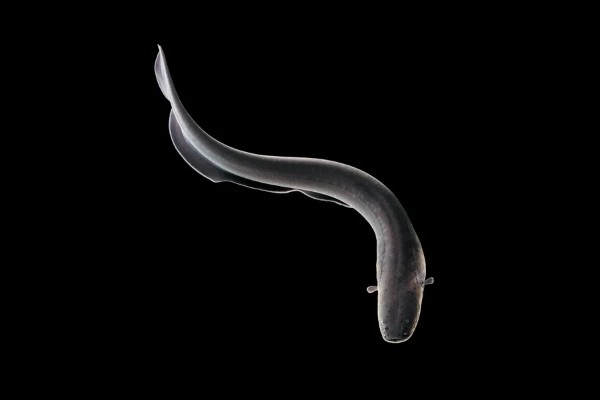
Electric Eel (Photo by David Liittschwager)
The Angelfish is represented with cluster chords as though the body decorations on the fish have become the score.
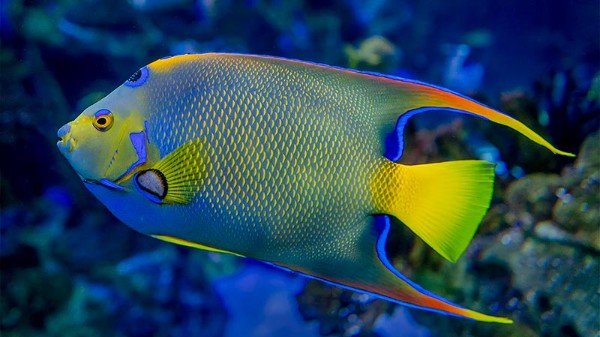
Angelfish
Johan de Meij: Aquarium, Op. 5 – I. Allegretto grazioso (Neon Tetra, Electric Eel and Angelfish) (Lubin Polish National Wind Orchestra; Sebastian Perłowski, cond.)
The second movement starts off with one of the most familiar of sea creatures, the sea horse. Its head and neck resemble those of a horse, aided by the fact that the sea horse is usually upright. It has a curled tail that helps it hold onto vegetation. The earliest sea horses were found in Italy, in the Marecchia River. A kind of pipefish, the sea horse is thought to have become its own species when tectonic events resulted in large bodies of shallow water. The shallow water and sunlight encouraged the growth of seagrass that the sea horse holds with its prehensile tail to hold itself upright.
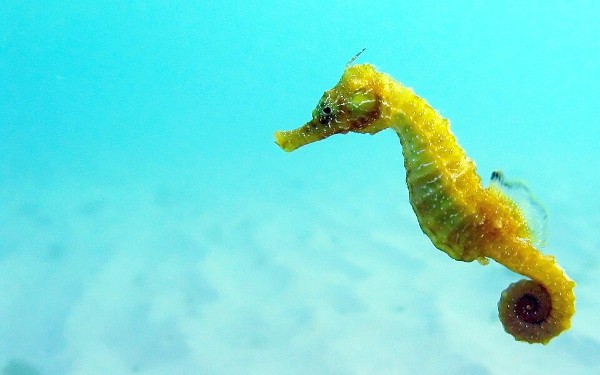
Sea Horse (photo by Florin Dumitrescu)
The Zebrafish is another freshwater fish, this time from South Asia, found in the water of India, Pakistan, Bangladesh, Nepal, and Bhutan. The fish has five uniform blue stripes on the side of its body and is a popular fish in home aquariums.
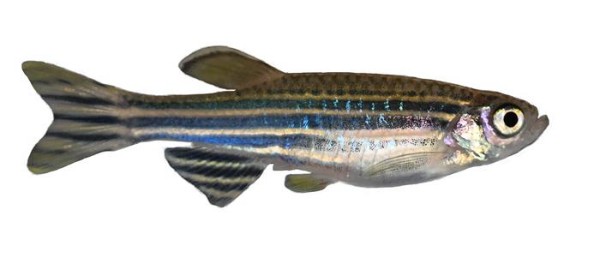
Zebrafish (photo by Yael Noy)
At the beginning, the seahorse peeks out from its seagrass home and starts to talk with the zebrafish. As the movement progresses, the unison zebrafish theme gets more and more menacing.
Johan de Meij: Aquarium, Op. 5 – II. Andante – Adagio (Sea Horse and Zebrafish) (Lubin Polish National Wind Orchestra; Sebastian Perłowski, cond.)
The final movement is about guppies. They come from South America’s northeast corner, and are many home aquariums’ first fish.
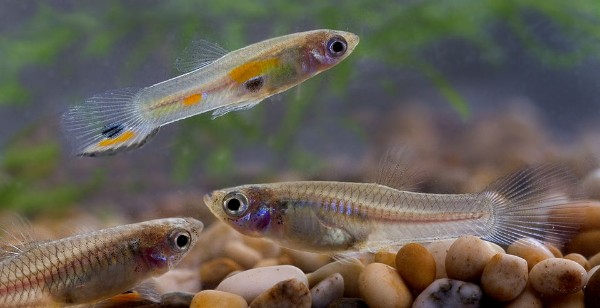
Guppy, Poecilia reticulata (photo by Per Harald Olsen)
Unlike the other fish in Aquarium, guppies come in several different colours and styles, in the picture below, are from the top right, the ribbon mosaic RREA, mosaic chilli, double sword, orange pintail, Moscow red RREA, and cobra snakeskin (top left).
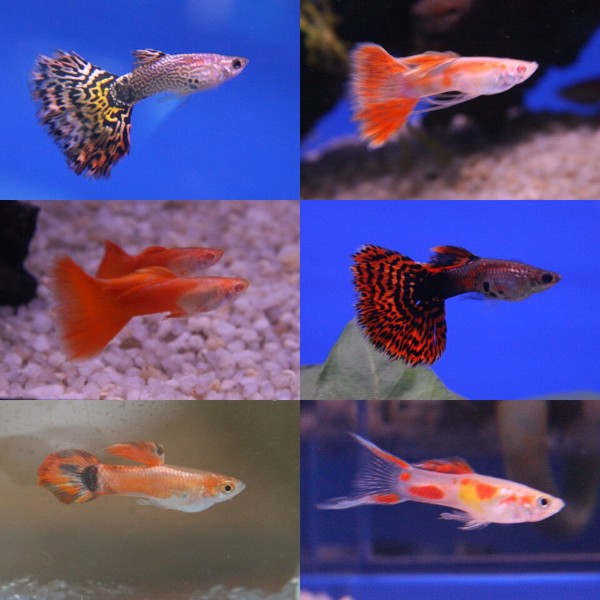
Varieties of guppies (photo by Melanochromis)
The final movement emulates most people’s experience with guppies. It starts with only two instruments (trumpet and xylophone), but then, as more guppies appear, more instruments pile in. The Guppy theme is presented in the piccolo and alto saxophone. As the movement progresses, themes from the earlier themes ‘swim’ by as well.
Johan de Meij: Aquarium, Op. 5 – III. Finale: Allegro giocoso (Guppy and Co.) (Lubin Polish National Wind Orchestra; Sebastian Perłowski, cond.)
Meij has managed to give us individual themes or rhythms for each animal represented and has given them to us with a kind of swinging nautical feel. In the full symphonic sound, this is a far cry from Baby Shark!
For more of the best in classical music, sign up for our E-Newsletter