“It’s so disappointing when you see a bunch of instrumentalists walk on stage and you already know how a piece is going to sound…” Jack Sheen, composer & conductor (interview in VAN magazine)
We live in a visual world, never more so now with platforms like Instagram and TikTok feeding us images in an endless churn. Yet perhaps we forget that we don’t just hear a concert; we also see it. Today, how musicians present themselves is more important than ever. When performers walk onto a stage, the moment is a critical transition that sets the energy for the entire performance.
Jack Sheen: It’s really you strolling by (Kathryn Williams, flute)
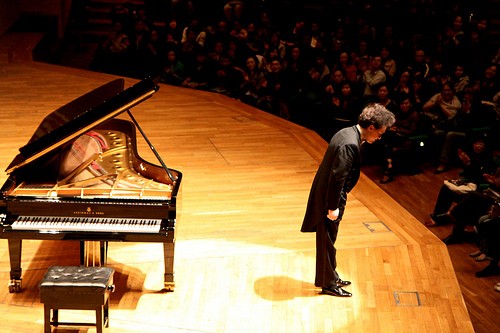
The visual dimension of live musical performance is incredibly significant to the audience’s experience. Before a single note is played, audiences begin forming expectations. From the moment the musicians come onto stage, they are already communicating with the audience. Posture, facial expression, energy, and clothing all speak volumes. So, if performers appear disengaged, rigid, or overly uniform, the audience anticipates a performance that may be equally lifeless or predictable. In contrast, expressive, intentional and confident body language can signal vitality, emotional depth, and interpretive individuality. In both instances, the audience’s expectations are set up before the music begins.
The disappointment referenced in the quote above stems from this sense of predictability: if performers look uninspired, listeners expect uninspired sound. Conversely, confident posture, purposeful movement, and engaged facial expression convey commitment and readiness. The violinist who breathes with a phrase or the pianist whose gestures reflect the arc of the melody communicates intention. These physical cues help bring the music to life and demonstrate that the performer is not merely executing notes but also embodying them, literally.
Franz Schubert: String Trio in B-Flat Major, D. 471 (Kodály Quartet, Ensemble)
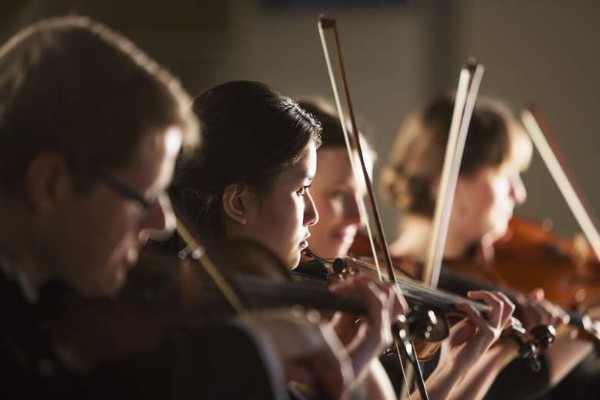
When I was a piano teacher, particularly when preparing students for their exams or other performance events, no matter their age or ability level, I would help them understand the importance of “stagecraft” and “presence”. These were skills which I taught myself when I was preparing for professional performance diplomas in my late 40s, having not had formal conservatoire training, and I learnt a lot by observing performers in concerts. A performer who enters the stage smiling, or at least looking pleased to be there, greets the audience with a bow or a few words to introduce the programme, immediately sets the expectation that the performance will be engaging and enjoyable.
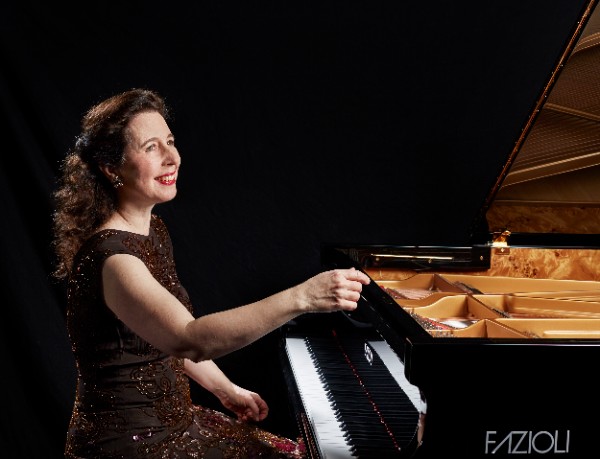
Angela Hewitt © Keith Saunders
One of the best examples of this, in my mind, is the pianist Angela Hewitt. With her broad smile and perfectly applied lipstick, not to mention a beautiful concert dress, she comes onto the stage looking as if she can’t wait to share the music with the audience. Not only does her body language convey pleasure, but it also instils confidence in the audience.
Pianist Angela Hewitt’s sparkling performance of Bach’s seven Toccatas
When helping my piano students understand the importance of body language and stage presence, I would ask them to “come on stage” from the hallway of my home, into the main room where my piano lived. The younger children enjoyed the “game” of this exercise and the “acting” or role-playing (of which more later) it entailed. The older ones would take it more seriously; all, I think, understood the usefulness of this exercise.
“Walk confidently and smile at the examiner when you enter the exam room,” I would say to my students. Not only is this a friendly gesture, but it also helps settle nerves. And this is another significant aspect of body language and stage presence: as performers, especially those of us who struggle with nerves or performance anxiety, our body language and demeanour can help us feel more confident, which, in turn, can influence our performance.
Performance is, in part, an act. Some acting and “playing the part” is integral to good stagecraft, but authenticity matters more than spectacle. Overly dramatic gestures can seem insincere, while stillness can suggest detachment. The goal is balance: visible expression should match the musical character. For example, a solemn adagio may require stillness and inward focus, but that stillness should feel intentional, not disengaged.
Ultimately, the opening quote underscores that musical performance is as much about presence as precision. Before a note sounds, performers tell a story through their bearing. When their body language promises energy and communication, the audience anticipates a memorable experience. Body language is a vital component of meaningful musical performance.
For more of the best in classical music, sign up for our E-Newsletter
Maurice Ravel: Le tombeau de Couperin (arr. I. Mikeleiz-Berrade and D. Zucchi for saxophone and accordion) (excerpts) – No. 4. Rigaudon (MZ Duo, Ensemble)