Lucille Dixon Robertson broke barriers as a powerhouse double bassist in both jazz and classical music.
Born in Harlem to a Baptist minister, she started on piano before picking up the bass in high school.
Shut out of symphony jobs because she was Black and a woman, she blazed her own path: touring with the International Sweethearts of Rhythm, joining Earl Hines’s band, and performing with legends like Ella Fitzgerald, Billie Holiday, and Frank Sinatra.
At the same time, she kept fighting to open doors in the classical field, helping found the groundbreaking Symphony of the New World.
Today, we’re looking at the incredible career of Lucille Dixon Robertson.
Lucille Dixon’s Childhood
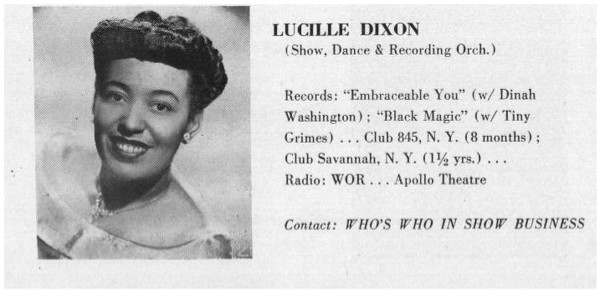
Lucille Dixon Robertson
Lucille Dixon was born in Harlem on 27 February 1923, the daughter of a Baptist minister and his wife.
She began her music studies with renowned piano teacher Carmen Shepperd (1910–1997), a Jamaican immigrant who had studied at Juilliard and Columbia University.
Like many Black musicians, she got her earliest performing experience playing in church.
Later in her career, Lucille said in an interview:
“In the early years, I played piano for my daddy’s church, earning around fifty cents a Sunday. Certainly, my folks would have preferred that I continue the musical association with the church rather than going into the clubs.”
Taking Up the Bass
Lucille went to high school in Manhattan. She wanted to join the school orchestra and had her eye on taking up the clarinet. But the ensemble needed a bass player more than a clarinettist, so she started playing the bass.
She took to the instrument immediately. In fact, her orchestra teacher encouraged her to audition for the All-City High School Orchestra. She did and was accepted: an impressive achievement, given how briefly she’d played.
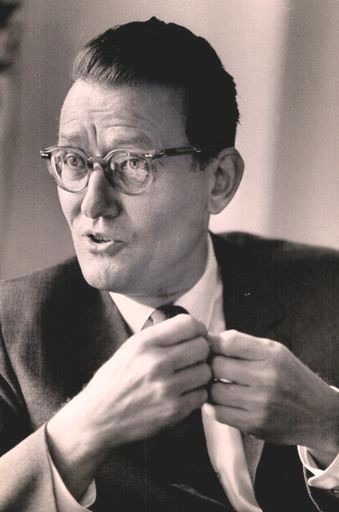
Fred Zimmerman
That same teacher suggested that she try studying with Fred Zimmerman, bassist with the New York Philharmonic. Zimmerman is known as the “father of bass teaching in the United States.” She was accepted and joined his studio on scholarship.
In 1941, when she was eighteen, she auditioned for a position with the National Youth Administration Orchestra, a holdover work program from Franklin Delano Roosevelt’s New Deal.
Lucille later remembered this time:
“That orchestra appeared at the Lewisohn Stadium. The thing that impressed me most about that orchestra was that we practised six hours a day, five days a week… It was a tremendous experience for me.”
The NYA Orchestra wasn’t just a training ensemble: it was a clearinghouse for up-and-coming musicians, and a feeder orchestra for the major American orchestras.
There were only two Black musicians in the entire ensemble, but Lucille was hopeful that since she’d managed to earn a place in the orchestra, she’d have a chance at pursuing a performing career in classical music, too.
Facing Discrimination In the Orchestral World
Dixon’s first love was classical music.
“I started out by playing classical music,” she later said, “and I fell in love with it. When I finally began to realize that because of discrimination I could not continue in it, that is what really put the fight in me…”
For as long as the New Deal-funded NYA Orchestra existed, she’d have a position. But the longer she spent in the field, the more she became aware that once funding lapsed (which it inevitably did in 1942), she’d have to switch genres due to the rampant discrimination in the wider orchestral world.
In the 1970s, she said:
“I became well aware that no blacks were playing in any of the nation’s symphonies, and it was obvious that none were going to be placed through the NYA orchestra.”
Her philosophy was shaped by the experience:
“I should like for the children of today to have a choice. If they want classical, there’s a place for them to go. If they want jazz, they can go into jazz.”
She also said:
“For many years, I was a jazz musician. In fact, I still am. Actually, I guess I like to think of myself as a musician – without the adjectives.”
“I must emphasise, however, that I enjoy jazz music as well as classical.”
Her Early Jazz Career
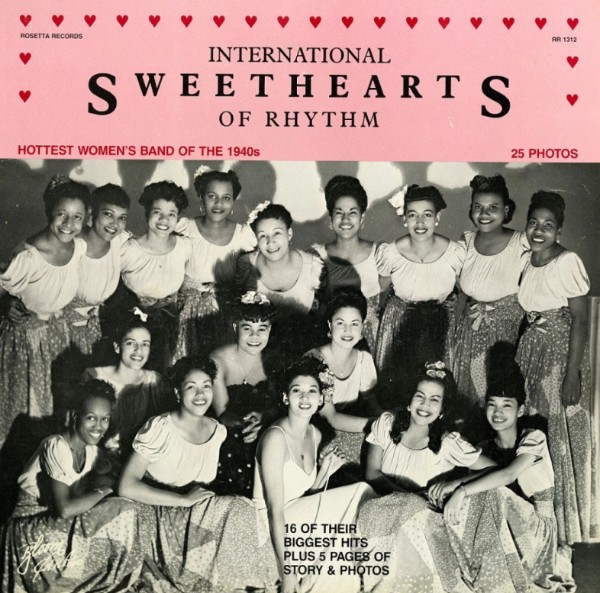
International Sweethearts of Rhythm
After graduating from high school, she studied for two years at Brooklyn College.
At the end of her sophomore year, she took a job with the all-female International Sweethearts of Rhythm, the first racially integrated women’s jazz group in America. She didn’t go back to college.
International Sweethearts of Rhythm playing “She’s Crazy With the Heat”
She then joined Earl Hines’s band, where she worked for two years. Hines was one of the most influential jazz pianists of the century, and it was a huge honour to play with him.
Earl Hines Band Plays “You Can Depend On Me”, 1944
She later told a striking story about how her friends and family took her career change:
“Shortly after joining Earl Hines’s band – I was about twenty – my picture appeared in the local paper. Well, I was walking down the street one day, and I met one of the sisters of the church. She said to me, ‘When are you going to stop playing for the devil and come back and play for the Lord?’ I responded, ‘I must make a living.’ No further explanation was necessary at the time – at least, so far as I was concerned.”
Her minister father never came to see her play jazz in the clubs, but he was still incredibly proud of her, and she always felt supported by him.
Becoming a Musical Entrepreneur
Traveling and constant life on the road were difficult.
“I tried remaining in New York City, gigging around with small groups at various clubs,” she said later, “but soon I came to realise that most leaders lacked business sense. I began putting together my own groups, going to clubs directly rather than through an agent.”
She became the business manager of the house band for the Savannah Club in Greenwich Village.
As a freelancer, she performed with Ella Fitzgerald, Sarah Vaughan, Tony Bennett, Frank Sinatra, Billie Holiday, and others.
She also founded her own orchestra, the Lucille Dixon Orchestra, between 1946 and 1960.
She hired superstars like trombonist Tyree Glenn, trumpeter Taft Jordan, saxophonist Buddy Tate, and others. These musicians played with legends like Duke Ellington, Louis Armstrong, Frank Sinatra, and others.
She became so successful at managing the ensemble that they eventually gave her the name “boss lady.”
Trying to Break Into the Classical World
Despite the fact that she kept running into closed doors, she still persisted in trying to break into the classical world.
She played in a number of local orchestras, including the Bridgeport Symphony, Westchester Philharmonic, and Scranton Symphony.
In 1964-65, she became the principal bass player for the Boston Women’s Symphony.
She kept trying to secure auditions with major conductors, including Leopold Stokowski. Again and again, she was iced out of jobs with major orchestras that she was well-qualified for.
In the mid-1970s, she reflected:
“You know, there have been many obstacles all along the way. Until about five years ago, I was aware of only two strikes against me – the fight that I was female and black. Only recently did I come to realise a third strike – I played a man’s instrument, the bass fiddle.”
She joined the National Orchestral Association in 1960 and played with them until 1964. While there, she learned even more orchestral repertoire and won two achievement awards.
But her time at the National Orchestral Association didn’t translate into a job offer.
“When did I get a chance to display the acquired skills?” she asked later. “Never, until the formation of the Symphony of the New World.”
Starting the Symphony of the New World
In the summer of 1964, the Civil Rights Act was passed in the United States, outlawing discrimination based on race, sex, and national origin.
Flautist Harold Jones later remembered how a core of Black orchestral musicians got together to discuss what the Act might mean for them.
“There was a nucleus of people… We all got together and had these meetings. ‘Are we interested?’ Everyone jumped to the idea. ‘Yes. Let’s do this. We’re going to do it – have an integrated orchestra.’ The standards of the musicians were very high.”
The Symphony of the New World gave its first concert on 6 May 1965 in Carnegie Hall.
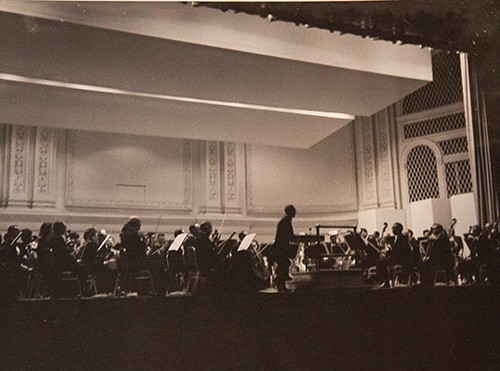
Symphony of the New World Carnegie Hall debut
According to Dixon, the orchestra “consisted of thirty-six black and fifty-two white musicians, all professionals by anyone’s standards.” Members came from “the United States, Europe, Puerto Rico, South America, Korea, and Japan.”
Despite the orchestra’s noble goals, it had difficulty securing funding. In the summer of 1965, Dixon actually held an Independence Day fundraising barbecue to help the organisation stay afloat.
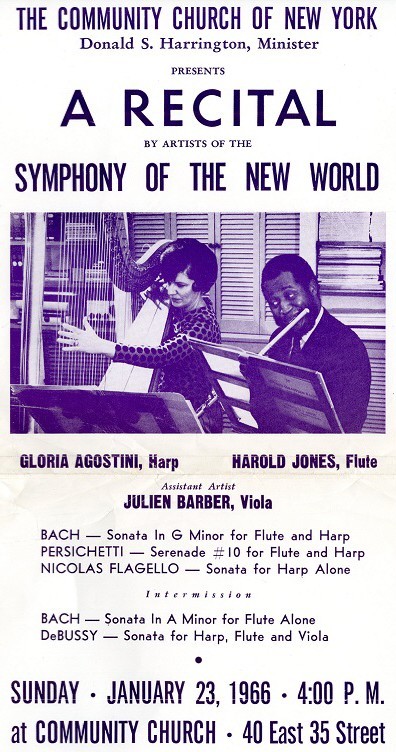
But by the 1970s, the season included six subscription concerts. In 1972, Dixon became the orchestra’s manager.
It was a demanding job. “For two years, I was in the office alone,” she said. “I soon realised that the office needed constant coverage. Then, too, my health was beginning to break.”
In 1975, she said in an interview, “Isn’t this the only orchestra in America – be it major, metropolitan, or community – that truly represents what this country is supposed to stand for – democracy? You know, the ‘melting pot theory!’”
Despite leaders’ best efforts, the orchestra, always operating on the edge financially, was forced to fold in 1978.
Personal Life and Final Years
Lucille Dixon married a dentist who was also an amateur violinist. He was supportive of his wife’s work.
They had three children in 1945, 1956, and 1958. All three studied music, but none became professional musicians themselves.
In between juggling her multiple careers, Lucille volunteered as a Girl Scout troop leader and a Cub Scout den mother.
In 1996, after a long and successful musical career, she and her husband retired to Puerto Rico. She returned to performing, playing jazz at a lounge in San Juan. She even recorded a disc there, “Live at Carli’s, Vol. 1.”
Lucille Dixon Robertson died on 23 September 2009. She was eighty-six years old.
Conclusion
Lucille Dixon Robertson’s career was defined by both resilience and brilliance.
Whether she was playing jazz in a Harlem club, performing the bass part to a symphony, or managing the first integrated orchestra in America, she spent her entire career refusing to accept the limitations of race, gender, or genre.
She has been almost entirely forgotten today, but hopefully, more and more people will learn and be inspired by her story in the years to come.
For more of the best in classical music, sign up for our E-Newsletter