Explore Francesco Cavalli’s Legacy 350 Years After His Death
When Francesco Cavalli died in Venice on 14 January 1676, opera had already become something recognisably modern. It was dramatic, flexible, emotionally direct, and unmistakably human.
More than any composer of the mid-seventeenth century, Cavalli shaped opera as a living theatrical language rather than a courtly experiment. Claudio Monteverdi gave opera its first monumental voice, but Cavalli taught it how to converse, argue, seduce, lament, and laugh.
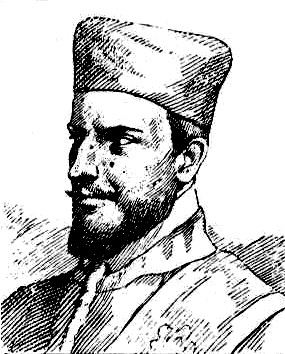
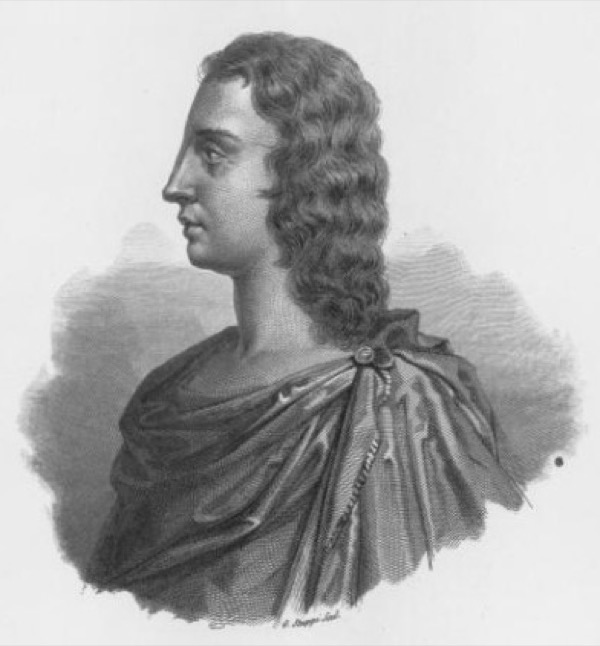
Francesco Cavalli
Cavalli taught opera to speak in sentences rather than proclamations, and how to reflect the messy complexity of human desire. As we commemorate the 350th anniversary of his death, let’s remember the architect of opera’s emotional grammar.
Francesco Cavalli: “Sinfonia et Airs de Nourrices”
Opera for the People
Born Pietro Francesco Caletti-Bruni in Crema in 1602, Cavalli arrived in Venice as a teenage chorister at St Mark’s Basilica, where he studied under Monteverdi himself. By the time of his death, he had composed more than forty operas, many for the new commercial opera houses that transformed Venetian cultural life after 1637.
As Ellen Rosand memorably observed, Cavalli was “the composer who adapted opera to the conditions of the marketplace without sacrificing its expressive power.” After all, Venice in the 17th-century was unique.
It was a republic without a court, a city of merchants, diplomats, tourists, and carnival crowds. When the Teatro San Cassiano opened in 1637 as the first public opera house, opera ceased to be a courtly spectacle funded by princes and became a commercial venture dependent on ticket sales.
With smaller budgets, leaner orchestras, and limited rehearsal time, what mattered most was clear storytelling, memorable melody, and emotional impact. And Cavalli’s works are economically written and theatrically sharp. As Lorenzo Bianconi notes, Cavalli “reduced musical means while expanding dramatic effectiveness.”
Francesco Cavalli: L’Artemisia, “Dammi morte o libertà”
Melody Meets Meaning
Cavalli’s most important contribution lies in his treatment of recitative and aria. In his operas, recitative becomes supple and expressive, capable of sudden lyric expansion or stark dramatic compression. Rather than rigidly separating speech-like recitative from closed-form arias, Cavalli allows music to grow organically from the text.
The result is an operatic discourse that mirrors natural speech while heightening emotional intensity. This flexibility is particularly evident in Giasone of 1649, his most popular opera during his lifetime.
Here, characters slip effortlessly between conversational declamation and lyrical outpouring, often within a single scene. Rosand describes this technique as “a musical syntax designed to serve drama rather than display vocal virtuosity.”
Cavalli’s singers were not expected to dominate the drama, as they were expected to embody it. He also refined the emerging aria style, favouring short, memorable forms with repeating bass patterns or simple strophic designs. These arias serve clear dramatic functions, be it love songs, laments, seductions, or comic asides.
Francesco Cavalli: Giasone (David Hansen, counter-tenor; Celeste Lazarenko, soprano; Miriam Allan, soprano; Christopher Saunders, tenor; David Greco, bass; Andrew Goodwin, tenor; Adrian McEniery, counter-tenor; Nicholas Dinopoulos, bass-baritone; Alexandra Oomens, soprano; Erin Helyard, organ; Orchestra of the Antipodes; Erin Helyard, cond.)
Sorrow in Real Time
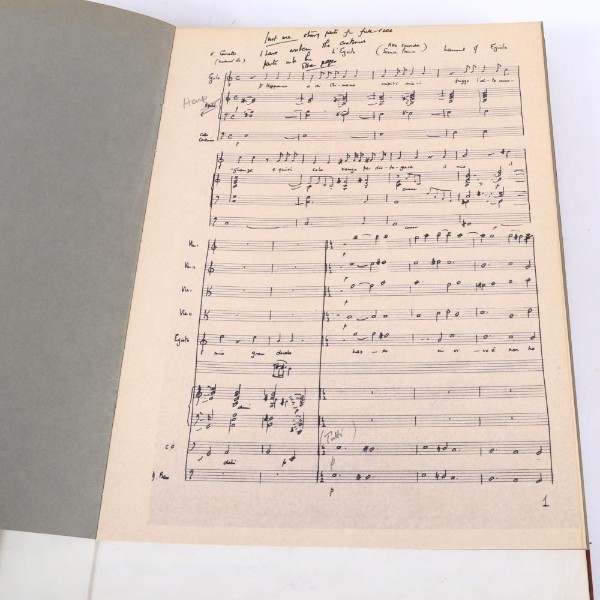
Francesco Cavalli’s Lament of Egisto
Few composers before Cavalli wrote laments with such emotional immediacy. His famous lamenti strips grief of mythic distance and presents it as lived experience. In Didone (1641), Ormindo (1644), and La Calisto (1651), abandoned lovers express sorrow not as noble abstraction but as raw, often contradictory feelings.
Musicologist Susan McClary argues that Cavalli’s laments are “grounded in the physicality of the voice itself, allowing desire and despair to emerge from breath, register, and harmonic instability.”
Musical devices, including descending bass lines, unresolved dissonance, and sudden silences, create an emotional landscape that feels strikingly modern.
In essence, these moments reveal Cavalli’s gift for psychological realism. Gods may appear on stage, but they behave like humans. They are jealous, lustful, petty, or tender as mythology becomes a mirror rather than a pedestal.
Francesco Cavalli: L’Ormindo, “Prologue”
Laughing with the Gods
Cavalli also had an irrepressible comic instinct. Venetian opera thrived during carnival season, and audiences expected laughter alongside tears. Cavalli embraced this expectation wholeheartedly.
His operas teem with nurses, servants, parasites, and comic old men whose earthy humour punctures heroic pretensions.
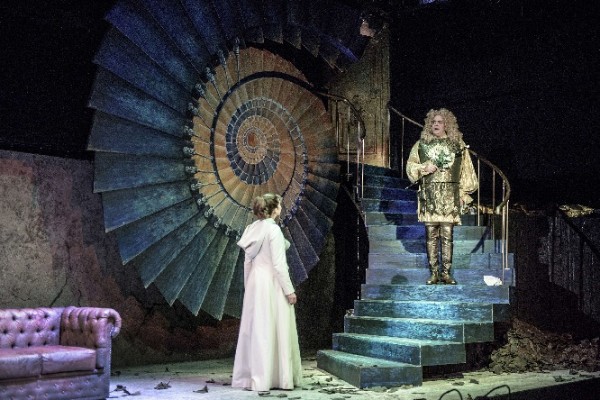
Francesco Cavalli’s La Calisto
In La Calisto, perhaps his masterpiece, sublime celestial scenes alternate with bawdy farce. Jupiter disguises himself to seduce the nymph Calisto, while Diana’s chaste world collapses into erotic confusion.
The music responds accordingly as elevated lyricism coexists with deliberately awkward rhythms and exaggerated declamation. As Bianconi remarks, Cavalli’s genius lies in his “ability to reconcile high myth with low comedy without undermining either.
Francesco Cavalli: La Calisto, “Moglie mie sconsolate”
From Court to Crowd
Cavalli is often positioned as Monteverdi’s successor, but the relationship is not one of simple inheritance. While Monteverdi pursued expressive extremes and rhetorical intensity, Cavalli prioritised fluency and accessibility.
His harmonic language is generally simpler, his orchestration lighter, and his melodic writing more direct. Yet this is not artistic decline, but an adaptation.
As Tim Carter points out, Cavalli “rethought Monteverdi’s achievements for a different social and economic reality.” Where Monteverdi composed for dukes and cardinals, Cavalli wrote for paying audiences who demanded emotional reward.
Francesco Cavalli: Pompeo Magno, “Incomprensibil Nume”
Liturgical Drama
Although best remembered for opera, Cavalli spent most of his professional life at St Mark’s Basilica, eventually becoming maestro di cappella in 1668. His sacred music, including masses, psalms, and motets, demonstrates a more conservative style, rooted in Venetian polychoral traditions.
These works reveal Cavalli as a disciplined and ceremonious composer, one who was deeply aware of liturgical function. Yet even here, expressive vocal writing and dramatic contrasts betray the opera composer at work.
The boundary between sacred and secular in seventeenth-century Venice was porous, and Cavalli moved across it with ease.
Francesco Cavalli: Missa a 8 voci concertata – Gloria (Ensemble Locatelli, Ensemble; UtFaSol Ensemble, Ensemble; Coro Claudio Monteverdi di Crema; Bruno Gini, cond.)
From Obscurity to Ovation
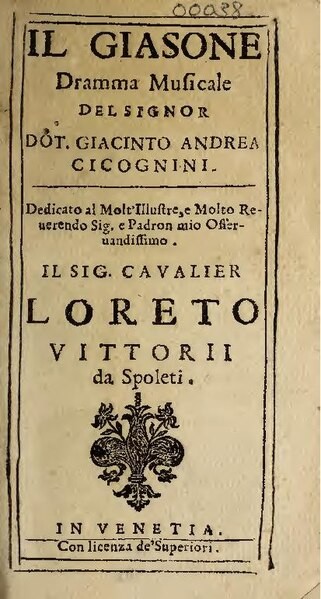
Francesco Cavalli’s Il Giasone title page
After his death, Cavalli’s operas gradually disappeared from the stage as operatic taste shifted toward Neapolitan styles and virtuosic display. For centuries, his reputation rested largely on historical footnotes.
Only in the twentieth century did scholars and performers begin to rediscover his works. The revival of La Calisto at Glyndebourne in 1970 marked a turning point, revealing Cavalli as a composer of theatrical brilliance rather than antiquarian interest.
Since then, historically informed performances have brought renewed attention to his operas’ wit, sensuality, and emotional truth.
Today, Cavalli is recognised as a central figure in operatic history. As Rosand concludes, “without Cavalli, opera might have remained an elite experiment, but with him, it became a living genre.”
Francesco Cavalli: Ercole Amante, “Oh Gallia fortunata”
Opera Made Human
In Cavalli’s theatre, gods behave badly, lovers suffer honestly, and music listens closely to the rhythms of speech and feeling. Nearly four centuries later, that achievement still resonates.
His characters are mirrors of human complexity, their passions neither idealised nor vilified, but rendered with an intimacy that invites empathy. Through this humanistic lens, Cavalli demonstrated that opera could probe the subtleties of emotion as finely as any novel or play.
He turned opera from an aristocratic curiosity into Venice’s most vital public art form. By embracing the interplay of melody, drama, and human psychology, Cavalli laid the foundations for the operatic traditions that would follow.
His works remind us that the enduring power of opera lies not merely in grand gestures or lavish sets, but in the art of listening. In every sigh, every longing glance, and every comic misstep, Cavalli’s music insists that opera remains a profoundly human art.
For more of the best in classical music, sign up for our E-Newsletter