Henry Purcell (1659-1695) stands as one of the most significant English composers of the Baroque, renowned for his ability to blend the grandeur of continental European styles with the distinct traditions of English music. Born on 10 September 1659 into a musical family in Westminster, Purcell showed prodigious talent from a young age, and he was appointed organist of Westminster Abbey at the age of 20.
His contributions to both sacred and secular music were groundbreaking. Among his most celebrated achievements are the opera Dido and Aeneas, widely considered the first great English opera. To be sure, his extensive work in theatre music helped to lay the foundation for later English dramatic traditions.
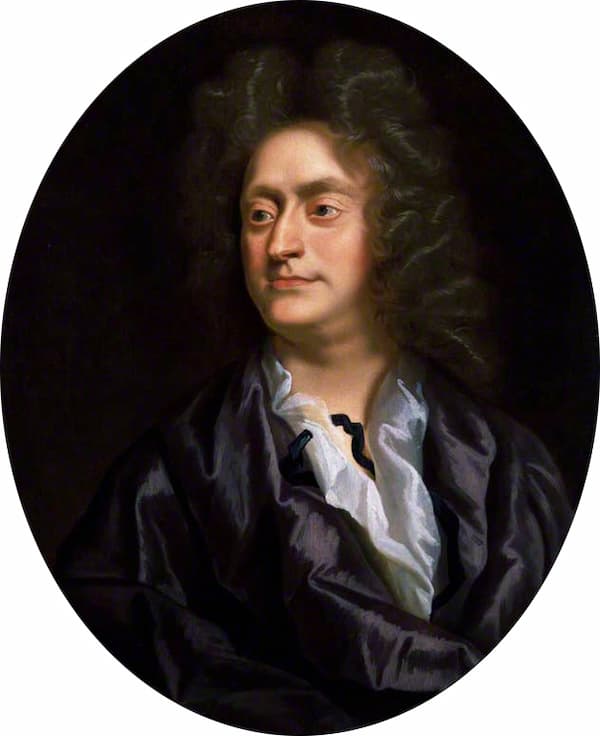
John Closterman: Henry Purcell, ca. 1695 (London: National Portrait Gallery)
Henry Purcell also made lasting contributions to church music, with his anthems, composed primarily for the Anglican Church and the English court, representing a pinnacle of Baroque sacred music.
These works reflect the complex socio-political and religious landscape of Restoration England, and to honour Purcell’s birthday, let’s explore the historical and musical context, and some stylistic features that contributed to their enduring legacy.
Henry Purcell: “Rejoice in the Lord Alway”
Historical and Cultural Background
Purcell’s anthems emerged during the Restoration period (1660–1688), a time of political and religious upheaval following the English Civil War and the Commonwealth’s Puritan regime. The restoration of the monarchy under Charles II brought a renewed emphasis on ceremonial splendour, particularly in the Chapel Royal, where Purcell served as organist and composer.
The Chapel Royal, the monarch’s private religious establishment, was a hub for sacred music and Charles II’s preferred French and Italian musical styles. The king’s exposure to the grandeur of Louis XIV’s court led to a demand for elaborate orchestral anthems, known as “symphony anthems.”
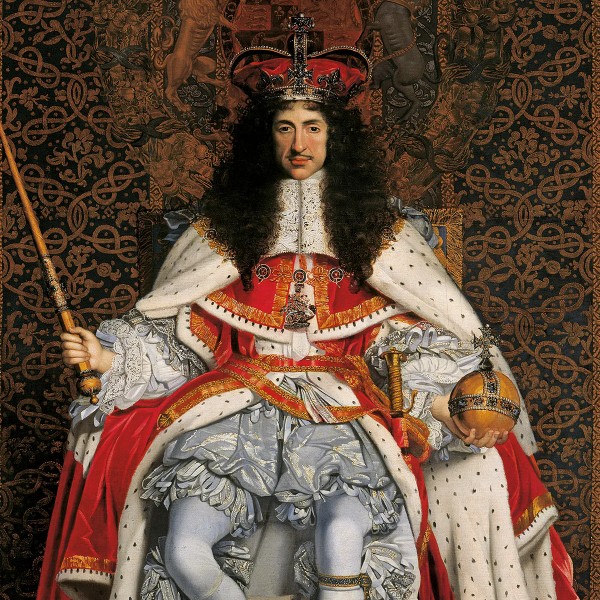
Charles II
Purcell, who joined the Chapel Royal as a boy chorister and later became its organist in 1679, composed anthems for both liturgical services and state occasions, such as coronations and royal funerals. His music, according to scholars, “reflects the need to balance devotional sincerity with the theatricality demanded by the court.”
In addition, Purcell’s anthems also reflect the influence of earlier English composers, such as Thomas Tallis and William Byrd, whose polyphonic traditions he inherited. He also looked towards continental composers like Claudio Monteverdi and Jean-Baptiste Lully, whose dramatic styles he emulated. F.B. Zimmerman writes, “Purcell’s ability to synthesise these influences created a distinctly English Baroque style, characterised by expressive text-setting and innovative harmonies.”
Henry Purcell: O sing unto the Lord
Styles and Types
Broadly speaking, Purcell’s anthems can be categorised into two types, the full anthems and the verse anthems. Full anthems are written for unaccompanied choir and emphasise contrapuntal texture and solemnity.
Verse anthems alternate solo sections called verses with choral passages, often accompanied by strings and continuo, reflecting the influence of French and Italian Baroque music. The symphony anthem, meanwhile, is a subset of the verse anthem as it incorporates orchestral interludes as well.
Henry Purcell: Hear My Prayer, O Lord
Full Anthems
The Full Anthem represents Purcell’s connection to the English choral tradition. Typically scored for four to eight voices, Purcell gave his interest in counterpoint full attention. “Hear My Prayer, O Lord,” a setting of Psalm 102:1, is one of Purcell’s most poignant full anthems.
Its eight-part texture and chromatic harmonies create a profound sense of anguish, reflecting the psalm’s plea for divine mercy. Scholars have noted the anthem’s use of dissonance to heighten emotional impact, with suspensions and unexpected harmonic shifts that anticipate later techniques.
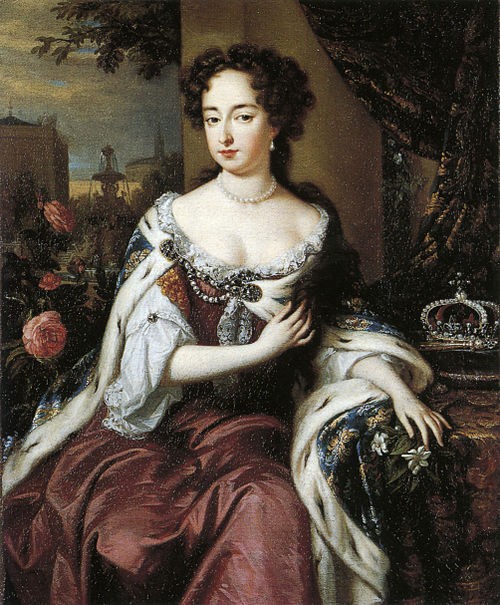
Queen Mary II
With its compact structure and intense expression, this anthem continues to be a favourite of modern choral repertoires. Another notable full anthem is “Thou Knowest, Lord,” part of the music composed for the funeral of Queen Mary II in 1695.
This anthem demonstrates Purcell’s ability to convey solemnity with simplicity. The homophonic texture and restrained harmonies underscore the gravity of the occasion, while its understated beauty highlights Purcell’s sensitivity to text. The piece was later performed at Purcell’s own funeral, and more recently, for the state funeral of Queen Elizabeth II in September 2022.
Henry Purcell: Thou knowest, Lord
Verse Anthems
Scholars have suggested that the majority of Purcell’s verse anthems “date from the 1670s or from after 1685, on either side of the period when he was predominantly concerned with symphony anthems.” In one of the earliest surviving Purcell sources, we find “Who hath believed our report,” featuring contrasting passages for solo voices in different combinations.
This verse anthem also features an intermediate and a final chorus. They are identical and much of the ensemble writing is homophonic, giving the illusion of a contrapuntal texture. The structural elegance of Purcell’s verse anthems lies in their seamless integration of solo verses, often performed by highly skilled singers, with robust choral responses, accompanied by strings or organ.
Henry Purcell: Who hath believed our report, Z. 64 (Charles Brett, counter-tenor; Wilfred Brown, tenor; Robert Tear, tenor; Christopher Keyte, bass; Henry Brian Runnett, organ; Cambridge St. John’s College Choir; George Guest, cond.)
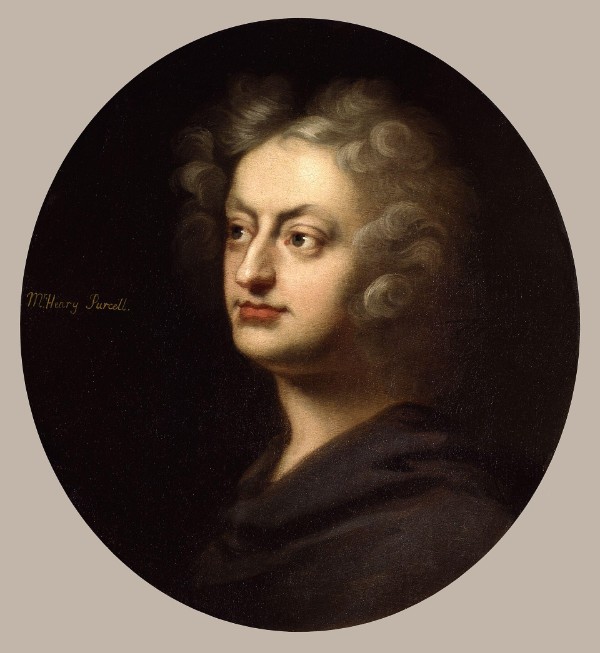
Henry Purcell by John Closterman
In the later group of verse anthems, we find the powerful “Let mine eyes run down with tears,” probably composed around 1682. It may have been composed for the use in the Chapel Royal during Lent, when string accompaniment was not permitted.
This verse anthem format allowed Purcell to explore a range of moods, from introspective devotion to exuberant praise, all within a single work. His harmonic language, rich with daring dissonances and unexpected modulations, adds a layer of emotional depth that elevates these anthems beyond mere functional church music.
Henry Purcell: Let mine eyes run down with tears (excerpt)
Symphony Anthems
The vast majority of Purcell’s anthems are of the symphony kind. Written between 1677 and 1685, they belong to a genre that owed its existence “to the personal taste of Charles II.” Scholars have also suggested that the genre might have been inspired by the architecture of its usual place of performance, the Chapel Royal at Whitehall.
Soloists and the instrumental group were probably placed in separate galleries while the chorus occupied the choir stalls below. As Peter Holman writes, “alternations between the different groups, and passages in which instruments and soloists combine, may therefore involve a spatial element not apparent from the score on the page.”
Henry Purcell: My Heart is Inditing
As we mentioned earlier, the symphony anthems reflect the influence of the Restoration Court’s taste for grandeur. “My Heart is Inditing”, composed for the coronation of James II in 1685, is a prime example. This anthem, scored for eight-part choir, soloists, and strings, celebrates the divine right of kings with exuberant orchestral writing and florid vocal lines.
The text, drawn from Psalm 45, is set with a balance of majesty and intimacy, reflecting Purcell’s ability to adapt sacred music to royal pomp. The anthem’s orchestral interludes, inspired by French overtures, demonstrate Purcell’s command of instrumental colour, while the choral sections showcase his contrapuntal skill.
In his symphony anthems, Purcell found ways of producing larger and more logical structures, using fewer but longer sections, and incorporating more counterpoint as well as virtuosic solo writing. His sensitivity to the text is evident in his careful declamation, and he skilfully uses word-painting to enhance meaning.
Henry Purcell: Awake, awake, put on thy strength, Z. 1 (Rogers Covey-Crump, tenor; Charles Daniels, tenor; Michael George, bass; King’s Consort, Ensemble; King’s Consort Choir; Robert King, cond.)
Significance and Legacy
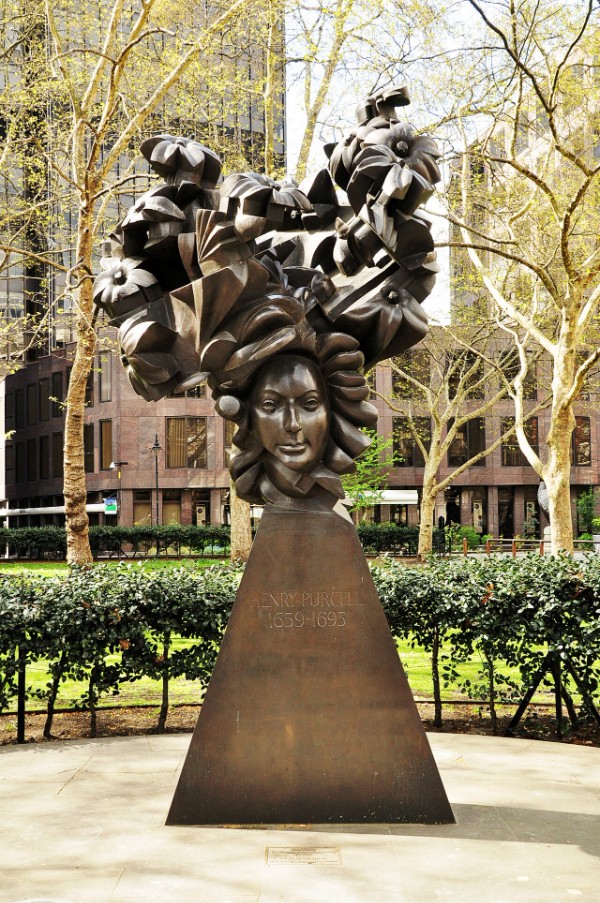
The Flowering of the English Baroque (Henry Purcell), sculpture by Glynn Williams located in Victoria Street near Buckingham Gate. 1994
Henry Purcell’s anthems were more than liturgical works. They were cultural artefacts that reflected the aspirations and anxieties of Restoration England. The symphony anthems, with their orchestral splendour, embodied the monarchy’s desire to project power and stability in a period of political uncertainty.
Conversely, the full anthems, with their introspective quality, spoke to the personal piety of the Anglican faithful. Purcell’s ability to navigate these dual roles as court composer and church musician made him a pivotal figure in English music. The anthems also highlight Purcell’s role as a bridge between the Renaissance and Baroque eras, with his adoption of continental styles aligning him with the broader European Baroque movement.
Purcell was equally in tune with ceremonial pomp and intimate devotion, and his anthems had a lasting impact on English sacred music. They greatly influenced later composers, such as George Frideric Handel, whose own anthems for the Chapel Royal echo Purcell’s style.
Purcell’s premature death at age 36 cut short a career that might have further transformed English music. Nevertheless, his anthems endure as a testament to his genius, blending technical mastery with profound expressiveness. Their continued performance in cathedrals, concert halls, and recordings underscores their universal appeal and historical importance.
For more of the best in classical music, sign up for our E-Newsletter