Frédéric Chopin’s music – famously melancholy, strikingly improvisatory, deeply Polish – is unique among the output of the great canonised composers. How did he develop such a special, creative voice?
The answer is composer, conductor, and teacher Józef Elsner, who taught Chopin during his formative teenage years.
Although Elsner has often been overshadowed by his student, his career is worth looking at to better understand Chopin’s.
Józef Elsner’s Family and Background
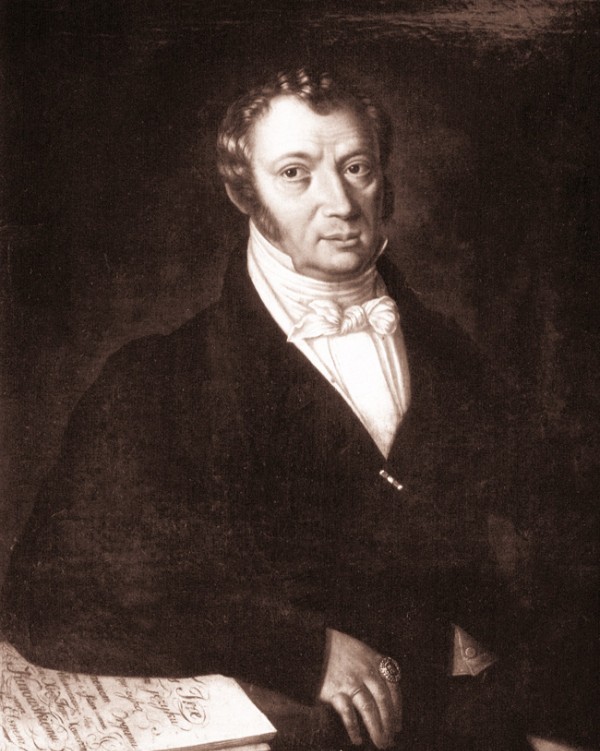
Józef Elsner
Józef Elsner was born on 1 June 1769 in Grodków, Prussia, near the present-day border between Poland and the Czech Republic.
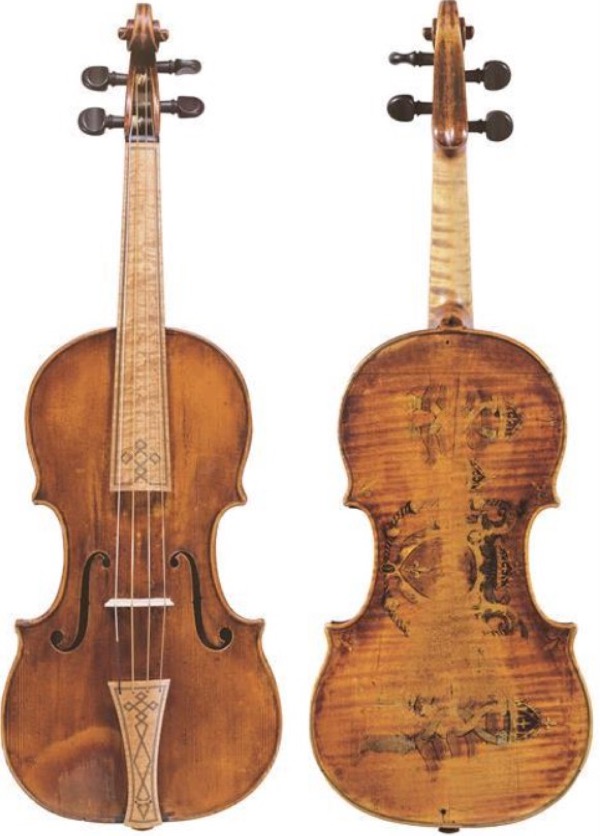
His father was a carpenter who repaired musical instruments, and his mother was the daughter of a well-known violin maker named Joseph Matzke.
During Elsner’s lifetime, there were many shifts of national borders as the influence of various European powers waxed and waned.
Although Elsner was born in present-day Poland, he and his family thought of themselves as Silesian, a geographical region that lies primarily within Poland but boasts its own distinctive culture.
This Silesian identity was so strong that Elsner never learned the Polish language as a child.
Józef Elsner’s Musical Childhood and Adolescence
His musical talents were clear from an early age, and he proved to be a talented singer in the church choir.
At the age of twelve, he began studying music in Breslau (in present-day Poland).
When he became a teenager, like many young people, he was unsure about what he wanted to do with his life.
First, he studied for the priesthood in Breslau, then moved to Vienna to pursue a medical career.
However, he was so dazzled by the culture of Vienna that he ultimately decided he wanted to become a musician instead.
In 1791, at the age of twenty-two, he got a job working as a violinist in Brünn (in the present-day Czech Republic).
The following year, he was named the second kapellmeister at the German Opera in Lviv (in present-day Ukraine). Two of his many operas were premiered there.
Józef Elsner: Overture from the opera “Leszek the White” (1809)
His First Marriage and Growing Love for Poland
In 1796, while living in Lviv, he married a Polish woman named Klara Abt.
Between Klara’s influence and the influence of his theatre colleague, director and playwright Wojciech Bogusławski, Elsner became increasingly interested in the Polish language, culture, and folk music.
He became so fascinated that he began writing operas to Polish librettos.
This interest in everything Poland would become especially relevant when working with Chopin.
Tragically, Klara died just a year into their marriage while giving birth to their first daughter, Karolina.
Moving to Warsaw and His Second Marriage
In 1799, after his colleague Wojciech Bogusławski moved to Warsaw, Elsner decided to follow him, choosing to settle in Warsaw and accepting a position as conductor of the Warsaw Opera. His tenure would prove to be hugely successful.
In 1802, he married his second wife, Karolina Drozdowska, a singer who would later become a star at the Opera. Karolina was eighteen, and he was thirty-three. They would have several daughters together.
By this time, Elsner had thoroughly embraced Polish language and culture. One of his main artistic priorities became promoting Polish opera sung in Polish.
Composing and Teaching
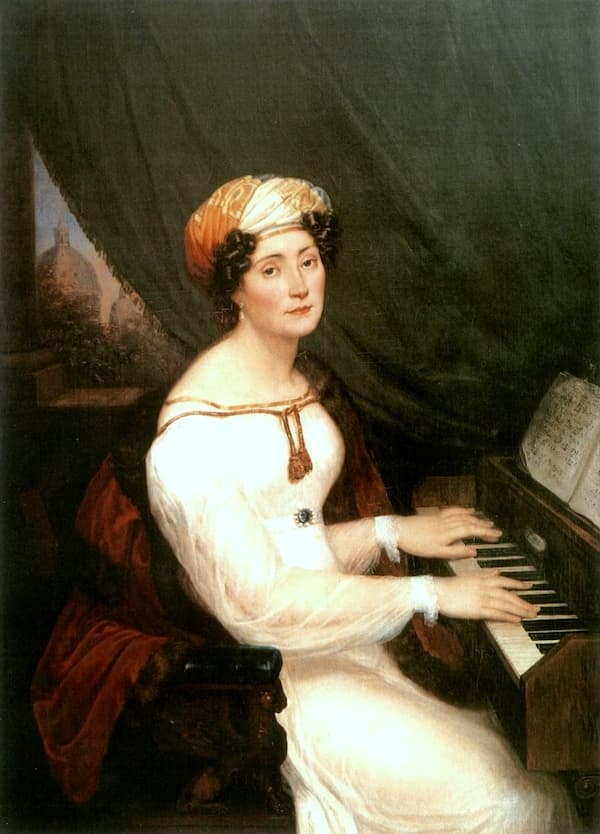
Maria Szymanowska
In addition to conducting, Elsner was a prolific composer. He wrote six string quartets, eight symphonies, twenty-seven operas, and fifty-five cantatas, as well as multiple works for solo piano.
He also became a talented teacher. He gave private lessons to Maria Szymanowska (a forerunner of Chopin) and Ignacy Feliks Dobrzyński, who also became a leading Polish composer.
Józef Elsner: Symphony in C-major, Op. 11 (1805)
Founding the Warsaw Conservatory
In 1821, Elsner helped to found the Warsaw Conservatory of Music.
However, just as the conservatory was getting off the ground, Elsner began quarreling with the principal, a singing teacher named Carlo Soliva. Their quarrels escalated into an all-out feud.
Eventually, the two men settled their differences by creating a Conservatory of Music (which Soliva would head) and a High School for Music (which Elsner would head).
When Chopin was a teenager, he decided to study at the High School because more non-music courses were offered there. That meant he began studying composition with Elsner.
Jozef Elsner: Piano Sonata No. 3
Elsner as Teacher
Elsner had a view of pedagogy that feels strikingly modern.
He encouraged his students to think for themselves and to develop their own unique styles, and was thrilled by the idea that his students might someday outshine him.
He appreciated Chopin’s gifts from the beginning, famously telling one critic, “Let him be. He is following his own path because his gifts are unusual.”
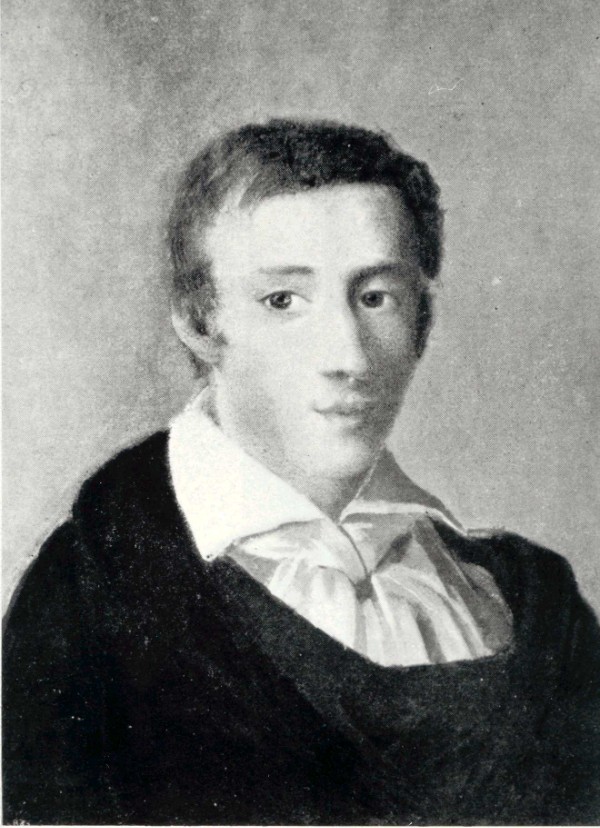
Frédéric Chopin, 1829
One method that Elsner used to teach was to take a pre-existing large-scale piece of music, notate where various markings were made in the score (having to do with tempo, key, etc.), and then assign his students to write original music that employed those same pre-existing indications at the same point in the piece. This is how his students would come to understand how to pace and structure a long piece of music.
Chopin, on the other hand, much preferred to follow his own ideas. To his credit, Elsner encouraged him to do so. As a result, despite his distaste for standard pedagogical procedure, Chopin was astonishingly productive during his time as Elsner’s student.
Elsner summed his pupil up with the following note: “Fryderyk Chopin, third year student; special ability, musical genius.”
Frédéric Chopin: Piano Sonata No. 1 (Written when he was 17-18, which he dedicated to Elsner)
Elsner’s Death and Legacy
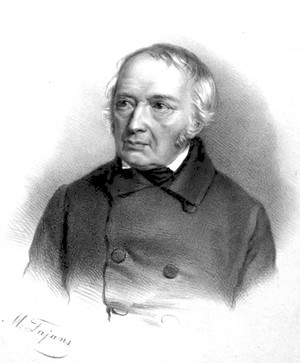
Józef Elsner
When he reached retirement age, Elsner moved to an estate outside of Warsaw, naming it Elsnerów.
He died there on 18 April 1854, five years after Chopin’s death, aged eighty-four.
Although we don’t remember him very often today, classical music lovers owe Józef Elsner a huge debt of gratitude for his sensitive mentorship of Chopin’s unique talents.
Another teacher might have constricted his student’s talent to fit into ready-made boxes or discouraged his passion for his Polish identity.
If Elsner had done so, it is likely that the Chopin we remember today would have had a very different musical voice – if we’d even remember him at all!
For more of the best in classical music, sign up for our E-Newsletter