Dubbed the “Maharaja of the Keyboard” by Duke Ellington, Oscar Emmanel Peterson is one of the most influential jazz pianists of the 20th century. Born to Caribbean immigrant parents in Montreal, Canada, Peterson’s virtuosic technique and improvisational brilliance elevated him to global acclaim.
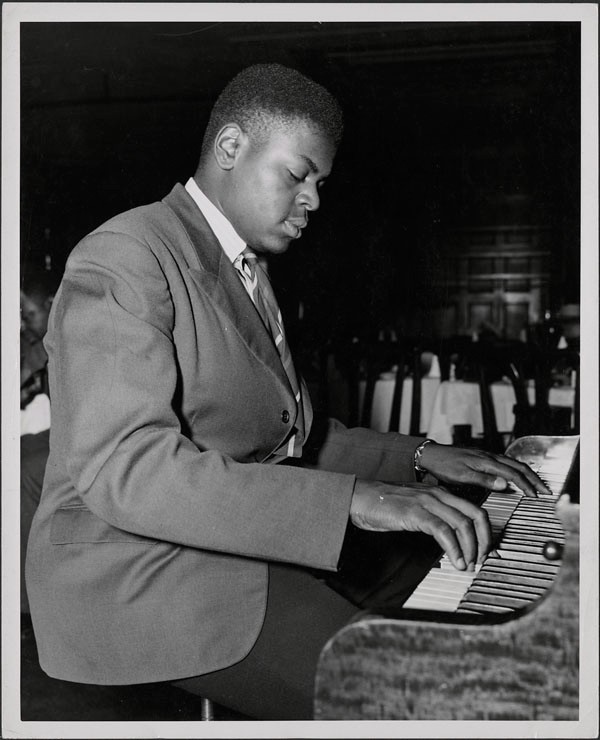
Oscar Peterson
His career, spanning over six decades, produced more than 200 recordings, eight Grammy Awards, and a legacy that reshaped jazz piano. Despite facing racism and health challenges, Peterson’s dedication to music and education earned him a legacy celebrated by awards, scholarships, and an ongoing influence on new generations.
Peterson once said that jazz requires “utter dedication, every time you play,” a mantra that defined his extraordinary career. On the occasion of his 100th birthday, let’s celebrate his technical virtuosity, innovative trio work, and his commitment to breaking racial barriers in jazz.
Oscar Peterson: C Jam Blues
Musical Foundations
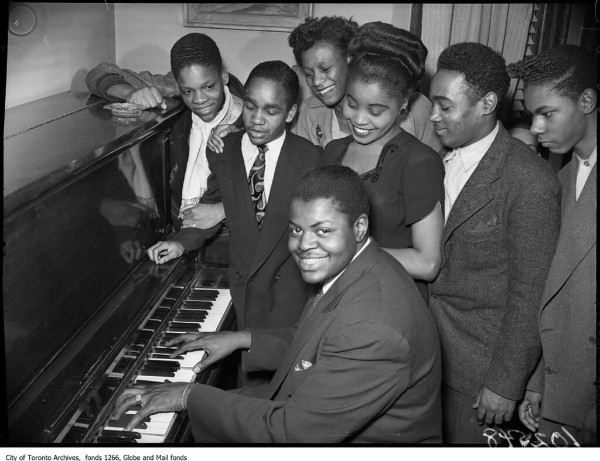
The young Oscar Peterson with friends
Oscar Peterson was born on 15 August 1925, in Montreal’s vibrant Little Burgundy. His parents nurtured a musical household, with his father, Daniel, a self-taught musician, enforcing strict musical training for his five children as a means of opportunity. Peterson started piano and trumpet at age five, but focused solely on piano after tuberculosis at seven halted his trumpet playing.
Trained in classical music by Hungarian pianist Paul de Marky, a student of a Franz Liszt protégé, Peterson developed technical precision that later defined his rapid, intricate jazz runs. By nine, his talent astonished professionals, and at 14, he won a 1940 national music competition held by the Canadian Broadcasting Corporation.
Influenced by his brother Fred and American jazz pianists like Art Tatum, Teddy Wilson, and Nat King Cole, Peterson was initially daunted by Tatum’s virtuosity but ultimately shaped his own style. Performing with the Johnny Holmes Orchestra from 1943 to 1947, he faced racial prejudice as the only Black member but was supported by the band, aiding his rise in the jazz world.
Oscar Peterson Trio: Salute to Bach
Rise to Fame
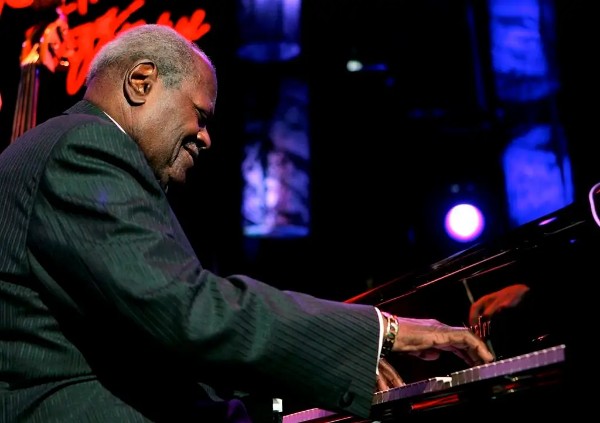
Oscar Peterson
Peterson’s international breakthrough came in 1949 when impresario Norman Granz invited him to perform at Carnegie Hall with “Jazz at the Philharmonic.” Eventually, Granz became Peterson’s manager, championing him through the racially segregated U.S. South, where Peterson faced persistent discrimination.
Peterson’s early recordings for Clef and Verve, including his 1950 duet with Ray Brown on “Tenderly,” established him as a household name by 1952. His trio with Brown and guitarist Barney Kessel became one of jazz’s most celebrated ensembles, known for its competitive energy and complex arrangements.
Oscar Peterson: “Tenderly”
Oscar Peterson Trio
Peterson’s musical style, blending swing, bebop, and boogie-woogie, defied categorisation, drawing both praise and criticism. The Oscar Peterson Trio, in the iteration with Ray Brown and Herb Ellis, became one of the most cohesive and dynamic ensembles in jazz history.
Formed in 1953, the trio’s telepathic interplay and rigorous rehearsals set a new standard for small-group jazz. Peterson insisted on equality among members, with Ellis and Brown pushing him to new creative heights through their virtuosic interplay. Standards like “Night Train” and Hymn to Freedom” became anthems of the era.
The trio, with changes in personnel, continued to evolve with Peterson remaining the dominant soloist. His compositional contributions, such as “Canadiana Suite”, reflected his national identity, while “Hymn to Freedom” became a civil rights anthem.
Oscar Peterson: Hymn to Freedom
Advocacy
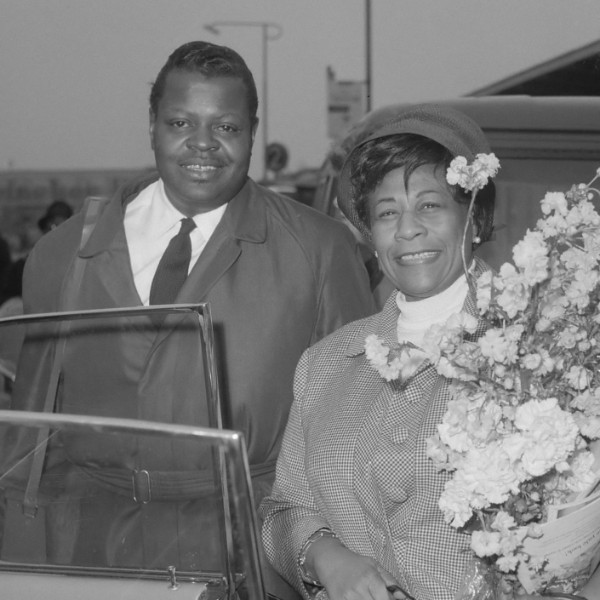
Oscar Peterson and Ella Fitzgerald, 1964
Peterson was a committed educator and advocate for racial equality. In 1960, he co-founded the Advanced School of Contemporary Music in Toronto, a pioneering institution for jazz education that attracted students globally. His four-volume Jazz Exercises and Pieces for the Young Jazz Pianist remains a cornerstone of jazz pedagogy, emphasising classical technique as a foundation for improvisation.
Peterson’s experiences with racism fuelled his advocacy. His manager, Norman Granz supported him in challenging segregation, notably during JATP tours in the U.S. South. Peterson’s success as the first African-Canadian inducted into the Canadian Music Hall of Fame (1978) and his receipt of the Praemium Imperiale Award (1999) underscored his role in breaking racial barriers.
A 1993 stroke weakened his left hand, but Peterson adapted and continued to perform and record with remarkable resilience. His later work with protégé Benny Green and recordings for Telarc in the 1990s and 2000s demonstrated his enduring creativity.
Oscar Peterson: “Old Folks”
Musical Style
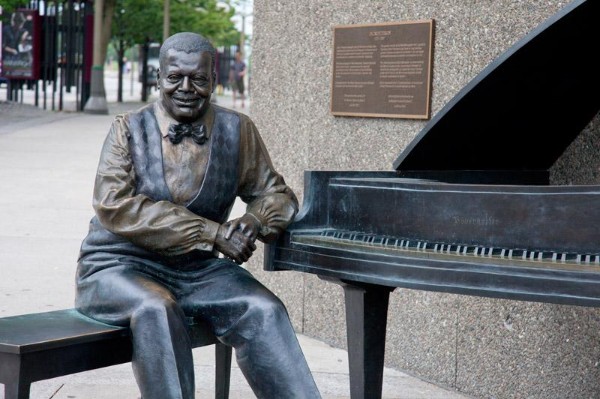
A statue of Oscar Peterson
Oscar Peterson’s musical style is a dazzling synthesis of technical virtuosity, emotional depth, and rhythmic vitality. Firmly rooted in the jazz tradition, he nevertheless found his unique voice. His classical training imbued his playing with meticulous precision and dexterity, allowing him to execute lightning-fast runs, intricate chord voicings, and seamless improvisations that became his hallmark.
Drawing heavily from the swing and bebop traditions, Peterson’s approach is characterised by a buoyant, propulsive swing feel, often propelled by his left hand’s robust stride and walking bass lines, while his right hand weaves melodic lines with a clarity and inventiveness that echoed influences like Art Tatum and Nat King Cole.
Oscar Peterson: “Satin Doll”
His ability to blend technical brilliance with soulful expression made his performances both intellectually engaging and deeply emotive, earning him acclaim as one of the greatest pianists in jazz. His improvisations were marked by a seemingly endless stream of ideas, delivered with a joyous energy that captivated audiences.
Whether interpreting standards, blues, or original compositions, Peterson infused each piece with a balance of exuberance and sensitivity, often building solos that escalated in complexity without sacrificing melodic coherence. This blend of technical mastery, rhythmic swing, and emotional resonance defined Peterson’s enduring legacy, making his music a delight for listeners worldwide.
Oscar Peterson: “Boogie Blues Etude”
Legacy and Critical Reception
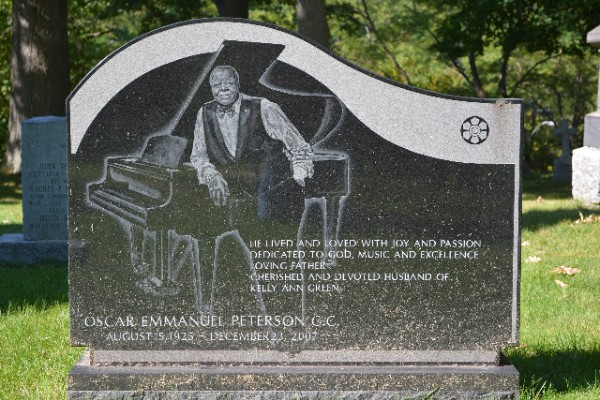
Grave of Oscar Peterson
Oscar Peterson’s legacy is multifaceted. He was a virtuoso who redefined jazz piano, a composer who captured Canadian identity, and an advocate who paved the way for Black musicians. His eight Grammy Awards, including a 1997 Lifetime Achievement Award, and honours like the Companion of the Order of Canada reflect his global impact.
However, critics like Miles Davis accused him of lacking originality, claiming he just “copied everybody.” Such critiques often overlooked Peterson’s ability to synthesise influences into a distinctive style, as defended by peers like Hank Jones, who called him “the apex” of jazz pianists.
Peterson’s influence endures in modern jazz pianists like Hiromi Uehara and Robert Glasper, who cite his technical prowess and emotional depth. Canada’s recent commemoration of Peterson on a circulation coin, the first for a Black Canadian, underscores his cultural significance.
Musicians like Oscar Peterson are vital to future generations for their role as innovators, educators, and cultural trailblazers who shape the trajectory of music and society. His iconic trio performances offer timeless lessons in collaboration and musical dialogue, while his compositions provide a blueprint for infusing music with cultural identity and social consciousness. Peterson’s enduring legacy continues to fuel passion and purpose, ensuring that jazz and the arts remain a vibrant force for cultural unity and freedom of expression.
For more of the best in classical music, sign up for our E-Newsletter