A Chilling Embrace
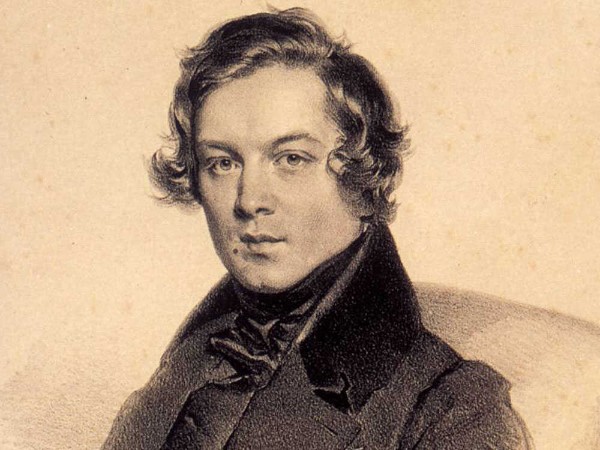
Robert Schumann
Lay your hand, my love
Just lay your hand on my heart, my love;
Ah, can you not hear it throbbing in there?
A carpenter, wicked and evil, lives there,
Fashioning me my coffin.
He bangs and hammers day and night,
And has long since banished all sleep.
Ah, master carpenter, make haste,
That I might soon find rest.
English translation © Richard Stokes
“Lay your hand, my love” is a haunting, almost macabre plea from the speaker to the beloved, imagined as a gentle but deadly presence. The poem likens the beloved’s touch to a carpenter hammering nails into a coffin, blending tenderness with a chilling sense of mortality. The imagery is stark and unsettling, with the heart’s pounding and the coffin’s construction evoking a visceral fear of love’s destructive power.
Robert Schumann’s musical setting amplifies the poem’s unsettling atmosphere. The piano accompaniment is sparse and stark, with repetitive, staccato chords that mimic the hammering of nails into a coffin. The vocal line is restrained and chant-like, with a narrow range and halting phrases that reflect the speaker’s anxiety and resignation. The brief, chilling postlude fades into silence, leaving a lingering sense of dread.
This song marks a dramatic shift in tone, introducing a darker, more morbid dimension to the cycle’s exploration of unrequited love. It transforms longing into a confrontation with love’s destructive potential, and Schumann bring Heine’s macabre imagery to life with his vivid world painting.
Robert Schumann: Liederkreis, Op. 24 – No. 6. Warte, warte, wilder Schiffmann (Andri Björn Róbertsson, bass-baritone; Ástríður Alda Sigurðardóttir, piano)
Nostalgia and Longing
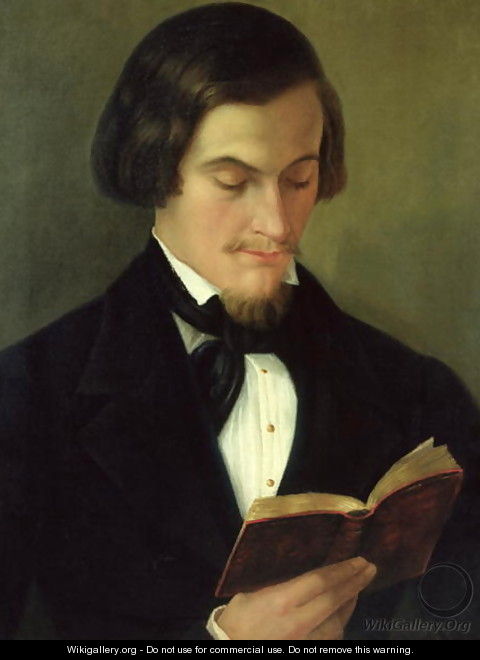
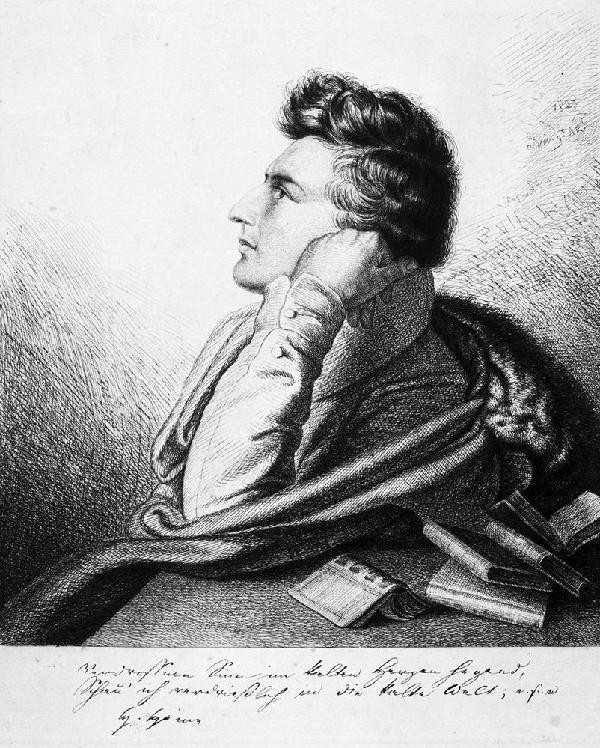
Portrait of Heinrich Heine by Amalia Keller © Wikipedia
Lovely cradle of my sorrows
Lovely cradle of my sorrows,
Lovely tombstone of my peace,
Lovely city, we must part—
Farewell! I call to you.
Farewell, O sacred threshold,
Where my dear beloved treads,
Farewell! O sacred spot,
Where I first beheld her.
Had I never seen you though,
Fair queen of my heart!
It would never then have come to pass
That I am now so wretched.
I never wished to touch your heart,
I never begged for love,
To live in peace was all I wished,
And to breathe the air you breathed.
But you yourself, you drive me hence,
Your lips speak bitter words;
Madness rages in my mind,
And my heart is sick and sore.
And my limbs, weary and feeble,
I drag away, my staff in hand,
Until I lay my tired head down
In a cool and distant grave.
English translation © Richard Stokes
“Love cradle of my sorrow” is a poignant farewell to the place where the speaker’s love was born. It has now become a cradle of suffering due to unfulfilled longing. Imagery of departure convey a sense of finality as the elegiac tone of the poem blends nostalgia with tender sorrow and resignation. The more elaborate structure of the text allows for an expansive expression of grief, making a shift from macabre intensity to a broader, more lyrical lament.
Schumann’s musical setting captures the poem’s bittersweet mood with profound sensitivity. The piano accompaniment is rich and lyrical, with rolling arpeggios and a warm, almost consoling texture. The vocal line is expansive and melodic, with soaring phrases that reflect the speaker’s deep emotion, particularly on lines recalling the beloved’s gaze. The piano postlude, tender yet fading, leaves a sense of unresolved longing.
The overall cycle is now moving from morbid dread to a more reflective, elegiac expression of love’s pain. It deepens the narrative of unrequited love by introducing the theme of departure, both physical and emotional, while reinforcing the speaker’s inability to fully escape their suffering.
Defiant Despair
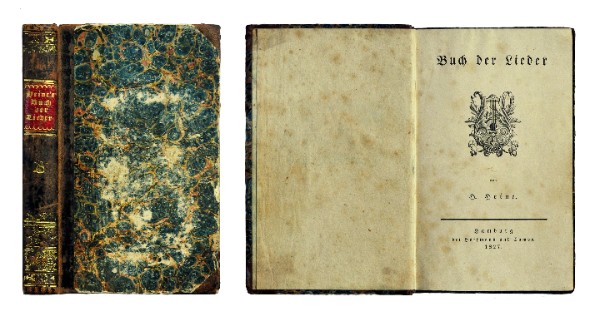
Heinrich Heine: Book of Songs, 1827
Wait, O Wait, Wild SeamanWait, O wait, wild seaman,Soon I’ll follow to the harbour;I’m taking leave of two maidens:Of Europe and of her.Stream from my eyes, O blood,Gush from my body, O blood,That with my hot bloodI may write down my agonies.Why today of all days, my love,Do you shudder to see my blood?You’ve seen me pale and with bleeding heartStand before you for years on end!Remember the old storyOf the serpent in Paradise,Who, through the evil gift of an apple,Plunged our forbears’ into woe?The apple has caused all our ills!Eve brought death with it,Eris brought flames to Troy,And you—both flames and death.English translation © Richard Stokes
“Wait, O Wait, Wild Seaman” is a vivid, impassioned cry from the speaker, who, desperate to flee the pain of unrequited love, calls out to a “wild boatman” to ready a ship for escape. The imagery is dramatic and turbulent, with references to stormy seas, burning love, and a heart torn by grief, conveying a sense of reckless urgency. The tone is defiant yet anguished, blending determination with despair as the speaker seeks to outrun his emotional torment..
Schumann’s setting matches the poem’s wild energy with striking vigour. The piano accompaniment is bold and turbulent, with driving rhythms, swirling arpeggios, and sharp dynamic contrasts that conjure the image of a ship battling waves. The vocal line is equally intense, with declamatory phrases and wide melodic leaps that capture the speaker’s urgent commands and emotional desperation.
This song intensifies the cycle’s emotional arc, shifting from the tender resignation to a fevered, almost reckless attempt to flee. Schumann’s vivid, stormy setting brings Heine’s dramatic imagery to life, making this song a climactic moment in the cycle’s exploration of unfulfilled love.
Robert Schumann: Liederkreis, Op. 24 – No. 7. Berg’ und Burgen schaun herunter (Andri Björn Róbertsson, bass-baritone; Ástríður Alda Sigurðardóttir, piano)
A River of Longing
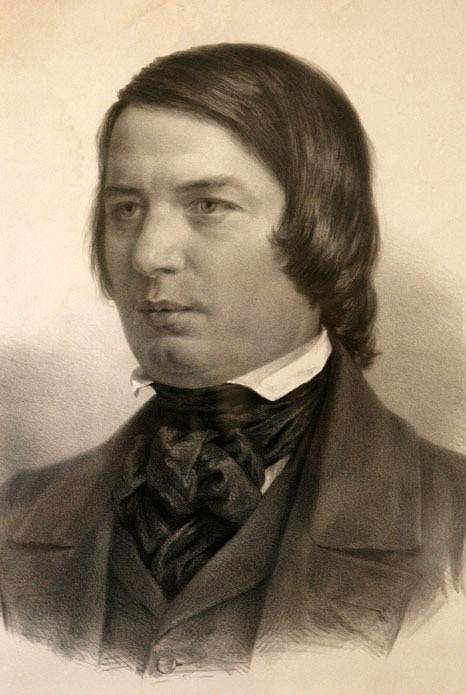
Portrait of Robert Schumann
Mountains and castles gaze down
Mountains and castles gaze down
Into the mirror-bright Rhine,
And my little boat sails merrilly,
The sunshine glistening around it.
Calmly I watch the play
Of golden, ruffled waves surging;
Silently feelings awaken in me
That I had kept deep in my heart.
With friendly greetings and promises,
The river’s splendour beckons;
But I know it—gleaming above
It conceals within itself Death and Night.
Above, pleasure; at heart, malice;
River, you are the image of my beloved!
She can nod with just as much friendliness,
And smile so devotedly and gently.
English translation © Richard Stokes
“Mountains and castles gaze down” paints a serene yet melancholic scene of the speaker traveling along the Rhine River, where mountains and castles reflect in the water, and the evening sun casts a golden glow. This tranquil landscape contrasts sharply with the speaker’s inner turmoil, as the heart weeps silently, consumed by thoughts of their unattainable beloved. The tone is reflective and subdued, and the romantic irony contrasts the beauty of the external world with the speaker’s internal pain.
Schumann’s musical setting captures the poem’s blend of serene beauty and quiet sorrow with exquisite sensitivity. The piano accompaniment is lyrical and fluid, with undulating arpeggios and soft, shimmering chords that mirror the river’s reflective surface and the evening’s golden light. The vocal line is tender and melodic, with smooth, legato phrases that convey the speaker’s contemplative mood, yet subtle dips into minor harmonies hint at their underlying grief. The song concludes with a soft, lingering piano postlude, fading gently to suggest both the river’s endless flow and the speaker’s unresolved longing.
The cycle has now moved from the turbulent escape to a quieter, more introspective meditation on love’s pain. It continues the theme of departure but reframes it as a reflective journey through a beautiful yet indifferent world.
Depths of Sorrow
At first I almost despaired
At first I almost despaired,
And I thought I could never be able to bear it;
Yet even so, I have borne it—
But do not ask me how.
English translation © Richard Stokes
“At first I almost despaired” expresses the speaker’s deep despair and fleeting hope in the face of overwhelming sorrow. The speaker confesses that he nearly succumbed to hopelessness, believing he could not endure the pain of his unrequited love. Yet a glimmer of resilience emerges, as he resolves to bear his suffering, though it feels eternal. The tone is sparse but powerful, focusing on the heart’s anguish and the crushing weight of grief.
Schumann’s musical setting amplifies the poem’s heavy melancholy with profound sensitivity. The song adopts a slow, deliberate tempo, creating an atmosphere of oppressive sorrow. The piano accompaniment is stark and measured, with heavy, chordal textures and a plodding rhythm that evoke the weight of the speaker’s burden. The vocal line is subdued and mournful, with a narrow melodic range and halting phrases that mirror the speaker’s emotional exhaustion.
This song deepens the cycle’s exploration of unrequited love by confronting the raw despair that follows the reflective journey. It marks a moment of intense emotional vulnerability, stripping away the external imagery of previous songs to focus on the speaker’s inner struggle.
Robert Schumann: Liederkreis, Op. 24 – No. 8. Anfangs wollt ich fast verzagen (Andri Björn Róbertsson, bass-baritone; Ástríður Alda Sigurðardóttir, piano)
Lyrical Legacy
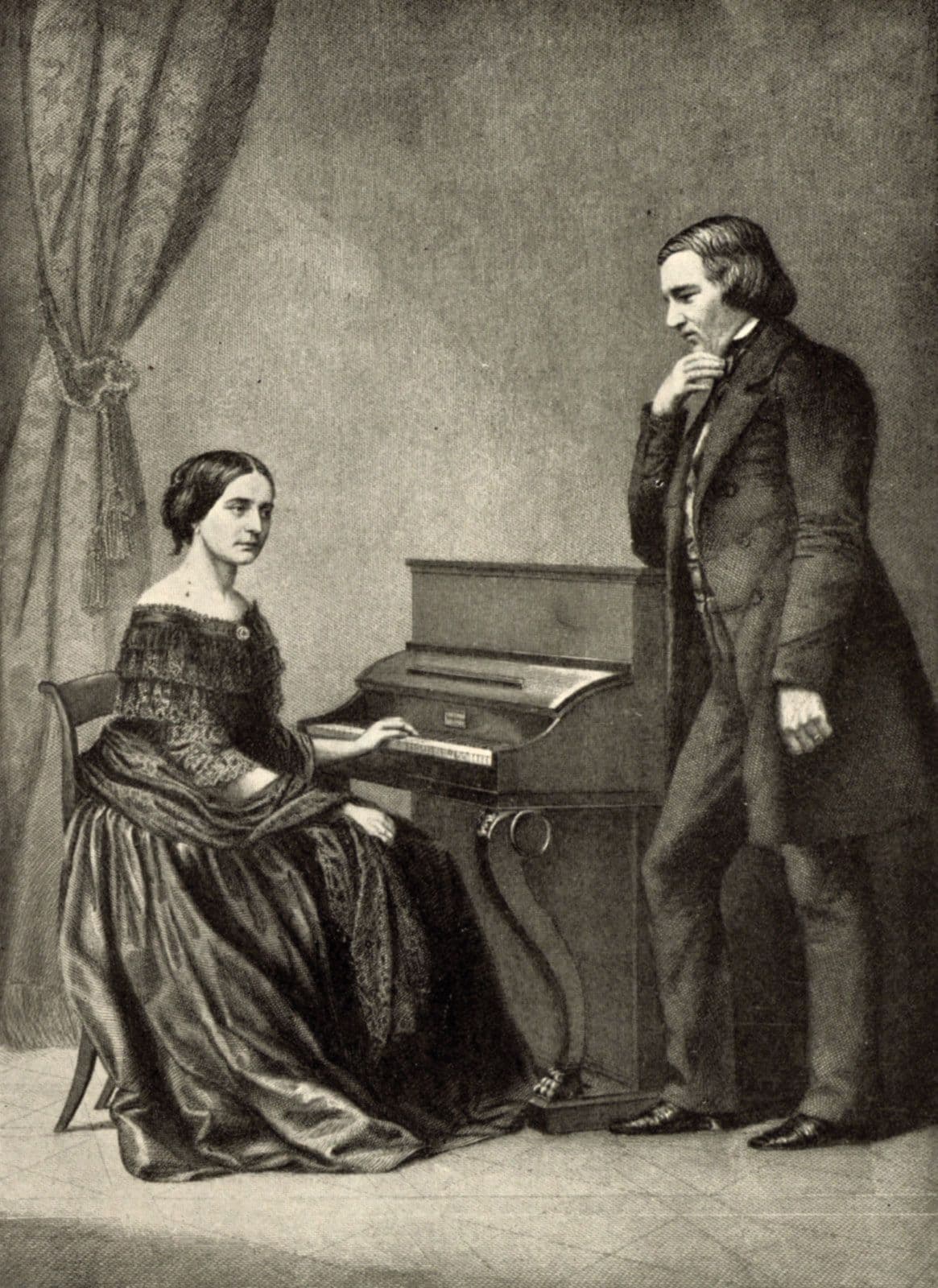
Robert and Clara Schumann, 1850
With myrtles and roses
With myrtles and roses, sweet and fair,
With fragrant cypress and golden tinsel,
I should like to adorn this book like a coffin
And bury my songs inside.
Could I but bury my love here too!
On Love’s grave grows the flower of peace,
There it blossoms, there is plucked,
But only when I’m buried will it bloom for me.
Here now are the songs which once cascaded,
Like a stream of lava pouring from Etna,
So wildly from the depths of my soul,
And scattered glittering sparks all around!
Now they lie mute, as though they were dead,
Now they stare coldly, as pale as mist,
But the old glow shall kindle them once more,
When the spirit of Love floats over them.
And a thought speaks loud within my heart,
That the spirit of Love will one day thaw them;
One day this book will fall into your hands,
My dearest love, in a distant land.
Then shall song’s magic spell break free,
And the pallid letters shall gaze at you,
Gaze imploringly into your beautiful eyes,
And whisper with sadness and the breath of love.
“With Myrtles und Roses” presents a tender yet bittersweet vision of the speaker intrusting his songs and love to a book, which he imagines to adorns with myrtle and roses, symbols of love and beauty. The speaker envisions the book as a vessel for his emotions, preserving his longing even after death. The poem’s tone is elegiac and hopeful, blending resignation with a poignant wish for transcendence. This poem offers a sense of closure, though it is tinged with melancholy.
Schumann captures the flowing structure and the reflective and aspirational mood by evoking a sense of gentle resolution. A warm and lyrical piano accompaniment mirrors the imagery of the flowers, while the expansive and melodic line soars with phrases that convey the speaker’s tender longing and spiritual yearning.
The piano postlude is extended and luminous, fading gently to suggest a peaceful, if bittersweet, closure. This song serves as a poignant conclusion, moving from the despair and agitation to a reflective acceptance of love’s enduring power, even in loss. It offers a vision of transcendence, tying together the cycle’s themes of longing, departure, and emotional struggle.
Robert Schumann: Liederkreis, Op. 24 – No. 9. Mit Myrten und Rosen (Andri Björn Róbertsson, bass-baritone; Ástríður Alda Sigurðardóttir, piano)
From Longing to Resolution
Robert Schumann’s Liederkreis Op. 24, with texts by Heinrich Heine, forms a cohesive yet emotionally varied cycle that traces the arc of unrequited love through longing, despair, and tentative resolution. From hopeful anticipation to the transcendent closure, the cycle navigates a psychological journey marked by vivid imagery and romantic irony, amplified by Schumann’s sensitive musical settings. Each song, with its distinct mood and texture, contributes to a narrative that captures the complexities of love’s joy and pain, set against Heine’s poetic blend of sincerity and subtle mockery.
Schumann’s ability to translate Heine’s concise, evocative texts into music creates a cycle that is both intimate and universal, reflecting the Romantic era’s fascination with individual emotion and nature’s resonance. Scholars have long recognized the depth of Schumann’s engagement with Heine’s poetry in Liederkreis Op. 24. As Jon W. Finson notes, “Schumann’s settings in Op. 24 demonstrate a remarkable sensitivity to Heine’s emotional nuances, using musical structure to mirror the poet’s shifts between hope and despair.”
Similarly, Barbara Turchin highlights the cycle’s unity, writing, “The songs of Liederkreis Op. 24 are bound by a psychological progression, where Schumann’s tonal choices and motivic connections create a narrative arc that transcends the individual poems.” Although less frequently performed than Dichterliebe, this cycle is a masterful synthesis of text and music and a cornerstone of Schumann’s “Year of Song.”
For more of the best in classical music, sign up for our E-Newsletter