We don’t think of Edward Elgar (1857–1934) as a song composer because his great symphonic and choral works capture our attention. Yet these ‘smaller things’, for which Elgar has been criticised for working on when he could be giving us greater pieces, are things of great skill and beauty.
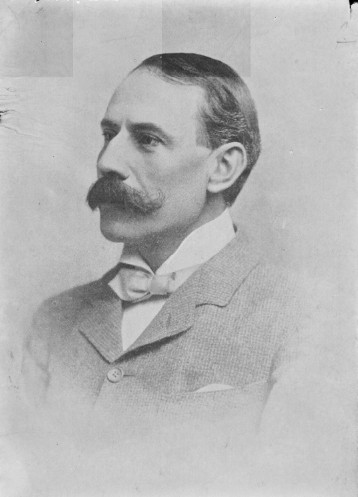
Edward Elgar, ca 1910 (photo by James Russell & Sons) (National Portrait Gallery)
Elgar’s song output consists of 48 completed songs with another 20 that remained unfinished. His contemporaries, such as Hubert Parry, C.V. Stanford, or Maude Valérie White, were much more prolific, but Elgar was content with his output. Although he was criticised for not setting great poetry, he is reported as saying, ‘it is better to set the best second-rate poetry to music, for the most immortal verse is music already’. Elgar set a few poets more than once, so we have a Tennyson ‘Lute Song’, Shelley’s ‘In Moonlight’, and Charles d’Orléans (translated by Louise Stuart Costello) is here with ‘Is she not passing fair’, and Longfellow’s translation of ‘Rondel’ by Froissart. But we also have songs by C. Alice Roberts, the minor literary figure he married in 1889, music setting verses by A.C. Benson, including ‘Land of Hope and Glory’, Gilbert Parker, Adam Lindsay Gordon, and Elizabeth Barrett Browning, the last two in his orchestral song cycle Sea Pictures.
Edward Elgar: Is She Not Passing Fair (Neil Mackie, tenor)
Elgar’s songs were most often performed in private, in the drawing-room, and were largely intended for amateurs and the young. This isn’t to say it isn’t music for professionals, but that it is accessible to a range of performers. If a song had some high voice writing, he also provided lower alternatives. The piano parts tend to be easier than might be expected.
Because so many of these works were intended for home performance, it’s difficult to track their reception, but if we look at the actions of his publisher, who specifically requested songs from Elgar, we can see that there was an audience they were trying to reach. Some songs were translated into German, and other works were written in multiple keys for different voice types.
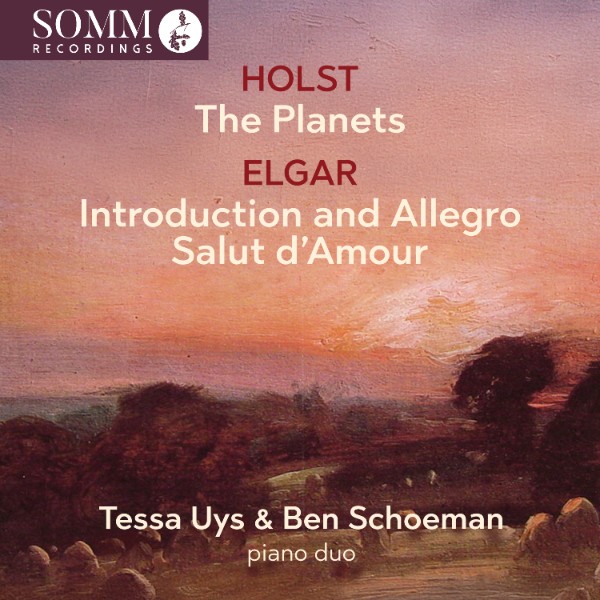
This recording by Catherine Wyn-Rogers (mezzo-soprano), Neil Mackie (tenor), and Christopher Maltman (baritone) with Malcolm Martineau on piano, was originally issued in 1999, and this 2026 reissue includes new liner notes by Julian Rushton. This collection ranges from songs composed early in Elgar’s compositional life to those done in his last years. Some of the songs are from incomplete projects, such as a setting of Ben Jonson intended for an opera, The Spanish Lady, that remained unfinished. Many of the songs are those of regret or of past memory. One exception is ‘The Shepherd’s Song’, to a text by Barry Pain, which has an active accompaniment, perhaps of the wind on the hills or the hurrying sheep, while the shepherd sings of the joys of summer and of coming home at the end of the day.
Edward Elgar: 3 Songs, Op. 16, No. 1 – The Shepherd’s Song (Catherine Wyn-Rogers, mezzo-soprano)
In his choice of texts, even if they are of minor poets, Elgar captures the country life of England, such as in Adam Lindsay Gordon’s ‘A Song of Autumn’, asking where to gather garlands for the fall. Songs of love, as in John Hay’s ‘Through the Long Days’ and songs of death, ‘Like to the Damask Rose’ (Simon Wastell), where the poet starts by appreciating the beauties of the world but then the flowers wither, the sun sets, the swan sings for one last time, and the tale is ended as ‘man’s life is done’.
The songs are beautifully sung and evoke a time when home entertainment was more important than social life. Elgar accommodated his audience by writing works that were accessible to both singers and their pianists and setting poetry that fit their worldview. In these small works, Elgar brings forth the intimate and home side of Edwardian life.
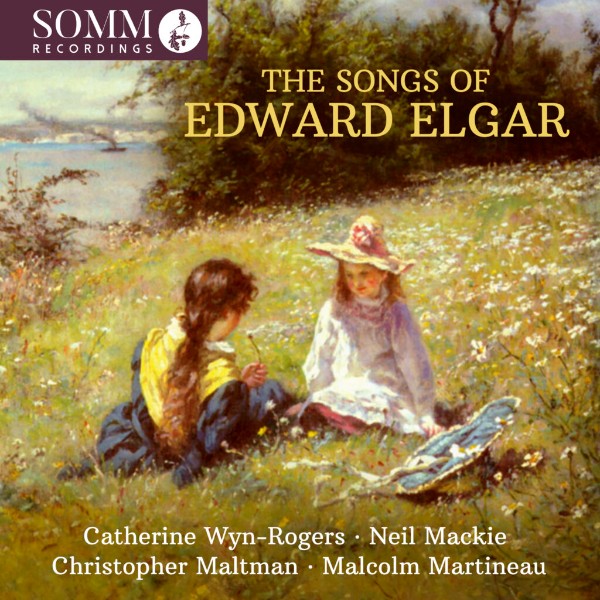
The Songs of Edward Elgar (Digital Re-release)
Catherine Wyn-Rogers (mezzo-soprano); Neil Mackie (tenor); Christopher Maltman (baritone); Malcolm Martineau (piano)
SOMM Recordings SOMMCD 0715 (originally issued as SOMMCD 220 in 1999)
Official Website
For more of the best in classical music, sign up for our E-Newsletter