When Georg Solti stepped onto the podium as Music Director of the Chicago Symphony Orchestra (CSO) in 1969, he inherited an ensemble with a storied history but a reputation in need of revitalisation. Over the next 22 years, Solti’s leadership would not only transform the CSO into one of the world’s preeminent orchestras but also redefine the possibilities of orchestral excellence.
Known for his fiery intensity, earning him the nickname “The Screaming Skull,” Solti’s tenure was marked by a relentless pursuit of precision, a bold reshaping of the orchestra’s sound, Grammy-winning recordings, and international tours that cemented the CSO’s global stature.
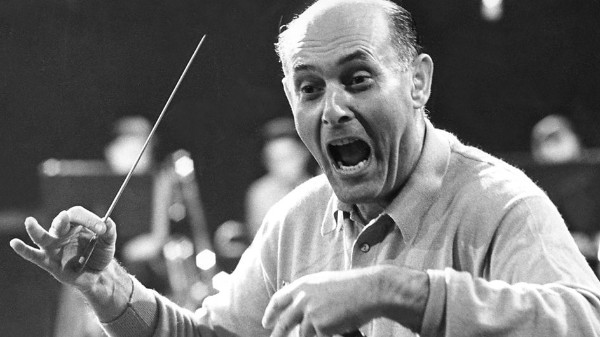
Georg Solti
To celebrate his birthday on 21 October, let us look at this golden chapter in classical music, a testament to Solti’s power of vision, discipline, and artistry.
Georg Solti & CSO perform Beethoven: Symphony No. 5 in C minor, Op. 67
Igniting Excellence
Born on 21 October 1912 in Budapest, Solti brought to Chicago a wealth of experience from his European career, including transformative leadership at the Royal Opera House, Covent Garden, and landmark recordings of Wagner’s Ring Cycle. Yet, when he arrived at the CSO, he faced an orchestra that, while respected, had not fully realised its potential on the world stage.
Under previous directors like Fritz Reiner, the CSO had developed a reputation for technical brilliance, but by the late 1960s, it was perceived as somewhat insular, lacking the international prominence of rivals like Berlin or Vienna.
Solti saw an opportunity to elevate the ensemble to unparalleled heights, and he approached the task with a ferocity that would define his tenure. His impact was immediate and profound, driven by his uncompromising standards and dynamic conducting style.
Gustav Mahler: Symphony No. 7 in E Minor – II. Nachtmusik: Allegro moderato (Chicago Symphony Orchestra; Georg Solti, cond.)
Precision and Passion
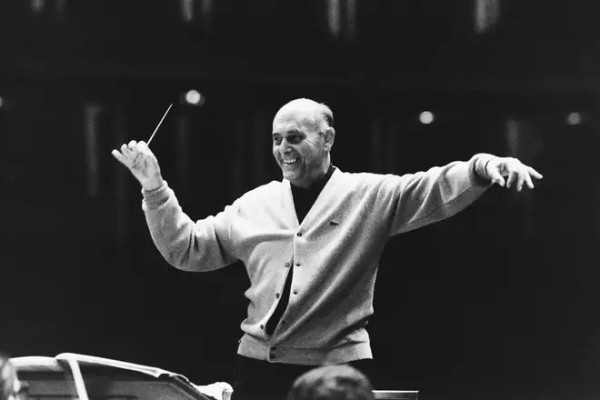
Georg Solti
Georg Solti’s conducting style was a force of nature, defined by a dynamic, precise, and passionate approach that left marks on every orchestra he led. His presence on the podium was electrifying, combining intellectual rigour with visceral energy.
His performances were not merely interpretations but events, charged with a sense of urgency and inevitability that captivated audiences and musicians alike. Solti’s philosophy was clear. Music demanded total commitment, and as he embodied this belief, he made the orchestra an extension of his own expressive will.
Central to Solti’s technique was his emphasis on clarity, rhythmic vitality, and dramatic intensity. He had an almost obsessive focus on transparency, ensuring that every instrumental line was audible.
Georg Solti & CSO perform Mozart: Symphony No. 35 in D Major, K. 385
Forging A New Sound
While some consider this approach tyrannical, Solti believed that great music required total commitment. As he once said, “if you want to play Beethoven, you must sweat.” This ethos galvanised the CSO, forging a sound that was both polished and electrifying, characterised by crystalline clarity, rhythmic vitality, and dramatic intensity.
Under Solti’s baton, the CSO’s sound underwent a transformation, and his interpretations of the Austro-German repertoire became benchmarks. His ability to balance technical precision with expressive power gave the CSO a distinctive voice, one that could rival any orchestra in the world.
The recording studio became a crucible for Solti’s vision. His partnership with Decca Records produced a discography that remains a cornerstone of classical music. Between 1969 and 1991, Solti and the CSO recorded prolifically, amassing over 100 albums, many of which garnered Grammy Awards. In fact, during his tenure, the orchestra received an unbeaten 31 Grammy Awards.
Béla Bartók: A csodalatos mandarin koncertszvit (The Miraculous Mandarin Suite), Op. 19, BB 82 (Chicago Symphony Orchestra; Georg Solti, cond.)
A Cultural Force
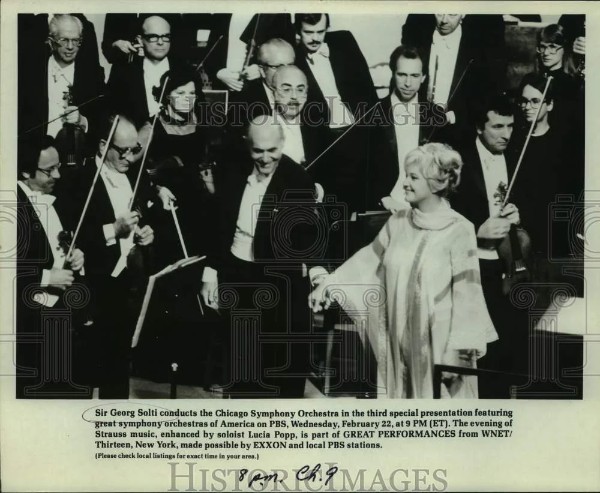
Georg Solti with the Chicago Symphony Orchestra
Beyond the studio, Solti’s international tours elevated the CSO’s reputation to new heights. His first major tour with the orchestra in 1971, which included stops in Europe, was a triumph. Audiences in London, Vienna, and Berlin were stunned by the CSO’s power and precision, with critics hailing it as a new force in orchestral music.
Solti’s programming was ambitious, featuring staples like Beethoven and Brahms alongside 20th-century works by Bartók and Shostakovich, reflecting his commitment to a broad repertoire. These tours showcased the CSO’s versatility and established it as a cultural ambassador for American music.
Solti’s intensity was not without controversy, yet his rehearsals fostered a sense of camaraderie and shared purpose among musicians. Principal horn player Dale Clevenger once remarked, “Solti made us believe we could be the best in the world, and we were.”
When Solti stepped down in 1991, after 22 years as Music Director, he left behind a transformed orchestra; technically peerless, artistically vibrant, and globally celebrated. The CSO’s reputation as one of the world’s finest orchestras today owes much to Solti’s relentless pursuit of perfection.
For more of the best in classical music, sign up for our E-Newsletter