Chances are, if you’ve ever watched classical pianists on YouTube, you’ve probably seen a performance by Valentina Lisitsa.
She has become one of the most frequently watched pianists on YouTube, building her audience over nearly twenty years, one view at a time.
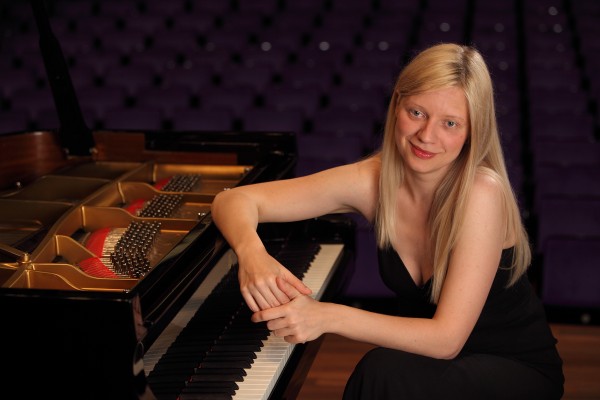
Valentina Lisitsa
Today, we’re looking at how she became such an online phenomenon and what her most popular recordings are as of the summer of 2025.
Valentina Lisitsa’s Career
Valentina Lisitsa was born in Kiev in 1973. She started playing piano at three and gave her first recital at four.
She met her future husband while studying at the Kiev Conservatory, and they emigrated to the United States together in 1991.
Like many talented young musicians, Lisitsa was unable to sign a deal with a major record label, so she took matters into her own hands. She began a YouTube channel and uploaded her first video there in 2007: this performance of Chopin’s Etude Op. 10, No. 4.
Valentina Lisitsa ( Chopin 24 Etudes DVD track) Op. 10 No. 4
Her Chopin YouTube videos became very popular, and she realised she was building an audience who would follow her. In 2010, she and her husband spent their life savings hiring the London Symphony Orchestra to record the Rachmaninoff concertos. She later signed with Decca, who released that recording.
Since she joined YouTube in 2007, her videos have garnered an astonishing 311 million views altogether.
Today, we’re looking at seven of her most popular performances. We’re also going to be looking at each performance’s heatmap when it’s available. (A heatmap is a feature available on some YouTube videos that reveals what specific portions of the video have been most frequently viewed.)
Here are Valentina Lisitsa’s seven most popular YouTube videos, ordered in reverse view number, with the most popular performance revealed at the end.
Beethoven’s Piano Sonata No. 17, Mov. 3
8.2 million views
This video demonstrates one reason why Lisitsa’s YouTube videos became so popular so quickly: she took the time and effort to film them in a professional way.
This video includes fascinating footage from a miniature camera attached to Lisitsa’s clothing, so you can see the keyboard from her point of view.
The tempo can sometimes feel sluggish or heavy compared to that of other marquee players, but honestly, the novelty of the filming style makes the quality of the performance less relevant than it would be in any other video using standard filming techniques.
Beethoven’s Für Elise
9.7 million views
This is an encore after a performance with the Seoul Philharmonic.
As the piece begins, you can hear several audience members laugh in surprise that she pulled out a simple piece by Beethoven instead of a standard virtuoso showpiece. All in all, delightful.
It was also a smart move given the 2009 YouTube algorithm: at the time, there weren’t nearly as many videos of standard repertoire as there are today, and of course, countless student pianists flocked to YouTube to hear professionals play the piece. When they all looked up Fur Elise, this was one of the performances that they found.
Chopin’s Nocturne in E-flat Major, Op. 9, No. 2
10 million views
This is one of Chopin’s most popular nocturnes and, over the decades, has appeared in countless pop culture moments and movie soundtracks.
The reception of Lisitsa’s performance is especially interesting because the YouTube heatmap indicates that the most often repeated portion of the video is actually the final third. (Usually, you see a spike at the beginning, indicating that people are repeating the entire performance. But in this case, people were most interested in listening again to her treatment of that elegant final third.)
Rachmaninoff’s Prelude in G-minor, Op. 23, No. 5
12 million views
This prelude is an encore from Lisitsa’s June 2012 performance at the Royal Albert Hall in London.
Her wrists and fingers are all incredibly, effortlessly springy in this performance. She really emphasises the sharp, marchlike rhythms of the outer sections, turning this prelude into a full-blown virtuoso showcase.
According to the video’s heatmap, there’s no one particular place that listeners return to, suggesting that people really enjoy this performance as a whole, rather than returning to specific moments in it.
Liszt’s La Campanella
13 million views
The showpiece energy continues with another encore from that same 2012 performance at the Royal Albert Hall.
The heatmap shows that the most popular part of the performance is the extraordinary flurries of notes that make up the final minute (starting at around 3:17 in this performance).
The finale is so aggressive, it feels remarkable that the piano survives intact!
Liszt’s Hungarian Rhapsody No. 2
26 million views
One of the most recognisable pieces in the classical repertoire – thanks in large part to cartoons like Tom and Jerry – is Liszt’s Hungarian Rhapsody No. 2.
At 26 million views, Lisitsa’s performance is the second most popular version of this work on YouTube (after another pianist named Yannie Tan, who performed an arrangement of it from the famous Tom and Jerry cartoon.) It’s an energetic performance, straightforward and assured. The portion from 8:40 on is especially dizzying; her fingers are moving so fast they practically turn invisible!
Beethoven’s Moonlight Sonata, Mov. 3
65 million views
Here it is: Valentina Lisitsa’s most viewed video, with a staggering 65 million views!
It’s a performance of the finale of Beethoven’s Moonlight Sonata, taken at a truly ferocious clip. This adrenaline-fueled run-through showcases Lisitsa’s talent at articulation. She may be pursuing speed and precision ahead of subtlety here, but maybe that’s part of what makes it such a thrilling interpretation.
As of 2025, this video has more views than any other performance of this movement on YouTube. Given the competition, that’s no small accomplishment.
Conclusion
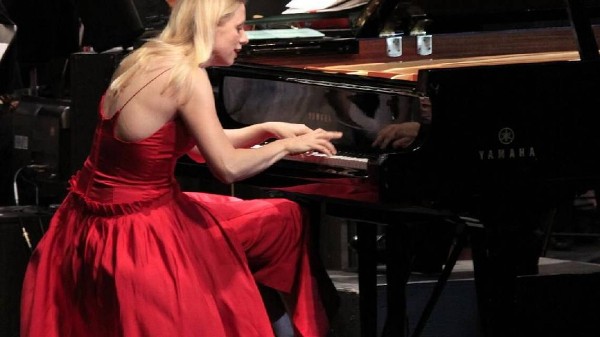
Valentina Lisitsa © Baptiste Grison
Valentina Lisitsa’s career trajectory is one of the most striking examples of how a classical musician can find a home – and make a career – by leveraging their online popularity.
By avoiding the traditional gatekeepers of the music world and turning directly to listeners, Lisitsa gained name recognition and then parlayed that into more traditional success. Perhaps most importantly of all, however, she established a direct and emotional connection with her fans. Her work has helped redefine what a modern career as a piano soloist might look like…and how classical music might find its way into modern listeners’ lives.
For more of the best in classical music, sign up for our E-Newsletter