Giacomo Puccini, celebrated worldwide for operas such as La Bohème, Tosca, and Madama Butterfly, remains primarily associated with tragic, emotionally intense narratives that exemplify the verismo tradition. Yet, among his lesser-known works lies La Rondine (The Swallow), a curious and fascinating departure from both his signature style and the standard operatic conventions of the early twentieth century.
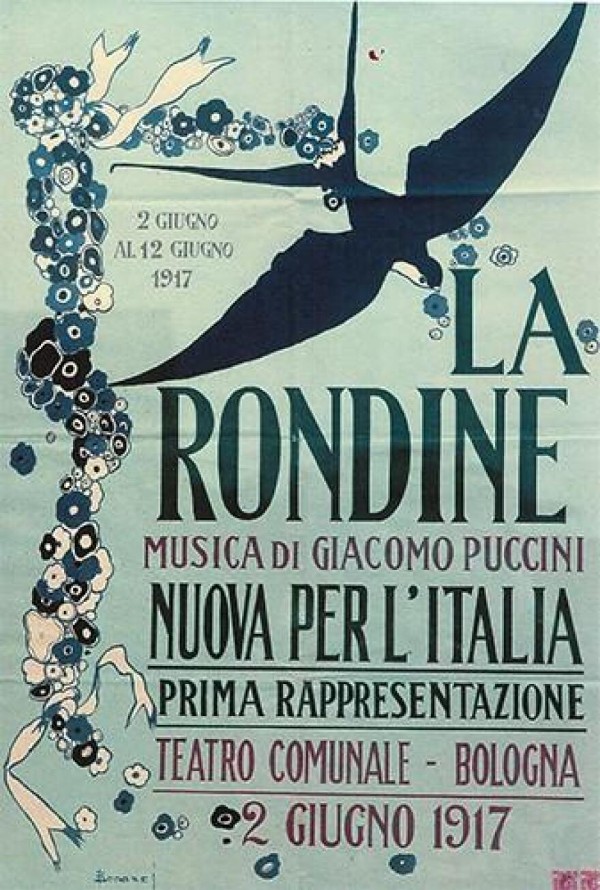
Puccini’s La Rondine
Premiered on 27 March 1917 at the Grand Théâtre de Monte Carlo, La Rondine occupies a distinctive place in Puccini’s output. It is a lyrical celebration of love and beauty, and a subtle, modern reflection on class, social expectation, and personal sacrifice.
Giacomo Puccini: La Rondine, “Chi I bel sogno di Doretta”
While it never achieved the popular acclaim of Puccini’s major works, La Rondine provides a compelling lens into the composer’s evolving artistic sensibilities, his experimentation with form, and his engagement with the operatic milieu of his era.
To commemorate Puccini’s passing on 29 November 1924 and to draw attention to a performance of the final 1921 version by Opera Rara on 5 December 2025 at the Barbican Centre, let’s take a glimpse into the breadth of Puccini’s creative vision.
War, Contracts, and Creative Instincts
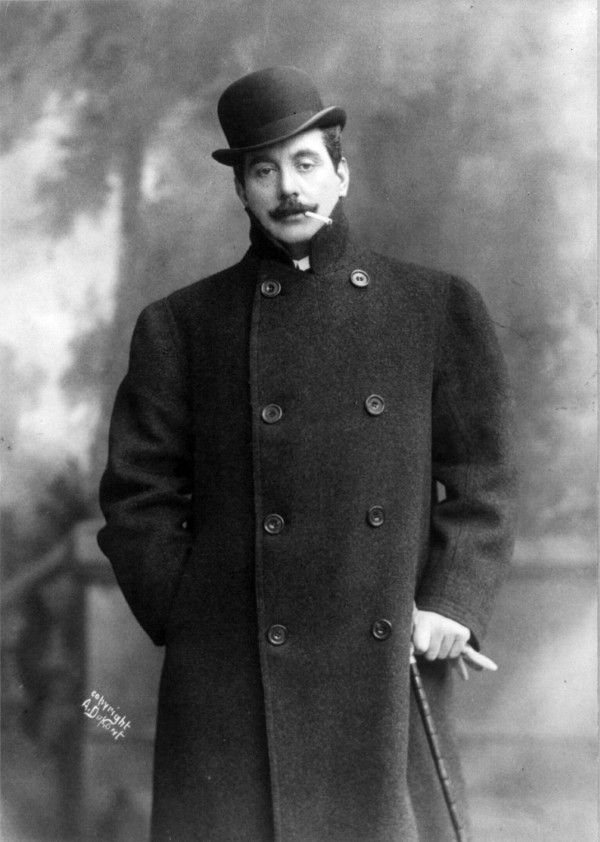
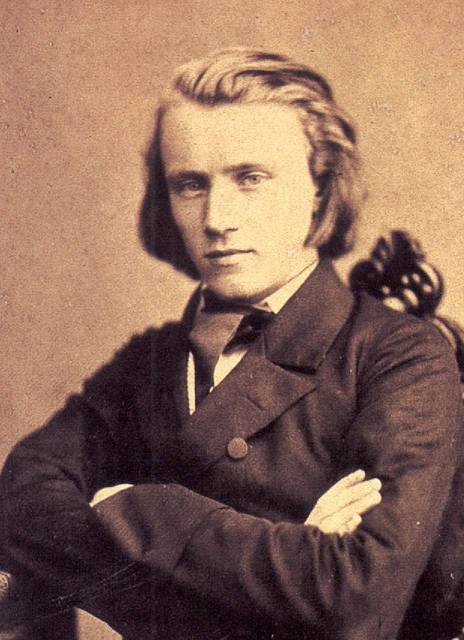
Giacomo Puccini
In October 1913, while in Vienna for La fanciulla del West, Puccini was invited by the Carltheater to write an operetta. He agreed on the condition that it be a fully through-composed comic opera, “like Rosenkavalier, but more amusing and more organic.”
Of the two plots proposed by Willner and Reichert, he chose the latter and asked Adami to prepare an Italian libretto. Progress over the next two years was slow, and Italy’s entry into World War I forced a revision of the contract. The Carltheater gave up its claim to the première but held on to half the performing rights.
With Tito Ricordi uninterested, Puccini turned to Sonzogno to publish the score. And because wartime Europe was in turmoil, the new opera needed a neutral stage, with Monte Carlo the natural choice.
The original cast included Gilda dalla Rizza (Magda), Ina Maria Ferraris (Lisette), Tito Schipa (Ruggero), Francesco Dominici (Prunier) and Gustave Huberdeau (Rambaldo), and the conductor was Gino Marinuzzi.
Giacomo Puccini: La rondine – Act I: Ah! no! no! … Non dite questo (Yvette, Bianca, Prunier, Magda, Lisette, Suzy, Rambaldo) (London Symphony Orchestra; Antonio Pappano, cond.)
Love over Luxury
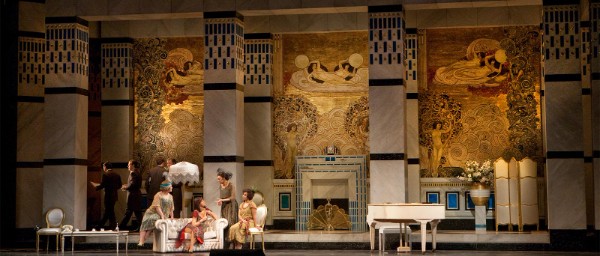
Puccini’s La Rondine, the MET production
La Rondine tells the story of Magda, a Parisian courtesan who longs for a more genuine, heartfelt existence than the comfortable but loveless life she leads under the patronage of the wealthy Rambaldo. When Rambaldo hosts a salon, the poet Prunier declares that romantic love is the great force of destiny.
This idea awakens Magda’s long-suppressed yearning for true passion, and Prunier predicts that she will one day fly toward love like a swallow returning to spring. Ruggero, a shy young man from the provinces and a friend of Rambaldo, arrives at the salon and captivates Magda with his innocence and sincerity.
After the party ends, she impulsively disguises herself and follows him to the lively café Bullier, determined to taste the freedom she has been denied. There, among students and dancers, Magda and Ruggero meet again, this time as strangers. They fall in love almost instantly, and when Rambaldo discovers her disappearance, Magda chooses love over security.
Giacomo Puccini: La rondine – Act I: T’amo … menti! (Prunier, Lisette) (London Symphony Orchestra; Antonio Pappano, cond.)
A Future Impossible
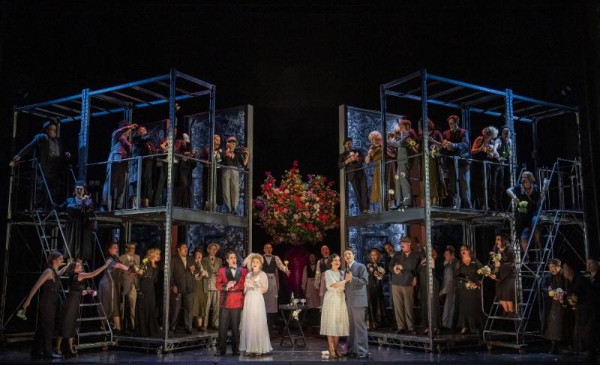
Puccini’s La Rondine, Opera North’s production
Eventually, Magda and Ruggero live together on the Riviera, where he dreams of marrying her and taking her home to his family. He writes to his mother asking for her blessing, certain that Magda is the ideal wife.
But Magda is tormented by the truth that she has concealed her past as a courtesan. When Ruggero receives his mother’s joyful approval, Magda realises she cannot build a future on a lie. Fearing that her past would destroy Ruggero’s happiness and reputation, she confesses everything.
Heartbroken, Ruggero begs her to stay, insisting that love matters more than convention. But Magda, recognising the gulf between desire and reality, makes the painful decision to leave him and return to the life she tried to escape. Like the swallow evoked earlier, she migrates once again, this time not toward hope but toward self-sacrifice.
Giacomo Puccini: La rondine – Act I: Fiori freschi! (Chorus, Georgette, Un giovane, Gabriella, Lolette) (London Symphony Orchestra; Antonio Pappano, cond.)
Three Versions, One Fate
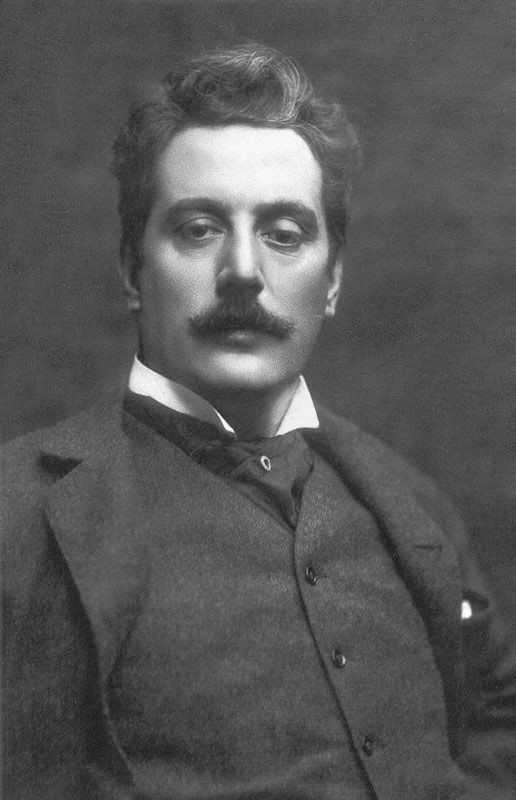
Giacomo Puccini
The first Italian performance took place at Bologna on 5 June 1917, but unsatisfied, Puccini initially made a number of modifications to the score between 1918 and 1919. He made Prunier a baritone, raised the pitch of Lisette’s role and added a romanza for Ruggero in Act I. Prunier was to appear twice in Act 3, with Magda departing without bidding farewell to Ruggero.
This version was given at Palermo and the Volksoper in Vienna on 9 October 1920, but the reception was lukewarm. In time, Puccini prepared yet a third version in which the first two acts reverted to their original design, with Prunier once more a tenor.
This version presents changes to the vocal line, and Puccini “loves to make everything higher, and brighter; it’s more sparkling.” In addition, the big confrontation between Magda and Rambaldo at the end of Act II becomes more violent.
In Act 3, Puccini makes his most striking revisions. He adds a trio of light soprano roles and also restores Rambaldo, absent from earlier versions, who returns to beg Magda to come back to Paris.
Their new duet brings the image of the “swallow” to the foreground, tying the opera’s title more explicitly to Magda’s fate. The act culminates in an intensified farewell between Magda and Ruggero. He discovers her past and rejects her, and although the music derives from the first version, its new text and dramatic framing give the ending a far more brutal emotional impact.
Giacomo Puccini: La rondine – Act II: Perche mai cercate di saper (Magda, Ruggero, Chorus, Rabonier) (London Symphony Orchestra; Antonio Pappano, cond.)
The Lost Jewel
Puccini was deeply committed to the third version, which he once described as a “jewel.” He was unable to attend the first performances in Italy in April 1924, and he died before he could ever hear it performed.
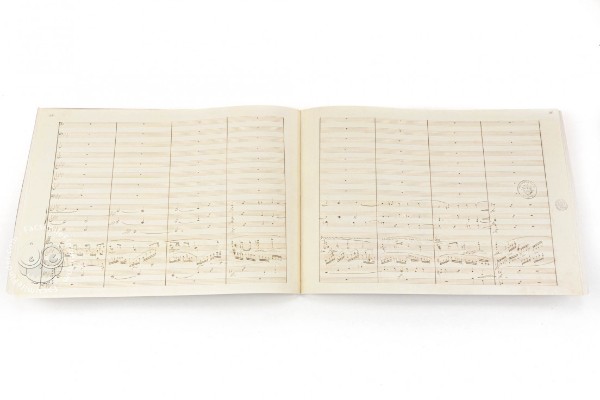
Moreover, a fire that broke out during the Second World War at Puccini’s publisher’s offices in Milan has meant that, since that time, this final version has survived only in vocal score. Opera Rara’s revival is based on a new performing edition, and it includes the ending that differs completely from the first version of 1917.
In essence, the final version of Rondine was actually a return to the original conception before Puccini started changing his mind. Opera Rara’s performance and recording present exciting opportunities to finally hear this version, effectively lost for many decades.
Giacomo Puccini: La Rondine: “Bevo al tuo fresco sorriso”
Hidden Sophistication
La Rondine is shaped by Puccini’s familiar motivic style, but with an unusually generous flow of long-spun melodies that often fragment into recurring thematic cells. Its sound world conjures languid French waltzes and touches of modernity, including tango, one-step, and even a gentle foxtrot in the love duet in Act II.
Though written for a large orchestra, the score is handled with delicacy, enriched by bold harmonic touches reminiscent of La fanciulla del West, including parallel chords, hints of bitonality and unresolved dissonances. According to scholars, the musical heart is located in Act 2, where Puccini layers two waltz themes to radiant effect and crowns the act with a luminous concertato.
La Rondine remains one of Giacomo Puccini’s most intriguing and underappreciated works. Its combination of lyrical elegance, subtle psychological insight, and cosmopolitan charm distinguishes it from both the heightened drama of Tosca and the heartfelt realism of La Bohème.
While it never achieved the widespread fame of his major masterpieces, La Rondine deserves recognition as a work of considerable artistic sophistication. Its enduring appeal lies not only in its melodious score and compelling characters but also in its capacity to navigate the complexities of social expectation, emotional longing, and personal agency.
For more of the best in classical music, sign up for our E-Newsletter
Giacomo Puccini: La rondine – Act III: Ma come puoi lasciarmi (Ruggero, Magda) (Alberto Rinaldi, baritone; Angela Gheorghiu, soprano; Inva Mula, soprano; Monica Bacelli, mezzo-soprano; Patrizia Biccire, soprano; Patrizia Ciofi, soprano; William Matteuzzi, tenor; Riccardo Simonetti, baritone; Enrico Fissore, bass; Toby Spence, tenor; Roberto Alagna, tenor; Andrew Busher, tenor; Gareth Roberts, tenor; London Voices; London Symphony Orchestra; Antonio Pappano, cond.)
Opera Rara: La Rondine
December 5th, Barbican Hall