We often think of Mozart’s chamber music in terms of refinement, invention, and that marvellous balance between intellect and emotion. Yet, among his chamber works, the string quintets occupy a singular, radiant place.
They are less frequently discussed than the piano concertos or late symphonies, but to listeners who know them, they represent Mozart at his most intimate and most profound. In a word, the music breathes with human warmth as Mozart finds a perfect equilibrium between structural mastery and lyrical expressiveness.
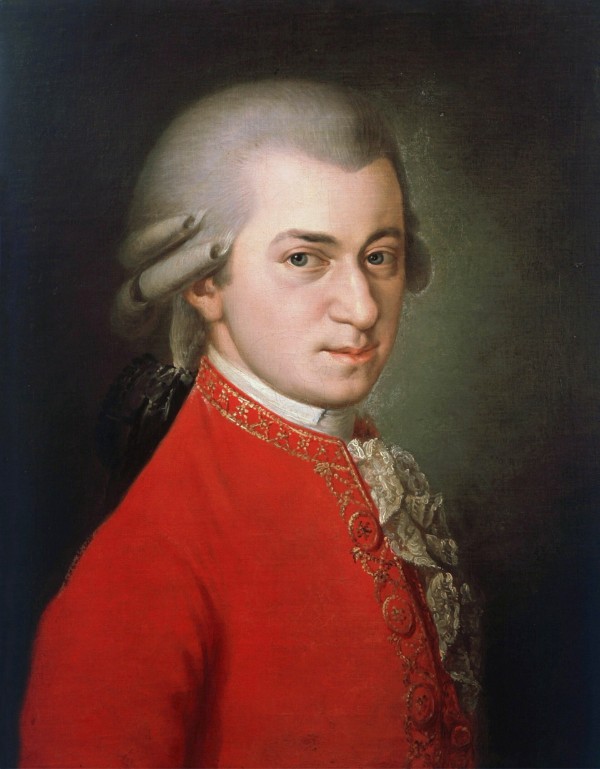
Wolfgang Amadeus Mozart
All six completed, published, and mature string quintets are scored for two violins, two violas, and cello, achieving a sound world deeper and darker than his string quartets, but all without sacrificing elegance. To commemorate Mozart’s passing on 5 December 1791, let’s explore this new chamber world in five voices.
Wolfgang Amadeus Mozart: String Quintet in G minor, K. 516
The Viola as Muse

© Alexandru Nika / Alamy/Alamy
Wolfgang Amadeus Mozart was himself a passionate violist. When he played music with friends, he preferred the viola to the violin. This personal affinity radiates through the quintets. The choice to add a second viola was not merely a practical arrangement but a creative decision tied to Mozart’s own musical identity.
The additional viola enriches the middle texture, allowing Mozart to weave counterpoint of remarkable suppleness, and to explore emotions that range from the tragic to the jubilant, from the mysterious to the serene. Through the middle voices, he could shape the harmonic and emotional core of the ensemble, with the viola’s warm timbre capable of subtle inflections.
At the time, the string quintet as a genre was not new. Luigi Boccherini had produced many, though with two cellos rather than two violas. However, Mozart took a form that might otherwise have been a footnote in chamber repertoire and elevated it into an expressive powerhouse.
Voices of Praise
Musicologist Stanley Sadie emphasises that the quintets “represent a new kind of chamber music, with the inner voices fully active,” and Alfred Einstein observed “Mozart’s rare ability to turn chamber music into a drama of tragic and lyrical intensity.”
Charles Rosen concluded, “by general consent, Mozart’s greatest achievement in chamber music is the group of string quintets with two violas.” And Cliff Eisen called the late quintets “models for a newly emerging genre, the viola quintets.”
Cellist Mstislav Rostropovich praised the quintets for their “transparent complexity,” while pianist Alfred Brendel spoke of the quintets as “perfectly proportioned music, where structural elegance and emotional expression are inseparable.” And most famously, Pyotr Ilyich Tchaikovsky wrote in 1878 about the Adagio of K. 516, “no one else has ever known how to express in music this sense of resigned and inconsolable sorrow.”
Wolfgang Amadeus Mozart: String Quintet in B-flat Major, K. 174
First Step Toward Greatness
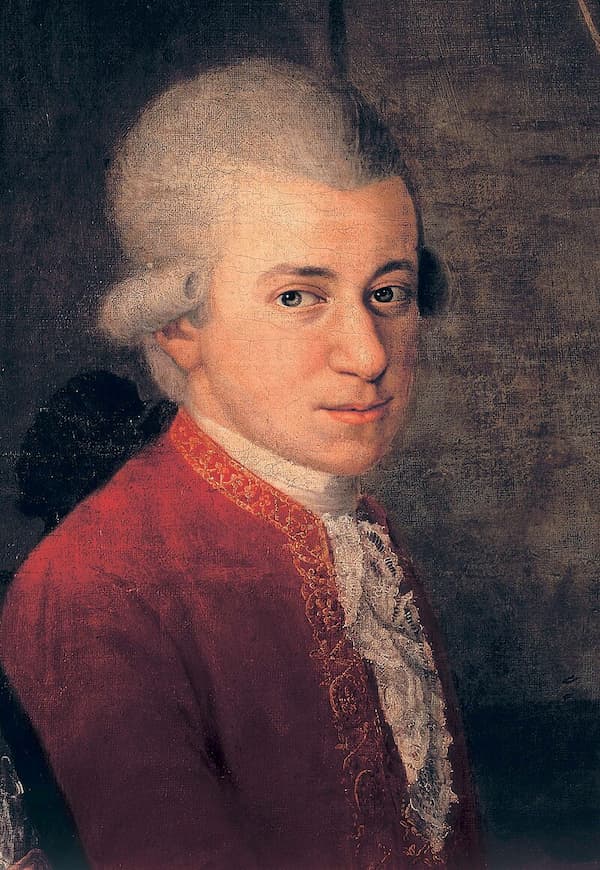
Wolfgang Amadeus Mozart
Mozart wrote the quintets across different periods of his life. We find early experimentations in the 1770s, and a quintet arrangement of a Serenade, the twin masterpieces of 1787, and two twilight works from 1790 and 1791, respectively.
Mozart’s first quintet in B-flat Major, composed in 1773 and catalogued as K. 174, is frequently overlooked. However, it is already a work of remarkable maturity for a seventeen-year-old composer.
The music builds on the language of the early string quartets, but the doubled viola allows a richer, almost orchestral mid-range colour. The opening movement is warm, buoyant, and melodic, revealing Mozart’s early fascination with blending voices rather than spotlighting them.
The slow movement, however, offers the first true glimpse of what the quintets would later achieve. It exudes an expressive inwardness and a sense of suspended time. The minuet is robust and charming, and the finale, although light-spirited, is not a lightweight movement.
Taken as a whole, K. 174 stands as Mozart’s earliest declaration that the string quintet would become one of his most personal and exploratory chamber works of expression. Even if the later masterpieces overshadow it, this youthful work contains the seeds of everything to come, including a deepened harmonic palette, the sensitivity to inner voices, and the seamless fusion of elegance and emotional depth.
Wolfgang Amadeus Mozart: String Quintet No. 2 in C Minor, K. 406 (Karine Lethiec, viola; Quartetto Stradivari, Ensemble)
A Serenade Reborn
Mozart’s Quintet in C minor, K. 406, is unique within the group, not only because it is an arrangement of his earlier Wind Serenade K. 388, but because the transformation shows how imaginatively he could rethink material without losing any of its dramatic potency.
The shift from winds to strings darkens the entire expressive world. The C-minor tonality feels weightier, and the added viola allows Mozart to weave textures of remarkable density and urgency. What in the Serenade felt sharp-edged and airy becomes in the quintet taut, muscular, and intensely focused.
The opening movement, with its angular lines and restless counterpoint, acquires a new structural solidity. The string timbre heightens its tension and gives the fugato writing a gripping immediacy. The slow movement benefits even more from the recasting, as what was once noble and poised now takes on a more inward and singing melancholy.
The minuet, one of Mozart’s starkest and most dramatic, becomes almost severe in this new guise, with the trio offering a momentary glimpse of tenderness. The finale is sharpened rather than softened, with each variation gaining in profile. Far from being a mere transcription, K. 406 emerges as a fully realised chamber work. It is a reimagining in which Mozart revisits his own ideas and, through the intimacy of strings, deepens their expressive power.
Wolfgang Amadeus Mozart: String Quintet in C Major, K. 515
Twin Masterpieces of 1787
Among Mozart’s chamber works, the paired string quintets of 1787, K. 515 in C Major and K. 516 in G minor, stand as towering achievements. Composed within weeks of each other, they form a profoundly complementary pair. One is radiant, architecturally expansive, and symphonic in breadth, while the other is inward, tragic, and sculpted with almost operatic tension.
The C-Major Quintet opens with a vastness rarely encountered in chamber music of its time. The first movement is monumental in scale yet supple in its thematic unfolding. Mozart’s use of the second viola here is not merely colouristic; it is actually structural.
Inner voices carry essential motivic material, shaping the harmonic landscape from within rather than merely supporting the surface. The orchestral imagination of the young symphonist is unmistakable, but it is filtered through the intimacy of five voices that breathe together with uncanny unity.
If K. 515 is Mozart’s chamber music at its most sunny and spacious, the G-minor Quintet reveals the opposite. Here, Mozart uses a key he reserved for his most emotionally charged utterances, producing a work of volatility and moments of desolation.
The opening movement is driven by a sense of unrelieved unrest, its motives shaped by sighing gestures and terse rhythmic urgency. Mozart uses the quintet texture as a psychological space, with the doubled violas deepening the shadows and creating a dense, murmuring interior that intensifies the movement’s expressive turbulence.
The slow movement in the major key provides only a fragile respite, its lyricism marked by a searching quality. The minuet returns to G minor with grim determination, yet its trio offers a glimpse of lyric tenderness.
The finale, famously, begins as a sombre lament. But in a gesture that only Mozart could shape convincingly, the music turns to G Major, releasing the accumulated tension in unexpected brilliance. Mozart has turned grief into radiance.
Together, these quintets reveal Mozart’s most personal chamber medium. While one work explores the full spectrum of classical balance, the other probes the limits of emotional depth. In K. 515 and K. 516, Mozart’s affinity for the quintet medium reaches its deepest and most transformative expression.
Wolfgang Amadeus Mozart: String Quintet in D Major, K. 593
Refinement at Twilight
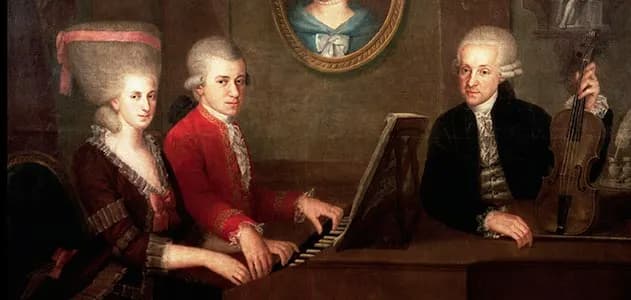
Mozart family portrait by Johann Nepomuk della Croce
Mozart composed the Quintet in D Major, K. 593, in 1790. It belongs to the composer’s final group of chamber works and carries a distinctive late-style refinement. Its opening Larghetto introduction is unusually exploratory, shifting through unexpected harmonies before settling into a bright and conversational Allegro.
The slow movement deepens the sense of inwardness as it spaciously unfolds with quiet confidence. The minuet has an easy grace, yet its trio introduces a touch of chromatic tension that subtly darkens the edges.
The finale is built on a theme of almost playful simplicity, and it becomes the engine for intricate contrapuntal play. Mozart spins variations and dialogues with effortless imagination, allowing the five voices to engage in a texture both transparent and richly woven.
While this quintet does not command the dramatic intensity of K. 516 or the grandeur of K. 515, it possesses a serene mastery all its own. It is poised, supple, and quietly profound, a work where expressive depth flows from clarity rather than urgency.
A Luminous Farewell
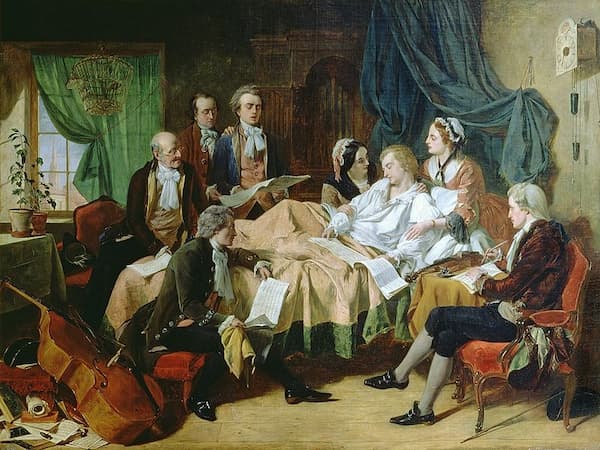
Henry Nelson O’Neil: The Last Hours of Mozart, 1860s
Mozart’s final quintet in E-flat Major, K. 614, was written the same year as the unfinished Requiem and The Magic Flute. It is the last of his contributions to the genre, and it radiates a clarity and buoyant confidence that set it apart from the darker intensity of the earlier masterpieces.
The opening movement is vibrant and spirited, propelled by bright thematic exchanges and an almost symphonic sense of rhythmic vitality. The doubled violas add not weight but agility, allowing the inner lines to sparkle.
The slow movement is warm and unhurried, shaped by long-spun melodies that feel serenely assured. The minuet, robust and rhythmically alert, leans toward the rustic, but its trio offers a charming contrast with its relaxed and lightly pastoral character.
The finale is one of Mozart’s most delightful rondos as it combines folk-like freshness with impeccable craftsmanship. On the surface, it seems rather simplistic, yet Mozart gives each instrument a moment in the sun.
Whispers of Brilliance
When we listen to Mozart’s string quintets, we enter a world where the classical ideal achieves its most intimate expression. Yet, profundity is not proclaimed but whispered in perfect lines, luminous textures, and animated dialogues among five equal voices.
In K. 515 and K. 516, we hear the heights and depths of human emotion. In K. 593 and K. 614, we see the radiance of Mozart’s late style. And in the early K. 174 and the transcription K. 406, we discover the seed of genius already blooming.
Taken together, these works represent one of the great triumphs of chamber music. They are less public than the symphonies, less flashy than the concertos, but they represent a cycle of profound humanity, luminous craft, and inexhaustible beauty.
For more of the best in classical music, sign up for our E-Newsletter