Which woman composer has been played the most at the Proms?
Would you believe it’s an obscure Englishwoman born in 1855 named Maude Valérie White?
She was a prolific composer, writing over two hundred songs, a ballet, and an unfinished opera, among other works.
Her music was hailed by critics and musicians alike. In fact, in 1903, writer Arthur Elson wrote, “Maude Valérie White takes rank among the very best of English song writers.”
She also influenced later composers like Vaughan Williams by helping to turn the tradition of English song into something more elevated than mere ditties for the drawing room.
And yet today she’s almost entirely forgotten. Why?
Today, we’re looking at the life and legacy of Maude Valérie White.
Maude Valérie White’s Birth and Family
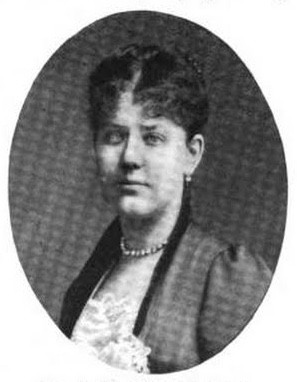
Maude Valérie White, 1901
Maude Valérie White was born in June 1855 to upper-middle-class English parents.
Her father was a merchant who had begun a business in Chile, then moved his family to Dieppe, Normandy, in France. She had at least seven siblings that we know of.
Months after her birth, her family relocated to England, so she always thought of England as home. But she also spent time in Paris and Germany while growing up.
White’s Early Education
Her first music teacher was her German governess, with whom she lived in Heidelberg between the ages of seven and nine.
In 1864, she was sent back to England, where she became the only female pupil at a boys-only school. Perhaps it was here that she began learning the necessary skills to successfully manoeuvre as a woman in male-dominated spaces.
Afterwards, she was sent to Paris to study for three years. During that time, her father died of yellow fever, which would have both emotional and economic consequences for her and her family.
Back in England, she began studying piano with Austrian pianist Ernest Pauer, with whom she did not get along very well, and who, she later wrote, “generated a sort of disbelief in myself, as far as music was concerned.”
This kind of disbelief, which was experienced especially frequently by female students, could prove to be debilitating to promising young female composers.
Despite her self-doubt, when she was seventeen, she composed a setting of Byron’s “Farewell, if ever fondest prayer.”
Decades later, she wrote about the experience:
I knew the poem well and improvised the music to the words without the slightest difficulty. It is the way I have composed the melody of almost every song I have ever written, naturally working up the accompaniment and adding many little details afterwards.
Studying with Rockstro and May
In 1875, while her mother and aunt vacationed in the seaside town of Torquay, England, she began studying harmony and counterpoint with William Smith Rockstro, who had studied composition and piano under Mendelssohn in Leipzig.
Rockstro recommended that she study with Oliver May in London. She greatly enjoyed her time with May:
Never in my life have I ever come across anyone professing to teach composition or the pianoforte who more efficiently or more faithfully fulfilled the task.
Dreaming of the Royal Academy of Music
Under May’s tutelage, she began to dream of attending the Royal Academy of Music and pursuing a career as a professional composer.
This was a daring dream for a woman of her somewhat elevated social status in the mid-1870s.
In this era, poor women were more likely than wealthy women to study music with the ultimate goal of pursuing a career to make money. When more socially prominent women performed, they usually did so privately or at benefit concerts. To do otherwise, as White was hoping to do, was considered a slight to male breadwinners in a family, and also smacked of the immodesty and immorality of the stage.
Not surprisingly, White’s family discouraged her from pursuing her dream. One of her mother’s friends was scandalised that White might have to “associate with the daughters of tradespeople!”
Mrs. White was concerned, but eventually gave her daughter permission to pursue her dream.
Enrolling at the Royal Academy of Music
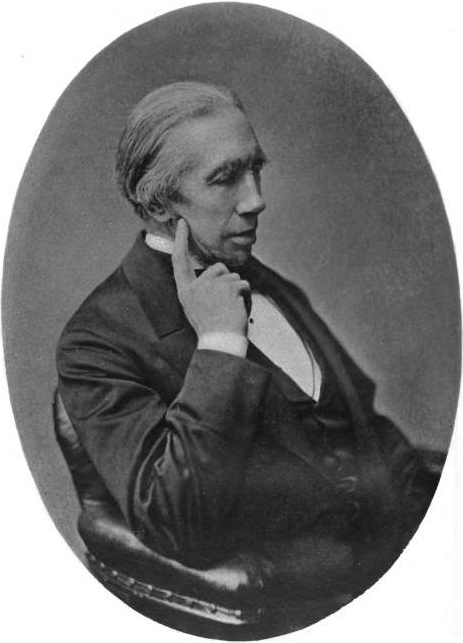
Sir George Alexander Macfarren
White enrolled at the Royal Academy of Music in 1876, when she was 21.
She studied piano and sight-singing and enrolled in the class of blind composer Sir George Macfarren to study harmony and composition.
(She tried to learn the violin, but it hurt her to play, so she gave that up.)
Even during her student years, her songs were bought by music publishers and performed at RAM concerts.
Macfarren encouraged her to branch out and try writing a concerto. She tried, but both teacher and pupil were dissatisfied with the result.
She would continue gravitating toward songwriting for the rest of her career.
Winning the Mendelssohn Scholarship
In 1879, she won the prestigious Mendelssohn Scholarship, the same prize that Arthur Sullivan had won years earlier, heralding the start of his brilliant career. (In fact, Sullivan was on the jury that awarded her the prize.) She was the first woman to ever win it.
Although she could have used the prize money to further her studies in Germany, she chose to stay in Britain and continue making connections there.
A big break occurred for the young composer when famous baritone Charles Santley began programming her song “Absent yet Present.”
He sang it at an appearance at the Monday Popular Concerts, a prestigious London institution.
Maude Valérie White: Scherzetto
Her Mother’s Death
In 1881, when White was twenty-six, her mother died. She entered into a year-long mourning period and fled to South America, where her elder sister had moved after her marriage.
While there, she became interested in Chilean dance music, which served as inspiration for her “Eight South American Airs” for piano duet.
The only song she composed during the ten months she was in South America – a song called “To Mary”, which she dedicated to her sister – ended up becoming one of Queen Victoria’s favourite songs.
Planning Professional Success
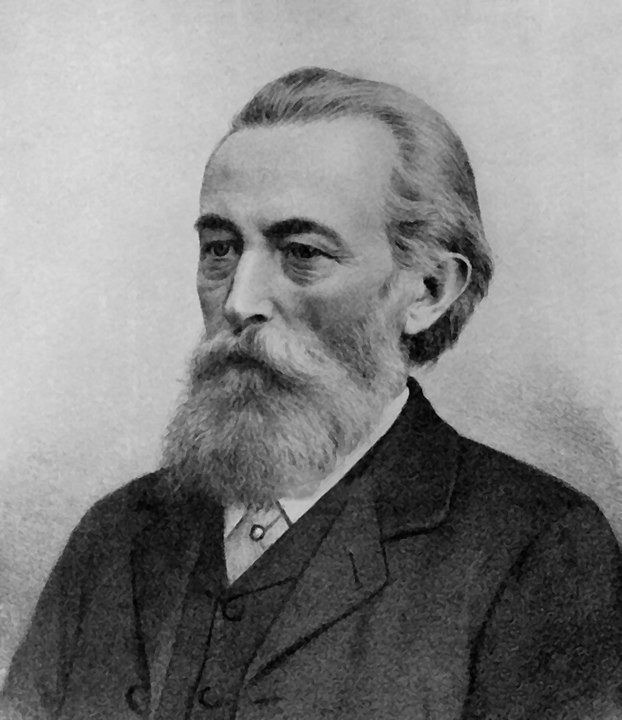
Robert Fuchs
In 1883, White traveled to Vienna to study with Robert Fuchs, who would go on to teach Enescu, Korngold, Mahler, and Sibelius.
He, like Macfarren, encouraged her to write a concerto. However, she was unsuccessful yet again, and he agreed to allow her to turn her focus back to songwriting.
When she finished her training in Vienna, she returned to London, acutely aware that, if she wasn’t going to marry, she was going to have to figure out a way to support herself.
She began teaching more often, as well as performing at private events, all while continuing to compose and sell her songs.
She spoke French, German, Italian, and Spanish, and began using those talents to translate works for money, too.
Maude Valérie White: Two Songs
White’s Heyday
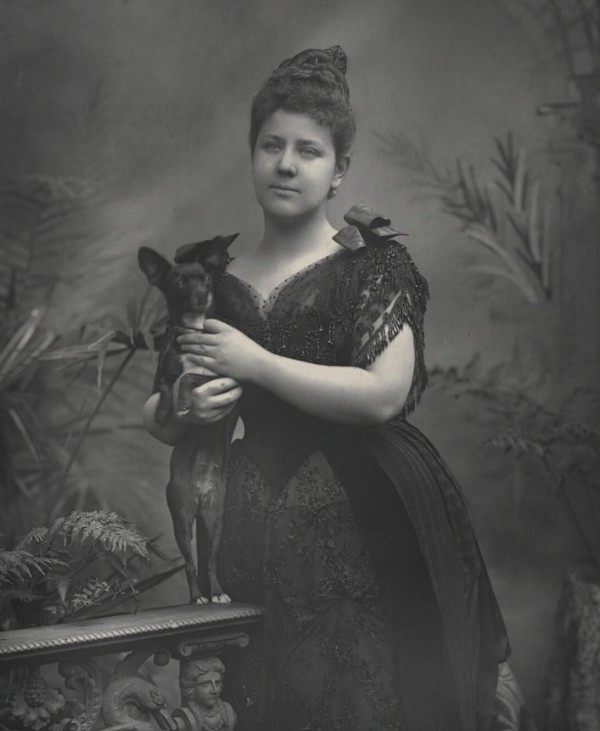
Maude Valérie White and her dog
All of this hard work paid off. Her creative star burned brightest in the 1890s, when she wrote dozens of well-loved songs.
Her music became so popular that she was able to organise concerts where she was the only composer on the program.
She tried yet again to branch out: this time with an opera called Smaranda, which she worked on between 1894 and 1911. Ultimately, she abandoned the effort.
But of course, an unfinished opera didn’t impact her popularity one whit. The greatest singers of the age were singing her work at the most prestigious concerts and venues in England.
One metric of a composer’s relative popularity in Britain is to look at how many times their music appeared during the Proms.
Between 1895 and 1940, Maude Valérie White’s works appeared over a hundred times. This makes her the most frequently performed woman composer in the history of the Proms, even today.
Maude Valérie White: “My soul is an enchanted boat”
Bad Health and Traveling
White had always struggled with health issues. Doctors suggested she might do better in warmer climates.
In 1901, she moved to Italy, only returning to England in the summer. The change agreed with her. Later, she moved full-time to Florence, Italy, near her sister.
She also continued to travel. In 1905, she gave a concert at the Cairo Opera House.
In 1912, she visited Russia. Watching the famous Russian ballet proved to be the inspiration she needed to finally complete a larger-scale work for orchestra.
Her ballet The Enchanted Heart (based on a scenario that she had created herself) was meant to premiere in the spring of 1914, but was canceled after the death of the Duke of Argyll.
She then rewrote the music into an orchestral suite to be played at the Proms in 1915, but that too was canceled after new music performances were scrapped due to budgetary concerns.
Excerpts would appear over the years, but the work never got the starry premiere her reputation deserved.
Maude Valérie White: “So We’ll Go No More A Roving”
Her Later Years
Once World War I broke out in 1914, White focused on organising benefit concerts.
After she reached her seventies, she composed less and less. Her romantic style had fallen out of fashion, and she simply was not very inspired to write.
She observed, “Of late years, I have not composed much. When one has nothing further to say, silence is best.”
During this period, she wrote two delightful memoirs, Memories and Friends in 1914, and My Indian Summer in 1934. She also spent more and more time translating literature.
She died in 1937 at the age of 82.
Her Legacy
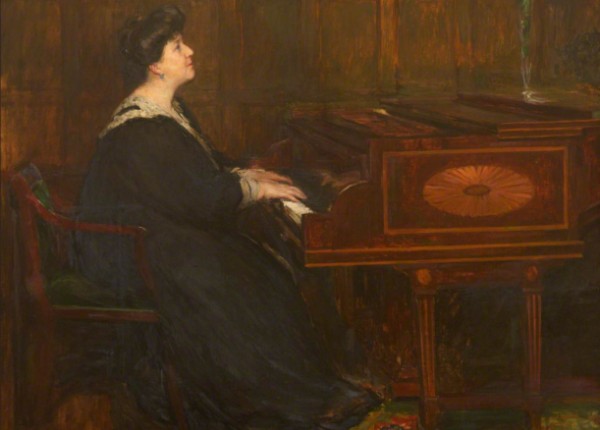
Portrait of Maude Valérie White
Why is her music not better known today? There are a few reasons.
First, her style is typical of the late Victorian era, and as such, is often thought to be too sentimental to appeal to modern audiences.
Second, the classical music world is much more focused on instrumental music today than it was during White’s lifetime, when vocal music reigned supreme.
And third, and possibly most consequentially, she didn’t have a spouse or family member to help preserve her legacy, like Ursula Vaughan Williams did for her husband, or Imogen Holst did for her father and Benjamin Britten.
Of course, none of these are reasons to ignore her wonderful music and groundbreaking career. Maybe it’s time for a reassessment.
To learn more, read Eugene Gate’s article “Emerging from the Shadows: Maude Valérie White, a Significant Figure in the History of English Song”, available here.
For more of the best in classical music, sign up for our E-Newsletter