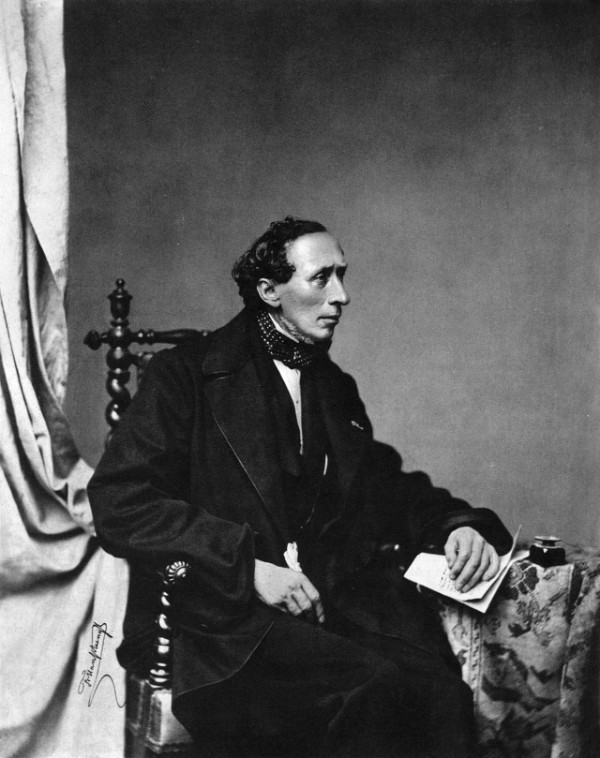
On 22 February 1903, Hugo Wolf tragically died in an insane asylum. In imitation of his hero, Robert Schumann, he had attempted to drown himself in October 1898. And just like Schumann, the impending paralysis of tertiary syphilis was accompanied by outbursts of violent temper and restlessness.
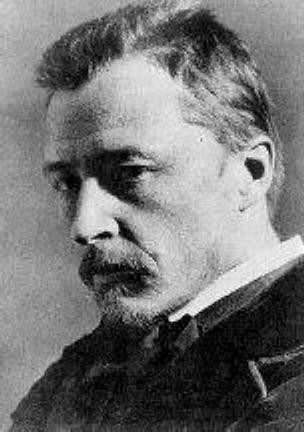
Hugo Wolf
Frank Walker writes in his biography of Wolf, “by 19 September 1897 it was evident to his distressed friends that he had lost his mind… The delusional Wolf insisted that he was the new director of the opera and had dismissed Mahler from his post.” (Walker, 1951)
Wolf was cared for by the Hugo-Wolf-Verein and Melanie Köchert, the wife of a prominent Viennese jeweller with whom Wolf shared a lifelong sexual, emotional, spiritual, and artistic bond.
After the summer of 1899, Wolf was no longer able to engage with music or the world, and he endured the long agony of his insanity until his death. He is buried in the Central Cemetery in Vienna, near the graves of Schubert and Beethoven.
Hugo Wolf: Mignon Lieder
The “Wild Wolf”
Hugo Wolf’s legacy endures in his reshaping of the German Lied tradition. Capturing every shade of meaning in a poem, and expressing it through a post-Wagnerian musical language, he sought to extract the emotional and psychological truth with harsh honesty.
The composer was known as the “Wild Wolf,” and he made powerful enemies. To be sure, he always felt misunderstood as a composer. As he wrote to Melanie Köchert, “On the whole I got the impression that I was not understood, that critics busied themselves too much with musical matters and thereby forgot what is new and original in my musico-poetic conception.” (Wolf, 1991)
Taking Wolf at his word and drawing on scholarship by Eric Sams and Susan Youens, let’s take a closer look at his musico-poetic conception, one that treated the poem not as a pretext for melody. As such, the music is no mere accompaniment as it represents the inner voice, akin to the subconscious. In other words, the music makes no sense apart from the text.
Hugo Wolf: “Morgenstimmung”
Finding his Voice
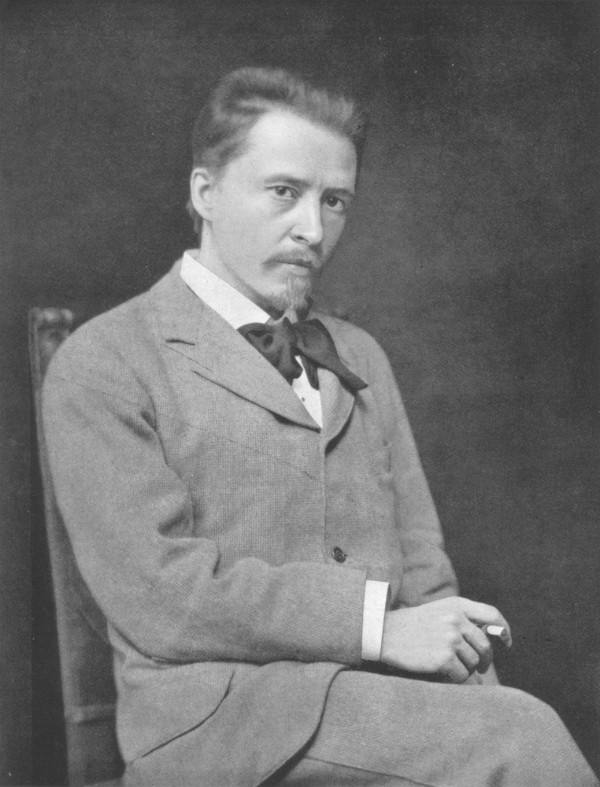
Hugo Wolf in 1902
Before his breakthrough “song year” of 1888, Hugo Wolf travelled a long and often frustrating artistic road. His early works were full of experiments, as he believed that writing large-scale works such as symphonies or chamber music was the true mark of a master. However, he was eventually drawn to the intimate world of voice and piano, as he believed that it could speak directly to the human heart.
His earliest surviving songs, three Goethe songs from his teenage years, are awkward settings bathed in far-flung harmonies and experimental chromatic ideas. He wasn’t actually thinking in terms of the Lied, but in terms of the dramatic and pictorial terms of opera.
Hugo Wolf: Auf dem See, Op. 3, No. 5 (Thomas Hobbs, tenor; Sholto Kynoch, piano)
Shaping a Style
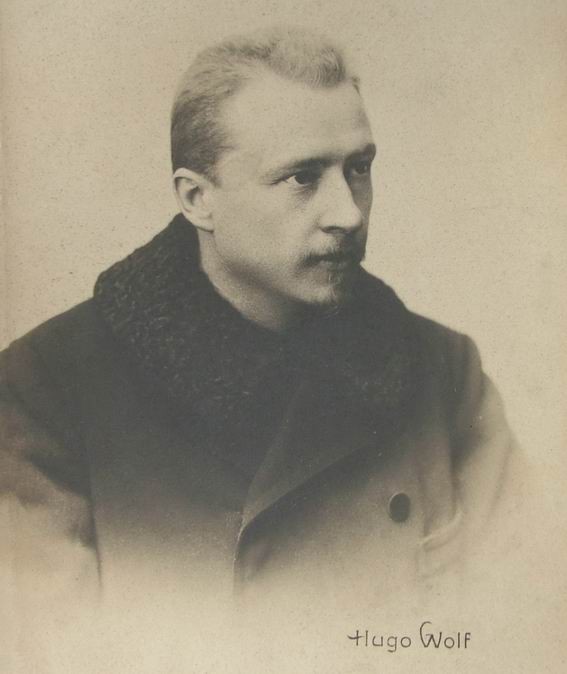
Hugo Wolf
Wolf was greatly influenced by Schumann and Liszt, and to a lesser extent by Schubert. His early songs can overindulge in Romantic drama, featuring prolonged chords and grand piano postludes. For a while, he was drawn to Heinrich Heine, and he went about creating miniature dramas in which the singer and the accompaniment could inhabit different worlds.
By the early 1880s, Wolf gradually began to refine his style by shifting to poets like Eichendorff, Reinick, Mörike, and Kerner. His harmonies became more controlled but more adventurous, and his response to poetic nuance more sensitive. And to be sure, his piano writing became more imaginative.
Wolf considered only a small fraction of the hundred pre-1888 songs worthy of publication. However, these musical trials, imitations, and self-experimentations allowed him to discover new terrain. The early songs are the building blocks that make the psychological fusion of poetry and music of his mature lieder so unforgettable.
Hugo Wolf: “Anakreons Grab”
Nine Years of Brilliance
Hugo Wolf’s songwriting maturity, punctuated by long silences, only lasted nine years. It blended tradition and innovation in ways that both fascinated and puzzled his contemporaries. He was compared to Schubert and Schumann, as he remained firmly rooted in the established 19th-century song form.
He knew his musical heritage intimately, and his choice of poetry reflected a certain conservatism. He preferred folk poetry, earlier poets, and classics like Goethe. In fact, he found contemporary writers careless or trivial.
It was Eduard Mörike, whose rich mix of love poems, fantastical tales, and comedies proved ideal for Wolf. Here was fresh material that he could truly make his own. He separated the voice and the piano into distinct musical characters, with each inhabiting different emotional worlds.
He treated the text with exquisite care, and his bold chromatic harmonies still fit within traditional tonal practice. Wolf achieved an idiosyncratic balance of innovation and homage, and the result is a body of song that feels both rooted in the past and startlingly alive. Poetry and music spoke with equal clarity and intensity.
Hugo Wolf: Mörike Lieder “Elfenlied”
Sounding the Subconscious
Hugo Wolf’s vocal writing is wonderfully flexible, as it shifts between gentle, lyrical melodies and more declamatory, speech-like passages. While simple symmetrical phrases evoke an orderly world, the use of repeated notes and recitative gestures brings dramatic weight to given words.
This balance between lyricism and declamation developed over time, as Wolf learned to shape melody and rhythm directly from the poetry. There are always subtle touches, like the stretching of a syllable to convey wonder, or the shifting of the phrases slightly off the beat. In the end, Wolf created a singing style that feels natural, expressive, and deeply attuned to the text.
Wolf was equally inventive in terms of harmonic language. He used bold chromaticism, tonal ambiguity, and delayed resolutions to bring the emotional and psychological aspects to life. He often employed shifting harmonies to evoke inner torment or mirror the restless mind with unstable chords that only resolve at the end.
Wolf famously stretches harmony to reflect existential tension and fear. Across his songs, melody, rhythm, and harmony are inseparable, working together to transform each poem into an intensely expressive musical world.
Hugo Wolf: 3 Gedichte von Michelangelo (Hans Hotter, bass-baritone; Hubert Giesen, piano)
Dramatic Journeys
Wolf had always been obsessed with larger forms, and herein we might find the reason he organised his mature songbooks into ordered dramatic successions. As such, singers could generate entire recitals from these collections and find all the contrasts to make a programme interesting. The critic Eduard Hanslick once quipped, Wolf composes not songs but entire poets.
The Hugo Wolf songbooks provide a remarkable richness and variety. In his Mörike songs, he elevated comic or whimsical texts far beyond the conservative harmonic styles of his contemporaries, imbuing them with tonal nuance and dramatic subtlety. Religious texts were treated with similar inventiveness, possibly reflecting the composer’s complex relationship with faith.
Hugo Wolf: Spanish Songbook, “Komm O Tod”
The Goethe songs include large-scale ballads, dramatic miniatures, and lyric gems. In his piano accompaniment, Wolf is at his most virtuosic, the piano often taking on a quasi-orchestral scope.
These songs are organised into cycles and subgroups, dividing them into male and female perspectives. He also explored Persian and Spanish poetry, and in his Spanish and Italian songbooks, he turned to paraphrased texts. These poems offered him a blank canvas for bold chromaticism and structural clarity.
The mystical tension of the Spanish songs gives way to the lighter textures of the Italian songs, culminating in a radiant synthesis of emotional depth, musical precision, and expressive variety.
As Susan Youens writes, “Wolf was not a Renaissance man, no more than Chopin, whom he so admired; he did not engage in many different genres, as did his older contemporary Brahms, but at the point where words and music intersect or coincide he can rightly claim greatness in company with Schubert and Schumann, whose legacy he carried forward and whose songs he equalled in refinement and power.” (Youens, 2001)
For more of the best in classical music, sign up for our E-Newsletter