On 27 January, we celebrate the birthday of Édouard Lalo, a French composer who may not enjoy the instant name recognition of Saint-Saëns or Fauré, but whose music leaves a lasting impression once you encounter it.
Lalo had a gift for melody, a taste for drama, and a boldness of colour that placed him at a fascinating crossroads. Some parts represent a refined mid-19th-century Parisian voice, and others define him as a full-blooded Romantic with a flair for the theatrical.
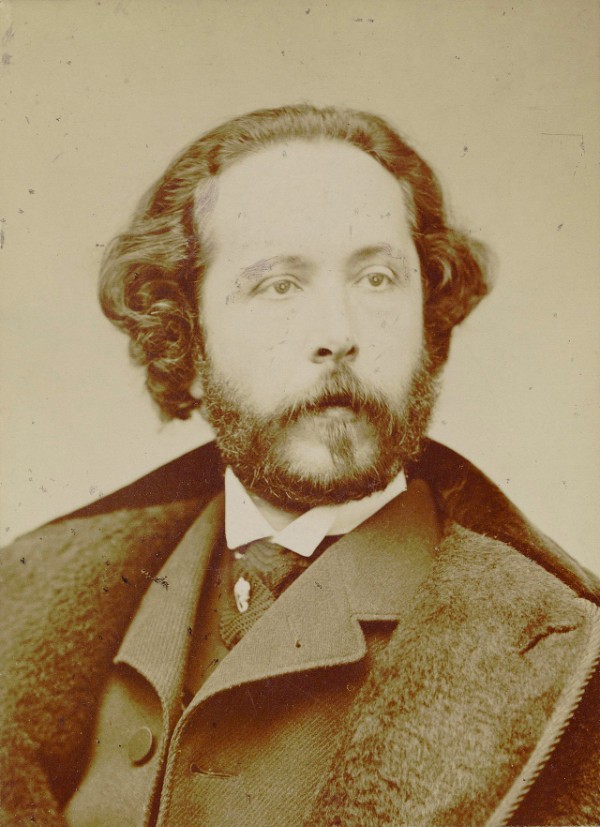
Édouard Lalo
Nowhere is this more evident than in his Concerto in D minor for Cello and Orchestra, one of the most distinctive works in the cello repertoire. For more than a century, it has challenged cellists not just to dazzle, but to persuade, to sing, and to tell a story.
As we mark Lalo’s birthday, it’s the perfect moment to hear how radically different artists have brought this concerto to life, ranging from Tortelier’s finely shaped phrasing and Rostropovich’s heroic intensity to Maisky’s sensuous warmth and Capuçon’s driving, modern clarity.
Édouard Lalo: Cello Concerto in D Minor – I. Prélude: Lento – Allegro maestoso – Tempo I (Daniel Müller-Schott, cello; Deutsches Symphonie-Orchester Berlin; Alexandre Bloch, cond.)
A Storyteller’s Concerto
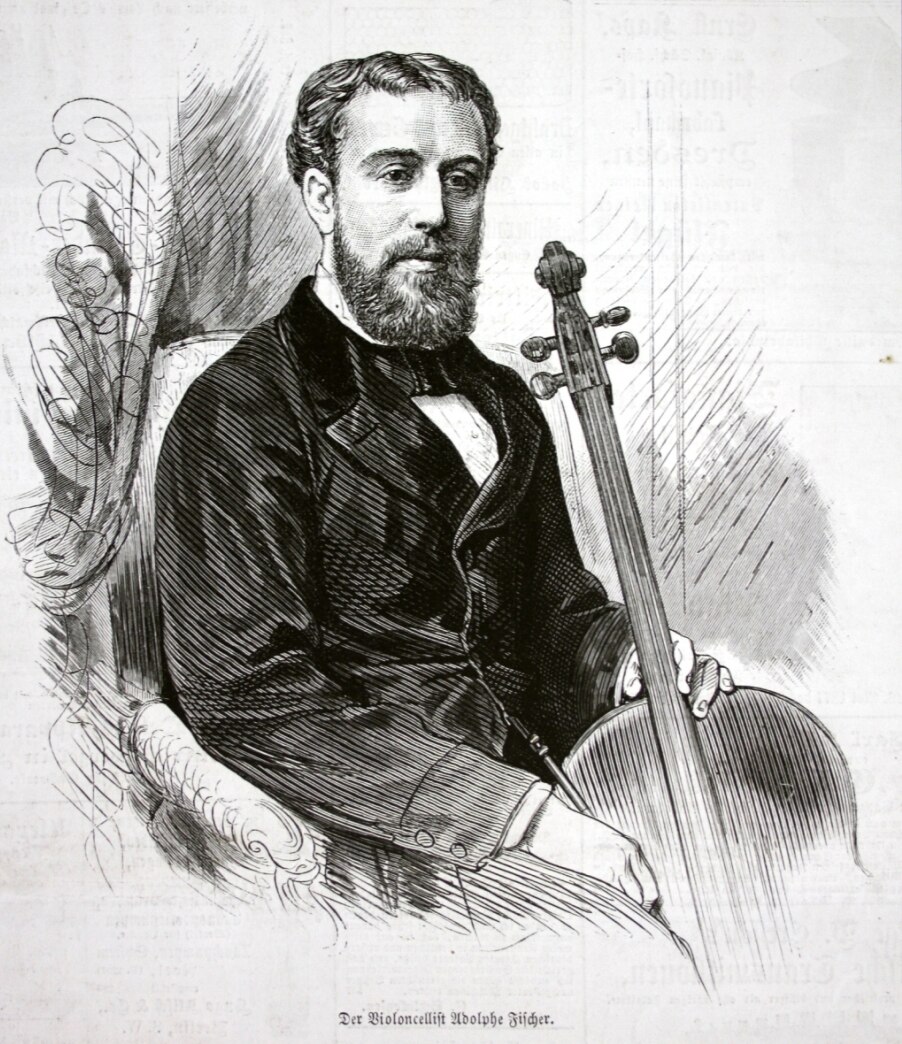
Adolphe Fischer
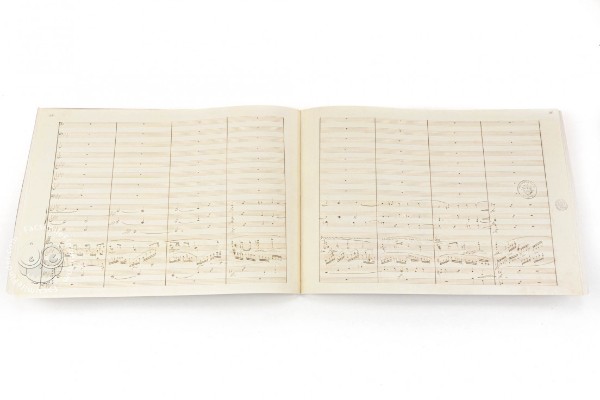
Lalo composed the concerto in 1876 for the celebrated cellist Adolphe Fischer. Rather than writing a vehicle for empty virtuosity, he crafted a work in which technical demands are inseparable from lyrical expression.
From the opening bars, the music grips the listener. A dark, brooding orchestral introduction, often described as almost Wagnerian, sets the emotional temperature before the cello enters, not as a flashy soloist but as a narrator stepping into the spotlight.
Structured in three movements, the concerto moves through a striking range of moods. There is shadow and introspection, but also brilliance, rhythmic sparkle, and moments of almost dance-like exhilaration. It’s music that asks the soloist to balance intensity with elegance, fire with restraint.
Elusive Fame
The concerto occupies a curious place in the repertoire. It never achieved the universal fame of Elgar’s or Dvořák’s concertos, yet it remains deeply loved by cellists for its melodic generosity and rhythmic vitality.
The first movement establishes a sombre atmosphere before the cello introduces a noble, singing theme that calls for a truly vocal sound. Here, the beauty of line and long-term shaping matter more than raw display.
The central intermezzo provides a sudden change of mood. It is lighter, more playful, and tinged with introspection. It acts as the emotional heart of the work. Then comes the finale, bursting with energy and propelled by rhythms that evoke Spanish dance, pushing the soloist’s agility and stamina to the limit.
Édouard Lalo: Cello Concerto in D Minor – II. Intermezzo (Gaspar Cassadó, cello; Bamberg Symphony Orchestra; Jonel Perlea, cond.)
Paul Tortelier: Noblesse and Fire
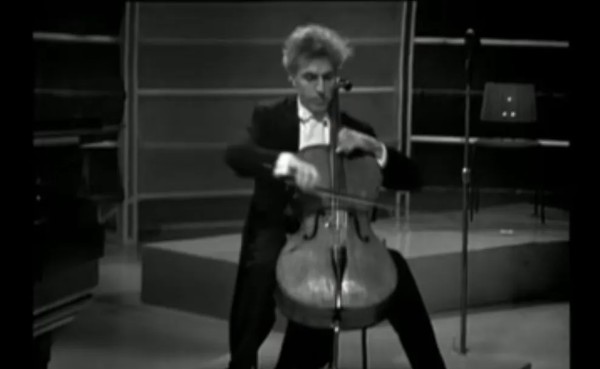
Paul Tortelier
Over the decades, performers have drawn out very different facets of Lalo’s score. One of the classic recordings is Paul Tortelier’s account with the London Symphony Orchestra under André Cluytens from the 1950s. Tortelier’s version is often paired with conductors like Louis Frémaux in reissues.
Tortelier’s playing is immediately recognisable for its warm, finely textured tone and its deeply vocal approach to phrasing. Critics at the time were quick to respond. Gramophone praised his “aristocratic poise and eloquence,” observing that he treated the solo line “as if it were an operatic role rather than a display of bravura.”
Nowhere is this more apparent than in the slow movement, where Tortelier lingers over the music’s poetic heart, shaping long phrases with patience and tenderness. His vibrato is expressive but never excessive, and his rubato feels like natural speech rather than calculated effect.
Yet drama is never far away. A French critic writing at the time described the performance as combining “noblesse and fire,” a balance that allows the concerto to feel both intimate and expansive.
What still strikes listeners today is how effortlessly Tortelier weaves virtuosity into the musical line. Fast passages unfold with clarity and ease, and even at the concerto’s most flamboyant moments, there is a sense of dialogue rather than competition with the orchestra.
As one recent reviewer neatly put it, Tortelier makes Lalo sound “less like a 19th-century showpiece and more like a lyrical drama for cello and orchestra.” His recording remains a touchstone, living proof that imagination and restraint can uncover depths that brilliance alone cannot.
Édouard Lalo: Cello Concerto in D Minor (Paul Tortelier, cello; City of Birmingham Symphony Orchestra; Louis Frémaux, cond.)
Mstislav Rostropovich: Granite Strength and Symphonic Drama
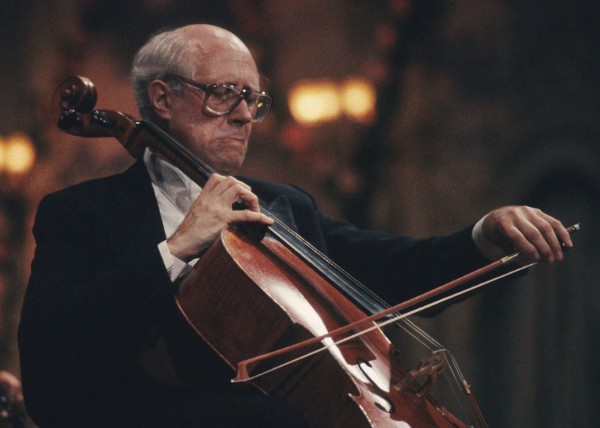
Mstislav Rostropovich
A very different world emerges in Mstislav Rostropovich’s 1970s recording with the London Symphony Orchestra under Jean Martinon. Here, as elsewhere, the concerto is charged with raw energy and almost confrontational intensity.
Critics at the time frequently commented on the sheer physical force of Rostropovich’s playing, with Gramophone pointing to the “granite strength” of his tone and the palpable sense of risk in every movement. In his hands, Lalo’s concerto becomes less a picturesque Romantic piece and more a full-scale symphonic drama.
Rostropovich shapes the opening movement with broad gestures and sharply chiselled accents, heightening the tension between inward lyricism and explosive declaration. His articulation and bow weight give the cello line a fierce urgency, matched by Martinon’s muscular orchestral support.
Later commentators have noted that refinement is often sacrificed in favour of immediacy. The slow movement feels less like a study in elegance and more like an impassioned monologue, stretched to the limits of expressivity.
The finale is especially striking, with Rostropovich leaning hard into the Spanish-inflected rhythms. Contemporary reviewers admired the ferocity of his off-beat accents and the biting, almost percussive edge of his spiccato.
The result, many critics agree, is a performance that may forgo polish but lays bare the concerto’s underlying heroism and emotional volatility with extraordinary conviction.
Rostropovich performs Lalo: Cello Concerto in D minor, “Prelude”
Mischa Maisky: Voluptuous Sound and Romantic Seduction
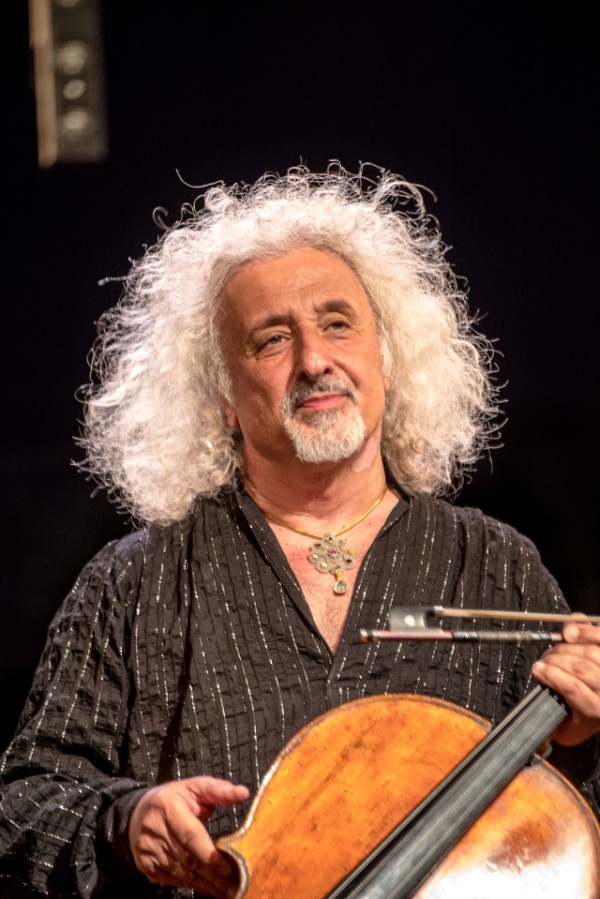
Mischa Maisky
More recent recordings continue to reveal new perspectives. Mischa Maisky approaches Lalo with an unabashedly Romantic sensibility, placing the sheer beauty of the cello’s sound at the centre.
Critics frequently remarked on the warmth and breadth of his tone, with The Strad praising its “vocal richness” and supple legato. In Maisky’s hands, the concerto becomes a work of seduction rather than confrontation.
His phrasing is generous, his tempos flexible, allowing melodies to blossom with expressive rubato. A wide, vividly coloured vibrato gives the opening movement an almost operatic cantabile, while the central movement unfolds with a hushed, nocturnal intimacy.
Some modern commentators have suggested that this approach softens the concerto’s rhythmic edge, but it also highlights Lalo’s gift for melody and harmonic warmth, reminding us that French lyricism lies at the heart of the piece.
In the finale, Maisky smooths the Spanish rhythms into a flowing dance rather than driving them hard. Recent critics tend to hear this not as a weakness but as a deliberate aesthetic choice.
Within the modern discography, his interpretation stands as a lyrical counterbalance to more aggressive readings, celebrating voluptuous sound and emotional warmth.
Maisky performs Lalo: Cello Concerto in D minor
Gautier Capuçon: Classical Poise and Inevitable Flow
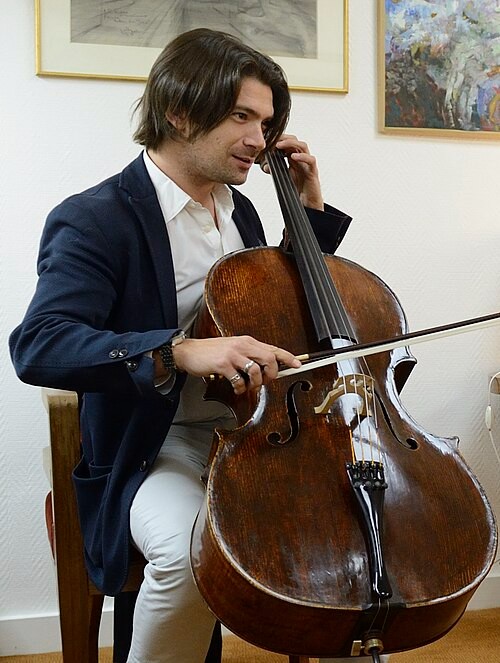
Gautier Capuçon
Gautier Capuçon represents yet another perspective. His performances are often praised for their sense of forward motion and structural clarity, making even the densest passages feel inevitable. Reviewers regularly point to the transparency of his sound and the elegance of his phrasing.
Diapason noted the “classical poise” of his approach, admiring how virtuosity is absorbed into the musical argument rather than put on display.
Capuçon favours clean articulation, controlled vibrato, and finely judged dynamics, allowing the concerto’s architecture to come into sharp focus. The first movement unfolds with a strong sense of direction, its contrasts shaped by proportion rather than exaggeration.
The slow movement is notable for its luminous simplicity, while the finale dances with buoyancy and rhythmic precision.
Critics have remarked on how his tempo choices maintain momentum without blurring articulation, giving the final pages a sense of inevitability rather than excess.
For many listeners, Capuçon’s recording has become a modern reference point, a reading that reconciles elegance, virtuosity, and architectural clarity.
Capuçon performs Lalo: Cello Concerto in D minor, “Intermezzo”
Endlessly Adaptable, Endlessly Alive
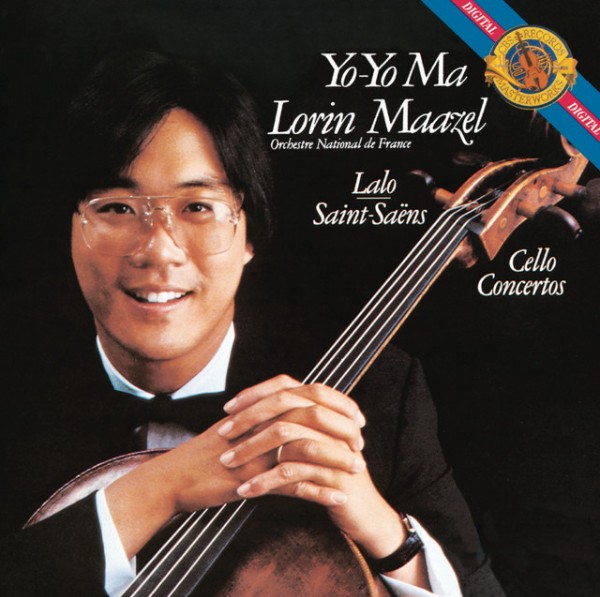
One of the great pleasures of this concerto is precisely this variety of voices. Tortelier offers the refinement and poise of the French tradition, Rostropovich brings towering intensity and risk, Maisky bathes the music in sensual warmth, and Capuçon presents it with sleek coherence and drive.
Even small details, such as the choice of tempo in the intermezzo or the shaping of the final phrases, can dramatically change the concerto’s emotional arc.
That such diversity is possible speaks volumes about Lalo’s achievement. His concerto is tightly written yet endlessly adaptable, sophisticated yet immediately communicative.
More than a century on, it continues to speak afresh, inviting performers and listeners alike to find new meanings in its ever-revealing score.
For more of the best in classical music, sign up for our E-Newsletter
Édouard Lalo: Cello Concerto in D Minor – III. Introduction: Andante – Allegro vivace (Yo-Yo Ma, cello; French National Orchestra; Lorin Maazel, cond.)