They’re the only member of the orchestra who stands with their back to the audience; nonetheless, every member of the orchestra keeps an eye on them…just in case. It’s the conductor, of course.
The English historian Charles Burney quotes Jean-Jacques Rousseau, who said:
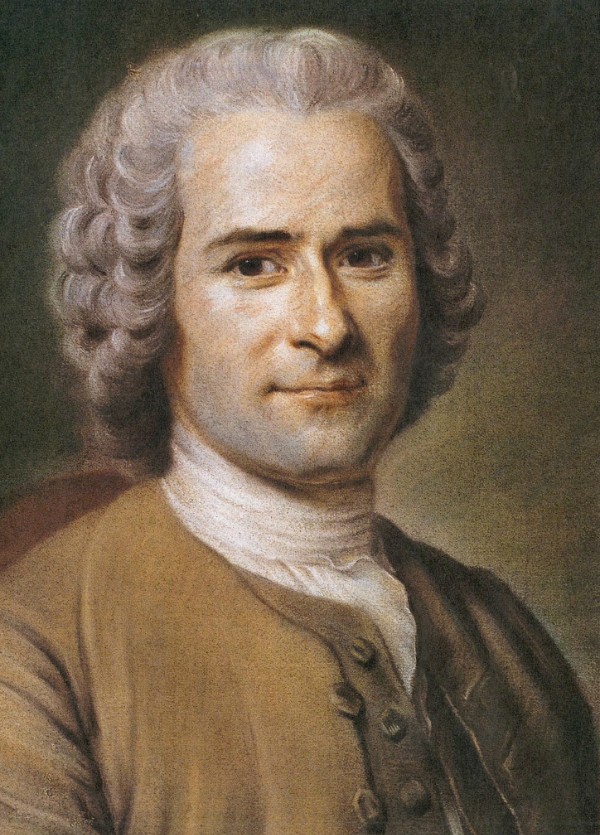
Maurice Quentin de La Tour: Jean-Jacques Rousseau, 1753 (Musée Antoine-Lécuyer)
The more time is beaten, the less it is kept…
This is a wonderful way of both condemning conductors who wave their arms too much and describing the attention their orchestras pay them.
Rousseau then goes on to explain what happens when everything falls apart:
…and it is certain that when the measure is broken, the fury of the musical general, or director, increasing with the disorder and confusion of his troops, becomes more violent, and his strokes and gesticulations are more ridiculous in proportion to their disorder.
Liszt saw the role of the conductor as very hands-off:
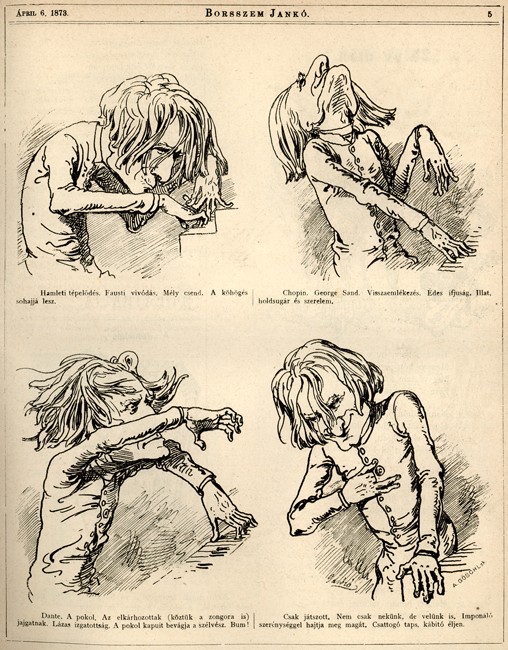
A. Göschl, “Liszt Ferencz”, Borsszem Jankó 6, no. 276 (1873): 5. (Budapest National Széchényi Library)
The real task of the conductor consists, in my opinion, in making himself ostensibly quasi-useless. We are pilots, not drillmasters. (1853)
Gounod had a similar view. Instead of being Rousseau’s general, he saw the conductor as someone who had his own taskmaster, the composer:
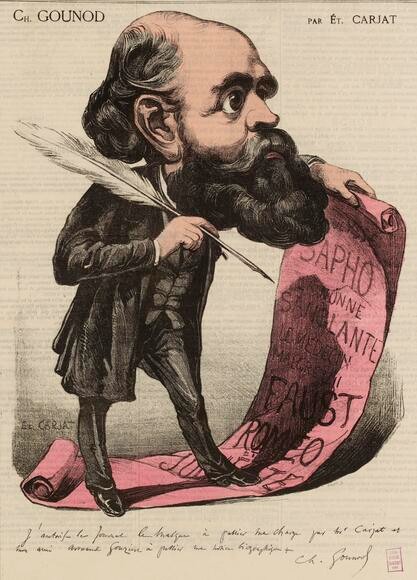
Étienne Carjat: Charles Gounod
The conductor is nothing more than the driver of the coach engaged by the composer. He should stop at every request or quicken the pace according to the fare’s orders. Otherwise, the composer is entitled to get out and complete the journey on foot.
The composer and conductor Hans von Bülow, speaking with the composer and conductor Richard Strauss, talked about musical knowledge:
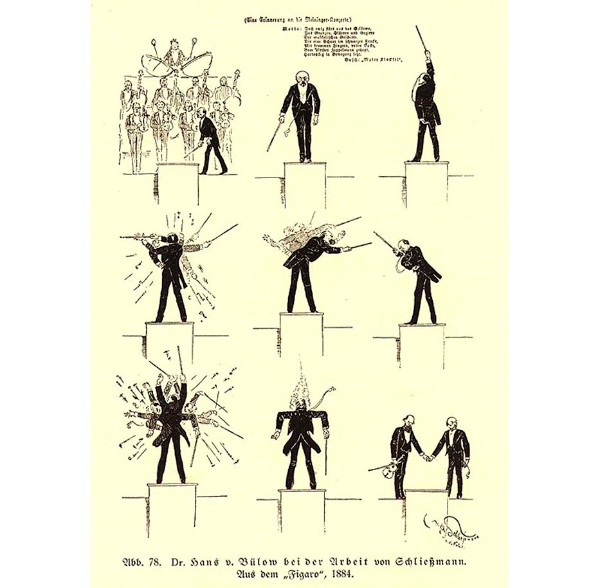
Hans Schließmann: Hans von Bülow conducting, 1884. (Figaro)
You must have the score in your head, not your head in the score.
Rimsky-Korsakov, on the other hand, saw conducting as a particular skill:
Conducting is a black art. (1909)
In a note to his 10-year-old sister, Thomas Beecham downplayed the whole performance:
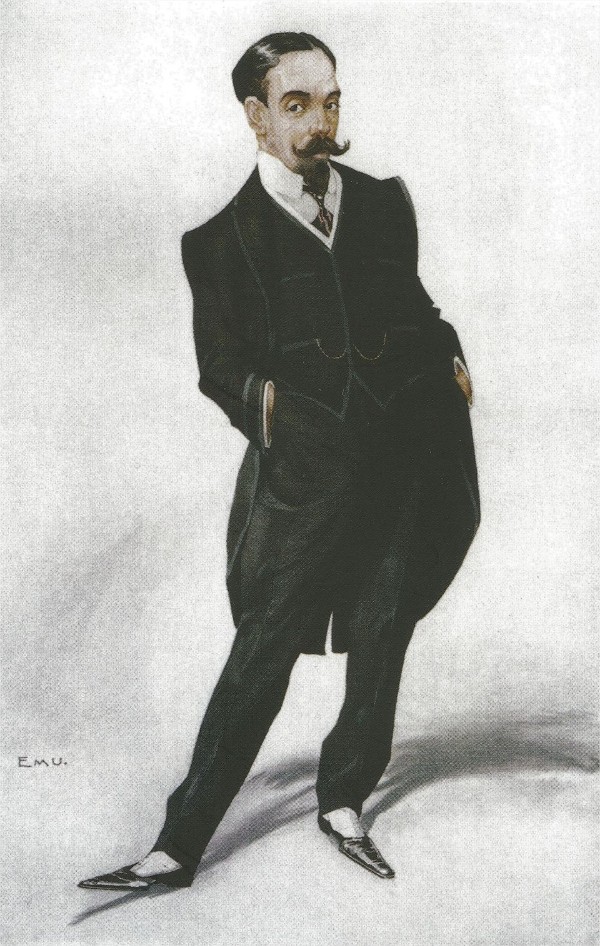
Emu: Thomas Beecham, 1910
It’s easy. All you have to do is waggle a stick.
In 1927, Richard Strauss wrote his 10 Golden Rules for a young conductor, and he cautioned that:
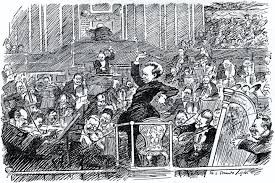
Strauss conducting, 1916
You must not perspire while conducting; only the public must get warm.
He also had something against the wind sections:
Never let the horns and woodwinds out of your sight; if you can hear them at all, they are too loud.
English conductor Eugene Goosens loved the podium:
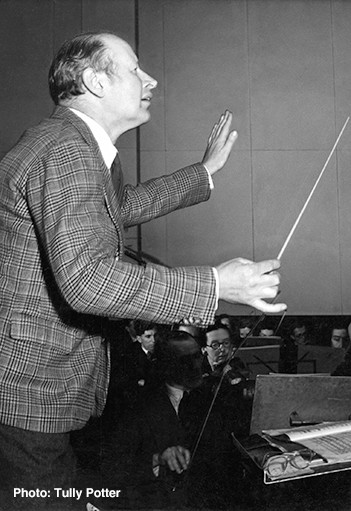
Eugene Goosens (photo by Tully Potter)
It is the most wonderful of all sensations that any man can conceive. It really oughtn’t to be allowed.
Russian-American conductor Nikolai Malko cautioned against conductors who resorted to other means to get their directions across:
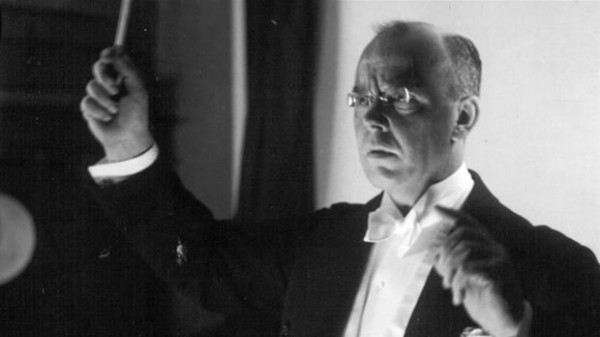
Nikolai Malko
He should rely on gestures more than words. It often happens that a conductor begins to talk when gestures fail him and then becomes accustomed to his own chatter.
Sometimes the soloist has to reassure the conductor. Hornist Barry Tuckwell told conductor André Previn how to get out of a mess:
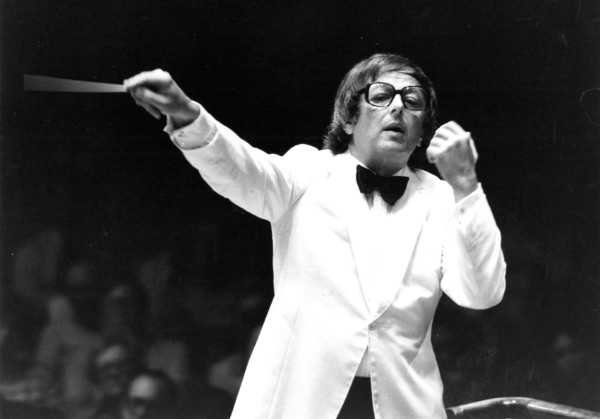
André Previn
When you get lost, and you will, everybody does at one time or another, just make some elegant vague motion, and we’ll put it all to rights quickly enough.
Pianist and conductor Daniel Barenboim had his doubts about conductors and their egos:
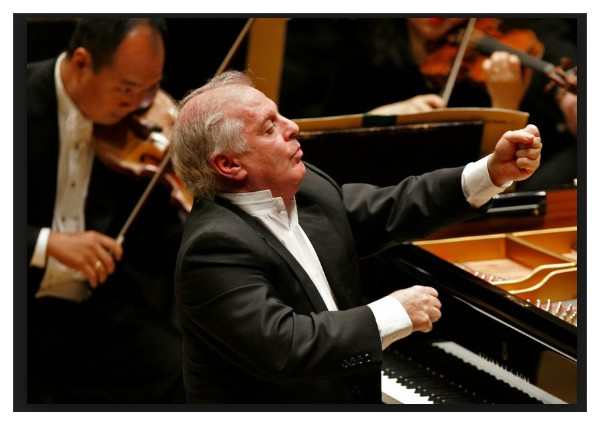
Daniel Barenboim
Today, conducting is a question of ego: a lot of people believe they are actually playing the music.
Barenboim, of course, made his early name conducting piano concertos from the keyboard, thereby knowing that he was actually playing the music in at least one sense!
Russian-American composer and conductor Igor Stravinsky was with Barenboim on how conductors considered themselves:
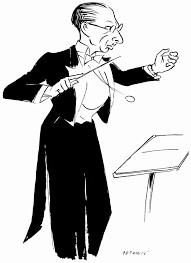
Stravinsky conducting
‘Great’ conductors, like ‘great’ actors, soon become unable to play anything but themselves.
Hmmm. Sean Connery, anyone?
San Francisco Symphony’s conductor Michael Tilson Thomas said it most plainly:
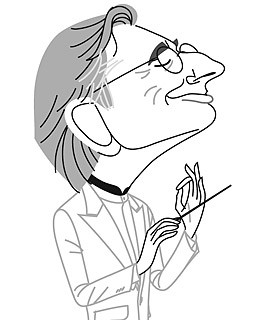
Michael Tilson Thomas (illustration by Zach Trenholm)
Conductors are performers.
English clarinettist Jack Brymer wondered why conductors were regarded so highly when they abandoned playing in the orchestra for the podium:
Why is anyone who adopts successfully this strange form of extroversion regarded instantly as being of so much greater moment than he was last week, when he was just a player?
Brymer also saw the orchestra in a different light than many people:
No wise conductor tries to outdo that bunch of professional comics, which is the average symphony orchestra.
For more of the best in classical music, sign up for our E-Newsletter