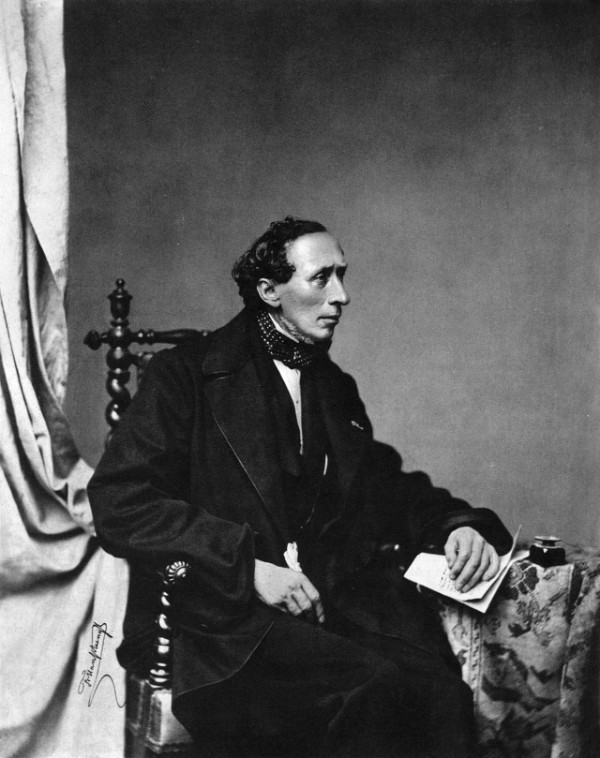
Charles-Valentin Alkan (1813-1888) was one of the most celebrated pianists of the nineteenth century. It was said that he played faster than Liszt and louder than Chopin. In addition, he was also a highly original composer comparable to Hector Berlioz.
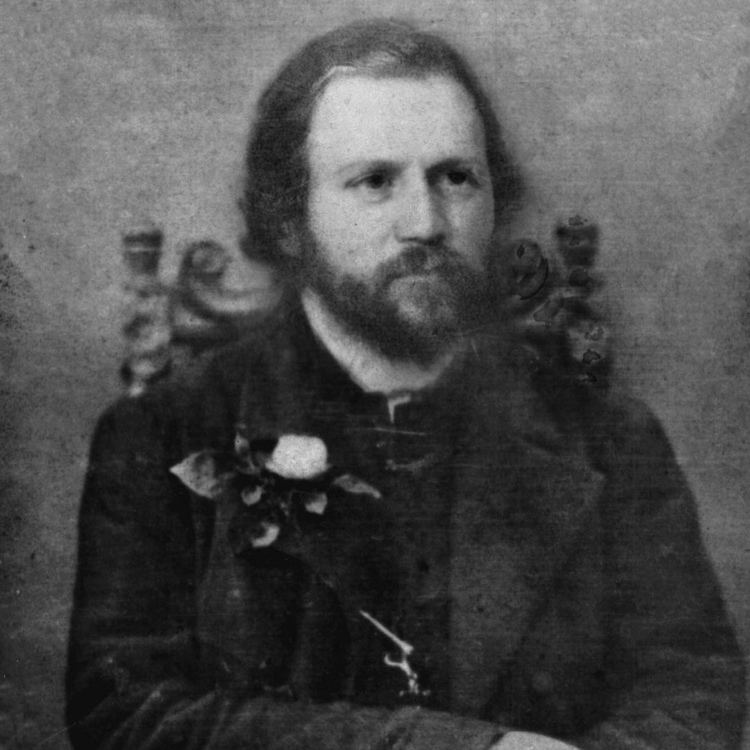
Charles-Valentin Alkan
Alkan’s career began most promisingly when he was accepted into the Paris Conservatoire at the age of 6. Everybody agreed that the child had amazing abilities. He soon performed in the leading salons and concert halls of Paris and made friends with the most influential musicians and composers of the time.
Not Liszt—But More Humanly Moving
After hearing Alkan play, the composer Vincent d’Indy recalled, “I listened, rooted to the spot by the expressive, crystal-clear playing… This was not Liszt, perhaps less perfect technically, but it had greater intimacy and was more humanly moving.”
Charles-Valentin Alkan died on 29 March 1888 when, according to a persistent legend, a heavy bookcase fell on him. To commemorate his passing, let’s briefly address a common debate in piano circles: “Is Alkan’s piano music harder than Liszt’s?”
Charles-Valentin Alkan: Etude de bravoure (Scherzo) Op. 16 No. 3
What “Harder” Means
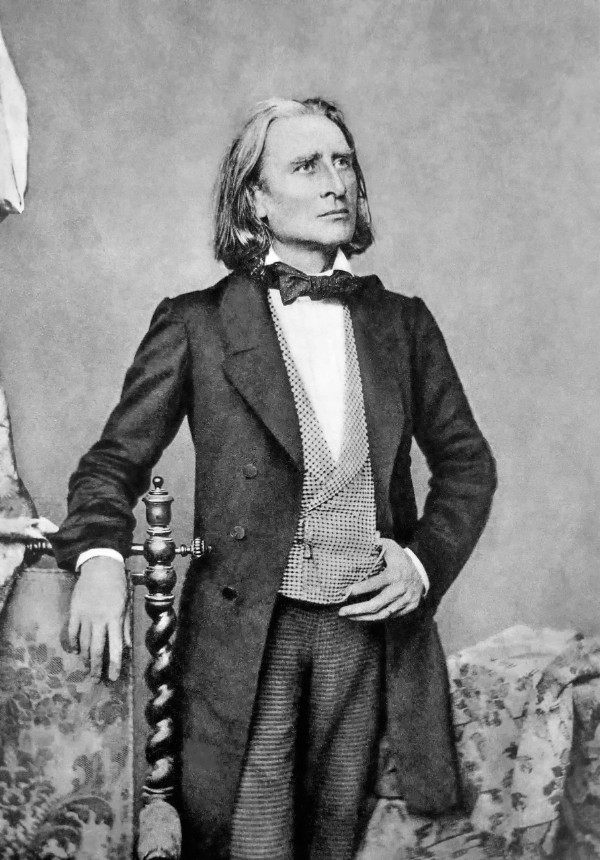
Franz Liszt
I suppose it all depends on what “harder” actually means. With most discussions of technical difficulties, it very much depends on the specific pieces being compared. Technical challenges aside, a composition can also be difficult to understand. For the performer, that means trying to interpret, and for the listener, trying to grasp its meaning or emotional content.
Liszt’s piano works, like the Transcendental Études or Hungarian Rhapsodies, demand exceptional velocity, powerful octaves, and the ability to shape long, singing melodic lines amid cascades of notes. His music features a kind of athletic and theatrical virtuosity that is difficult to comprehend.
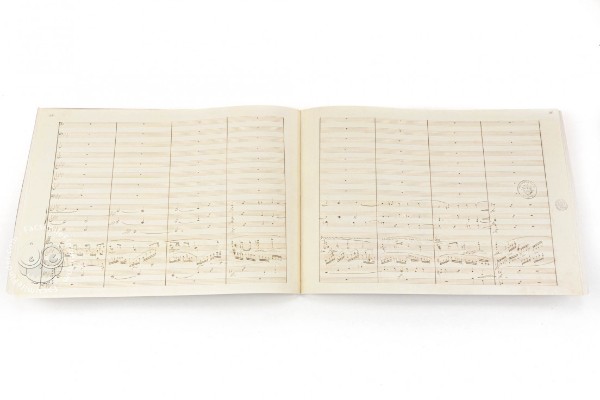
In his compositions, Alkan seemingly places the emphasis on massive chordal density and huge stretches that test the limits of human hands. And let’s not forget the extreme endurance needed to perform pieces like Le Festin d’Ésope or the monumental Concerto for Solo Piano.
Charles-Valentin Alkan: 3 Grandes études, Op. 76 – No. 1. Fantaisie in A-Flat Major (Marc-André Hamelin, piano)
Opposites in Personality
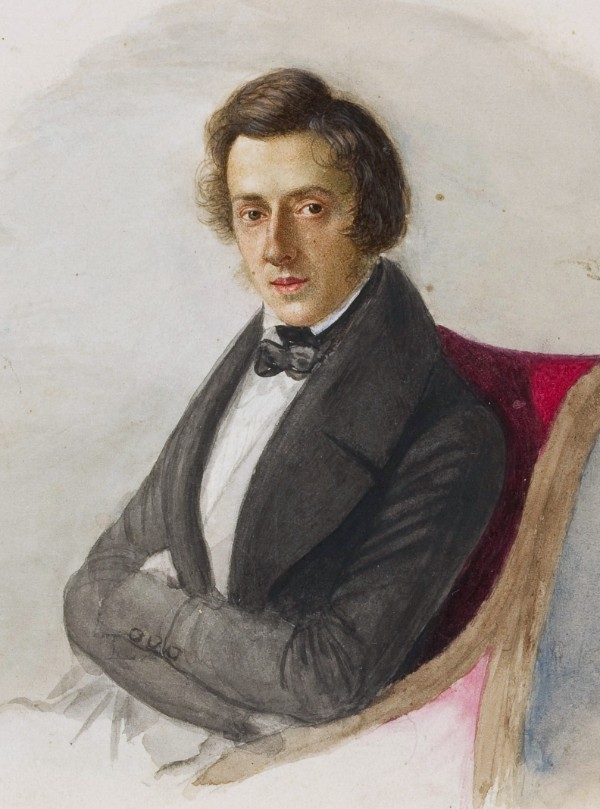
Maria Wodzińska: Frédéric Chopin, 1836 (Wasaw: National Museum)
Liszt and Alkan were completely different personalities. Liszt was a benefactor and an extrovert, while Alkan was a mysterious, enigmatic person. We don’t know exactly what turned Alkan into a genuine misanthrope, but he was deeply affected by the death of his close friend Frédéric Chopin.
Liszt, on the other hand, was a true cosmopolitan. Described as a famous virtuoso and superstar, his virtuosity, according to a contemporary critic, was “not exhausted in technical mastery but inextricably tied to his personality and intellect.”
Liszt and Alkan probably weren’t the best of friends, but Liszt thought that Alkan had the finest piano technique he had ever heard. He also invited him to become his assistant at the Geneva Conservatory, an offer that Alkan refused. In turn, Alkan mentioned the influence of the young Liszt on his compositional style.
Charles-Valentin Alkan: 3 Grandes études, Op. 76 – No. 2. Introduction, Variations and Finale in D Major (Marc-André Hamelin, piano)
Schumann’s Scorn
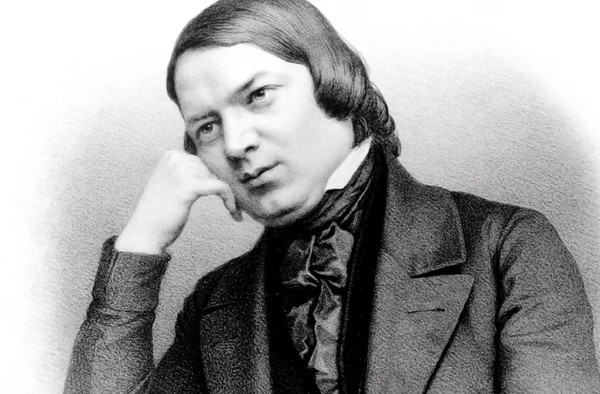
Robert Schumann
The purely mechanical qualities of pianistic virtuosity received widespread criticism. Robert Schumann, reviewing Alkan’s music, commented, “One is startled by such false, such unnatural art… the last piece titled ‘Morte’ is a crabbed waste, overgrown with brush and weeds… nothing is to be found but black on black.”
Schumann didn’t like the purely athletic pieces of Liszt either, but he did recognise him as a pianist-interpreter. A recent study suggests that in “Liszt’s view, virtuosity was necessary and unavoidable. But he was also aware that virtuosity could easily corrupt and impair a piece of artistic work if it is established as the principal goal.” (Golubovic/Komatović, An Extrovert and a Misanthrope, 2020)
Charles-Valentin Alkan: 3 Grandes études, Op. 76 – No. 3. Etude a mouvement semblable et perpetuel: Rondo-toccata in C Minor (Marc-André Hamelin, piano)
Polar Opposites
Since Liszt and Alkan worked in a period defined by extraordinary virtuosity, it’s hardly surprising that they composed highly complex works. For Alkan, some scholars argue, “extreme virtuosity appears to have been an escape from reality and a product of his withdrawal from the world.”
“In contrast, Liszt’s virtuosity felt natural and deeply rooted in the spirit of his time. This fundamental contrast has led to the perception of the two composers as polar opposites, pitting the misanthrope versus the extrovert.” (Golubovic/Komatović, An Extrovert and a Misanthrope, 2020)
Charles-Valentin Alkan: Le Festin d’Ésope, Op. 39 No. 12 (Excerpts)
No Definitive Winner
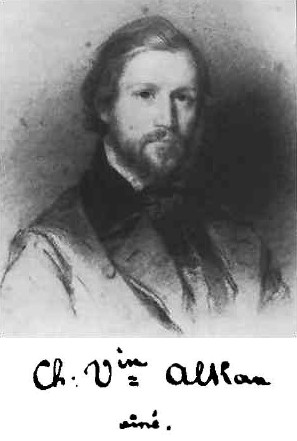
Charles-Valentin Alkan
We might thus generally say that Liszt’s technical difficulties frequently serve an expressive or pictorial purpose, while Alkan’s music feels more abstract and occasionally mechanical. Pianists who have mastered both repertoires often consider certain works by Alkan more difficult than those by Liszt.
Apparently, Alkan himself said that certain pieces were playable only by him and Liszt. And Liszt allegedly called some of Alkan’s compositions “impossible.” Coming from the same era but with completely different mindsets, both composers pushed the boundaries of what the piano and the human hands and mind can achieve. For me, there can be no definitive winner in the Alkan vs. Liszt debate.
For more of the best in classical music, sign up for our E-Newsletter