Unconscious bursts of creativity that engender significant artistic endeavors are not necessarily inspired by passionate romantic love alone. Greek mythology believed that this kind of stimulus came from nine muses, the inspirational goddesses of literature, science, and the arts. Muses were long considered the source of knowledge embodied in poetry, lyric songs and ancient myths. Throughout the history of Western art, artists, writers and musicians have prayed to the muses, or alternately, drawn inspiration from personified muses that conceptually reside beyond the borders of earthly love. True to life, however, composer inspiration has emerged from the entire spectrums of existence and being. Nature has always played a decidedly important role in the inspiration of various classical composers, as did exotic cities, landscapes or rituals. Composer inspiration is also found in poetry, the visual arts, and mythological stories and tales. Artistic, historical or cultural expressions of the past are just as inspirational as is the everyday: the third Punic War or the contrapuntal mastery of Bach is inspirationally just as relevant as are the virulent bat and camel. Composer inspiration is delightfully drawn from heroes and villains, scientific advances, a pet, or something as mundane as a hangover. Discover what fires the imagination of people who never stop asking questions.
Felix Mendelssohn (1809–1847) traveled to England and Scotland in 1829, and that visit was important for his musical writing, as it was the source for not only his Third Symphony but also for The Hebrides Overture, despite them being written
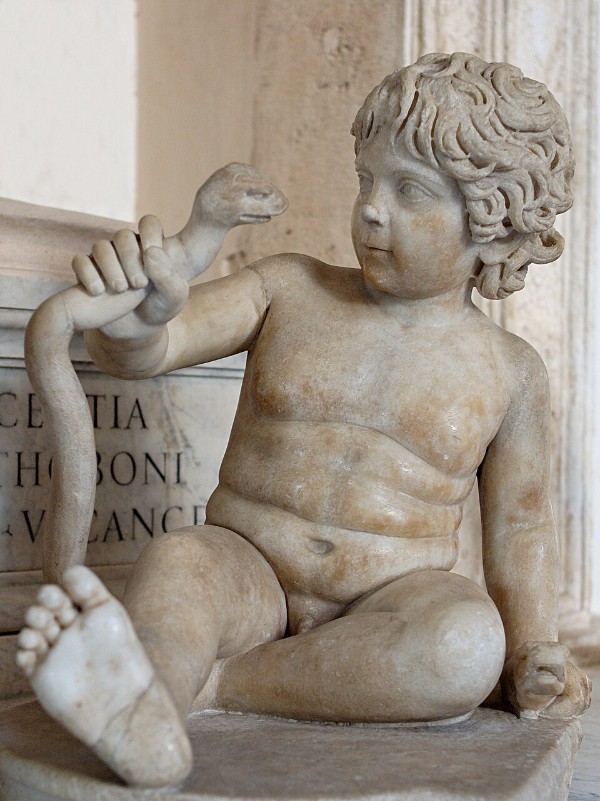
As a mythological character, Hercules is one who has always captured our attention. Famed for his strength and for his adventures around the known world, he’s caught the attention of writers and musicians for centuries. The stories and feats of
In the long 19th century, when one’s drawing room was the performance venue of greatest popularity, musicians were desperate for material. If you were a virtuoso pianist, then your repertoire was expansive. If you were an amateur player on the
Dutch trombonist, conductor, and composer Johan de Meij (b. 1953) made his international name in 1988 with his first symphony, The Lord of the Rings. Since then, he had gone on to become a noted composer for wind orchestra. In
The Yorkshire folksong, ‘On Ilkla Moor Baht ’at’, or ‘On Ilkley Moor Without a Hat’ is considered the folksong of Yorkshire and is sung (and titled) in the Yorkshire dialect. The melody used for it comes from the hymnal, namely,
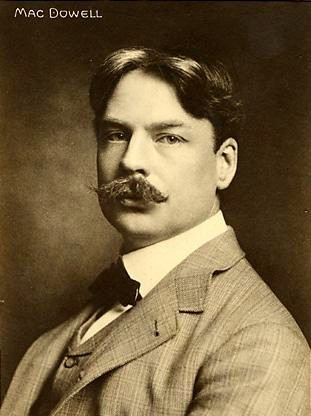
In July 1884, Edward MacDowell (1860–1908) married his pupil Marian Nevins (1858–1956), and they immediately left for England for their honeymoon. Daughter of a Wall Street banker, Marian had gone to Europe to study with Clara Schumann at the Hoch
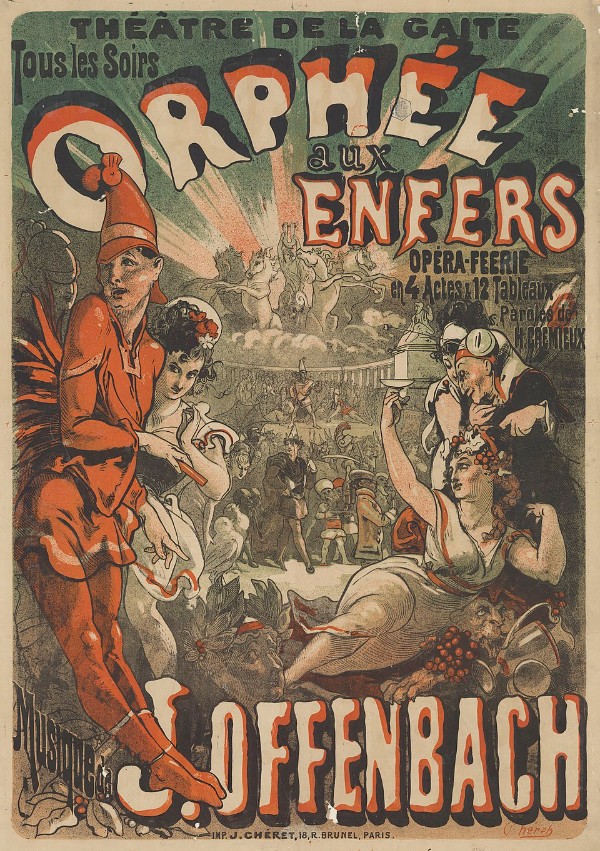
In Greek mythology, Orpheus, the greatest of all musicians and poets, lost his new bride Eurydice when she stepped on a viper and died from the bite. At the news, Orpheus wept so bitterly and sang so mournfully that all
As a continuation of his first book on the animals of the Chinese zodiac (Read more from The Chinese Zodiac for Children), Canadian composer Vincent Ho (b. 1975) wrote a book 2 that builds on Book 1 and takes a