
If Italian Baroque music had a gift for conversation, Baldassare Galuppi (1706–1785) would be one of its most charming talkers. He is often remembered today as an opera composer, but that misses out on something intimate and quietly revolutionary.
And you have already guessed that I am talking about his keyboard music, written mostly for harpsichord but alive and well on the modern piano.
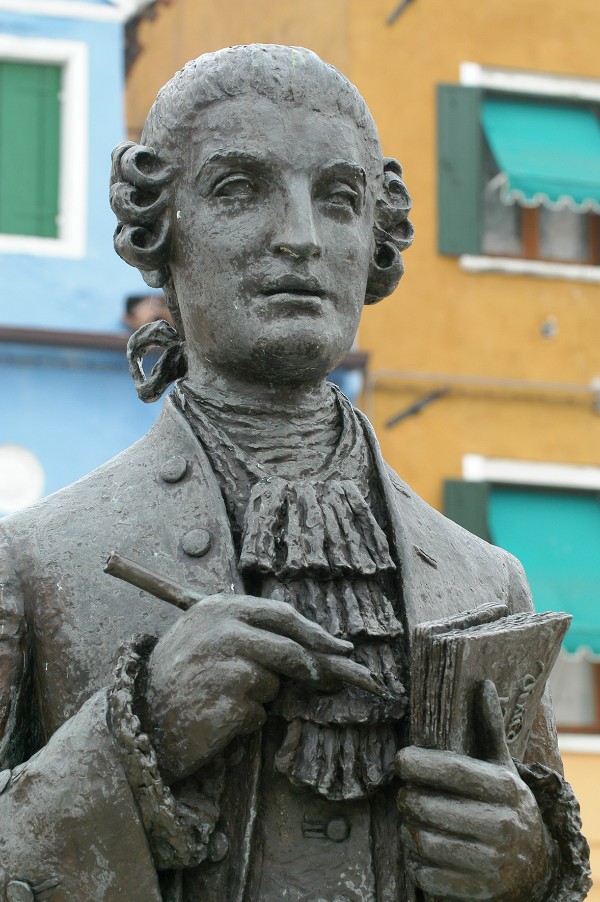
Baldassare Galuppi
It is music that stands at a crossroads between Baroque craft and Classical clarity, between ornament and melody, between the learned counterpoint of the past and the speaking and singing keyboard of the future.
So, let’s have a listen to Galuppi’s keyboard works, to compositions that smile, flirt, tease, and occasionally sigh. It is music that knows how to listen as well as speak and thus still feels surprisingly modern.
Baldassare Galuppi: Keyboard Sonata No. 9 in D minor, “Andante spiritoso”
Venice Speaking
Galuppi hailed from the island of Burano, near Venice, and that geography matters. Venice was not only a city of canals and masks, but a crossroads of taste, commerce, and performance.
Opera houses flourished, audiences were vocal and discerning, and Galuppi developed a musical language that prized elegance, wit, and directness. And those values carried straight into his keyboard writing.
Even when he writes counterpoint, it rarely feels academic. Voices converse rather than compete. Harmonies move with purpose, never lingering long enough to grow pedantic.
There is a sense that the music always knows where it is going, and that it wants the listener along for the ride.
Baldassare Galuppi: Keyboard Sonata in F Major, Illy No. 28 (Matteo Napoli, piano)
A Keyboard in Transition

Baldassare Galuppi
Galuppi wrote for the harpsichord at a moment when the keyboard world was changing fast. The fortepiano was emerging, touch sensitivity was becoming increasingly important, and composers were beginning to think of the keyboard as a melodic instrument capable of expressive nuance.
His sonatas, toccatas, and shorter keyboard pieces sit precisely at this turning point. Structurally, many still follow Baroque models like binary forms, dance rhythms and clear tonal symmetry.
But the musical surface tells a different story. Melodies sing and phrases breathe. Accompaniments are getting much lighter and thin into patterns that support rather than dominate.
Played on a modern piano, Galuppi’s music benefits from dynamic shading and legato phrasing, even if these were not explicitly available to him. What matters is not historical dogma, but musical intention. And Galuppi’s intentions are unmistakably expressive.
Baldassare Galuppi: Keyboard Sonata in A Minor (Matteo Napoli, piano)
The Art of the Galant
Galuppi is one of the key figures of the “galant style,” a term often misunderstood as lightweight or superficial. In reality, galant music was a reaction against density, not depth. It sought clarity, balance, and emotional immediacy.
His keyboard works revel in contrast. A bright opening idea is answered by a softer echo, a playful rhythmic figure suddenly giving way to lyrical reflection. Cadences feel conversational rather than ceremonial.
Even repetition is handled with care, subtly varied so that the music never feels static. What makes Galuppi especially engaging is his sense of timing. He knows when to linger and when to move on.
A melodic idea is rarely overstated. Instead, it appears, delights, and makes room for the next thought. This restraint gives the music a sense of self-confidence; it simply knows that there is no need to impress.
Baldassare Galuppi: Keyboard Sonata in D Major
Theatrical Keyboard
Listen closely, and Galuppi’s keyboard music begins to sound unmistakably theatrical. Phrases unfold like arias. Sudden harmonic turns feel like plot twists. Light staccato figures chatter like comic servants, while slower movements sigh with genuine tenderness.
This is not accidental. Galuppi was one of the great architects of opera buffa, working closely with Carlo Goldoni to shape a new kind of musical comedy that prized realism, pacing, and psychological insight.
Those instincts spill directly into his keyboard writing. Each piece feels inhabited by characters, even when no words are present.
In slower movements, especially, Galuppi’s gift for melodic line shines. The right hand often sings as if onstage, while the left provides discreet support. There is intimacy here, but never indulgence. Emotion is suggested, not underlined or shouted, and this quality keeps the music fresh even centuries later.
Baldassare Galuppi: Keyboard Sonata in B-Flat Major, Illy No. 32 (Matteo Napoli, piano)
Elegance in Form
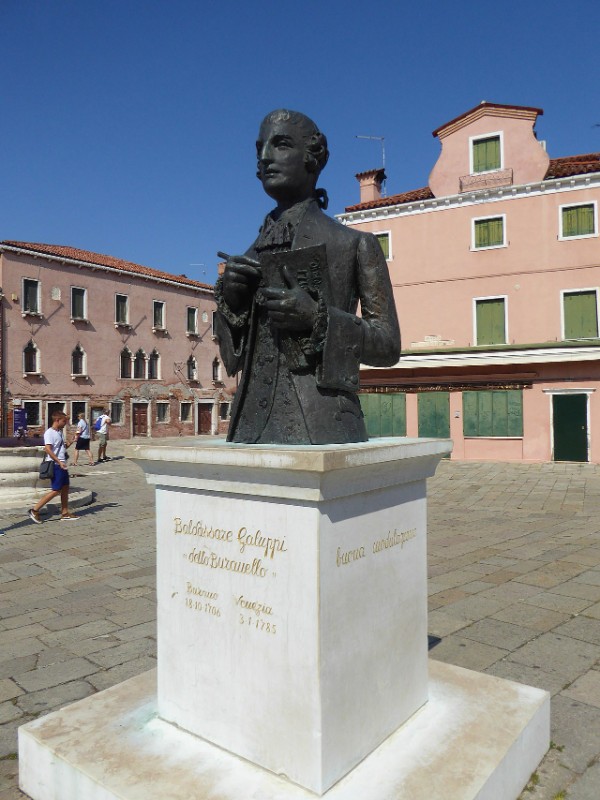
Statue of Baldassare Galuppi in Burano
Structurally, Galuppi’s keyboard pieces are models of proportion. Binary forms are clean and symmetrical, but rarely predictable. Transitions are smooth, modulations logical yet surprising. There is a sense of architectural balance without rigidity, meticulously planned but effortlessly presented.
Unlike later Classical composers, Galuppi rarely aims for dramatic conflict. Instead, his forms evolve organically. Tension arises from harmonic colour or rhythmic play rather than from overt struggle.
This gives the music a distinctive emotional profile, one that is poised, humane, and quietly persuasive.
For performers, this presents both a gift and a challenge. Without obvious drama to lean on, interpretation must come from nuances of articulation, timing, and touch. The greatest danger is blandness. But the reward, when done well, is elegance that feels alive.
Baldassare Galuppi: Harpsichord Sonata in C Minor, No. 3. (from Passatempo al cembalo) (Luigi Chiarizia, harpsichord)
Travelling Lightly
Galuppi’s keyboard music did not shout its influence, but it travelled widely. His reputation spread across Europe as he worked in London and St Petersburg. We know that his music circulated in manuscript and print.
That traces of his style were available throughout the continent is heard in the early keyboard works of Haydn and even in the youthful Mozart. We can hear it clearly in their handling of melody and phrase structure.
Yet Galuppi never became a monument. He remained a craftsman of pleasure rather than a prophet of destiny.
That may explain why his keyboard music slipped from mainstream repertory, and why it is now ripe for rediscovery. In an age tired of excess, Galuppi’s moderation feels refreshing rather than timid.
Baldassare Galuppi: Piano Sonata No. 6 in E-Flat Major (Fernanda Damiano, piano)
Forward-Looking Keys
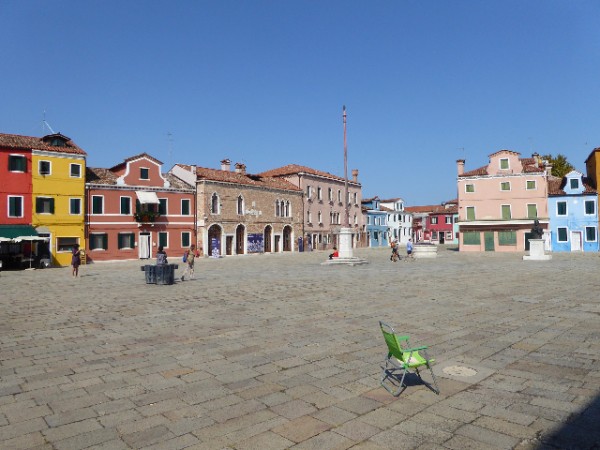
Piazza Baldassarre Galuppi in Burano
To play or listen to Galuppi today is to encounter a composer who trusted the listener’s intelligence. His keyboard music does not demand awe, but it invites attention.
It rewards close listening without punishing casual enjoyment. It can charm a newcomer while still satisfying a seasoned musician.
In a concert programme, Galuppi offers a wonderful contrast without apology. Between Bach’s grandeur and Mozart’s drama, his music provides light, air, and wit. Beauty here lies in balance, not scale, and Galuppi provides us with a different way of thinking about musical value.
On the modern piano, Galuppi’s works gain warmth and colour, but they must retain their essential clarity. Too much pedal clouds the line, too much weight turns elegance into heaviness. When approached with sensitivity, however, the piano reveals just how forward-looking this music really is.
Baldassare Galuppi: Piano Sonata No. 9 in E Major (Fernanda Damiano, piano)
Quiet Genius
Galuppi’s keyboard music reminds us that not all greatness announces itself by shouting. Sometimes it speaks conversationally or confidently for those who are listening closely. These pieces are not about transcendence or torment; they are about human proportion.
In a musical culture increasingly obsessed with extremes, Galuppi offers something quietly radical. He offers music that delights without demanding, that moves without manipulating, that smiles without winking.
His keyboard works sit at a moment of transition, but they are not transitional music. They are complete in themselves and still very much alive under the fingers.
To sit at the piano with Galuppi is to rediscover music as conversation rather than proclamation. In his hands, the keyboard does not strive to overwhelm, but to delight, reminding us that elegance, when shaped with intelligence and care, can be as enduring as grandeur.
For more of the best in classical music, sign up for our E-Newsletter





I am glad that you have included a performance of Galuppi by Michelangeli, who was something of a proponent of his music. Michelangelo’s deft touch brings out the beauty of Galuppi’s writing. During his lifetime Galuppi was hugely successful and wealthy, with a 5-story house on St Mark’s Square, Venice, yet within a few decades he had been largely forgotten, overshadowed by Mozart and Beethoven.
By the early-mid 19th Century in the Anglo-Saxon world, Galuppi had almost entirely disappeared. It wasn’t until English poet Robert Browning wrote “A Toccata of Galuppi’s” in 1855 that he resurfaces, but Galuppi has never recovered the fame and prominence he enjoyed during his lifetime.