We might easily call Alexander Nikolayevich Scriabin (1872–1915) one of the most original and enigmatic composers of the late Romantic and early modern eras. His career spans an extraordinary journey from virtuoso pianist to a visionary of mysticism, symbolism, and musical synthesis.
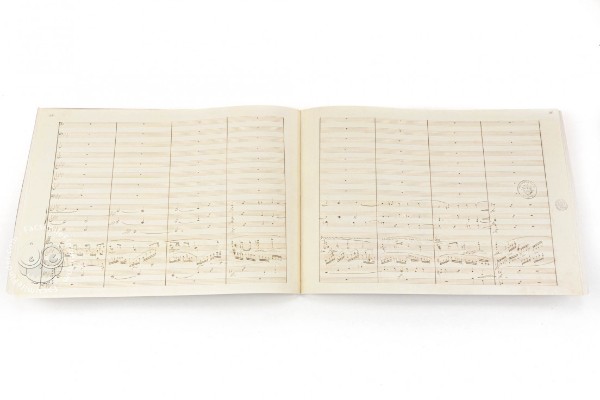
His Symphony No. 1 in E major, Op. 26, completed between 1899 and 1900, is a foundational work in this trajectory. It is ambitious in structure, expressive in language, and critical to understanding Scriabin’s developing aesthetic and philosophical commitments.
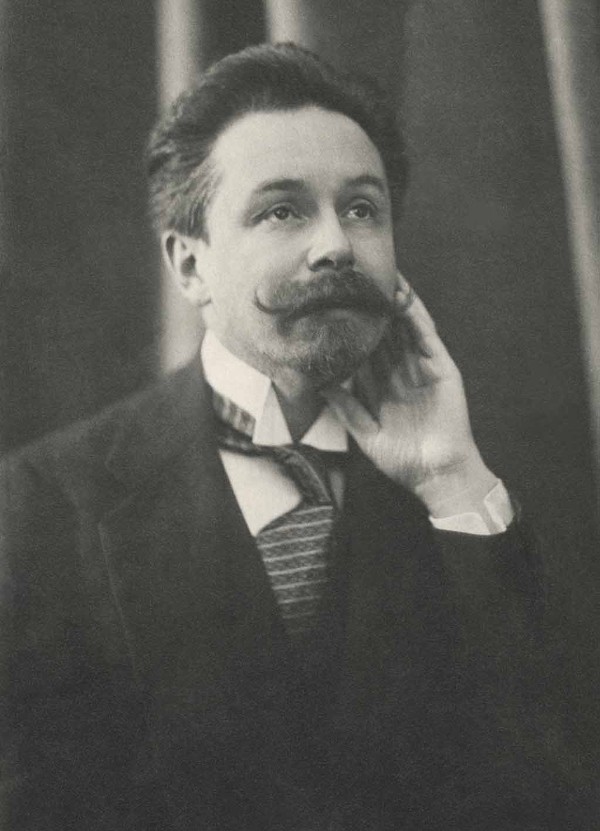
Alexander Scriabin
On the occasion of his birthday on 6 January in the New Calendar Style, let’s examine the background of composition and its conceptual foundations.
Alexander Scriabin: Symphony No. 1 in E Major, Op. 26 – I. Lento (Larisa Kostyuk, contralto; Oleg Dolgov, tenor; Russian State Symphonic Cappella; Russian State Symphony Orchestra; Valery Polyansky, cond.)
The Making of a Composer
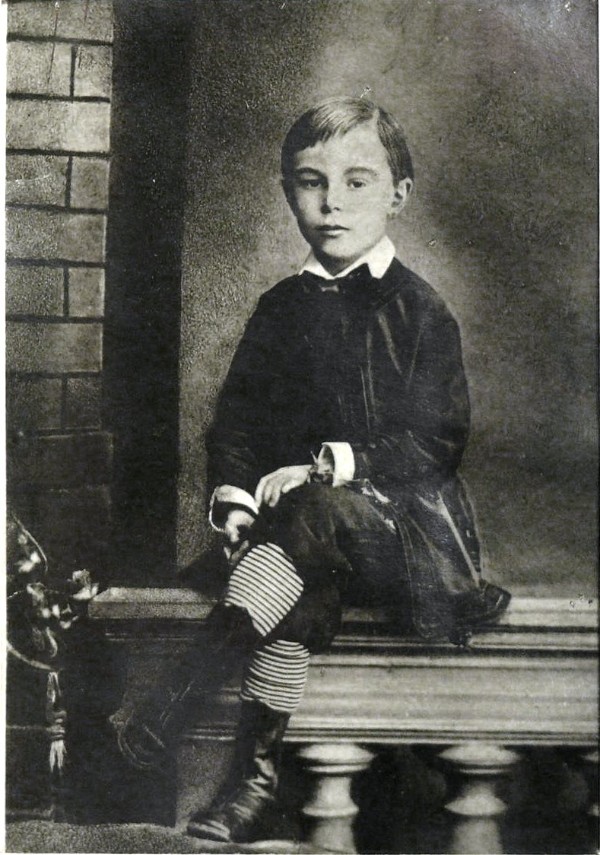
The young Scriabin
Scriabin hailed from Moscow, and he began piano studies early on. He would later enter the Moscow Conservatory, where he studied piano with V. I. Safonov and composition with Sergey Taneyev and Anton Arensky.
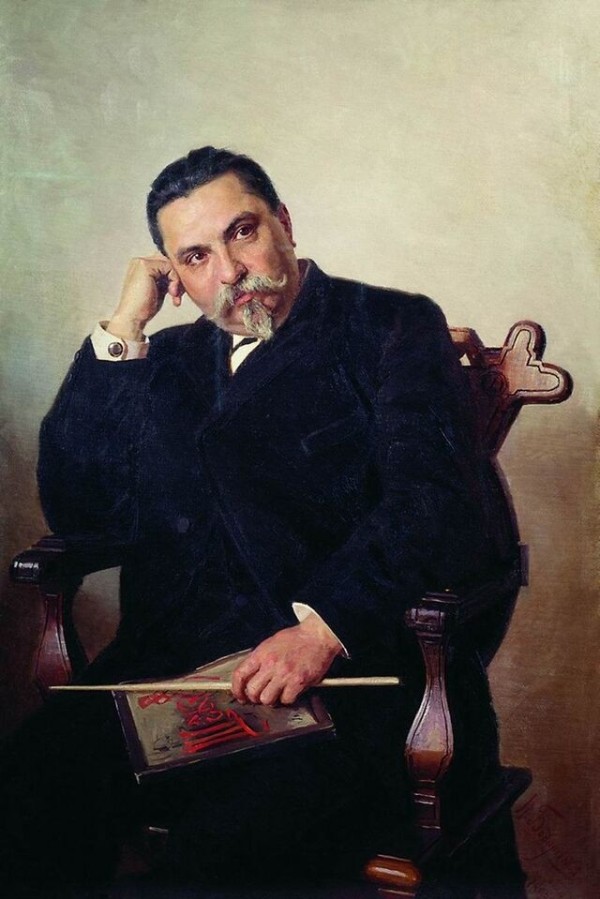
Vasily Safonov
Graduating in 1892, he established himself as a concert pianist of considerable ability while composing a substantial corpus of piano music that revealed a deep Romantic sensibility. His early works, such as the piano sonatas and preludes, exhibit rich harmonic imagination, delineating a personal style long before his orchestral endeavours.
Musicologist Faubion Bowers notes that Scriabin’s early output, though Romantic, “already presented hints of expressive and harmonic originality that would flourish in later orchestral compositions.”
Music Beyond Music
By the late 1890s, Scriabin’s intellectual interests had expanded beyond purely musical concerns into broader philosophical realms. He assimilated ideas from German Idealism, Russian Symbolism, and mystic thought, as revealed in notebooks and writings that reflect a search for a metaphysical basis for artistic creation.
These texts, translated and annotated in The Notebooks of Alexander Skryabin, reveal his conviction that music could transcend mere aesthetic pleasure and act as a medium for spiritual transformation and symbolic expression.
Such ideas, although most fully developed in later works like The Poem of Ecstasy and his planned mystical opus Mysterium, already inform the conceptual underpinnings of his first symphony.
Alexander Scriabin: Symphony No. 1 in E Major, Op. 26 – II. Allegro dramatico (Larisa Kostyuk, contralto; Oleg Dolgov, tenor; Russian State Symphonic Cappella; Russian State Symphony Orchestra; Valery Polyansky, cond.)
From Sketch to Symphony
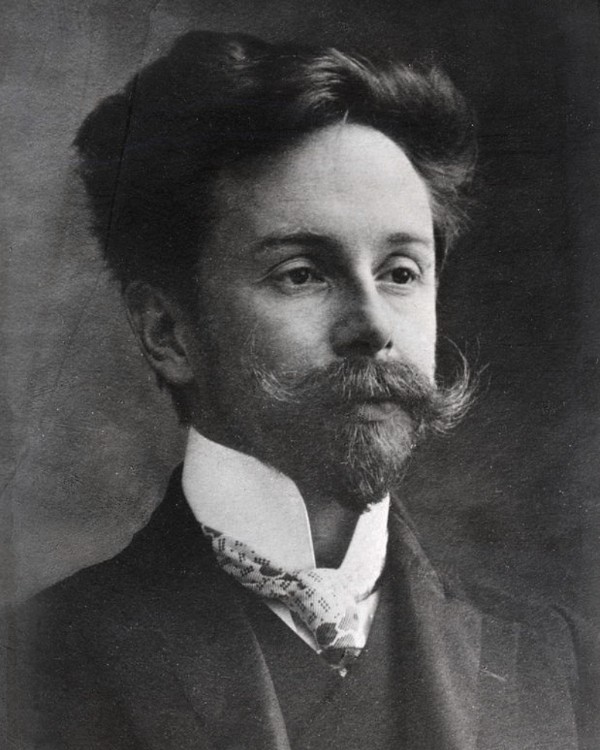
Alexander Scriabin
Scriabin began sketching ideas for his first symphony in 1899, during a period when he was gaining confidence as a composer beyond solo piano work. The composer tested early drafts in a two-piano form with friends in Moscow in January 1900, including Alexander Goldenweiser.
During the summer of 1900 in the Moscow suburb of Daryino, he worked intensively on the orchestral score. By June, he wrote to his publisher, Mitrofan Belyayev, that he was engaged in orchestral composition, and by September, he reported that the six-movement symphony had been written and was entering the orchestration phase.
During this formative phase, Scriabin was also exploring smaller orchestral pieces, yet the Symphony No. 1 represented his first sustained engagement with the large symphonic genre. Unlike composers who approached their first symphony cautiously, Scriabin embraced bold formal and expressive choices in a six-movement structure culminating in a choral finale.
Alexander Scriabin: Symphony No. 1 in E Major, Op. 26 – III. Lento (Larisa Kostyuk, contralto; Oleg Dolgov, tenor; Russian State Symphonic Cappella; Russian State Symphony Orchestra; Valery Polyansky, cond.)
Toward a Choral Apotheosis
The exceptional six-movement layout is an expansion of the traditional four-movement model. The symphony’s opening Lento functions simultaneously as an introduction and tonal framing device, while the following allegros and scherzo provide contrast and developmental impetus.
Its final movement, a choral and orchestral finale with text by Scriabin, was intended as a dramatic apotheosis of his belief in art’s spiritual and moral force. This incorporation of vocal forces in a first symphony reflects Scriabin’s ambition to fuse musical and poetic meaning into a unified artistic statement.
O wonderful image of the Divine,
Harmony’s pure Art!
To you we gladly bring
Praise of that rapturous feeling.
You are life’s bright hope,
You are celebration, you are respite,
Like a gift you bring to the people
Your enchanted visions.
In that gloomy and cold hour,
When the soul is full of tumult,
Man finds in you
The spry joy of consolation…
Art as Transcendence
The Symphony No. 1 is one of the earliest works in which Scriabin’s concept of art as morally and spiritually transformative becomes explicit. The text of the choral finale, glorifying art itself, reveals Scriabin’s conviction that artistic creation offers a path to a kind of transcendence.
According to Encyclopaedia Britannica, this movement reflects Scriabin’s “interest in mystical philosophy,” which was increasingly prominent after 1900 and which informed the symphony’s celebratory apotheosis.
The infusion of text and music situates the symphony between late-Romantic conventions and the nascent modernist quest for the synthesis of the arts. Eventually, the integration of multiple sensory elements became a hallmark of Scriabin’s aesthetic vision.
Alexander Scriabin: Symphony No. 1 in E Major, Op. 26 – IV. Vivace (Larisa Kostyuk, contralto; Oleg Dolgov, tenor; Russian State Symphonic Cappella; Russian State Symphony Orchestra; Valery Polyansky, cond.)
Music as Symbolic System
While Scriabin never formally joined the Theosophical Society, his philosophical outlook resonates with the era’s fascination with mysticism, symbolist aesthetics, and metaphysical inquiry.
His notebooks demonstrate engagement with diverse philosophical traditions that informed his broader artistic imperatives. It includes entries from the time of the First Symphony and shows his deepening commitment to music as a vehicle for metaphysical expression, rather than mere entertainment.
Although primary scholarship on the relationship between these notebook writings and specific compositional decisions in the First Symphony is still emerging, it is clear that the composer’s worldview increasingly viewed music as part of a total symbolic system connecting human consciousness to broader cosmic forces.
Premiere, Protest, and Prize
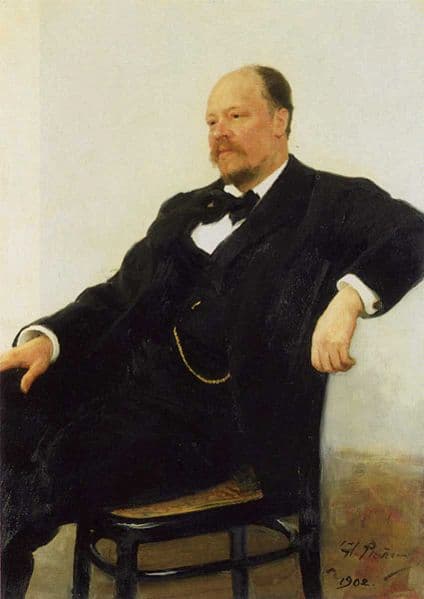
Ilya Repin: Portrait of the composer Anatoly Konstantinovich Lyadov, 1902 (Moscow: Russian Museum)
The work premiered in Saint Petersburg on 24 November 1900, conducted by Anatoly Lyadov. The chorus and soloists in the final movement were eliminated from this first performance by the adjudicating committee, which included Nikolai Rimsky-Korsakov, Alexander Glazunov, and Lyadov himself, on the grounds that the vocal writing was “unperformable.”
Scriabin protested this decision, but the performance went ahead without the intended finale. However, the symphony was nevertheless awarded the Glinka Prize in 1900.
The complete version was first performed on 29 March 1901 in Moscow under Vasily Safonov. While critical response was mixed, many recognised its originality and expressive ambition.
Fifteen years later, critic Arthur Eaglefield Hull described the work as “a masterly work of great beauty,” acknowledging its enduring artistic value despite early controversies.
Alexander Scriabin: Symphony No. 1 in E Major, Op. 26 – V. Allegro (Larisa Kostyuk, contralto; Oleg Dolgov, tenor; Russian State Symphonic Cappella; Russian State Symphony Orchestra; Valery Polyansky, cond.)
Forging a Symphonic Voice
Although Scriabin had limited experience with orchestral writing at the time, his command of orchestral colour in the First Symphony is strikingly sophisticated.
Commentators such as Walter Simmons note that Scriabin’s orchestral palette combines Romantic sonority with an emerging personal voice. “The orchestral fabric is rich and varied, with slow movements characterised by lyrical expansiveness and allegro movements showing rhythmic vitality and dramatic impetus.”
The six movements collectively maintain structural cohesion by recurring motivic ideas and harmonic gestures that sustain the work’s overarching expressive narrative. The inclusion of the chorus and soloists in the final movement shifts the symphonic argument from instrumental elaboration to explicit articulation of Scriabin’s aesthetic manifesto.
From Pianist to Visionary
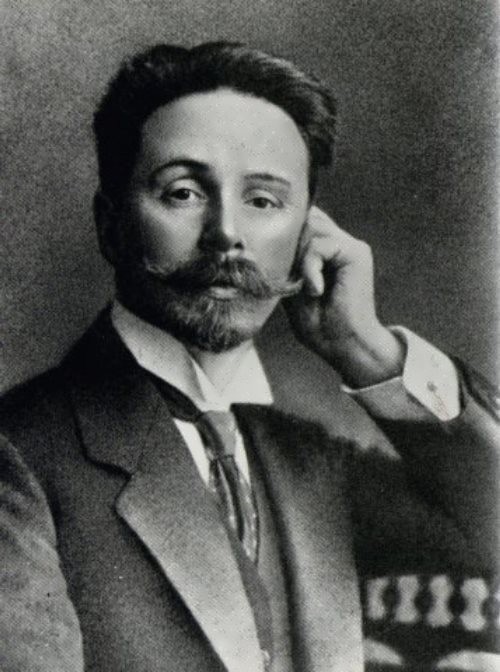
Alexander Scriabin
Although seldom programmed compared to his later orchestral poems, the 1st Symphony holds an important place in the composer’s oeuvre. It demonstrates the early flowering of Scriabin’s orchestral voice and offers a window into his evolving philosophy of art and music.
Musicologists emphasise that understanding this symphony enriches appreciation of Scriabin’s broader artistic project, bridging traditional orchestral technique with the composer’s larger ambitions for symbolic and spiritual integration in art.
It is a work of remarkable ambition and expressive richness, as it announces the composer’s transition from pianist-composer to visionary orchestrator. Anchored in Romantic orchestral tradition but propelled by Scriabin’s expanding worldview, the symphony articulates an ideal of art as morally and spiritually formative.
For more of the best in classical music, sign up for our E-Newsletter
Alexander Scriabin: Symphony No. 1 in E Major, Op. 26 – VI. Andante (Larisa Kostyuk, contralto; Oleg Dolgov, tenor; Russian State Symphonic Cappella; Russian State Symphony Orchestra; Valery Polyansky, cond.)