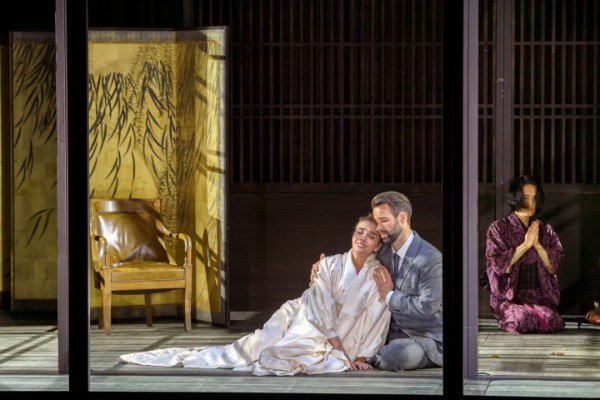
To celebrate the centenary of Giacomo Puccini’s death in 1924, the Aix-en-Provence Festival presented a brand-new staging of Madama Butterfly. It was the first time his opera had been presented at the Festival, with performances held outdoors at the Théâtre de l’Archevêché in July 2024.
Giacomo Puccini: Madama Butterfly Festival d’Aix-en-Provence 2024
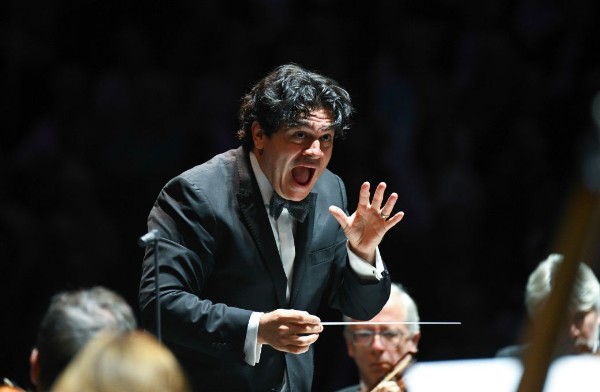
Daniele Rustioni, music director of the co-producing Orchestra and Chorus of Opéra de Lyon, welcomed Ermonela Jaho, one of the world’s most celebrated Butterfly interpreters. Adam Smith sang Pinkerton, Mihoko Fujimura was Suzuki, and Lionel Lhote portrayed Sharpless.
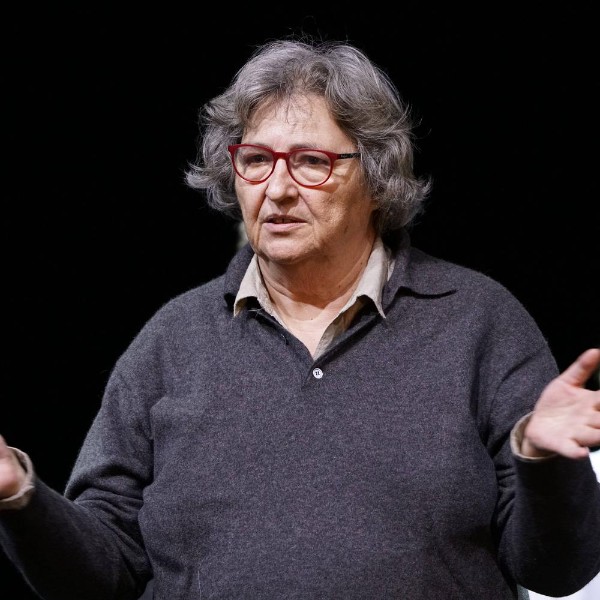
The German director Andrea Breth, known for her psychologically precise productions, relied on a late 19th-century photograph of Western travellers in Japan for her staging. She creates an almost photographic environment in which Pinkerton and Sharpless are portrayed as whisky-drinking intruders.
Breth did not modernise the action nor add overtly political aspects. However, the themes of imperialism and cultural clashes are as relevant today as they were 100 years ago.
Giacomo Puccini: Madama Butterfly, Festival d’Aix-en-Provence 2024
Available until 11/01/2027
Exotic Contracts
Giacomo Puccini: Madama Butterfly
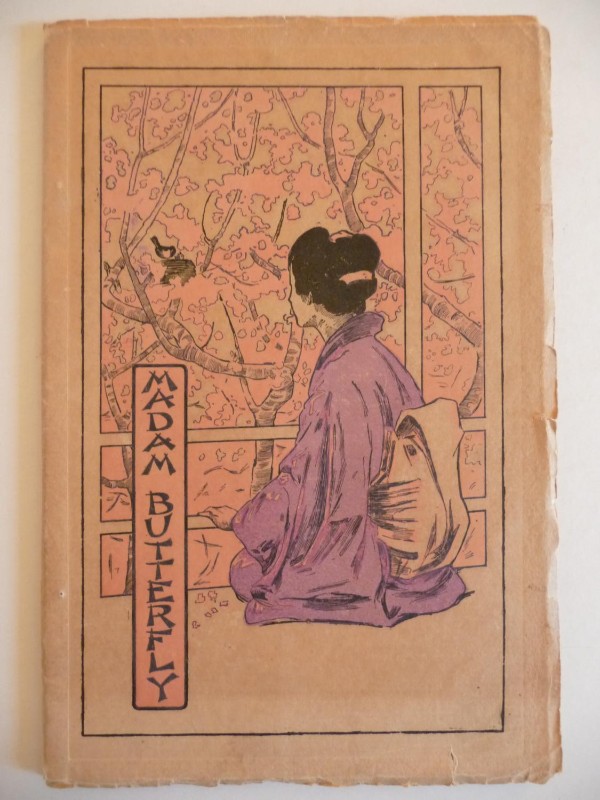
When the American naval Commander Matthew Perry gently persuaded the Japanese Shogunate to open their ports to foreign trade in 1853, he secured a number of commercial and diplomatic privileges. Perry’s tactful negotiations and the subsequent implementation of the Harris treaty not only brought economic benefits to both sides but also accorded fringe benefits to American men living in Japan.
One of these little pleasures of life was the ability to “rent a wife.” For a small monthly fee, a healthy lad could procure a “docile, doll-like Japanese wife, and live in a miniature house surrounded by exotic gardens and flowers.”
These marriage contracts were vigorously advertised in glowing and seductive terms, but were not legally binding and could be abandoned at any time. It hardly bears pointing out that these exotic conventions quickly fuelled the Western imagination.
The Geisha Trope
Andrea Breth
At the forefront of popular culture was the fictional account of the French naval officer Pierre Loti, who published his faux memoir Madame Chrysanthème in 1887. Loti was not entirely sympathetic to the plight of his Japanese geisha. Rather, he portrayed her as a calculated money grabber who simply waited for her next husband.
In response, Felix Regamey penned his own novel, Le cahier rose de Mme Chrysanthème in 1894. Told from the perspective of the geisha, he takes a much kinder view. And in 1898, the American lawyer John Luther Long published a romanticised trope in Century Magazine.
Of course, the musical community had not been idle, and Camille Saint-Saëns published his opera La princesse Jaune, in 1872. Gilbert and Sullivan satirised British infatuation with all things Japanese in the 1885 production of Mikado, André Messager brought Madame Chrysanthème to the operatic stage in 1893, and Pietro Mascagni dealt with the subject matter in his opera Iris of 1898.
Music Boxes Over Folk Songs
Giacomo Puccini
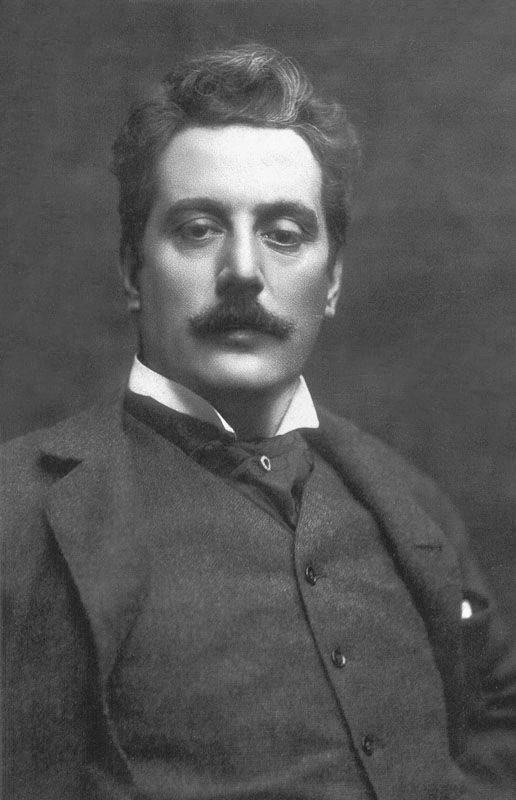
Giacomo Puccini never set foot on Japanese soil, and his textual source originated in the one-act play Madame Butterfly by American playwright and producer David Belasco. Puccini saw Belasco’s play in London in 1900, and he was particularly touched by Cio-Cio San’s vigil, who stays up all night waiting for Pinkerton’s ship to appear in Nagasaki harbour.
Upon his return to Italy, Puccini engaged the services of Luigi Illica and Giuseppe Giacosa, who had repeatedly served him in the past. In terms of music, Puccini was striving for a sense of Japanese authenticity. He engaged in exhaustive research to find or at least approximate the sense of Japanese musical identity.
It has long been assumed that the Japanese melodies in Butterfly originated in a collection of songs published by Y. Nagai and K. Kobatake in 1891 and 1892, or were taken from popular arrangements of Japanese songs, published in 1894 and 1895 by Rudolf Dittrich, respectively. However, recent research indicates that Puccini heard at least two of these Japanese melodies mechanically performed by music boxes.
Transcending Limitations
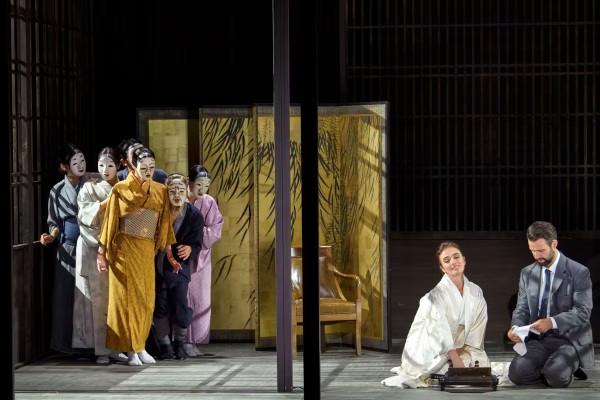
Giacomo Puccini: Madama Butterfly Festival d’Aix-en-Provence 2024
In all, Puccini revised his Butterfly for a grand total of five times, with the 1907 version considered to be his final say. In Madama Butterfly, Puccini found a wonderful balance between the sentimental and the overwhelming, as moments of great delicacy alternate with emotional outbursts.
The conflict is both personal and cultural, and through his unforgettable melodies, not to mention his sophisticated style of orchestration that cleverly aligns specific instrumental groups and orchestral timbres to match distinct dramatic moments, Puccini’s timeless creation resonates on a variety of psychological and cognitive levels.
In the Aix-en-Provence production, critics widely praised Ermonela Jaho’s performance, calling it extraordinary, breathtaking, and exceptional. Andrea Breth’s sparse staging did keep the spotlight on Jaho; however, it was generally considered underwhelming and static. Some even called it an “ode to slowness.” In the event, Jaho’s soulful portrayal easily transcended any staging limitations.
For more of the best in classical music, sign up for our E-Newsletter
Giacomo Puccini: Madama Butterfly, Festival d’Aix-en-Provence 2024