As the well-dressed man about town in the 19th century, you’d have your snuff box to hand. Something elaborate in gold or silver, with fine chasing or inlay work or made of tortoiseshell, perhaps. Some of these were elaborate enough to have their own musical boxes incorporated, such as in this one from Switzerland.
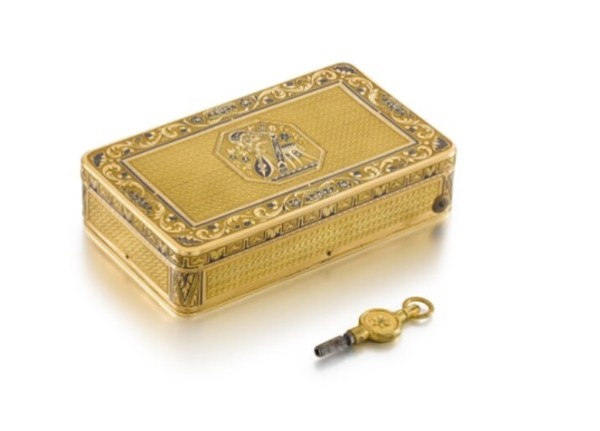
Gold and enamel musical snuff box, 1815
Elaborate snuff boxes of the early 19th century were replaced by mass-produced ones, usually done in black horn, and the music boxes disappeared.
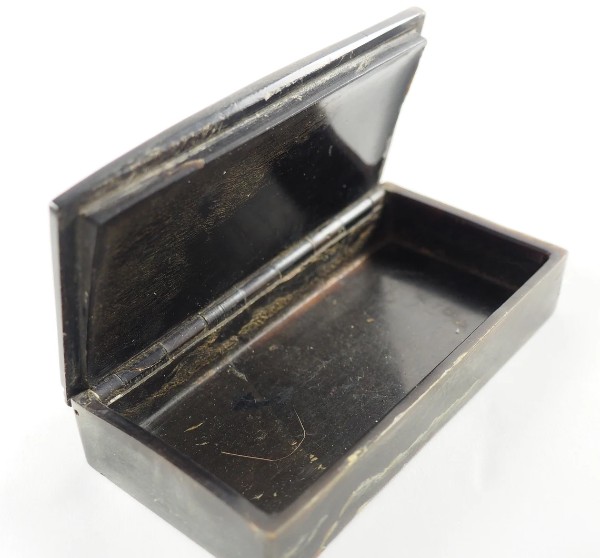
Black horn snuff box, Rome
In their memory, as a present for his son Mikhail, Anatol Liadov wrote this little piano piece, Une Tabatière à musique, Op. 32, which he described as a ‘Valse-Badinage’. Badinage means an exchange of teasing remarks.
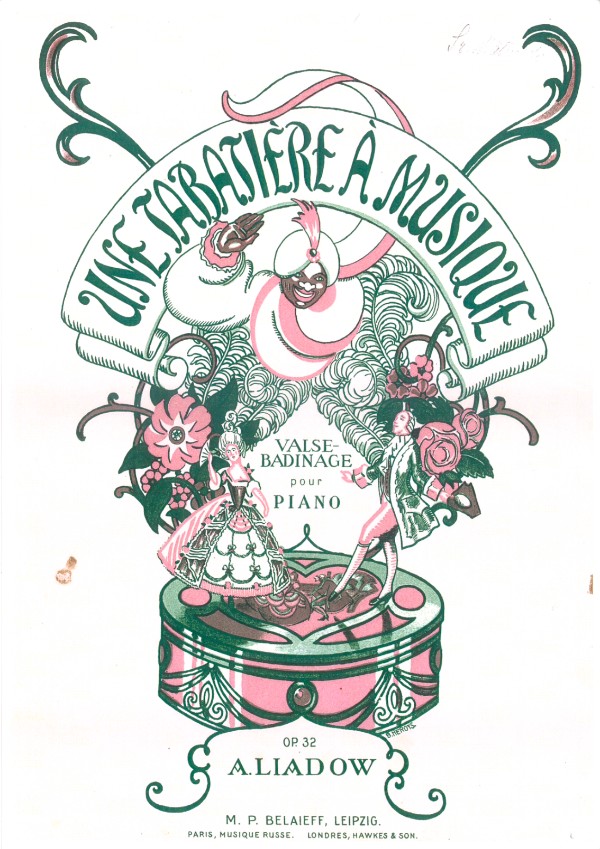
Une Tabatière à musique
To emphasise the mechanical quality of the music, it’s marked “Automaticamente’ and ‘sempre staccato’ and, since it’s just a little box, it’s to be played pianissimo. The triple time makes the piece dance. As with most music box tunes, each new section is different and then, at the end, returns to the initial melody. Although the work is in 3/8 time, the music divides itself into duplets, complicating the melody in a delightful manner.
Anatol Liadov: La Boîte à musique, op. 32
This recording was made in 1954 and 1955 at the Decca Studios, West Hampstead, in London by Paolo Spagnolo.
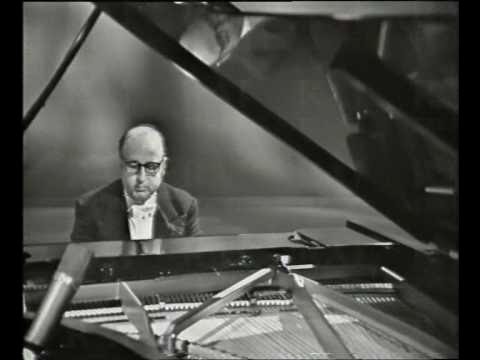
Paolo Spagnolo
Paolo Spagnolo (1930–2012) was an Italian child prodigy, taking the limelight for the first time at age 5 and by age 6 appearing in newsreels. In this newsreel, he plays Robert Schumann’s Warum? from the Op. 12 Fantasies and Improviso, Op. 108/3, by Giovanni Rinaldi. Note the pedal extensions for his short legs in this video!
He attended the Conservatory of San Piero a Majella in Naples at age 7 and at the age of 17, won first prize at the Geneva International Competition. Through the 1950s, he travelled the world, giving concerts and recitals in Europe, South America, and appeared at Town Hall in New York. In the 1960s, he gave up his concert career for one teaching at his old conservatory. He resumed his recording career in 2009, bringing back to the studio a career that had stopped for 40 years. He brought back an older style that had, as one commentator wrote, ‘an austere and classicist sensibility’.
On the 1954 and 1955 recordings, his repertoire extends from Liadov (above) to Debussy’s Children’s Corner, as well as selections from works by Granados, Albéniz, and de Falla. Less well-known composers on the recording include José Sciliani, Julián Aguirre, Francisco Mignone, before closing with a selection from Ernst Toch’s Burlesque, Op. 31.
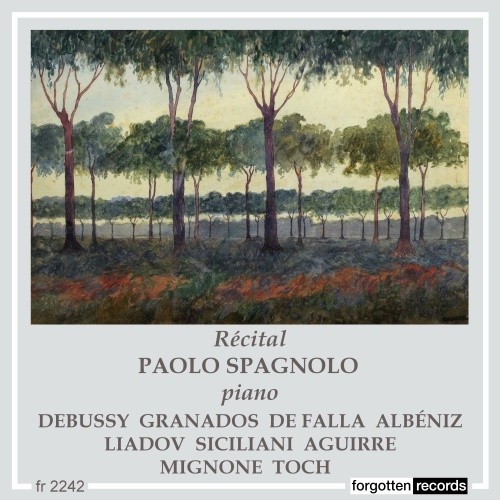
Performed by
Paolo Spagnolo
Recorded in 1954-1955
Official Website
For more of the best in classical music, sign up for our E-Newsletter