What would it take for you to dedicate your entire adult life to one orchestra?
Many orchestral musicians enjoy careers that span decades, but a select few remain on stage for 60, 65, or sometimes even 70 years!
The longevity of these players is not only a testament to their stamina and skill, but also to their deep devotion to their orchestras.
Before we get started, here are some disclaimers:
- Our list goes from shortest tenure to longest tenure.
- We are limiting our list to players with large professional orchestras.
- An asterisk denotes a player who is still playing as of late 2025.
- Rules mandating comparatively early retirement have kept many European musicians off this list.
- This list doesn’t count musicians who switched orchestras during their career.
With those disclaimers settled, here’s our list of ten orchestra musicians with some of the longest tenures:
Leonard Mogill, Philadelphia Orchestra, 62 years
Leonard Mogill played viola in the Philadelphia Orchestra between 1930 and 1992.
According to a Philadelphia Inquirer article posted on his Find-a-Grave page, Mogill was born in Philadelphia and studied at the Curtis Institute of Music. While at Curtis, he switched from violin to viola.
When he was 22, Leopold Stokowski hired him to play in the Philadelphia Orchestra. During his tenure, he served as associate principal.
Under existing rules, he was due to be pushed out in 1976 due to a mandatory retirement age, but the players negotiated to keep him around.
During the 1980s, he continued playing regularly with the orchestra as a substitute.
Aside from his work as an orchestral musician, he also composed a number of studies for viola.
He died of a heart attack in his home in 1997. He was 86.
Stanley Drucker, New York Philharmonic, 62 years
Watch a 2009 ABC News segment on Stanley Drucker.
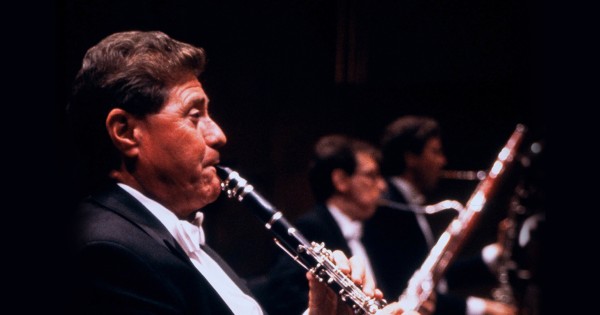
Stanley Drucker
Stanley Drucker played clarinet in the New York Philharmonic between 1948 and 2009.
He was born in 1929 in Brooklyn, New York, and began studying clarinet at the age of ten. He studied at the Curtis Institute for one year before dropping out to take a job with the Indianapolis Symphony.
In 1948, he won a position in the clarinet section of the New York Philharmonic. Twelve years later, in 1960, he became the principal.
Over the course of his tenure, he made nearly 150 appearances as a soloist with the orchestra. He also premiered clarinet concertos by William Bolcom and John Corigliano.
He died in California in 2022. He was 93.
Jay Friedman, Chicago Symphony Orchestra, 63 years
Jay Friedman’s performance of Sulek’s Sonata for Trombone and Piano
Jay Friedman played trombone with the Chicago Symphony between 1962 and 2025.
Friedman was born in 1939.
In 1962, at the age of 23, Fritz Reiner hired Friedman to play in the orchestra’s trombone section.
Two years later, he was named the principal trombonist, becoming the youngest principal brass player in America.
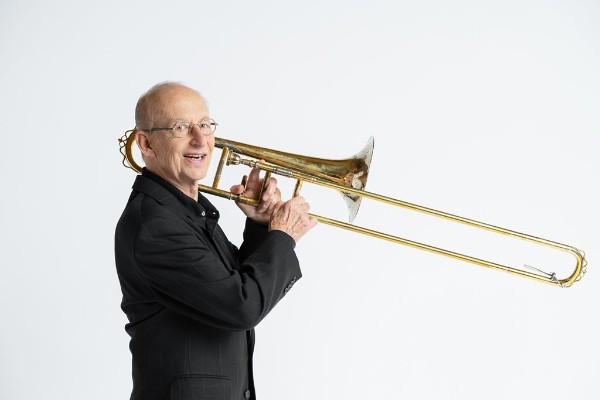
Jay Friedman
In addition to his orchestral job, he became a conductor who worked throughout the Chicago community. He was music director of the Symphony of Oak Park & River Forest and River Cities Philharmonic, and also conducted the Chicago Chamber Orchestra, the Civic Orchestra of Chicago, and even the Chicago Symphony itself.
He retired in September 2025.
Lynne Turner, Chicago Symphony Orchestra, 63 years
A brief interview with Lynne Turner
Lynne Turner was born to a musical family in 1941. Her father, Sol Turner, played in the Chicago Symphony for over twenty years.
She began playing piano at four, taking lessons from her piano teacher mother. At ten, she took up the harp.
She made her first solo appearance with the CSO when she was just fourteen years old, performing Handel’s Harp Concerto in B-flat Major.
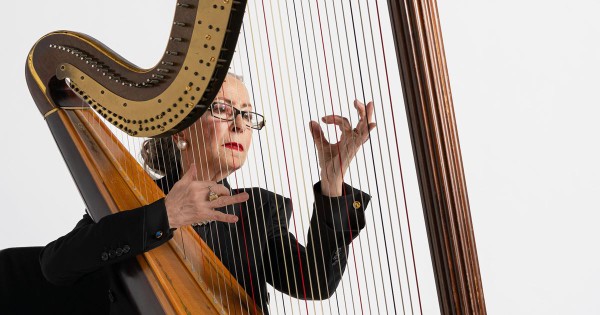
Lynne Turner
As a young woman, she studied at the Paris Conservatoire. Soon after, she was chosen by Fritz Reiner to join the CSO harp section in 1962.
She retired in the spring of 2025. In the press release announcing her retirement, she is quoted as saying:
“I feel an overwhelming sense of gratitude for the privilege of making music at the highest level, alongside extraordinary colleagues and in collaboration with some of the world’s most inspiring conductors. As I look back, I’m filled with deep joy and pride – along with appreciation to the people of Chicago, who made every performance an occasion to remember.”
*Joseph Hearne, Boston Symphony Orchestra, 63 years
A brief conversation with Joseph Hearne, starting at 10:51
Joseph Hearne has played bass in the Boston Symphony since 1962.
He was born in Ohio in 1942 and spent his childhood in Oregon. He began learning the bass as a child and attended the Aspen Music Festival in the summers during high school.
While at Aspen, he began studying with a professor named Stuart Sankey. Hearne ended up moving to New York to study with him at Juilliard.
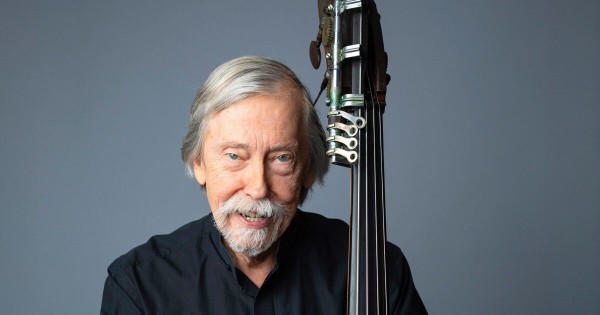
Joseph Hearne
Just two years into his studies at Juilliard, at the age of twenty, he won an audition with the Boston Symphony.
As of the end of 2025, he is still playing with the BSO at the age of 83.
Hearne has a number of extramusical hobbies, including welding, skiing, and even piloting. In fact, he is licensed as a commercial pilot!
*Broderyck Olson, Edmonton Symphony Orchestra, 64 years
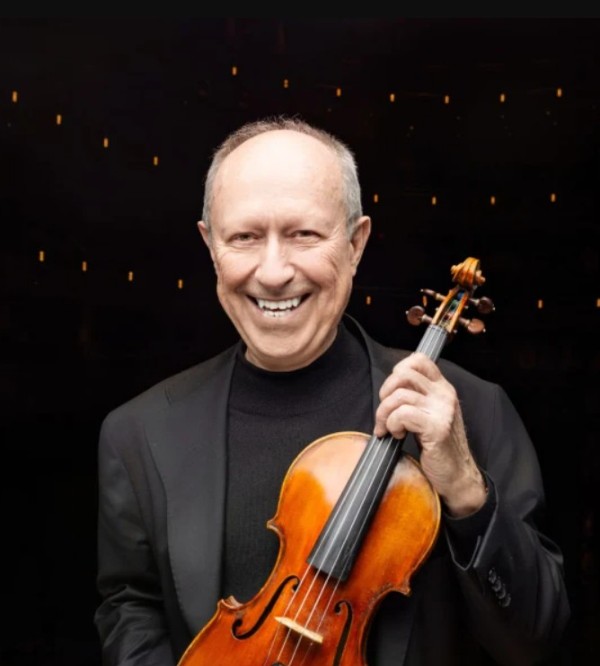
Broderyck Olson
Broderyck Olson has been playing violin in the Edmonton Symphony since 1961. He was the son of one of the violinist founders of the Edmonton Symphony.
He went to Juilliard, where he studied with pedagogical giants Ivan Galamian and Dorothy DeLay.
He ended up finishing his bachelor’s and master’s degrees at the University of Alberta.
He joined the Edmonton Symphony in 1961. Five years later, he won a position as assistant concertmaster. As of late 2025, he’s still playing in the orchestra.
Felix Resnick, Detroit Symphony Orchestra, 65 years
Felix Resnick conducting the Birmingham-Bloomfield Symphony Orchestra, 1995
Felix Resnick played violin in the Detroit Symphony Orchestra between 1942 and 2007.
Resnick was born in 1918 in New York, but he was raised in Detroit.
He joined the orchestra in 1942 at the age of 24, but he was unable to take to the stage until the following year, due to budgetary cutbacks impacting the symphony’s schedule.
During the 1960s, Resnick was part of the group of Detroit Symphony Orchestra musicians who, after DSO concerts, went into studios and recorded orchestral parts for famous Motown records.
Diana Ross once asked if she could try playing his violin, but he didn’t let her because her fingernails were so long!
In addition to his work with the Detroit Symphony, Resnick was also a conductor, conducting the Pontiac Symphony, the Birmingham-Bloomfield Symphony, and the Grosse Pointe Symphony.
He retired in 2007 and died the following year.
Richard Horowitz, Metropolitan Opera Orchestra, 66 years
Video of a tribute to Richard Horowitz by Peter Gelb, 2012
Richard Horowitz was the principal timpanist of the Metropolitan Opera Orchestra between 1946 and 2012.
He was born in the Bronx in 1924. Both of his parents were musicians: his father was a cellist, and his mother was a violin and piano teacher.
After high school, he studied at Brooklyn College and the Juilliard School.
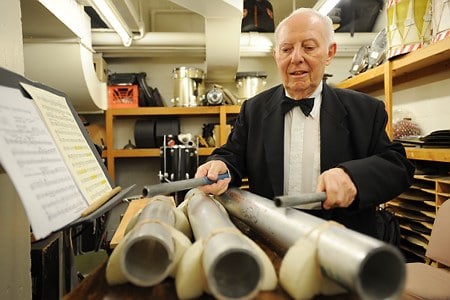
Richard Horowitz
He joined the Metropolitan Opera Orchestra in 1946 at the age of twenty-two. He became the principal timpanist in 1974.
By the end of his career, he had given over 10,000 performances.
Interestingly, Horowitz was a baton-maker on the side. For decades, he whittled batons in the basement of his house in Queens. His clients included Leonard Bernstein, Colin Davis, Christoph von Dohnanyi, and others. Bernstein was even buried with his Horowitz baton!
Frances Darger, Utah Symphony, 70 years
Interview with Frances Darger from 2014
Frances Darger played violin in the Utah Symphony between 1942 and 2012.
Darger was born in Salt Lake City in 1924, the middle child in a family of five girls.
Her mother was an opera singer who started Frances on violin lessons when she was nine. She joined the Utah Symphony (then known as the Utah State Symphony) at the remarkable age of seventeen.
All of the sisters were musical, and during World War II, they toured together as a swing quintet. However, that career didn’t pan out, so they returned home to Utah, where Darger embarked on her historic tenure.
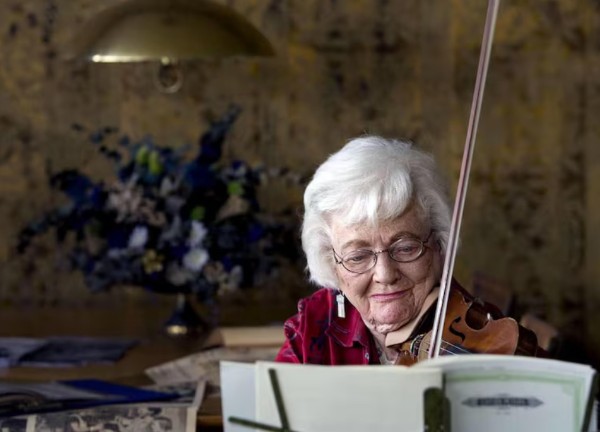
Frances Darger
Darger’s tenure was all the more remarkable given her gender, as many women in other orchestras dealt with barriers due to sexism.
During her decades in the orchestra, Darger became a widely beloved figure. A fellow violinist named Barbara Scowcroft remembered, “She was on the picket line when there were a couple of strikes; she was right there with everyone. She was such a solid colleague and devoted to classical music.”
Her favourite experience was touring with the orchestra and performing at the base of the Acropolis in Athens.
She retired in 2012 at the age of 87. She died in August 2024, just short of her hundredth birthday.
Jane Little, Atlanta Symphony Orchestra, 71 years
The New Yorker’s tribute to Jane Little
Jane Little was born in 1929 in Atlanta. Her mother was a pianist, but they didn’t have a piano in the house, so Jane taught herself by using a neighbour’s instrument.
In high school, despite her tiny size, she started playing bass and quickly fell in love with it. She joined the Atlanta Youth Symphony Orchestra at sixteen.
When that organisation began admitting adults and expanded to become the Atlanta Symphony Orchestra, she stayed.
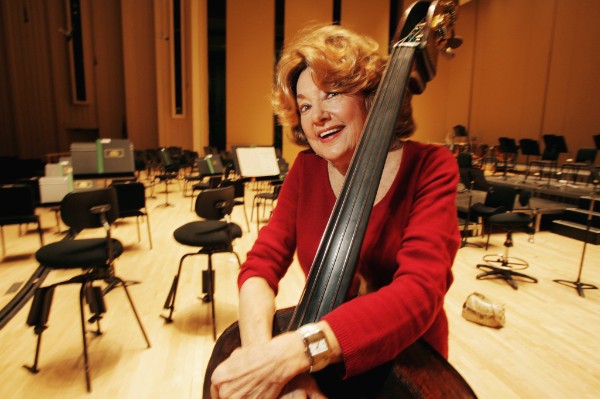
Jane Little
In 1954, she married the orchestra’s principal flutist Warren Little. He would carry her bass to work, and she would carry his flute.
She continued playing in the orchestra for a jaw-dropping 71 years, until the end of her life.
In 2016, she collapsed when the orchestra was playing an arrangement of the song “There’s No Business Like Show Business.” She died at the hospital. She was 87 years old.
Jane Little’s tenure with the Atlanta Symphony Orchestra was the longest in American orchestral history.
For more of the best in classical music, sign up for our E-Newsletter