It’s one of the most common questions newcomers pose to classical musicians: am I too old to return to music?
Just for the record, the answer is a resounding no!
Today, we’re looking at the life story of one composer who was living proof that you’re never too old to become a better musician. Her name was Minna Keal.
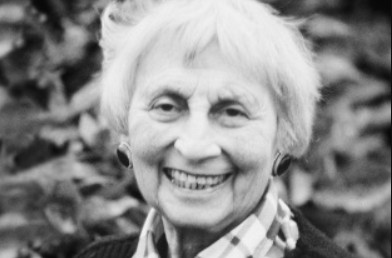
Minna Keal
You probably have never heard of her, but she’s an inspiration to any adult student or returner to music.
Minna Keal’s Childhood
Minna Keal was born Minnie Nerenstein in London’s East End in March 1909.
Her parents, Jacob and Fanny, were Jewish immigrants who ran a small Hebrew bookshop and publishing company. (Minna was actually born in the shop’s stockroom!)
Unlike some composers, she wasn’t a child prodigy. However, she was exposed to recorded music, her mother’s singing, and live performance at her synagogue, and a beloved uncle who was a violinist took her to concerts. These experiences proved formative.
As a young girl, she won a scholarship to attend a progressive school run by a socialist woman. This led to a lifelong belief in the idea that women could succeed as professionals outside the home.
She planned to study languages after graduating, but her father died in 1926, when she was just seventeen, putting an end to those dreams.
So instead of studying languages full-time, she helped her mother by working at the family business. And because the schedule was convenient, she enrolled at the Royal Academy of Music two days a week.
An Aborted Career
At the RAM, she studied piano with Thomas Knott and composition with William Alwyn.
She wrote a handful of pieces that received performances, including a Ballade for viola and piano.
Minna Keal: Ballade in F minor for Viola and Piano
Her Ballade was well-received and even won her a bursary for composition.
However, in 1929, overwhelmed by pressure from extended family, she dropped out of the RAM and began working full-time with her mother (who wanted her to continue studying music, but also needed her help in the shop).
She later wrote of the pressure her extended family applied:
They said, ‘How can you be studying when your mother is struggling in the business?’ I felt awful. I felt guilty… I was getting more and more demands on me to look after the business, and I was spending more and more time on my composition, and it was quite incompatible, so I decided I would have to give it up.
When she shared the news that she was dropping out of music school, nobody protested. (This was due, at least in part, to her gender. At the time, it was assumed that most women musicians would just retire as soon as they got married, anyway.)
The fact that nobody told her to keep composing made her feel like she must not have been a good composer to begin with. Later, she reflected:
If people had come and said: ‘You can’t give it up: you are so good’, perhaps I would not have given it up, but nobody did… So I decided that if I was really good, they would have been begging me to stay, and as no one did, I obviously couldn’t be much good.
Making a Life Outside of Music
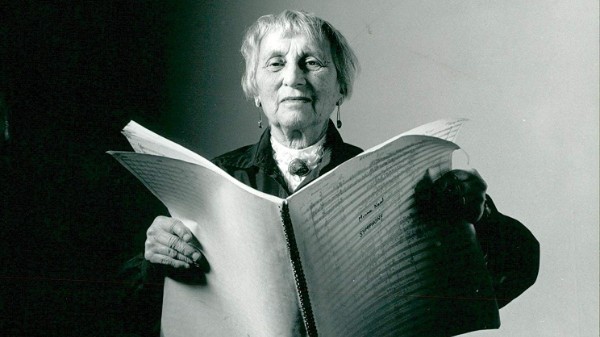
Minna Keal
In 1931, she married a lawyer named Barnet Samuel. A few years later, in September 1934, she gave birth to their son, Raphael Samuel.
Early in their marriage, the Samuels became active in political causes, especially after the Spanish Civil War broke out in 1936. Left-wing politics would become increasingly important to both mother and son in the years to come.
In 1939, Minna joined the Communist Party, just before the Nazis embarked on their invasion of Poland.
World War II
World War II changed everything for the Samuels, just as it did for everyone living in Britain.
The Samuels, however, went above and beyond when it came to resisting the onslaught of authoritarianism, organising a committee that rescued two hundred Jewish children from Germany.
Minna’s political beliefs continued to become even more important to her during the war. Her passion for communism led her to embrace feminism and atheism. Around the same time, her marriage began unraveling.
In 1941, after Barnet Samuel was drafted, the couple separated. She became a single mother in the middle of a world war.
A Second Marriage
In the early 1940s, she took a job at an aircraft factory, eventually becoming a union leader.
One of her coworkers was a sheet-metal worker named Bill Keal, who was a poet by night. He also shared her passion for politics. The two fell in love, but he was married. They separated for a few years, but reconnected after his divorce.
After the war, she took a secretarial job at The Daily Worker, the newspaper of the Communist Party of Great Britain. She also returned to music, joining a choir with the Workers’ Music Association.
However, in 1956, distressed at the Soviet Union’s invasion of Hungary, she left the Party. That said, she never lost her passion for politics and social justice.
Minna and Bill were married in 1959.
A Chance Encounter Leads Her Back to Music
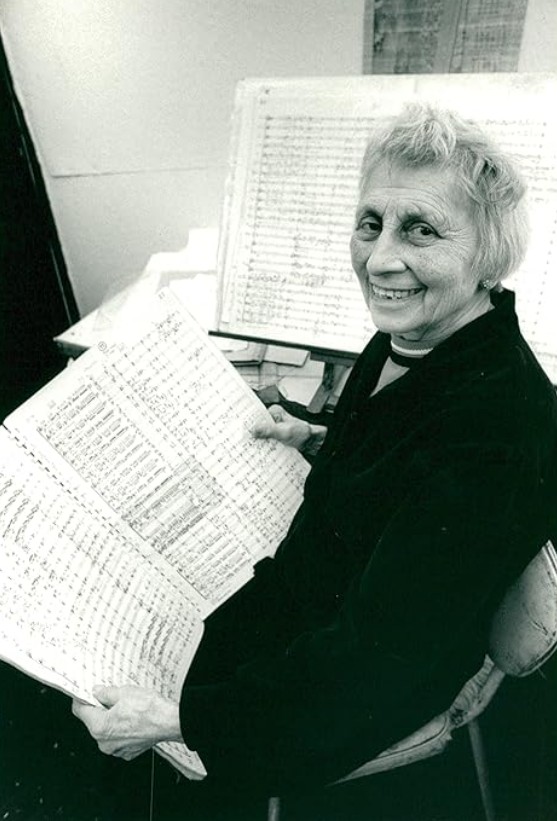
Minna Keal
She retired from her office job in 1969, at the age of sixty.
After her retirement, she took steps to return to a musical life part-time. She earned her LRAM (Licentiate of the Royal Academy of Music) diploma, which qualified her to become a piano teacher, and she accepted a few students.
Her life changed forever in 1973, when a piano examiner came to her house to administer an exam. His name was Justin Connolly, and he was a composer.
The two got to talking, and Minna mentioned that she’d once studied at the RAM. Connolly was intrigued, dug into the archives, and found some of her compositions. He was impressed and told her she should start composing again.
The following year, when she was sixty-five, her son Raphael gave her a life-changing Christmas present: composition lessons with Connolly.
A creative dam broke. Suddenly, Minna was composing prolifically, despite the fact that she hadn’t done so for nearly fifty years.
Minna Keal’s Return to Music
She dubbed her first piece Lament, which was written in the same 1920s style she’d been writing in before she’d left the art.
She wrote her first string quartet (which would become her opus 1) in 1978 and her wind quintet in 1980.
Minna Keal: Wind quintet
The more she thought about the issue of style, the more she realised she wanted her music to sound modern and be relevant to contemporary audiences.
She began listening to more and more new music, attending festivals, and studying other composers’ scores.
She later admitted that her obsession impacted her marriage:
For years, Bill took all the chores from me. It was really thoughtless of me, and I should have insisted on doing something – but I didn’t, because I was so anxious to get on with my music…
Later, he used to say to me: You have an obsession… I would have been the same in his position.
I do not blame him at all, but it was extremely difficult for me. I went through hell for a couple of years. But I still went on composing: I would not give it up.
Despite the difficulties she faced balancing her art and her marriage, she soldiered on.
The Triumph of Minna Keal’s Symphony
In 1982, she began studying with renowned composer Oliver Knussen. After working with him, she felt equipped to take on the biggest compositional challenge a composer can face: writing a symphony.
She wrote that it was “about the turmoil of human existence and the spiritual search for serenity and permanence.”
The symphony was broadcast on the BBC in 1988 and played at the BBC Proms in 1989, where the work earned a standing ovation for the eighty-year-old composer.
At the first rehearsal, she broke down in tears. Musicians came up to her and expressed their astonishment that this was her first piece for orchestra.
Minna Keal: Symphony
Another striking major work, her cello concerto, was written between 1988 and 1994.
Minna Keal: Cello Concerto
In 1990, she was selected as a fellow of the Royal Academy of Music.
During this unlikely career renaissance, she said, “I thought I was nearing the end of my life, but now I feel like I’m just beginning. It’s as if I’m living my life in reverse.”
Minna Keal’s Final Years
She lost her husband in 1995 and her son in 1996. These late-in-life losses were shattering, but she found refuge in music.
In 1999, the Royal Academy of Music threw a ninetieth birthday party for her.
She died that November.
The Legacy of Minna Keal
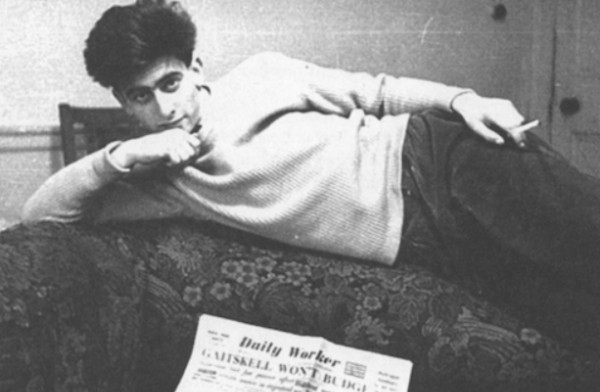
Minna Keal’s son Raphael Samuel
For a variety of reasons, Minna Keal’s output is both unique and uniquely fascinating.
Of course, it’s always a treat to get to hear music from opposite ends of a decades-long career. Many composers don’t continue writing for that long, or live long enough.
But it’s also inspirational to see a composer who was unable to pursue her musical goals as a young person, was forced to leave the art, and then came back with major works and successes. Few musical careers enjoy that type of trajectory.
Hopefully, Minna Keal’s story inspires other musicians to follow in her footsteps. As she proved, it’s never too late to pursue your love of music.
For more of the best in classical music, sign up for our E-Newsletter