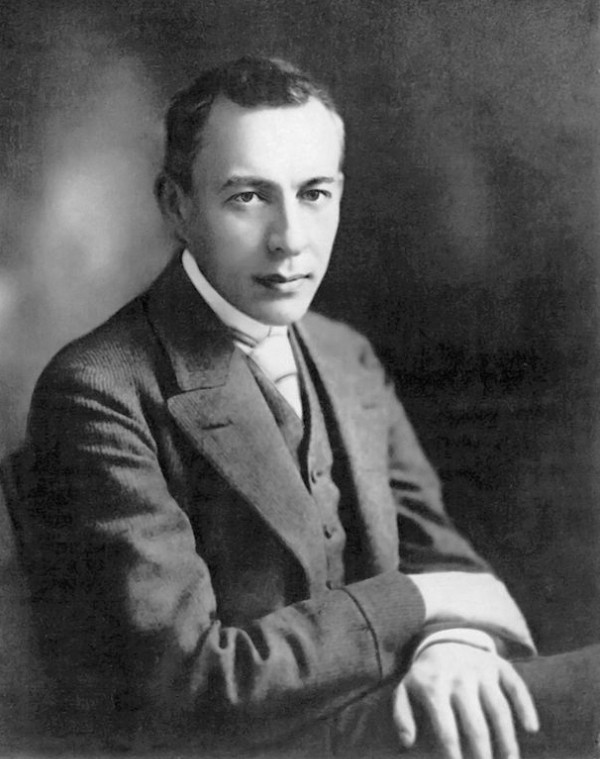
Composer Johannes Brahms is famous for the difficult romantic relationships he had with women.
He was attracted to many women (especially singers), but ultimately found it impossible to envision any of them as his wife.
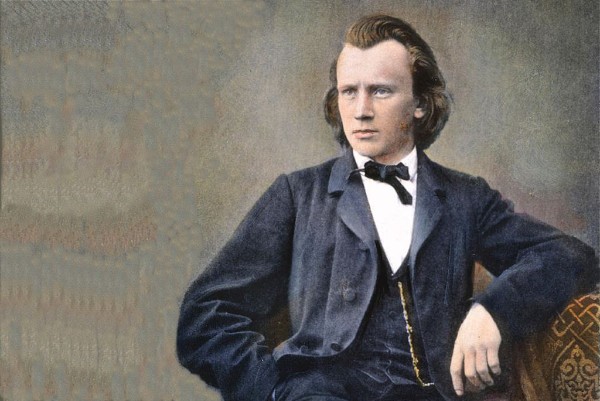
Johannes Brahms
He was also perpetually worried about what having a wife and children would do to his creative freedom.
Again and again throughout his life, he would come close to proposing, then sabotage the relationship and move on by himself.
This is the first of a two-part article looking at the women he fell in love with, why he married none of them, and our best guess at who was the greatest love of his life.
Clara Schumann (1819–1896)
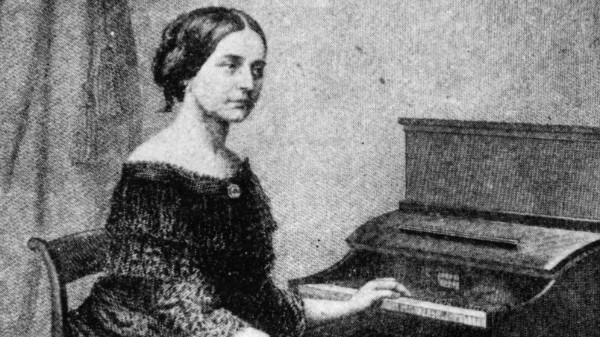
Clara Schumann
Brahms met Clara Schumann on 1 October 1853.
Johannes was a 20-year-old pianist and composer from Hamburg, just starting his career.
Meanwhile, Clara was a 34-year-old pianist, widely considered to be one of the greatest musicians in Europe. She was happily married to her composer husband Robert and expecting her eighth baby.
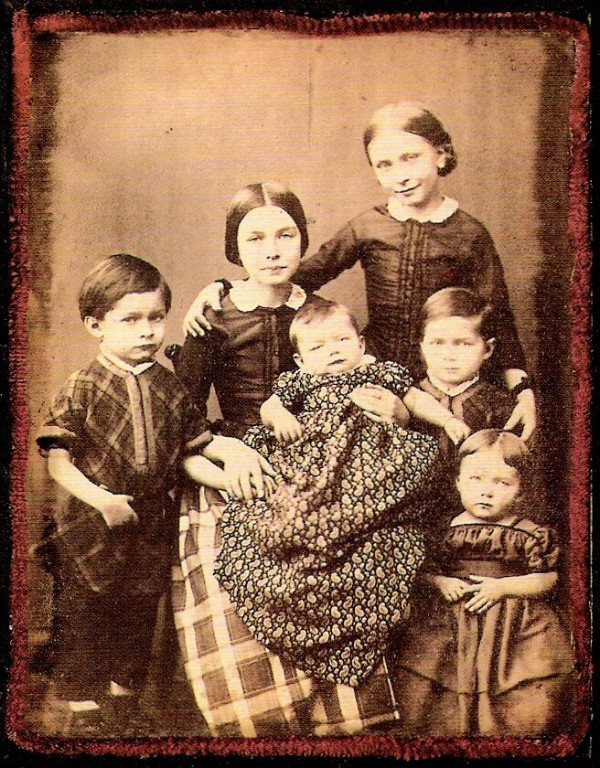
Robert and Clara Schumann’s children
Despite their differences, Johannes and Clara connected in a profound way. Robert, too, was entranced by the handsome young composer. In fact, just a few weeks after they met, Robert wrote in an editorial that Brahms was talented enough to become the saviour of German music.
It seemed inevitable that Robert and Clara would step into the roles of mentors for the talented composer. But tragedy intervened.
For years, Robert had struggled with his mental health. In February 1854, those struggles finally came to a head when he leapt into the Rhine during a suicide attempt.
Robert survived, but realised he needed to move to a mental health facility to avoid endangering his wife or children. He would never return home again.
Suddenly, a shattered Clara was, for all intents and purposes, a single mother. She felt she needed to tour as a soloist to support her family and her sick husband.
As soon as he heard about Robert’s suicide attempt, Johannes dropped everything to travel to Düsseldorf to be with Clara. A number of family friends did the same, but Johannes stayed the longest. He spent time playing chamber music with her and helping out with the children.
By the summer of 1854, Robert still hadn’t returned home…and Johannes still hadn’t left. Why?
Brahms wrote to violinist and confidant Joseph Joachim:
I believe that I do not have more concern and admiration for [Clara] than I love her and am under her spell. I often have to restrain myself forcibly from just quietly putting my arms around her, and even – I don’t know, it seems to me so natural that she could not misunderstand. I think I can no longer love an unmarried girl – at least, I have quite forgotten about them. They only promise heaven while Clara shows it revealed to us.
After Robert died in the summer of 1856, the close-knit couple had to decide if they were going to approach the future as official romantic partners.
The month after Robert’s death, Johannes and Clara went with a group of family members on a Swiss vacation to process the loss.
They ended that vacation having come to the mutual, if heartbreaking, decision that they were not going to pursue a relationship.
That said, they remained in each other’s lives for decades to come. Brahms dedicated this tender Intermezzo to her decades later, soon before they died.
Brahms’s Intermezzo in A major Op. 118, No. 2
Agathe von Siebold (1835–1909)
In 1858, composer and conductor Julius Otto Grimm invited Brahms to the German town of Göttingen, where he had recently moved. At the time, Grimm was conducting the Cäcilienverein, a chorus of female voices.
Grimm wrote:
If it would please you to have a few good voices, lodged in very lovely girls, sing for you, they will take pleasure in being at your disposal. Come quickly!
Understandably, Brahms was intrigued. He went to Göttingen along with Clara Schumann and her children.
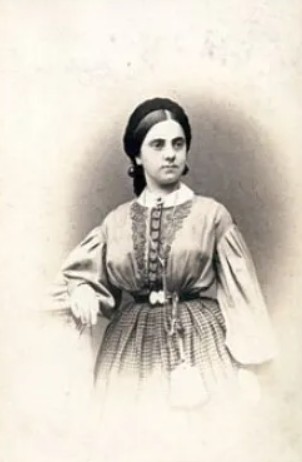
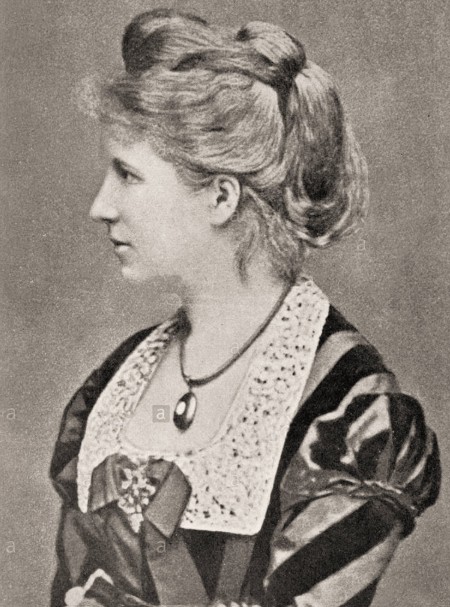
Agathe von Siebold
While there, one of the singers caught Johannes’s eye. Her name was Agathe von Siebold. She was the beautiful daughter of a local professor and a soprano. Brahms was 25; she was 23.
Clara, then 38 and the mother of eight, felt out of place. After she caught Johannes and Agathe embracing one night, she left. At the end of the summer, Johannes left, too.
However, Johannes and Agathe continued their love affair long-distance via letters for three months. Sometimes he would send her songs he’d written.
In January of 1859, while traveling for a work trip to oversee the premiere of his first piano concerto (whose second movement he described as “a portrait of” Clara), he passed through Göttingen again and proposed to Agathe. She accepted, and they exchanged rings.
Brahms’s Piano Concerto No. 1, movement 2
Unfortunately, the first performances of the concerto received a lukewarm reception, especially in musically conservative Leipzig, Clara’s hometown.
Years later, Brahms wrote to his friend George Henschel:
At the time I should have liked to marry, my music was either hissed in the concert hall, or at least received with icy coldness. Now, for myself, I could bear that quite well, because I knew its worth, and that some day the tables would be turned. And when, after such failures, I entered my lonely room, I was not unhappy. On the contrary!
But if, in such moments, I had had to meet the anxious, questioning eyes of a wife with the words “another failure” – I could not have borne that!
For a woman may love an artist…ever so much…still she cannot have the perfect certainty of victory which is in his heart. And if she had wanted to comfort me – a wife to pity her husband for his lack of success – ach! I can’t stand to think what a hell that would have been.
He wrote to Agathe proposing a compromise:
I love you! I must see you again! But I cannot wear fetters! Write to me, whether I am to come back, to take you in my arms, to kiss you and tell you that I love you.
She interpreted this as a suggestion she be his mistress and not his wife. It was a degrading proposition for a respectable middle-class German woman. The relationship was over.
The rejection proved to be a bitter blow. Agathe went on to write a novel inspired by the relationship before marrying ten years later.
For his part, Johannes later remarked, “I’ve played the scoundrel toward Agathe.”
To top it all off, Grimm cut off relations with him in protest (albeit temporarily).
Brahms’s 5 Poems, Op.19, written between 1858-1859
Bertha Porubsky (1841–1910)
In the spring of 1859, just a couple of months after rejecting Agathe, Brahms gave some concerts in his hometown of Hamburg.
Despite his fear of failure, his performance was a sensation, and hundreds of people had to be turned away.
While staying in Hamburg, a friend named Karl Grädener, who conducted the Akademie choir, asked his women singers if they’d like to perform something by Brahms. Everyone was eager to do so.
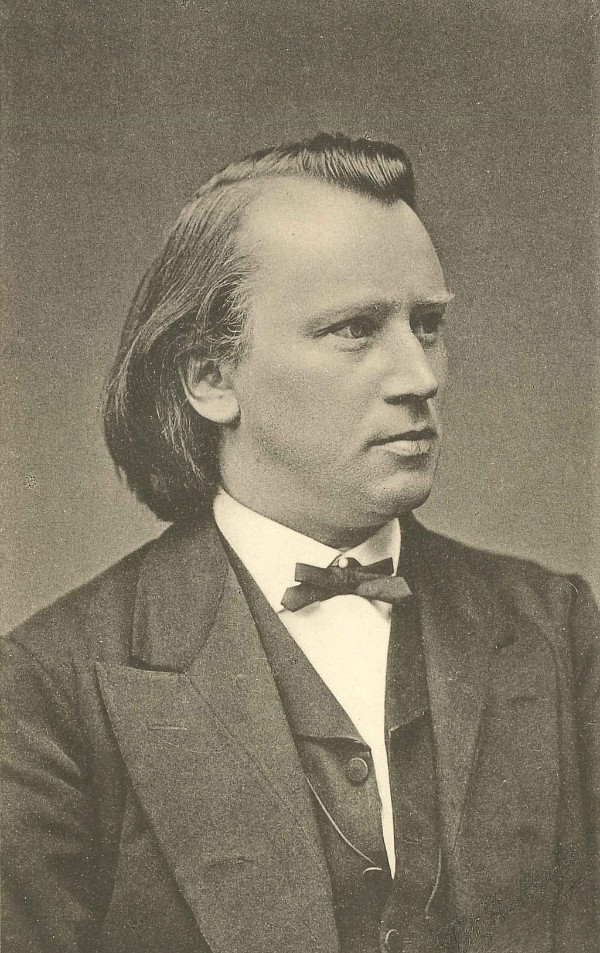
Johannes Brahms, ca 1875
That eagerness led to the formation of the Hamburg Frauenchor. Eventually, a subgroup of women from the Frauenchor began meeting with Brahms in the evenings. Brahms quickly developed crushes on several of them.
One of the women he found particularly attractive was Bertha Porubsky, an 18-year-old woman from Vienna visiting her aunt in Hamburg.
As the months passed and Brahms continued his professional travels, he wrote regularly to Bertha: “Shall I send songs? Gay, fresh little songs. I would like to give them directly to you, if you wish.”
Despite his interest in her, Brahms never proposed, and Bertha finished the visit with her aunt and returned to Vienna.
In the autumn of 1862, at the age of 29, Brahms decided to take the plunge to move to Vienna himself. He quickly reconnected with Bertha, who was now engaged. In 1863, she married Arthur Faber. She would go on to have three sons and a daughter with him.
In 1868, after the birth of one of her sons, Brahms sent Bertha a cradle song. This was no ordinary cradle song: it was the famous Brahms lullaby.
Brahms’s Wiegenlied, op. 49, no 4
He wrote to Arthur:
Bertha will realise that I wrote the “Wiegenlied” for her little one. She will find it quite in order… that while she is singing Hans to sleep, a love song is being sung to her.
As a countermelody, Brahms had woven in a song that Bertha used to sing for him. It was a bittersweet tribute to the flirtatious relationship they’d once had.
Ottilie Hauer (1837–1926)
Singer Ottilie Hauer met Brahms in 1862 in Vienna. She was 25 and he was 29.
Ottilie was a member of the Frauenchor that Brahms directed in Vienna. He worked with a number of women in the ensemble, but he was uniquely impressed by Ottilie. He gifted her with sixteen manuscripts of his own work.
On Christmas Day 1863, after months of internal struggle and indecision, he decided that he was going to propose to her. (Interestingly, at the time, he was spending Christmas with the family of the aforementioned Bertha Faber!)
That day, he arrived at the Hauer home to find the entire household celebrating. A few hours earlier, Ottilie had accepted a proposal from 42-year-old scholar Dr. Eduard Ebner, to Brahms’s “great dismay and even greater pleasure,” in the words of biographer Jan Swafford.
Apparently, the entire Hauer household had anticipated a Brahms proposal, but after it never materialised, Ebner appeared on the scene, and the rest was history.
The Ebners married the following year and later became friends with Gustav Mahler.
Conclusion
These weren’t the only women whom Brahms fell in love with! He still had a few more decades of romantic heartbreak to endure.
Stay tuned for part two!
For more of the best in classical music, sign up for our E-Newsletter