Every person with mental illness experiences it in different ways, with different symptoms of different severities.
This deeply personal and subjective experience means that mental illness is famously difficult to diagnose, even with our comparatively advanced medical knowledge.
If it’s difficult to diagnose people who are seeking help today, imagine how difficult it is to diagnose the mental health issues of figures from the past.
What historians can do is guess, based on the symptoms they experienced. In many cases, the best descriptions of how patients felt during their illness can be found in their letters.
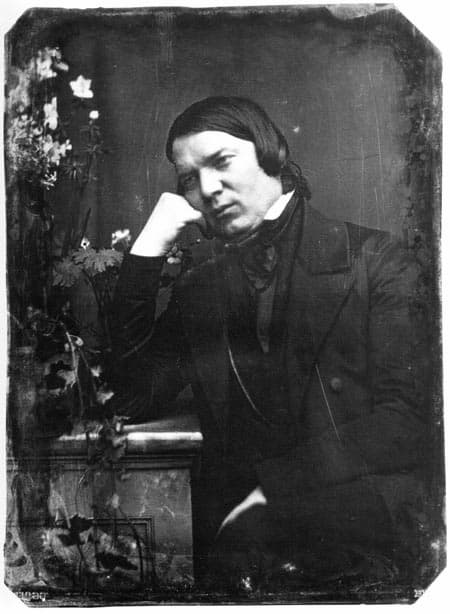
Robert Schumann, 1850
Today, we’re looking at excerpts from composer Robert Schumann’s letters, dating from between 1828 and 1849.
These priceless documents give an idea of the kinds of symptoms Schumann dealt with and how he approached his struggles with depression, anxiety, and other mental health issues.
“Quite well, though a little depressed”
Schumann wrote this letter as a young man after he arrived in Leipzig to study:
Leipzig, 21 May 1828
To his mother
I arrived here last Thursday, quite well, though a little depressed, and took my position as a student and a citizen in this big, spacious city, in the stir of life and the great world.
After my few days here I still feel quite well, though not quite happy.
My whole heart cries out for the quieter home where I was born and spent such happy days with Nature.
“Heavy, dull, and disagreeable”
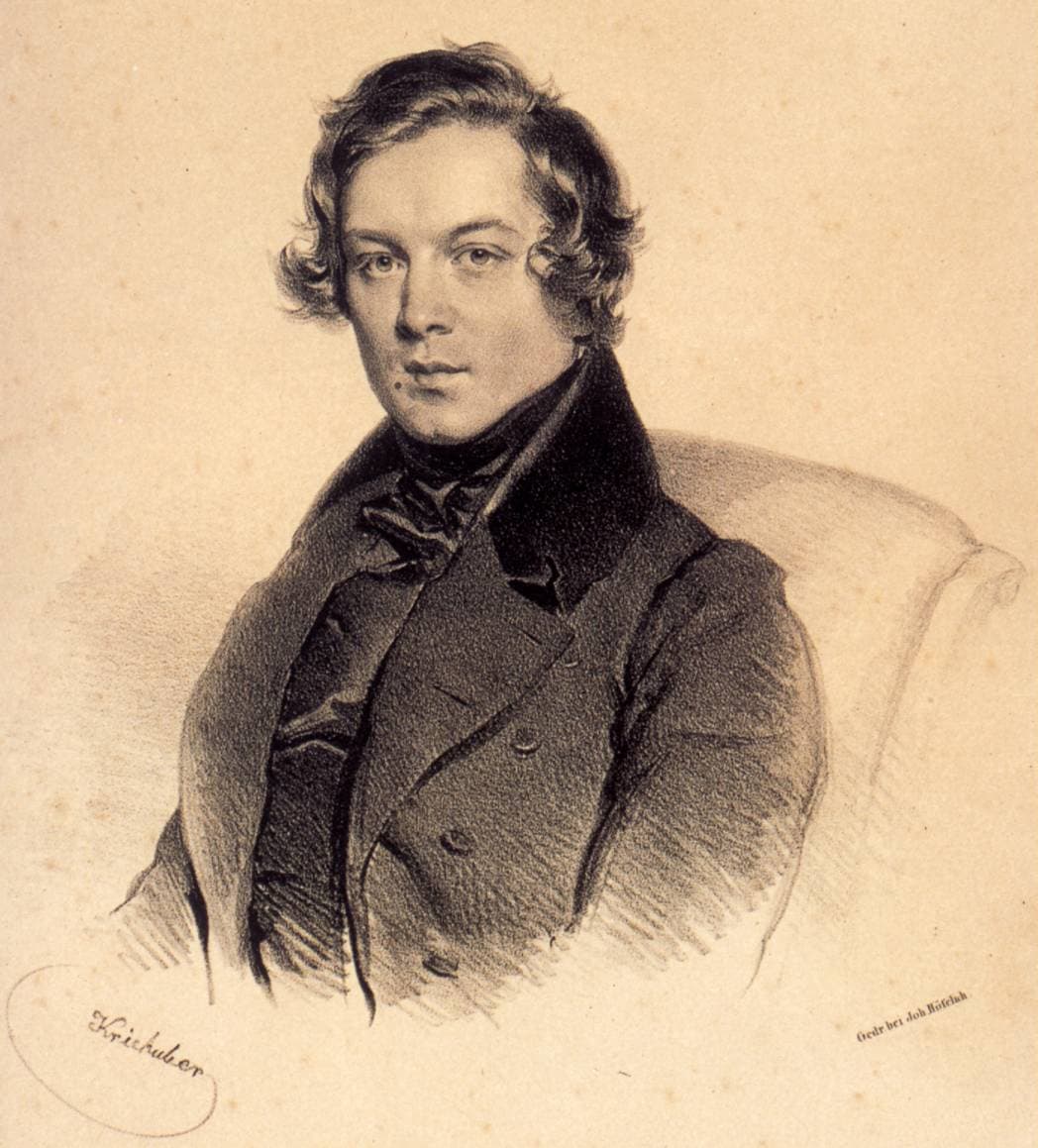
Robert Schumann, 1839
One of the families Schumann got to know in Leipzig was the Caruses. Dr. Carus treated mental illness at a local asylum and also befriended and treated Robert.
Leipzig, 15 November 1830
To his mother
The Caruses insist on introducing me to numerous families, thinking it ‘good for my career.’ I am sure it would be, and yet I don’t go; indeed, I hardly leave my room.
I am often heavy, dull, and disagreeable; my laughter is of a sardonic order, and there is hardly a trace of my old heartiness and enthusiasm.
You will not enjoy my company at Christmas.
“Painful, almost childish, dread”
Leipzig, 5 September 1831
To his brother Julius Schumann
I must confess to you my painful, almost childish, dread of cholera, and my fear that a sudden seizure may put an end to my existence.
The thought of dying now, at twenty, before I have done anything except spend money, maddens me.
I have been in a fever for days, making a thousand plans, only to dismiss and revive them alternately.
“I never talk much when I am really absorbed”
Leipzig, 6 November 1832
At 2am precisely
To his mother
One thing more – if I am silent at times, do not think me dissatisfied or melancholy. I never talk much when I am really absorbed in my ideas, my book, or my emotions.
Schumann’s Toccata, 1832
Daniil Trifonov Plays Schumann’s Toccata
“Inexpressible terror, failure of breath”
Robert’s brother died on November 18, 1833. The shock and grief sent him into an acute mental health episode, resulting in symptoms of anxiety or maybe even what we’d call panic attacks today.
Leipzig, 27 November 1833
To his mother
I was little better than a statue, feeling neither cold nor heat, until, with strenuous work, some life came into me again.
I am still so nervous and timid that I cannot sleep alone, but I have found a thoroughly good-natured companion, and the very deficiencies of his education provide stimulus and distraction.
Do you know, I had not the courage to travel to Zwickau alone for fear that something might happen to me! Violent congestion, inexpressible terror, failure of breath, momentary unconsciousness – these overtake me in quick succession, though I am better than I was.
If you had any notion of the lethargy into which melancholia has brought me, you would forgive my not writing.
“I wonder anxiously”
Schumann’s love for the great pianist Clara Wieck and her father’s fierce opposition to their marriage were major stressors in the late 1830s.
Leipzig, 2 January 1838
To Clara Wieck
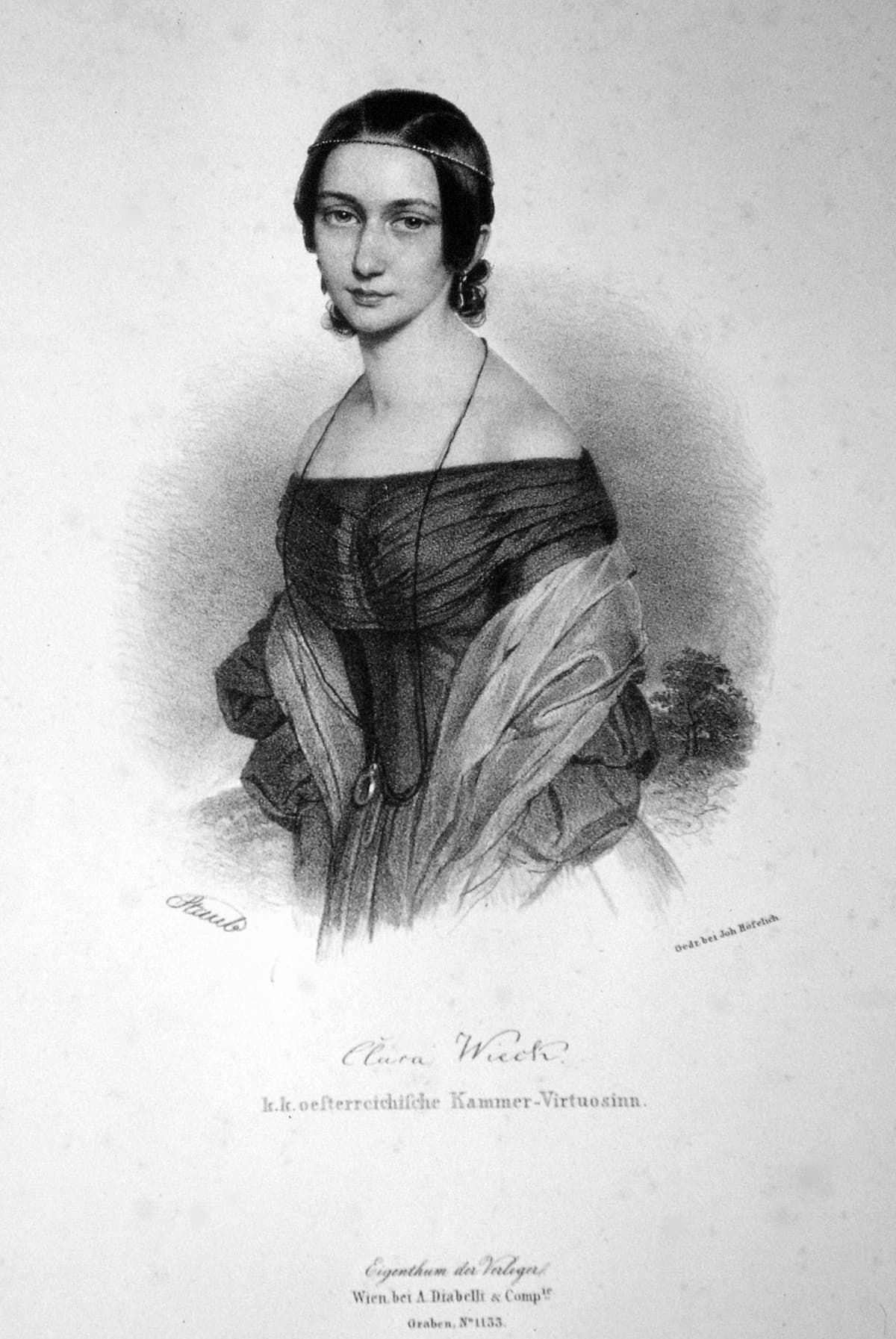
Andreas Staub: Clara Wieck, 1839
There are terrible hours when your image forsakes me, when I wonder anxiously whether I have ordered my life as wisely as I might, whether I had any right to bind you to me, my angel, or can really make you as happy as I should wish.
These doubts all arise, I am inclined to think, from your father’s attitude towards me. It is so easy to accept other people’s estimate of oneself.
Your father’s behaviour makes me ask myself if I am really so bad, of such humble standing, as to invite such treatment from anyone.
Schumann’s Kreisleriana, 1838
Yuja Wang Plays Schumann’s Kreisleriana Opus 16
“Melancholy enough to shoot myself”
In late 1838, he went to Vienna to investigate the possibility of him and Clara moving there together.
Vienna, 18 December 1838
To his sister-in-law Theresa
Of myself, I can say that I often feel well enough here, though oftener melancholy enough to shoot myself.
Was he entirely serious…or was this an example of the gallows humour often exhibited by people with depression?
“No one knows the suffering, the sickness, the despair”
As Schumann and Clara continued to get to know one another, he shared secrets about the 1833 breakdown that had occurred after his brother’s death, five years earlier.
His brother’s death had been followed by news of his beloved sister-in-law Rosalie’s death soon after. (He appears to have misremembered the deaths as occurring in October instead of November.)
Leipzig, 11 February 1838
To Clara Wieck
The death of a dear brother threw me into a state of melancholy, which gained more and more the upper hand. The news of Rosalie’s death found me in this condition. I won’t say much about it.
In the night between the 17th and 18th of October, I was seized with the worst fear a man can have, the worst punishment Heaven can inflict – the fear of losing one’s reason.
It took so strong a hold of me that consolation and prayer, defiance and derision, were equally powerless to subdue it.
Terror drove me from place to place. My breath failed me as I pictured my brain paralysed.
Ah, Clara! no one knows the suffering, the sickness, the despair except those so crushed.
He went to a doctor who recommended the following course of treatment:
And now, my angel from heaven, I must tell you that the doctor, after comforting me kindly, told me that medicine was useless, and ended by advising marriage as the only cure.
One hopes that a modern doctor wouldn’t prescribe such a course of treatment!
“I meet affectionate advances with icy reserve”
Vienna, 29 December 1838
To Clara Wieck
I feel I should like to talk to you about certain of my phases.
People are often at a loss to understand me, and no wonder! I meet affectionate advances with icy reserve, and often wound and repel those who really wish to help me. I have often taken myself to task about it.
It is not that I fail to appreciate the very smallest attention, or to distinguish every subtle change in expression or attitude; it is a fatal something in my words and manner which belies me.
But you will take me as I am, and make excuse, I know.
My heart is in the right place, and my whole soul is responsive to the good and the beautiful. But enough of this.
Schumann’s Träumerei, from 1838
Vladimir Horowitz Plays Schumann’s Träumerei
“Like a knife to my nerves”
Robert and Clara were married in 1840. However, although the marriage brought them both great happiness, it was not a cure for his mental illness, as his doctor had once suggested it would be.
In 1844, he updated a critic named Dr. E. Krüger, describing some of his continuing symptoms:
Leipzig, October 1844To critic Dr. E. Krüger
The thought of my remissness towards you has often distressed me. You may not perhaps know that I have had a serious nervous illness for the past three months, and was, in consequence, forbidden every exertion, mental or physical, by my doctor.
I am now a little better and can see some brightness in life, some return of hope and confidence.
I think I did too much music. My music to Goethe’s Faust occupied me very much latterly, and in the end, mind and body both gave way…
During this time, I have not been able to hear a note of music, for it was like a knife to my nerves….
Schumann’s Scenes from Goethe’s Faust
Robert Schumann: Scenes from Goethe’s Faust (1999)
“A mysterious illness”
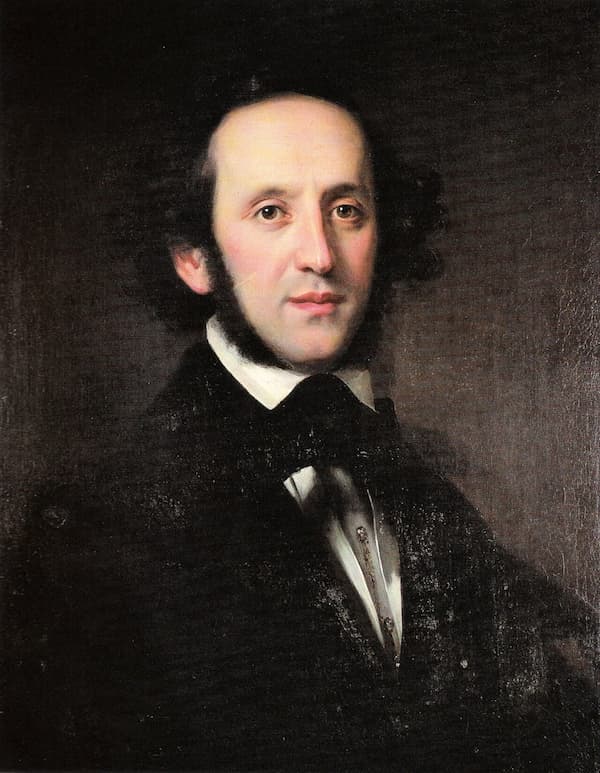
Felix Mendelssohn
Many people who struggle with mental health issues also describe experiencing physical pain, which Schumann does in this 1844 letter to fellow composer Felix Mendelssohn:
Dresden, September 1844
To Felix Mendelssohn
It was my turn to write – to thank you for your kind visit, and for much that you said. But writing of any sort still tires me very much, therefore forgive me.
I am already rather better. Doctor Carus has advised early morning walks, which have done me a lot of good.
Yet I am not altogether cured, and I have touches of pain every day in a hundred different places.
A mysterious illness, which seems to vanish when the doctor prepares to attack it! But better times will come again, and I am happy enough when I look at my wife and children.
“My semi-invalid state can be divined from the music”
During the 1840s, Schumann’s struggle with mental illness continued to become more and more acute.
In this letter to Hamburg conductor D.G. Otten, he feared that his depression was showing in his creative output.
Dresden, 2 April 1849
To D. G. Otten, Hamburg conductor
I wrote my symphony in December 1845, and I sometimes fear my semi-invalid state can be divined from the music.
I began to feel more myself when I wrote the last movement, and was certainly much better when I finished the whole work. All the same, it reminds me of dark days.
Your interest in a work so stamped with melancholy proves your real sympathy. Everything you say proves your thorough acquaintance with the music, and I was greatly delighted to find that my mournful bassoon in the Adagio was not lost upon you, for I confess I wrote that part for it with peculiar pleasure.
Schumann’s second symphony, the work referred to in this letter
Schumann: 2. Sinfonie ∙ hr-Sinfonieorchester ∙ Marek Janowski
Robert Schumann’s mental health continued to worsen. In February 1854, he attempted to die by suicide by jumping into the Rhine River.
He was saved, but requested to be taken to an asylum, fearing he would hurt his wife or children. He was brought to an asylum in Bonn, where he weakened and ultimately died in the summer of 1856.
Some historians today believe he was struggling with bipolar disorder, but of course, we will never know for sure.
For more of the best in classical music, sign up for our E-Newsletter