Pianist and composer Frédéric Chopin wrote four Ballades for solo piano:
- Ballade No. 1 in G-minor, Op. 23 (written in 1835, when he was twenty-five)
- Ballade No. 2 in F-major, Op. 38 (written between 1836-39, when he was in his late twenties)
- Ballade No. 3 in A-flat-major, Op. 47 (written in 1841, when he was thirty-one); and
- Ballade No. 4 in F-minor, Op. 52 (written in 1842, when he was thirty-two).
The word ballade, as Chopin employed it, has at least two different connotations.
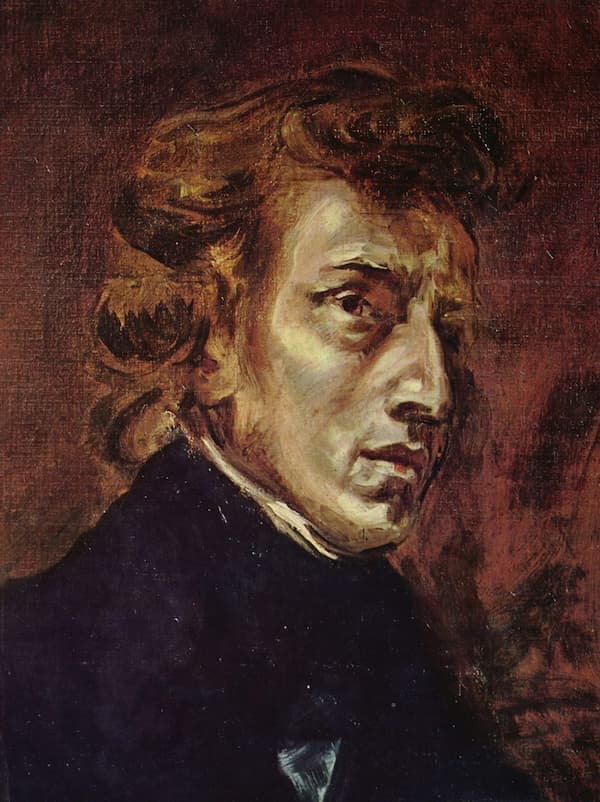
Portrait of Frédéric Chopin by Eugène Delacroix, 1838
The first is a reference to dance music (the Italian word balletta means “ballet”).
The second is a reference to the musical and literary genre of ballad, “a poem or song narrating a story in short stanzas” (definition courtesy of Oxford English Dictionary). This genre was especially popular in the medieval era.
So, to sum up, these are works that are meant to combine elements of storytelling and dance music.
And of course, no one wrote that kind of music better than Chopin.
So Which Ballade Is the Best?
All four of Chopin’s ballades are incredible, and any one could easily be anyone’s favourite.
Again, every Chopin ballade is amazing, and favourites can change from day to day, depending on what each listener is in the mood for.
With that said, here are my favourites, with the best at the end.
Ballade No. 3 in A flat major
Chopin wrote his third Ballade in 1841 while working at the idyllic country home of his partner George Sand in Nohant, France.
It begins in 6/8 time and contains fragments of a dance. But it never quite congeals into a predictable rhythm that a person could actually easily dance to.
Chopin continues to play with time throughout the work. After the initial introduction, he writes passages where the strong beat doesn’t appear in the first beats of the measures. This makes the dancey rhythms feel off-balance, like they’re tripping over themselves.
About halfway through the piece, passages of quicksilver notes trickle up and down in a virtuoso display: perhaps the out-of-breath storytelling of someone relating a particularly emotional story.
In the piece’s last quarter, the left hand returns to creating an unstable accompaniment, written in a rumbling way that takes full advantage of the piano’s bass.
By the end, the virtuoso pianist sounds like they’re performing a dance gone wild. It’s equal parts delighted and diabolical.
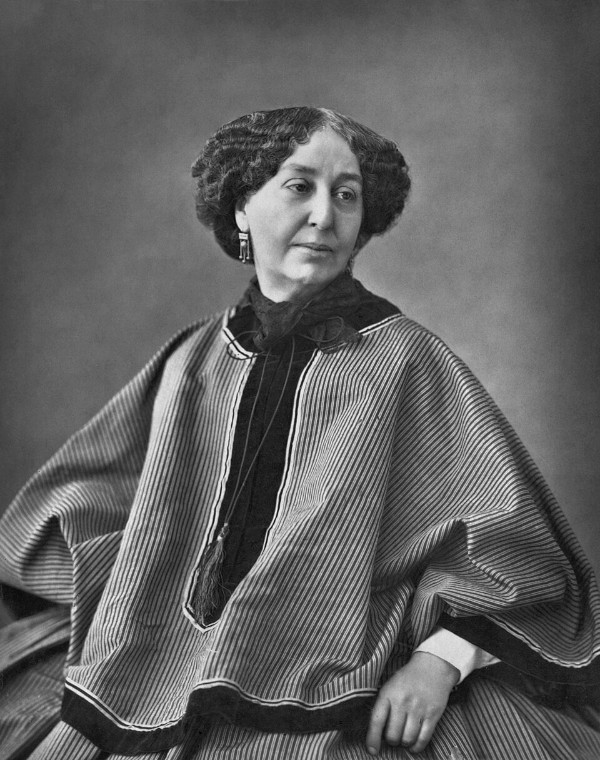
George Sand – Portrait by Nadar (1864)
WHY THIS RANKING?
Don’t get us wrong: this ballade is incredible.
That said, so are the other three! And this one doesn’t have the heartbreaking poignancy of the other three ballades. In fact, this is the only one of the four that doesn’t end in a minor key.
Ballade No. 2 in F major
Chopin wrote his second Ballade at Nohant and on the island of Mallorca, where he was living with George Sand.
Composer Robert Schumann had recently dedicated his eight-movement piano piece Kreisleriana to Chopin. Chopin doesn’t seem to have been a huge fan of Kreisleriana, but he respected Schumann, and he dutifully dedicated this second ballade to him as a thank-you.
Robert Schumann’s Kreisleriana
The overarching narrative of this ballade is contrast. Notice the sudden jolting transitions between very different parts.
The opening theme is a cross between a hymn and a court dance.
However, two minutes in, there’s a shocking fortissimo that comes out of nowhere, marked presto con fuoco (“fast with fire” or “fast with passion”).
When the placid first theme returns, it has an unnerving undertone, having come just after the fortissimo scramble.
Two-thirds of the way through, the lilting rhythm of the opening combines with the volume and energy of the initial shocking interjection.
The work ends with a wild agitato – then, in the final few measures, a simple pianissimo.
WHY THIS RANKING?
This piece has been criticised for the relative simplicity of its narrative. But the sheer shock value of teetering so violently between its split personalities really makes it stand out.
That said, its simple narrative is emotionally eclipsed by the more complex stories that Chopin tells in his first and fourth ballades.
Ballade No. 1 in G minor
Chopin wrote his first ballade in 1835, employing sketches he’d made a few years earlier. He was in his early twenties and had just left his beloved homeland of Poland. He ultimately decided not to return due to political upheaval and violence.
Maybe some of the agony he felt over his exile found its way into this piece.
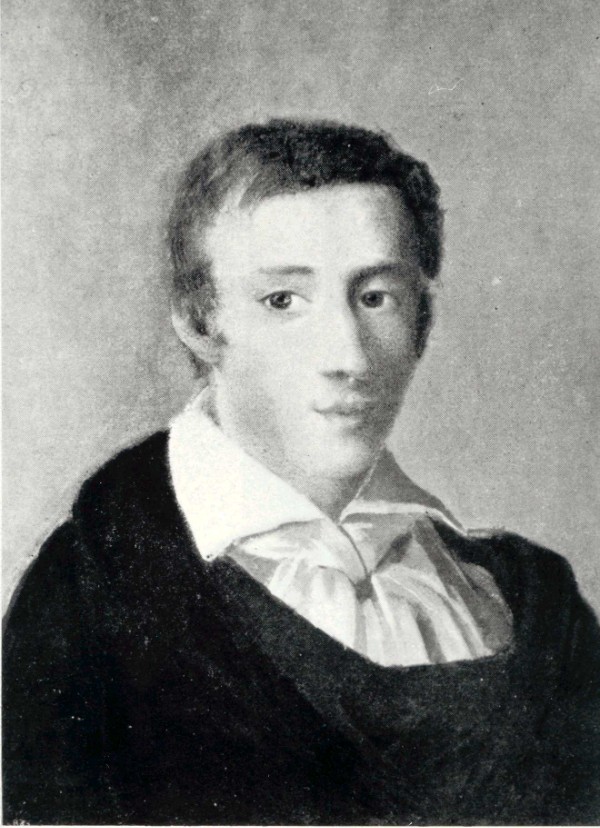
Frédéric Chopin, 1829
Robert Schumann had opinions about this Ballade:
I have a new Ballade by Chopin. It seems to me to be the work closest to his genius (though not the most brilliant). I even told him that it is my favourite of all his works. After a long, reflective pause he told me emphatically: “I am glad, because I too like it the best, it is my dearest work.”
In the generations since, the Ballade has become the most popular of the four. It’s also appeared in countless soundtracks, movies, and even in figure skating programs.
Yuzuru Hanyu performs Chopin’s Ballade No. 1 at PyeongChang 2018
It begins with a simple ascending line played in octaves, which allows a pianist to showcase their control and musicality right off the bat.
The material develops into a waltz that never quite gets off the ground. Elements from the waltz transition into a virtuosic flurry of notes that call to mind a ship tossing on stormy seas, before briefly calming again.
But then there’s trouble: that first waltz returns, by turns triumphant and anguished.
What happens next? If you don’t know, listen for yourself: this is Chopin’s most immediately accessible Ballade. And listen for the terrifying octaves that finish out the piece: completely different in mood and texture from the ones that open it.
WHY THIS RANKING?
This piece, and all of the cinematic drama within it, makes for a perfect gateway drug to Chopin. Its melodies are more memorable than any in the second and third ballades, and it holds an important place in pop culture, to boot.
But there’s one last ballade that’s even more accomplished, which brings us to today’s winner…
Ballade No. 4 in F minor
Here’s my argument for why the fourth ballade is the best Chopin ballade.
It’s a completely different animal from his other ballades. It’s longer (ten to twelve minutes). It’s the most technically difficult. It’s more emotionally complicated, and therefore more elusive.
Pianist and composer John Ogdon wrote of it:
[The ballade is] the most exalted, intense and sublimely powerful of all Chopin’s compositions… It is unbelievable that it lasts only twelve minutes, for it contains the experience of a lifetime.
Musically, the ballade initially eschews the genre’s connection to the dance; the opening feels more like a song without words than a dance. Its poignant, yearning melancholy calls to mind a sophisticated drawing room version of a folk song.
Two-thirds of the way through, after a dolcissimo flurry of notes, Chopin breaks down elements of this folk song melody in a startling way. It’s as if he’s turning the notes into building blocks and reorganising them inside the listener’s ear.
He gradually turns these building blocks into a series of dizzying, improvisatory passages that unwind and then careen into a staggeringly demanding ending.
WHY THIS RANKING?
There is no other work like it in the repertoire, and it could only have been written by Chopin. And that’s why it’s his best.
For more of the best in classical music, sign up for our E-Newsletter