Hieronymus von Colloredo, the Prince-Archbishop of Salzburg, had a long political career, but today he is best known as Mozart’s strict employer…and eventual enemy.
His efforts to modernise Salzburg by constraining spending and curbing musical performances brought him into direct conflict with Wolfgang Amadeus Mozart and his father, Leopold.
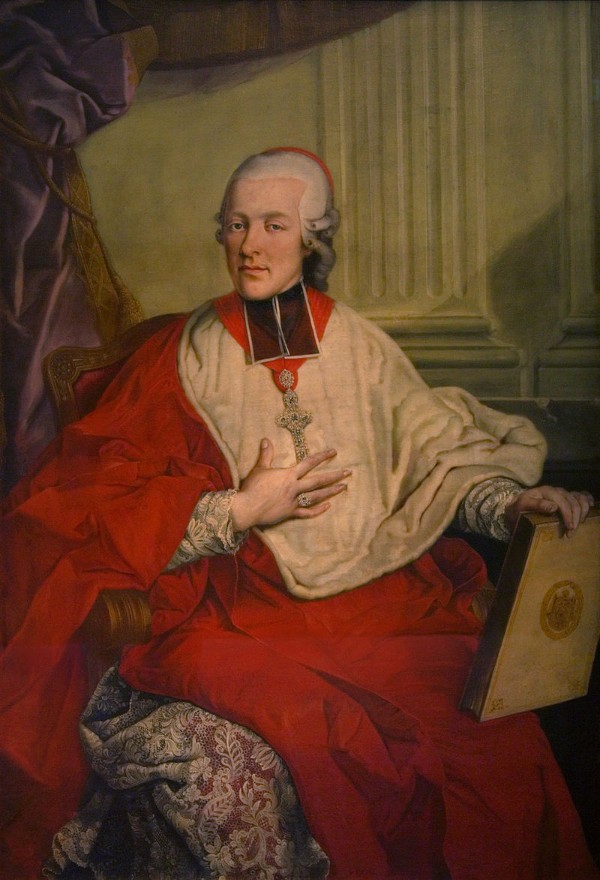
Hieronymus von Colloredo
Initially, he supported the teenage Mozart’s career, but within just a few years, their relationship deteriorated drastically, to the point where Colloredo’s steward kicked Wolfgang out of the room in 1781.
How and why did things get so bad?
Today, we’re looking at the life of Hieronymus von Colloredo and his rocky relationship with the most famous composer of the Classical Era.
Colloredo’s Family and Childhood
Hieronymus Joseph Franz de Paula Graf von Colloredo was born into an Austrian noble family in Vienna on 31 May 1732.
He was the fifth of eighteen children of Count Rudolf Joseph von Colloredo, an Imperial Vice-Chancellor, and Countess Maria Franziska Gabriele von Starhemberg.
Raised in a strict and religious household, the young Hieronymus initially aimed to enter the military, but his poor health made him pivot careers to the Catholic Church.
Colloredo’s Schooling and Early Posts
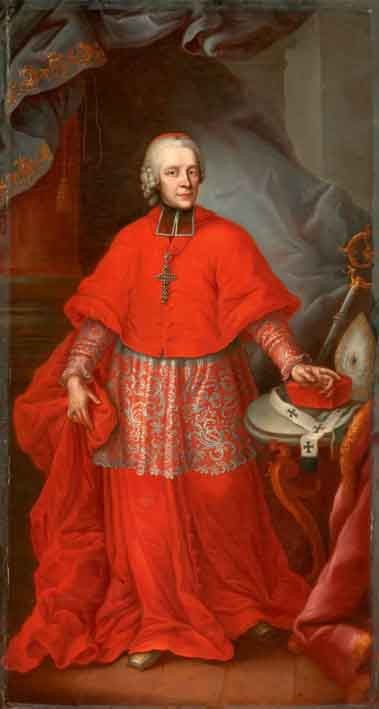
Hieronymus von Colloredo
He received an elite education. First, he attended the Theresianum Academy in Vienna, then studied philosophy at the University of Vienna, and then theology at Rome’s Collegium Germanicum et Hungaricum.
Unsurprisingly, given his family and education, Colloredo advanced quickly through the church ranks.
In 1747, when he was just fifteen years old, he was made a canon of the Salzburg Cathedral.
In 1761, at the age of 29, he accepted the post of Prior of the cathedral chapter in Kremsier (Kroměříž) in Moravia.
These early appointments gave him administrative experience and connections within the Catholic Church and Habsburg Empire, setting the stage for his elevation to the Prince-Archbishopric of Salzburg.
Becoming the Prince-Archbishop of Salzburg
In December 1771, just before Colloredo turned forty, the prince-archbishopric of Salzburg fell vacant.
Backed by the Imperial court in Vienna, Colloredo was elected Prince-Archbishop of Salzburg on 14 March 1772 – but only after a contentious, drawn-out election (which reached a thirteenth ballot before eliciting a result).
Unfortunately, Salzburgers had been pulling for a local candidate, and Colloredo was an unpopular choice among both the Salzburg clergy and citizenry.
From the beginning, he clashed with both cathedral and civic officials.
Colloredo’s Leadership Style and Salzburg’s Money Woes
Colloredo came into office only to discover that his predecessor, Sigismund von Schrattenbach, had run up huge debts.
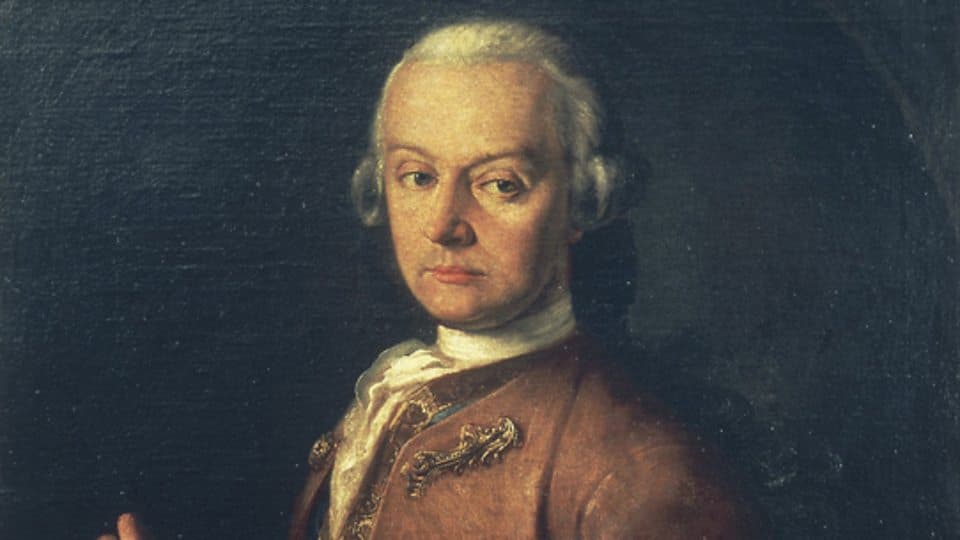
Leopold Mozart
(Schrattenbach was the Prince-Archbishop who had approved Leopold Mozart’s years-long absence from his court musician job, which enabled the Mozart family to travel during Wolfgang’s childhood.)
Colloredo quickly began tightening the fiscal reins, going so far as to invest some of his own family money to help balance the books.
He also encouraged observing a less ornate, less expensive kind of Catholicism. Church decor and ceremonies were simplified. Musical Mass settings were shortened. Latin liturgical music was partly replaced by hymns in the vernacular German. He pushed to eliminate instrumental extravagance from church services and to curtail public concerts generally. It became a running joke around town that Colloredo was a “secret Lutheran.”
Colloredo and the Mozart Family
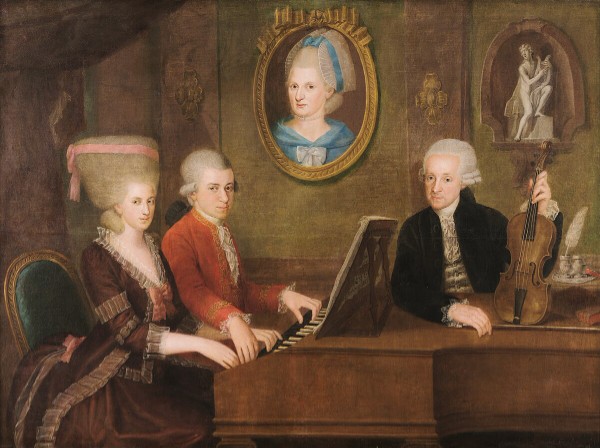
The Mozart family
When Colloredo became Prince-Archbishop in 1772, he was 39, Leopold Mozart was 53, and Wolfgang was sixteen.
Colloredo was a talented amateur musician himself (he even occasionally played in the court orchestra), and he recognised Wolfgang’s genius.
He granted Wolfgang his first salaried job that August: court concertmaster with an annual stipend of 150 gulden.
Mozart’s Il Sogno Di Scipione, 1772, dedicated to Colloredo
Their relationship had begun warmly, but soon tensions began to surface.
Wolfgang, who had spent his childhood touring the great courts of Europe, began finding Salzburg increasingly provincial and creatively stifling, especially under Colloredo’s rule.
Even apart from the effect on Mozart’s job, the wider effects of Colloredo’s policies – like eliminating elaborate instrumental music from church services and curtailing concerts and theatrical performances – were suffocating musical life in Salzburg as a whole.
Wolfgang chafed under these circumstances. He dutifully composed the required church music for Colloredo, but he didn’t like it.
Soon, Mozart began focusing on composing secular works that he hoped would earn him a job far away from Salzburg.
Irritation grew on both sides. Colloredo disliked Mozart’s restlessness, ingratitude, and frequent absences. He reportedly once remarked dismissively that young Mozart “ought to go to a conservatory in Naples in order to learn music” – an insult implying that Wolfgang’s accomplishments were inadequate.
The Tension Boils Over
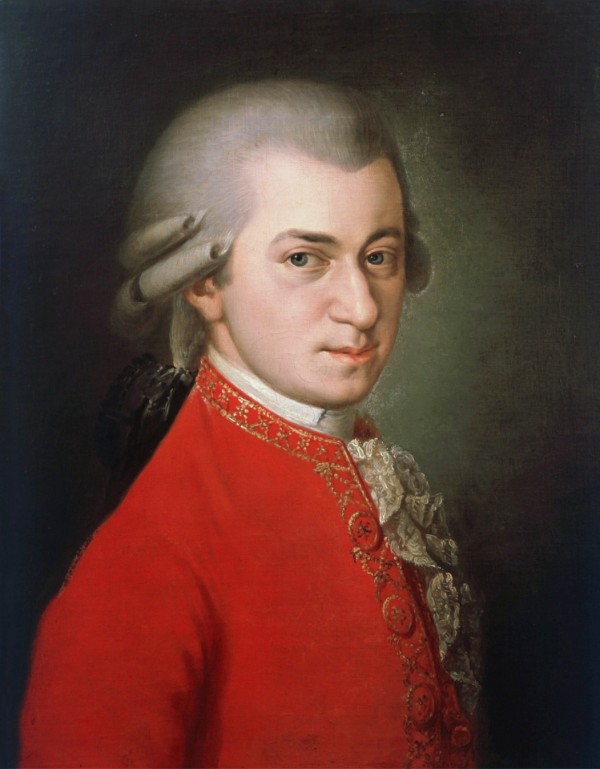
Barbara Krafft: W. A. Mozart, 1819 (Gesellschaft der Musikfreunde)
By 1777, the year he turned 21, Wolfgang was desperate to leave Salzburg and find a position that would allow him greater creative and financial freedom.
He requested permission to undertake a job-hunting tour with his father…but Colloredo refused to grant Leopold permission to leave.
In August 1777, Wolfgang petitioned the Archbishop for an honourable discharge from service, citing his duty to use his God-given talents to support his family. He reminded Colloredo that “Your Grace…graciously declared that I had nothing to hope for in Salzburg and would do better to seek my fortune elsewhere.”
Colloredo relented and allowed Wolfgang to depart (albeit without pay) to look for employment elsewhere, while Leopold stayed behind in Salzburg. Wolfgang’s mother went along to supervise the job hunt and report back to Leopold by letter.
Wolfgang’s months-long journey to various musical meccas – including Munich, Mannheim, and Paris – was creatively stimulating, but in the end, it didn’t yield a job.
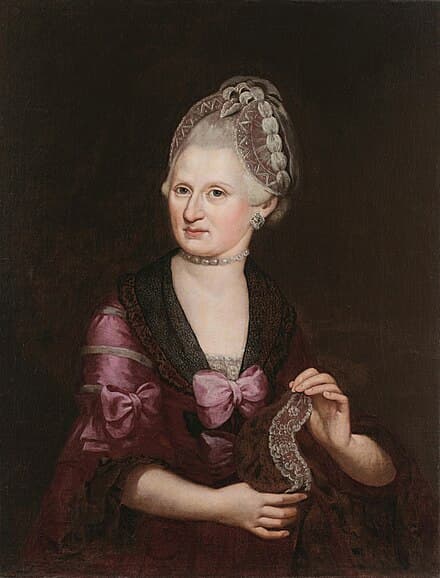
Anna Maria Mozart, Mozart’s mother
Worse, tragedy befell the family in the summer of 1778, when Mozart’s mother died suddenly during their Paris stay.
Mozart’s Violin Sonata in E-minor, composed after the death of his mother
He returned home in early 1779. Colloredo accepted Mozart back, appointing him court organist at a slightly higher salary, but their relationship had soured too badly for a small promotion to change Mozart’s opinion of him.
Surviving family letters from 1778 and 1779 contain numerous bitter remarks about Colloredo’s continued arrogance and stinginess.
Mozart Finally Leaves Salzburg
The tiff between the three men came to a head in 1781.
That year, Colloredo traveled with his court (including Mozart) to Vienna to attend festivities celebrating the new Emperor Joseph II.
Mozart, fresh from a triumphant premiere of his opera Idomeneo in Munich, bristled at being treated as a lowly servant in Colloredo’s retinue, and not the international music star he was fast becoming.
“Padre, germani, addio!” from Idomeneo
Tensions exploded in May 1781: Mozart asked the Archbishop to dismiss him from service. Angry confrontations ensued.
Colloredo, exasperated by Wolfgang’s rebellious spirit, is said to have exclaimed, “Soll er doch gehen, ich brauche ihn nicht!” (“He should just go then; I don’t need him!”)
The dismissal was finalised on 9 June 1781. According to Mozart’s account, the Archbishop’s steward Count Arco abruptly threw Mozart out of the room with a “kick up the backside.”
“Well, in plain language, this means that as far as I’m concerned, Salzburg no longer exists,” Wolfgang wrote.
Freed from Colloredo’s service, Wolfgang chose to move to Vienna to work as an independent composer, launching the legendary final decade of his career.
The Mozarts Drift Apart
Leopold Mozart, by this point in his early sixties and too old to find work as a performing musician elsewhere, remained in Salzburg under Colloredo’s employ after Wolfgang’s departure.
However, relations between father and son cooled considerably after Wolfgang moved to Vienna, thereby escaping his father’s influence and control.
Without Wolfgang, Salzburg’s musical life continued to atrophy. Leopold complained in letters about Colloredo’s refusal to hire new musicians and the overall degradation of the Salzburgian musical tradition generally. The Archbishop, it seems, wanted to save money at the cost of the quality of his court orchestra.
Letters show Leopold unhappily tolerating Colloredo’s rule all the way up to his death in 1787. Wolfgang died not long after his father, in December of 1791.
Colloredo never invited Wolfgang back to Salzburg, and the two never reconciled.
Lacrimosa from Mozart’s Requiem
The Final Years of Colloredo’s Life
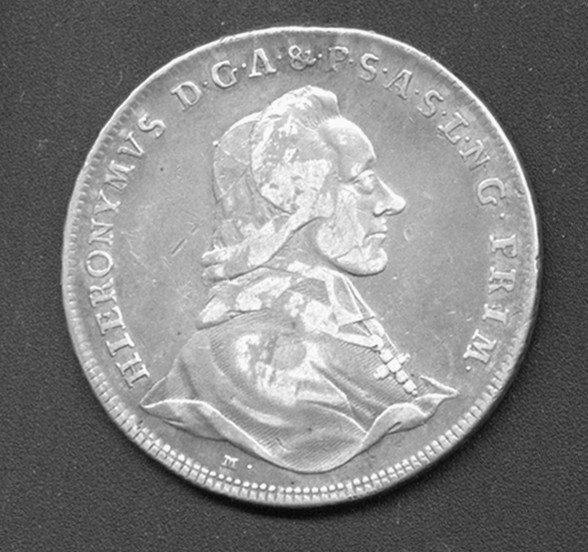
The later years of Colloredo’s reign coincided with the turmoil of the French Revolutionary era.
In December 1800, during the Napoleonic Wars, French troops advanced toward Salzburg after the Austrian defeat at Hohenlinden.
The Archbishop chose to flee Salzburg on 10 December 1800 ahead of the invaders.
In 1803, the Reichsdeputationshauptschluss (Imperial Mediatization) secularised the Prince-Archbishopric of Salzburg, stripping Colloredo of his secular authority and dissolving the centuries-old ecclesiastical principality. After that, Salzburg came under the control of secular rulers.
Colloredo formally resigned his position as head of state in 1803, but retained the Archbishop title when it came to church jurisdiction. However, he did so working out of Vienna, not Salzburg.
He lived out his final years in Vienna as a non-resident archbishop without a prince-bishopric.
Colloredo died in Vienna on 20 May 1812 at the age of 79.
He had spent decades in politics and the church, but today he is primarily remembered for his power struggles with the Mozart family…a legacy that no doubt would have surprised and annoyed him!
For more of the best in classical music, sign up for our E-Newsletter