She was the first woman to win a Nobel Prize, the first person to win a Nobel Prize twice, the only person to win a Nobel Prize in two scientific fields, and the first woman to become a professor at the University of Paris. She was born Maria Salomea Skłodowska in Warsaw, Poland, and everybody knows her as Marie Curie.
Curie discovered the elements polonium and radium, and she developed the theory of “radioactivity,” a term she actually coined. She revolutionised our understanding of atomic structure, “demonstrating that radioactivity is an intrinsic atomic property, independent of chemical bonding or molecular structure.”
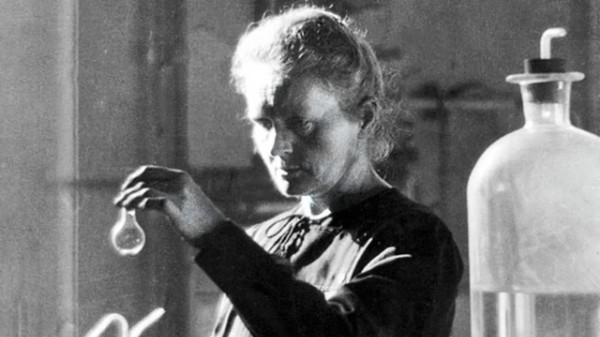
Marie Curie
Madame Curie had a deep personal appreciation for classical music, and to celebrate her birthday on 7 November 1867, let’s discover her musical background.
Frédéric Chopin: Waltz in C-sharp minor, Op. 64, No. 2
Competent Keys
Marie Curie was not a musician, but she did take piano lessons as a child. This was part of a cultured middle-class education, and the first piano she ever touched belonged to her mother.
Bronisława Boguska, a former headmistress, owned a second-hand Pleyel, and Marie learned scales under her mother’s watchful eye. At ten, she could play Chopin waltzes and Bach preludes and fugues. Music was not just an ornament in the household; it was an integral part of life.
Although Marie did not perform publicly, and she was clearly not a virtuoso, she played competently and retained a lifelong appreciation for classical music, particularly the works of Chopin, Beethoven, and Bach.
Johann Sebastian Bach: Prelude & Fugue in C minor, BWV 847
Courtship in Equations and Waltzes
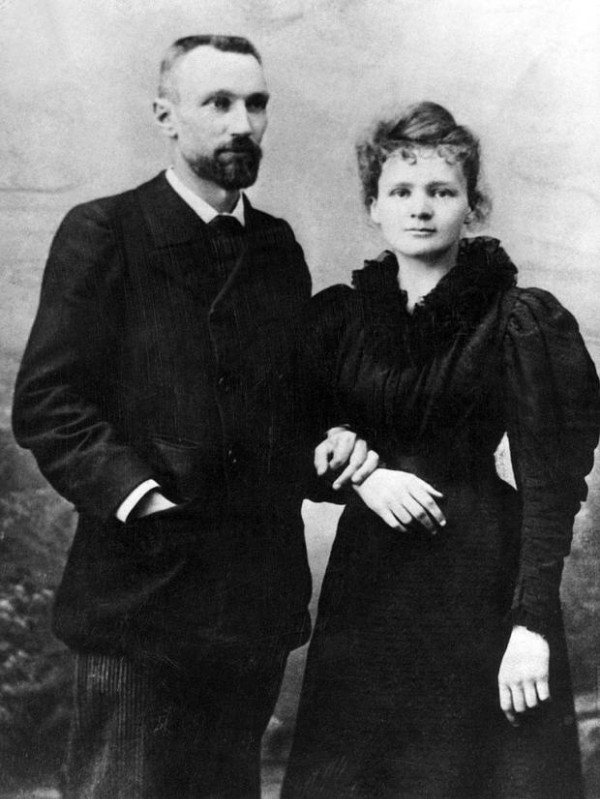
Pierre and Marie Curie
By the time Marie left for Paris in 1891, the piano had become only a memory. She carried no instrument, only a small volume of Chopin scores tucked between physics textbooks. And as she got really busy with her research, she only had time to listen to music.
When she met Pierre Curie, their courtship unfolded in letters that quoted Chopin alongside equations. They married in 1895, and the ceremony was civil and spare. As a wedding gift, Marie received a bicycle, when she probably wanted a piano.
Their daughter Irène was born in 1897, and between 1898 and 1902, Marie processed eight tons of pitchblende in a shed that leaked when it rained. Irène would occasionally tag along, and she remembered her mother labelling vials to the pulse of Chopin’s Nocturne in E-flat.
Frédéric Chopin: Nocturne in E-flat Major, Op. 9 No. 2
From Vials to Vinyl
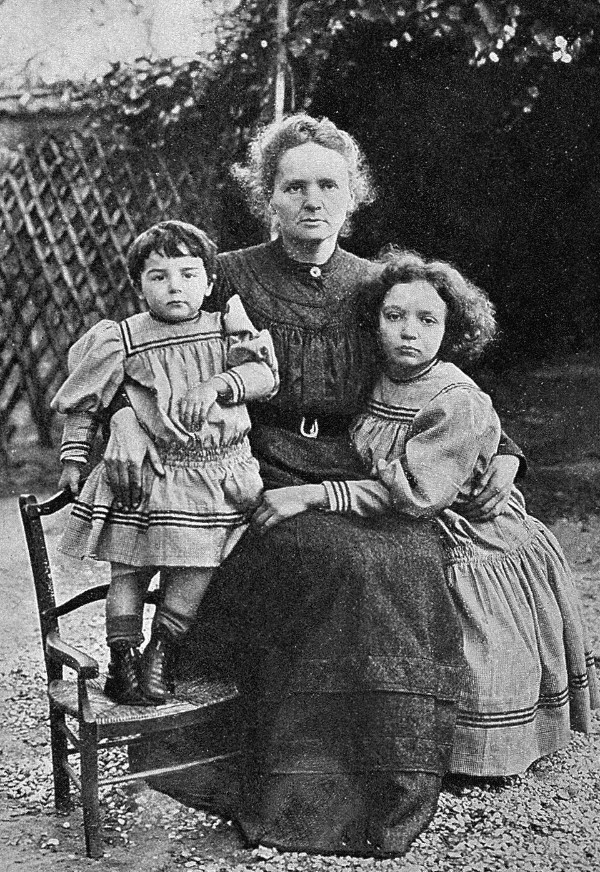
Marie Curie with her daughters Eve and Irène
Marie once told her daughter that “music keeps the hands honest as it refuses approximation.” She never owned a piano during her most intense scientific years, but music remained a quiet and steady presence in her inner life.
She attended concerts in Paris and sometimes listened to performances at private gatherings hosted by scientists or intellectuals. Letters from her daughter Ève Curie, herself a pianist and music critic, confirm that Marie valued music as a form of respite from her demanding research.
The Nobel Prize in 1903 brought money and a measure of freedom. The Curies did buy a gramophone and a stack of shellac discs, including a much-loved recording of the C-sharp minor string quartet, opus 131, by Beethoven.
Ludwig van Beethoven: String Quartet in C-sharp minor, Op. 131 “Adagio ma non troppo”
Radium Institute
The second Nobel, in 1911, brought scandal and exile. Hounded by the press for her affair with Paul Langevin, Marie fled to England with her daughters. In a borrowed cottage near the sea, she found a battered upright and quietly played after her daughters had gone to sleep.
Back in Paris, the Institute du Radium rose on the Rue Pierre Curie. The building had a small recital room, a gift from American patrons. Marie used it for storage, primarily for Geiger counters, lead bricks, and crates of Bohemian pitchblende.
In 1921, she hosted a benefit concert for Polish students. Paderewski himself played the Chopin Polonaise in A-flat, as Marie stood in the wings, arms folded, eyes closed. When the final chord crashed, she opened them and said only, “Good acoustics.”
Frédéric Chopin: Polonaise in A-flat Major, Op. 53
Laboratory Instrument
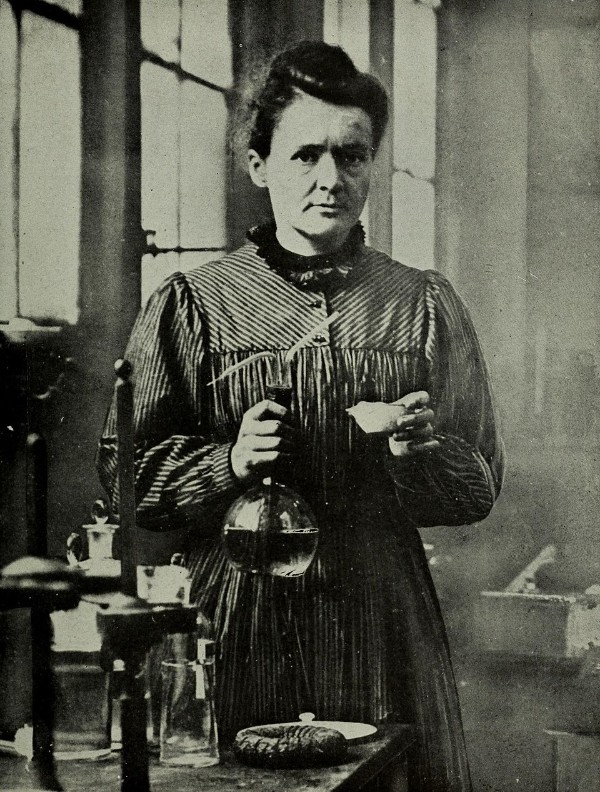
Marie Curie
Music gave Marie Curie a private language, a way to measure what could not be weighed. She never composed, never sought applause as the piano was her laboratory instrument, its keyboard a periodic table of emotions.
To be sure, Marie Curie inspired a number of musical works, including the opera Marie Curie by Elżbieta Sikora, composed in 2020. It directly portrays her story and connects her scientific intensity with musical expression.
For more of the best in classical music, sign up for our E-Newsletter