When most people think of Ludwig van Beethoven (1770-1827), their minds jump to the grand, earth-shaking moments of his music. The first four notes of the Fifth Symphony, the tender glow of the Moonlight Sonata, or the heroic sweep of the Eroica.
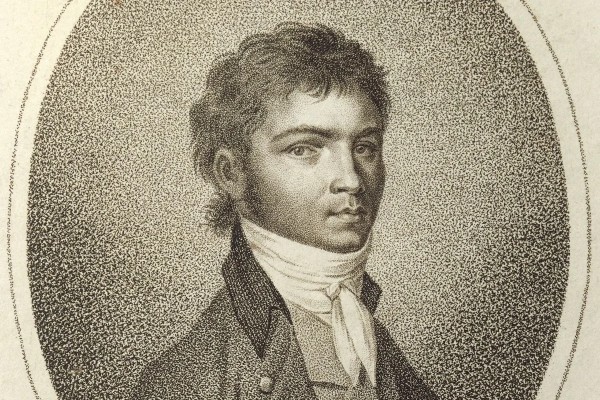
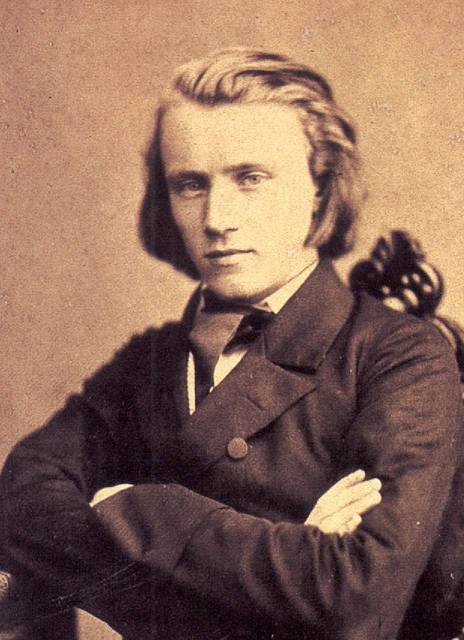
The young Beethoven
These works are rightly celebrated, monumental in scale and ambition. But Beethoven, like any great artist, also had a quieter, more intimate side, one that didn’t always make it to the public during his lifetime. Among these hidden treasures are his 3 piano quartets WoO 36, charming works for piano, violin, viola, and cello, which were published only after his death.
Ludwig van Beethoven: Piano Quartet in E-Flat Major, WoO 36, No. 1 – I. Adagio assai (New Zealand Piano Quartet, Ensemble)
Unpublished by Choice
Yes, you read that correctly. Beethoven wrote these quartets, but he never published them himself. The reasons for this remain a mix of speculation and legend. Some scholars suggest he considered them personal exercises or private music, basically works meant for friends, students, or small gatherings rather than the grand concert halls of Vienna.
Others think Beethoven, ever the perfectionist, simply didn’t think they were important enough compared to his symphonies and sonatas. Whatever the reason, Beethoven’s birthday on 17 December 1770 provides the opportunity to give us a glimpse into his private, playful, and experimental side.
Chamber Music Up Close
Before diving into the music itself, let’s clarify what a piano quartet actually is. The term refers to a chamber work written for piano, violin, viola, and cello, essentially a small ensemble that balances the percussive and harmonic power of the piano with the lyrical, singing quality of the strings.
Think of it as a mini-orchestra in your living room. Unlike a symphony, which can feel monumental and public, a piano quartet is intimate, conversational, and immediate. The instruments talk to one another, often with a sense of humour or surprise, and the listener becomes almost a guest at a private musical conversation.
This format gave Beethoven the perfect playground to experiment. He could write bold, virtuosic piano passages, intricate string dialogues, and subtle harmonic surprises, all in a setting that felt warm, approachable, and personal.
Ludwig van Beethoven: Piano Quartet in E-Flat Major, WoO 36, No. 1 – II. Allegro con spirito (New Zealand Piano Quartet, Ensemble)
Youth in Bonn
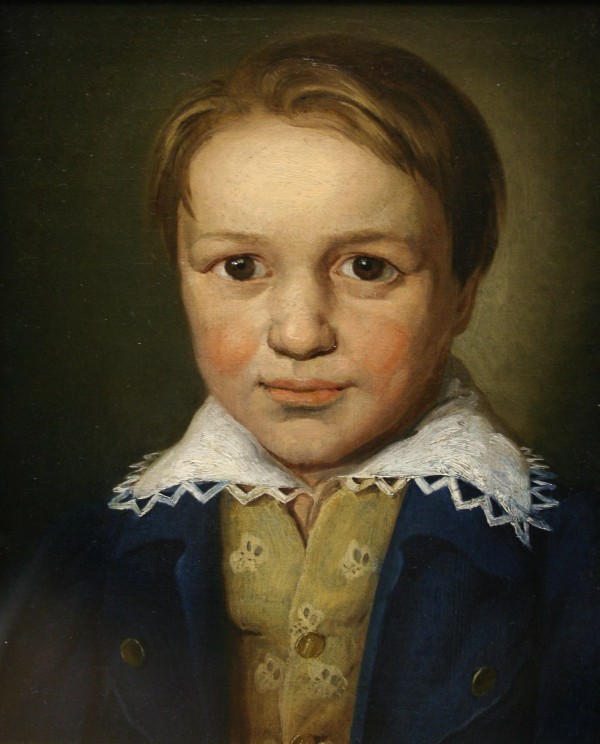
Thirteen-year-old Beethoven
The piano quartets were composed in 1785, when Beethoven was only 14 to 15 years old and still living in Bonn, Germany. This places them firmly in his juvenile period, before he permanently moved to Vienna in 1792.
In 1785, Beethoven was a young court musician in Bonn, heavily influenced by mentors like Christian Gottlob Neefe and models like Mozart, whose violin sonatas inspired these quartets.
The quartets were indeed unpublished during Beethoven’s lifetime and first appeared posthumously in 1828, one year after his death.
These works were overlooked for many years due to their early origin and the overshadowing dominance of his mature works. Today, however, they are recognised not only as beautiful pieces of chamber music but also as windows into Beethoven’s personality.
Ludwig van Beethoven: Piano Quartet in E-Flat Major, WoO 36, No. 1 – III. Theme and variations: Cantabile (New Zealand Piano Quartet, Ensemble)
Youthful Spark
The 3 piano quartets are charming and youthful pieces showing Mozartian influence, brilliant piano writing, and early signs of Beethoven’s emerging voice. Above all, they are playful, intimate and approachable.
Descriptions of them revealing a “witty, tender, and sometimes even mischievous” side of Beethoven are plausible interpretations. Many sources note their lyrical sparkling and forward-looking qualities.
But one thing is sure, they reflect the personality of a talented teenager rather than the mature composer known for bold, heroic, or profound expressions in his late chamber music. In these juvenile works, there is a constant sense of conversation, sometimes serious, sometimes playful, and sometimes reflective.
Ludwig van Beethoven: Piano Quartet in D Major, WoO 36, No. 2 – I. Allegro moderato (New Zealand Piano Quartet, Ensemble)
Sparkle and Surprise
A great way to approach these quartets is to imagine a gathering in a salon, where friends and students are playing together. The music moves fluidly between moods. A light-hearted scherzo, a tender slow movement, a lively finale that leaves everyone smiling. It is precisely this intimacy and versatility that make the quartets so endearing, even today.
Even though these quartets are smaller in scale than a symphony, Beethoven’s inventive spirit is fully present. He experiments with unexpected harmonies, sudden dynamic shifts, and unusual textures, giving the music both charm and surprise.
In some places, the piano takes on a dominant, almost orchestral role. In others, the strings carry the narrative, with the piano providing sparkling commentary. There are moments of humour, sudden pauses, or rhythmic quirks that feel like Beethoven winking at you across time.
Ludwig van Beethoven: Piano Quartet in D Major, WoO 36, No. 2 – II. Andante con moto (New Zealand Piano Quartet, Ensemble)
A Secret Beethoven
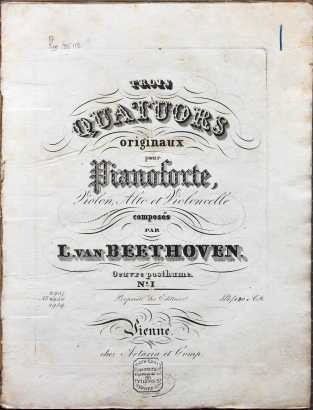
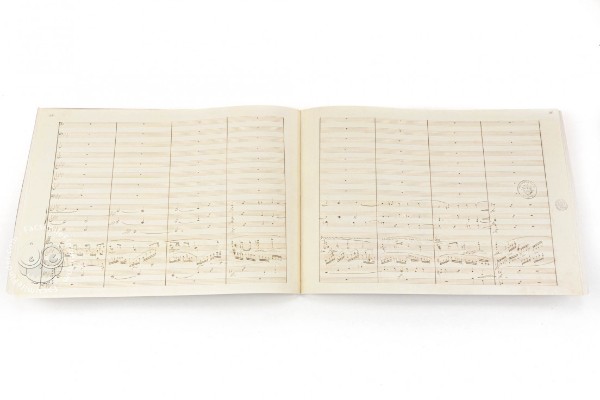
Beethoven’s Piano Quartets WoO36 title page
The fact that Beethoven did not publish these works himself adds an extra layer of fascination. Musicologists and performers alike often wonder what Beethoven’s intentions were. Did he consider them incomplete? Too informal? Or did he simply have his attention fixed on grander projects?
Whatever the reason, posthumous publication allows us to hear a side of Beethoven that was private, personal, and experimental. It reminds us that even a composer known for his monumental symphonies and piano sonatas had a lighter, more intimate side. These quartets are not just minor works; they are gems of his early imagination.
Another delightful aspect of these works is their emotional range. A single quartet might move from a playful, sprightly movement to a tender, lyrical one, then conclude with a lively, exuberant finale. The contrast between movements keeps the listener engaged, as if Beethoven is leading us through a conversation that includes laughter, reflection, and surprise.
Ludwig van Beethoven: Piano Quartet in D Major, WoO 36, No. 2 – III. Rondo: Allegro (New Zealand Piano Quartet, Ensemble)
Alive and Immediate
In some of the slower movements, the strings sing long, expressive melodies over soft, supportive piano lines, creating an atmosphere of intimacy and contemplation. In the faster movements, the piano often jumps in with sparkling figuration, driving the energy forward and inviting the strings to respond with clever counterpoints.
The result is music that feels alive, spontaneous, and full of character, even though it was written more than two centuries ago. Remarkably, Beethoven kept the autograph manuscript until his death, suggesting they held personal significance, despite never publishing or performing them publicly.
He later recycled some of the themes. For instance, material from the C Major quartet appears in his early Piano Sonatas Op. 2 Nos. 1 and 3. The piano quartets themselves might have been written for the Mastiaux family of Bonn, wealthy amateurs who took lessons from the teenage Beethoven.
Ludwig van Beethoven: Piano Sonata No. 3 in C Major, Op. 2, No. 3
Treasures in Miniature
In many ways, the posthumous piano quartets are a gift to the modern listener. They offer a fresh perspective on Beethoven, one that balances the heroic and monumental with the personal and approachable.
Clearly, these piano quartets may not have the fame of his symphonies or piano sonatas, but they are treasures in their own right. They are intimate, playful, and full of surprises, offering a unique glimpse into the private world of one of history’s greatest composers.
So the next time you want to experience Beethoven up close and personal, reach for the piano quartets. Listen to the piano sparkle, the strings sing, and the ensemble converse. You might find yourself smiling at a sudden harmonic twist, tapping your foot to a lively scherzo, or simply getting lost in the warmth and intimacy of this remarkable music.
For more of the best in classical music, sign up for our E-Newsletter