The English composer E.J. Moeran (1894–1950) was born into an affluent family, and the money that his mother settled on him after WWI freed him to devote his time to composition, which he had started to study at the Royal College of Music before WWI. During the War, his battalion was sent to Ireland, and he was able to spend time collecting folk songs. Moeran was half-Irish from his father’s side, and as his career went on, Ireland would become increasingly important to him as a place of inspiration.
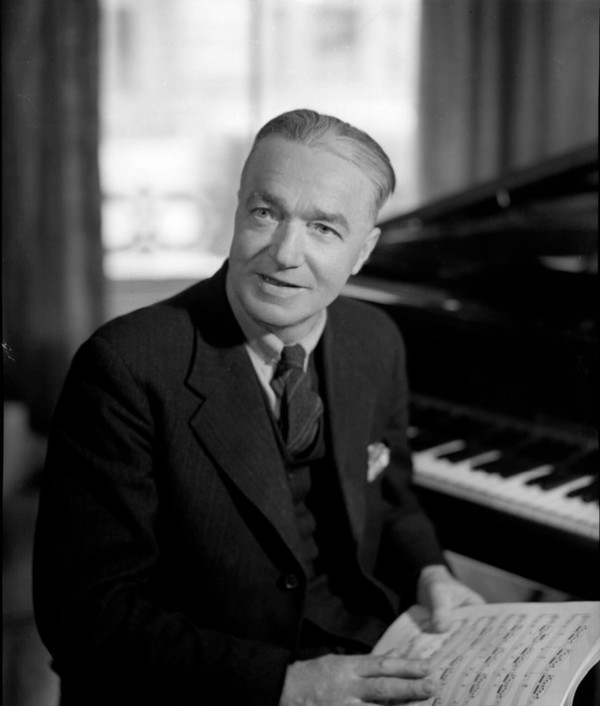
Howard Coster: Ernest John Moeran, 1944 (National Portrait Gallery, NPG x23788)
After he returned to London after the war, he resumed his studies at the Royal College of Music but soon left to study privately with John Ireland. Between 1920 and 1925, he became more and more recognised as his mother’s money enabled him to stage concerts that included his own music. Unfortunately, in 1925, he moved to share a house in Kent with the composer Peter Warlock, and their cottage in Eynsford became a byword for both ‘riotous living and artistic creativity’. Moeran lost his ability to compose in all the uproar and started down his path to alcoholism. A particular failure was his unfinished symphony, commissioned by Hamilton Harty for the Hallé Orchestra.
He wrote to Harty that he was rethinking the structure of the symphony, and so it missed its scheduled 1926 premiere date. He took it up again in 1934 and completed it in 1937. However, by this time, Harty had left the Hallé due to ill health and a scheduled performance in March 1937 had to be cancelled. It was finally given its premiere on 13 January 1938 with Leslie Heward conducting the London Philharmonic Orchestra. It was given a March performance in Bournemouth and then two performances in Cincinnati with Eugene Goosens conducting. It was on the August Proms schedule, with Sir Henry Wood conducting, and then wasn’t heard again at the Proms until 2008, more than 70 years later.
Although Moeran expressed qualms about the possibility of Adrian Boult conducting the premiere of the symphony, when he heard Boult’s version, he praised Boult for a ‘… fine performance, really good. I heard he spent hours on it. …. He knew the score backwards and had his own ideas and suggestions and played it like he does Elgar…’. That is the performance heard on this CD.
The Violin Concerto, which was also started in 1937, was inspired by Moeran’s time in County Kerry, Ireland. The second movement is said to be based on the ‘calm of Kenmare Bay in fine weather’ and the Lento movement ‘reflected a period of seasonal colour and beauty along the Kenmare River’. The lively second movement picks up the sights and sounds of the Kerry fairs and the sound of Irish fiddlers.
Ernest John Moeran: Violin Concerto – II. Rondo: Vivace
When Moeran wrote his symphony, there was a lot of Sibelius in the air, and more than a little comes into Moeran’s music. He wrote to Benjamin Britten asking if he had the last four pages of his miniature score of Sibelius’s Fifth Symphony. He wrote ‘I may have lost them myself since you had it. I wanted to crib his scoring of those final chords’. He was so impressed with Sibelius that a fellow RCM student mock-complained that Moeran had just been around and ‘tried to convert us to Sibelius’.
The premiere of the work was given at the Proms on 8 July 1942, with Arthur Carrerall as soloist and Henry Wood leading the BBC Orchestra. This recording was made in April 1946 with Albert Sammons, a violinist known for his performances of the Elgar and Delius Concertos.
Sammons, suffering from Parkinson’s Disease, had to be coaxed out of his impending retirement to learn the work as Moeran considered him the finest violinist who could undertake it. Sammons eventually agreed and played the Moeran Concerto on his last Proms appearance on 28 August 1945. He also played it in April 1946 on his last public concerto performance with the BBC Orchestra under Boult, and that is the performance here. A private recording of the concert was made by Lionel Hill, Sammons’ son-in-law, and Moeran sent a copy to his cellist wife, Peers Coetmore, when she was on tour in Australia. That private recording was used on this CD as no known copy exists in the BBC Archives either of this work or of any other work played by Sammons, considered the finest English violinist of his day.
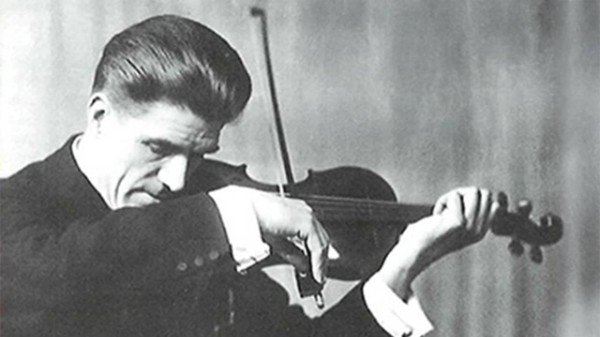
Albert Sammons
The English cellist Peers Coetmore had first met Moeran in 1930, but it wasn’t until 1943 that they became friends. She had studied at the Royal Academy of Music in London and was awarded the Piatti Prize for cellists in 1924. During WWII, she was often away on war work working for ENSA, and while she was away on one of those trips, Moeran wrote to her asking if she’d like a cello concerto from him. He finished the work in early 1945, the two were married in July 1945, and the premiere of the work was given in Dublin in November 1945 with Coetmore as soloist. This recording was made by Lionel Hill in April 1946, with Coetmore as soloist and with Boult conducting the BBC Symphony Orchestra.
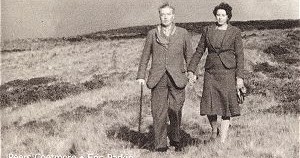
E.J. Moeran and Peers Coetmore
Coetmore’s and Moeran’s marriage didn’t survive, and she moved permanently to Australia in the late 1940s. They never divorced, and Moeran continued to write to her until a few months before his death. He died on 1 December 1950, having suffered a cerebral haemorrhage while walking on the pier at Kenmare and then falling in the water and drowning. His alcoholism, which developed during his time with Peter Warlock in the 1920s, continued to plague him through his career, leading to unfilled commissions, dropping off the map for performances and commissions, and the destruction of his own work when he judged it too harshly.
This newly restored recording of Moeran’s Symphony, Violin Concerto, and Cello Concerto come from 3 BBC Live broadcasts: the symphony from the Royal Albert Hall, London, 9 February 1949 (Home Service); the Violin Concerto from St Andrew’s Hall, Norwich, 28 April 1946 (Home Service); and the Cello Concerto from the People’s Palace, Mile End, London, 10 April 1946 (Home Service). Audio restoration was done by Lani Spahr.
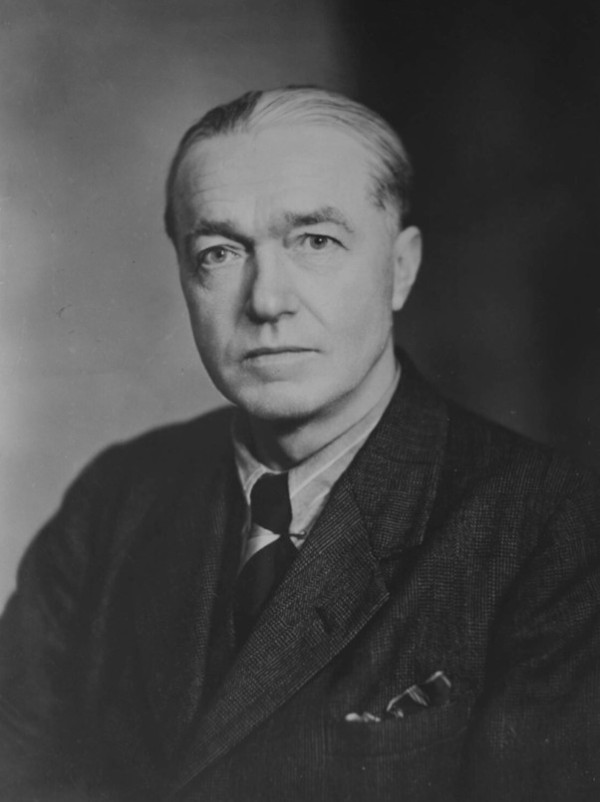
Elliott & Fry: Ernest John Moeran, 1944 (National Portrait Gallery: NPG x82210)
A composer with a brilliant start who succumbed to the lure of alcohol, Moeran deserved to be looked at again, and these reissues will help us add him to the standard repertoire. Released ahead of the 75th anniversary of his death, these recordings fill a needed gap.
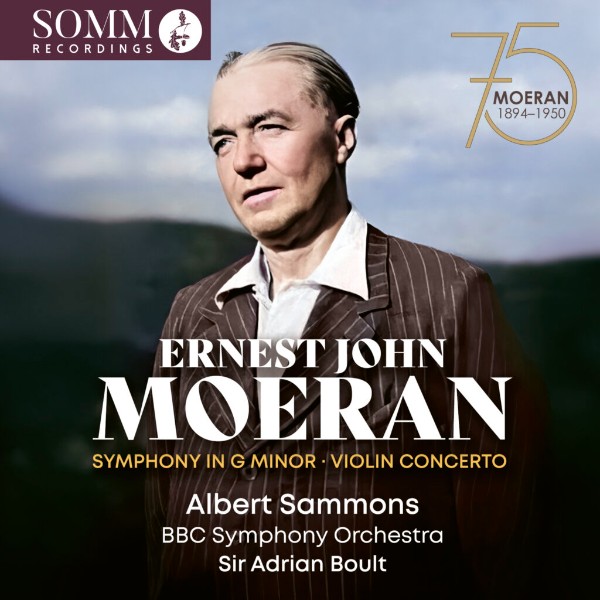
Ernest John Moeran: Symphony in G Minor & Violin Concerto
Albert Sammons, violin; Peers Coetmore, cello; BBC Symphony Orchestra, Sir Adrian Boult, cond.
SOMM Recordings Ariadne 5045
Official Website
For more of the best in classical music, sign up for our E-Newsletter