In all, Joseph Haydn (1732-1809) composed 106 symphonies. Of these, 104 have numbers associated with them, while two additional symphonies were discovered later. Have you noticed that, when Haydn symphonies get programmed these days, if at all, it’s always the same handful of his greatest hits?
Most of them have catchy nicknames like “Surprise,” “Military,” “Drumroll,” and “London.” To be sure, Haydn basically invented the symphony as we know it today, and these greatest hits already became a brand during Haydn’s lifetime.
Hearing the Forgotten
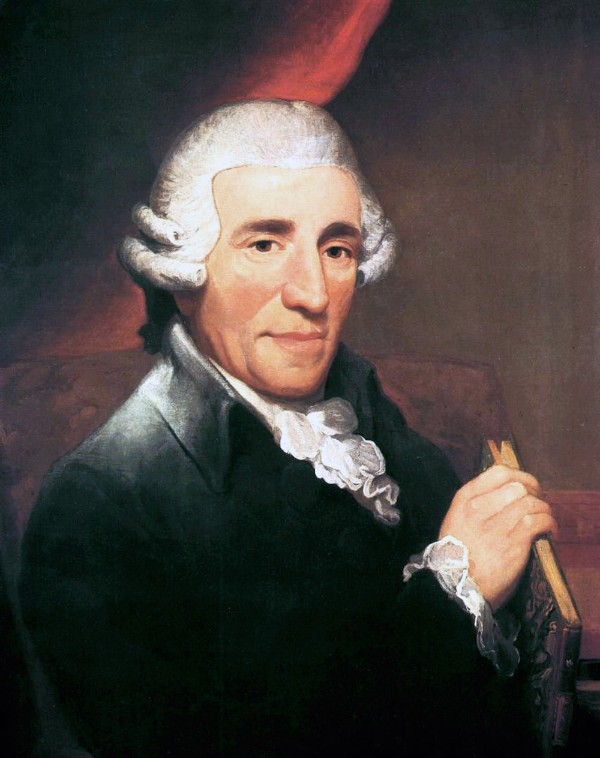
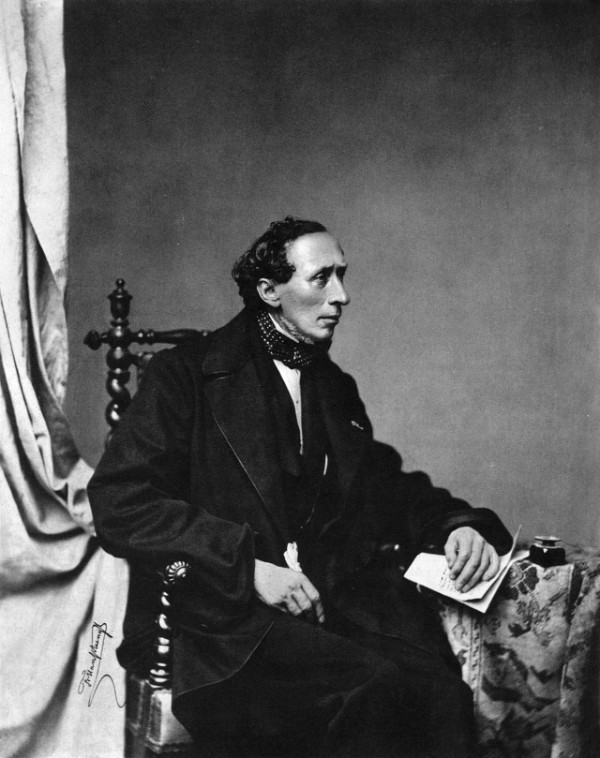
Joseph Haydn
But what about the 90+ symphonies that never reach the stage? You could buy recordings of the complete Haydn symphony cycles by Dorati, Fischer, or the ongoing Antonini Haydn 2032 project. However, thanks to modern streaming, getting to know these lesser-known Haydn symphonies has never been easier.
To celebrate Haydn’s birthday on 31 March 1732, let us explore some Haydn symphonies that deserve far more attention than they usually get. Here is a playlist of symphonies you don’t hear every day, but they are packed with everything that made Haydn famous.
Joseph Haydn: Symphony No. 87 in A Major, Hob.I:87
The Forgotten Paris Symphony
The so-called “Paris” symphonies are rightfully famous. Written for the large ensemble of the Paris orchestra, these works are scored for trumpets, timpani, and a full complement of winds.
They were designed to impress a cosmopolitan audience, and Haydn puts on plenty of theatrical flair to tailor his music to this much grander stage. But even within this famous set, we find a stepchild.
For no apparent reason, the Symphony No. 87 has been practically forgotten since the end of the 18th century. It was probably the first in this set to be written, but there is no reason to consider one as being more advanced than another.
There is no slow introduction to the opening movement, and the “Adagio” features plenty of solo woodwinds. There is even an extended solo for the oboe in the simple “Trio,” and a rousing “Rondo” concluded what we might call one of Haydn’s sunniest symphonies.
Joseph Haydn: Symphony No. 49 “La Passione” in F minor, Hob.I:49
Emotion meets Tradition
We find one of Haydn’s most deeply expressive minor-key symphonies in a work dating from 1768. Symphony No. 49 carries the nickname “La Passione,” suggesting that it was probably intended for performance in church during Lent.
“La Passione” might not have been the work’s original nickname, but it is a wonderful musical example of Haydn’s Sturm und Drang, a literary movement that would usher in a new period of music, known today as the Romantic Era.
You immediately notice that the usual fast first movement and slow movement have changed places. So, it’s the “Andante” first and the “Allegro di molto” second. Apparently, this order comes from the antiquated form of the church sonata.
For some commentators, this work represents something of a watershed in Haydn’s symphonic development, as he combined the form of the church sonata with modern emotional content.
Joseph Haydn: Symphony No. 76 in E-flat Major, Hob.I:76
Hidden Classic
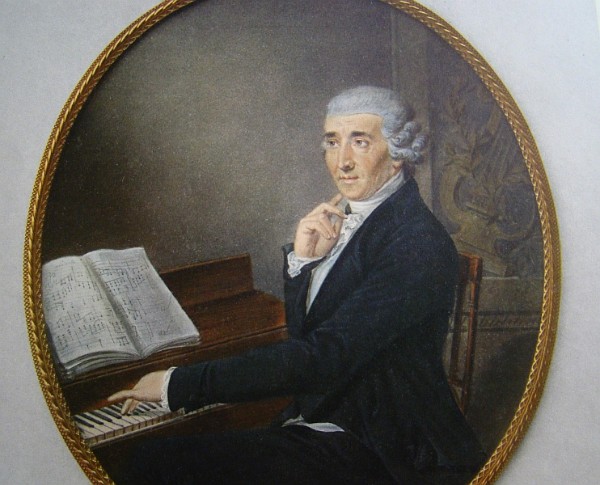
Joseph Haydn
For an overlooked late gem from Haydn’s Esterházy years, we turn to the charming Symphony No. 76 in E-flat Major. By the 1780s, Haydn had been employed at and retained by the court of Prince Nikolaus for many decades.
His reputation, however, had already spread across Europe. The Symphony No. 76 was specifically composed for a concert tour to London, but Haydn never made this trip. He had to wait until 1790 to visit the British capital.
Haydn was a crafty businessman, and he sold this symphony simultaneously to three different publishers, specifically to Torricella in Vienna, Boyer in Paris, and Foster in London. Haydn described the work as “beautiful, elegant, and by no means over-lengthy…”
It is a refined and charming work, lacking some of the idiosyncrasies that made Haydn famous. What this symphony doesn’t lack, however, is quality or originality.
Joseph Haydn: Symphony No. 44 in E minor, “Mourning” Hob.I:44
Emotional Storm
Composed around 1771–1772, Haydn’s Symphony No. 44 in E minor is nicknamed “Mourning.” As such, it fits perfectly within his so-called Sturm und Drang period.
During this time, Haydn experimented with intense emotional expressions, dramatic contrasts, and unconventional structures. Perfect for a broader artistic movement emphasising passion and individuality.
According to an anecdote, Haydn requested that the third movement of this symphony be played at his funeral, adding a mournful mystique to this work.
All that gloom aside, it’s not a sad symphony, but a journey through tension, reflection, and defiance. This symphony is special because Haydn balances raw emotion with his trademark cleverness.
Joseph Haydn: Symphony No. 81 in G Major, Hob.I:81
The Siciliano Surprise
Composed in 1784, the Symphony No. 81 probably sounded pretty alien as Haydn explores the ambiguities of tonality in the first and third movements.
Just listen to the beginning of this work, as the tonic G in the basses is followed by the dissonant F and a suspended dissonant C. With this symphony, Haydn started to use bolder variants and “alien” harmonies.
The second movement is a siciliano theme with three variations, including a beautiful minor-key interlude in the centre of the movement.
Haydn likes to keep it simple in his closing movements, and the graceful and inventive conclusion beautifully balances lyricism and drive. This symphony is essentially a bridge between Haydn’s earlier and later styles.
Joseph Haydn: Symphony No. 52 in C minor, Hob.I:52
Fire and Elegance
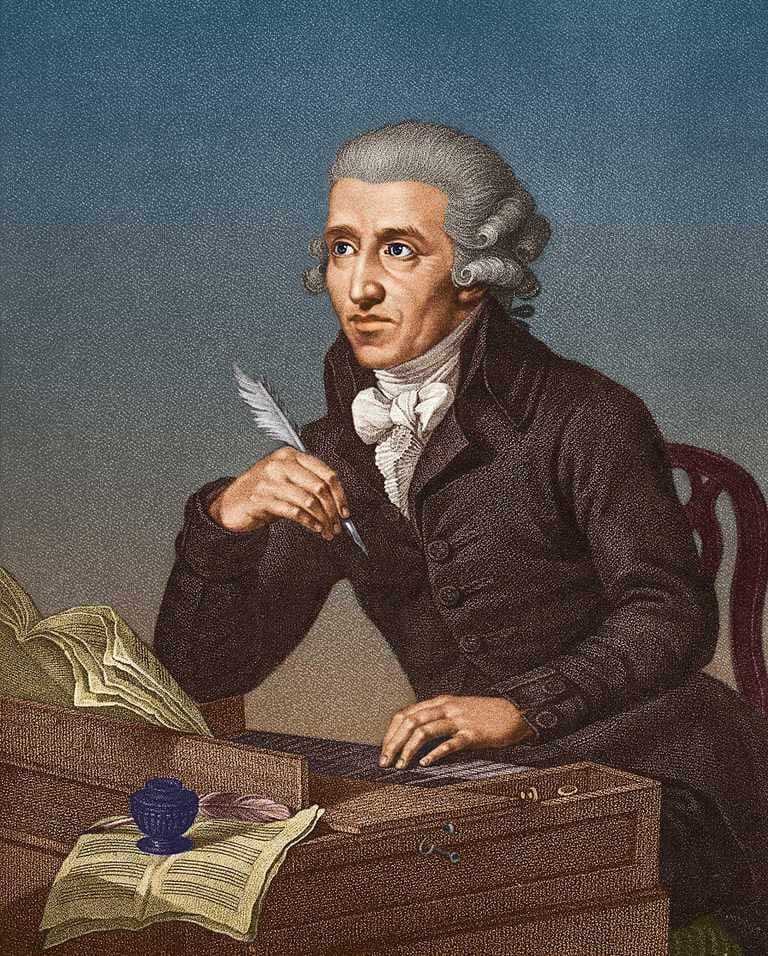
Joseph Haydn
The Symphony No. 52 in C minor offers a wonderful mix of fire and elegance. It is generally described as the last of Haydn’s symphonies in the dramatic style.
The Haydn scholar H.C. Robbins Landon called it the “grandfather” of Beethoven’s Fifth Symphony. The opening “Allegro” is certainly one of the most dramatic movements Haydn ever composed.
Above all, it’s very unpredictable because it’s difficult to predict phrase lengths or even where the cadences will fall. The “Andante” offers relative calmness, and critics have suggested that it served Mozart as a model for his minor-key Symphony No. 40.
The third movement pairs a brusque minuet with a gentler trio, and the “Presto” finale unfolds at breakneck speed. This is clearly a lesser-known, but hardly less exciting gem from Haydn’s symphony catalogue.
Franz Joseph Haydn: Symphony No. 78 in C Minor, Hob.I:78 (Japan Century Symphony Orchestra; Norichika Iimori, cond.)
Subtle Sophistication
Let’s continue with another Haydn symphony in C minor, one that feels like a bridge to Mozart’s minor piano concertos and the later Beethovenian drama. Symphony 78 is another example of a work expressly fashioned for international consumption.
Haydn described this work as “very easy,” but let’s not be fooled by his sales talk. It is actually the composer’s combination of the learned and the popular styles. He takes initially unremarkable music material and explores it from all angles.
If you don’t believe me, just listen to the uneasy unison figure that opens the “Vivace” movement. The slow movement, now scored in the major key, finds a place for gentle drama, and the dance movements feature a winding melodic line for violins doubled by the oboe.
The concluding “Presto” once again features Haydn’s favourite finale form, combining sonata-rondo with double variations. This movement has a remarkable development section punctuated by sudden silences, key shifts, and a contrapuntal treatment of the opening figure.
Joseph Haydn: Symphony No. 88 in G Major, Hob.I:88
Radiant Optimism
A favourite among conductors, Haydn’s Symphony No. 88 in G Major is a gem from his mature period. For some reason, however, it is not frequently scheduled for concert performance.
Composed in 1787, this symphony reflects Haydn’s mastery of orchestral colour and structure while showcasing a more intimate and refined style. The major key lends it a warm and optimistic character, though we find the composer’s trademark wit and unexpected twists.
Its accessibility and brilliance earned praise from later composers, including Brahms, who admired its craftsmanship. It’s like Haydn serving up a musical smile that is impossible to resist.
It all feels completely effortless and less flashy than the Paris works. But that’s part of the charm and the magic. It is warm, radiant and human; a joyful masterpiece that feels like a warm embrace.
Joseph Haydn: Symphony No. 6 in D Major, “Le Matin” Hob.I:6
Musical Sunrise
In 1761, Haydn composed a set of three narrative symphonies for Prince Paul Anton. He had a great fondness for the music of Italy, probably because it was his wife’s, the Marchesa Lunati-Visconti, native country.
The work opens with an “Adagio” that, in the space of six measures, suggests in its crescendo the rising of the sun, as dawn breaks. The bird-like flute, imitated by a pair of oboes, then launches the “Allegro.”
British musicologist Richard Wigmore described the second movement as a “comic sendup of a music lesson, the solo violin showing his incompetent ‘student’ how to play a simple rising scale.”
The “Minuet” highlights the flute, while the “Trio” features a bassoon solo and a grumbling cello. In the “Allegro,” Haydn paid homage to his talented concertmaster Luigi Tomasini, and this work showcases Haydn’s early and innovative symphonic style.
Franz Joseph Haydn: Symphony No. 70 in D Major, Hob.I:70 (Japan Century Symphony Orchestra; Norichika Iimori, cond.)
Brilliant and Festive
For a festive and brilliant work with plenty of trumpets and timpani, we turn to the highly energetic and under-appreciated Symphony No. 50 in C Major.
It dates from 1773 and features a slow introduction, a relative rarity before the late Paris and London works. The stately opening and sunny “Allegro” apparently started life as a now-lost overture to a marionette opera.
The slow movement paces majestically and is beautifully adorned with triplets assigned to the strings. The solo cello doubles the melody in the first violins, and it is eventually joined by an oboe for extra effect.
The “Minuet” combines dancing extroversion and lamenting chromatic phrases, and the “Presto” features a single theme. A typical humorous coda finished off this wonderful symphony.
Beethoven’s Model
For his visits to London between 1791 and 1795, Joseph Haydn wrote twelve symphonies. That’s why we know them as the “London Symphonies.”
Haydn was at the peak of his fame, and these symphonies were performed by a large orchestra designed to impress with bold orchestration, inventive structures, and crowd-pleasing charm.
During his first visit, he gave us such masterworks as the “Surprise” and the “Miracle,” but there is an underrated sibling in the London series. It is witty, grand, and full of orchestral colour, yet infrequently programmed compared to its neighbours.
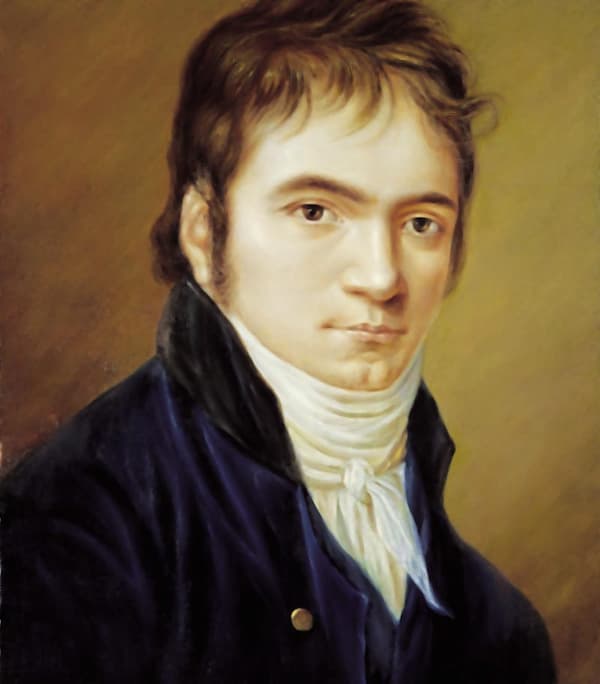
Christian Horneman: Beethoven, 1803 (Beethovenhaus Bonn)
It is said that Ludwig van Beethoven used this specific piece as a model for a symphony in C Major, which he never completed. According to Beethoven, he sought to emulate the structural energy and festive character of Haydn’s work.
If it was good enough for Beethoven, why aren’t we hearing this and the other featured Haydn symphonies more frequently? Well, the music industry, concert halls, and playlists lean heavily on the same familiar tracks, believing that most people only like what they know.
Haydn’s birthday seems a perfect moment to prove the industry wrong. Our featured lesser-known symphonies are full of the same wonderful music that made Haydn one of the most beloved composers of all time. Happy birthday, Papa Haydn!
For more of the best in classical music, sign up for our E-Newsletter