Born on 21 August 1933, in Hatfield, Pennsylvania, Janet Baker is widely regarded as one of the most distinguished British mezzo-sopranos of the 20th century. Renowned for her rich, expressive voice and profound interpretive depth, she has captivated audiences in performances of opera, oratorio, and recital settings.
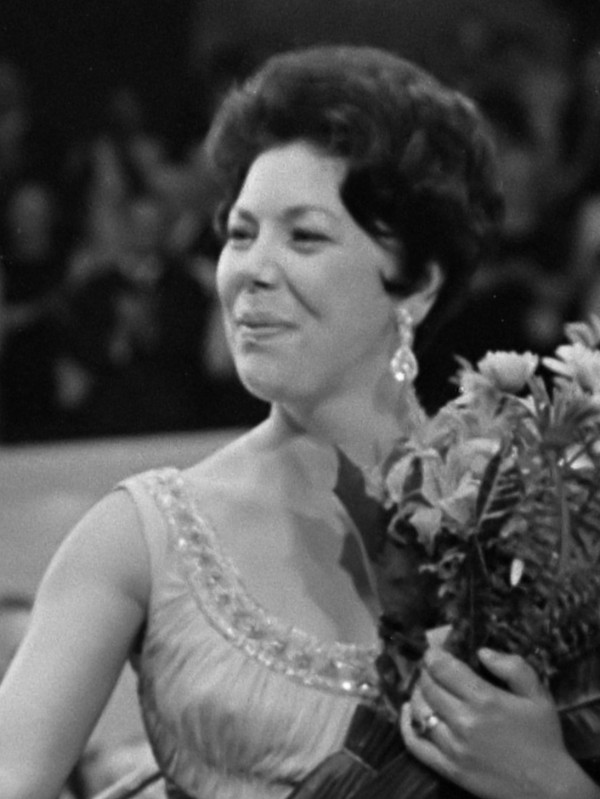
Dame Janet Baker, 1967
Baker’s career, spanning from the 1950s to her retirement from the operatic stage in 1982, was marked by her mastery of a diverse repertoire, ranging from Baroque and Classical works to modern compositions, with a particular affinity for the music of Handel, Mozart, and Berlioz.
Her nuanced portrayals, impeccable musicianship, and dedication to authenticity earned her critical acclaim and a lasting legacy as a singer who brought emotional truth to every note. Her influence endures through her recordings, teaching, and memoirs, and on the occasion of her birthday on 21 August, shall we sample some of her most iconic performances and recordings?
Janet Baker sings “Che puro ciel” from Gluck’s ‘Orfeo ed Euridice’
A Voice of Endless Summer
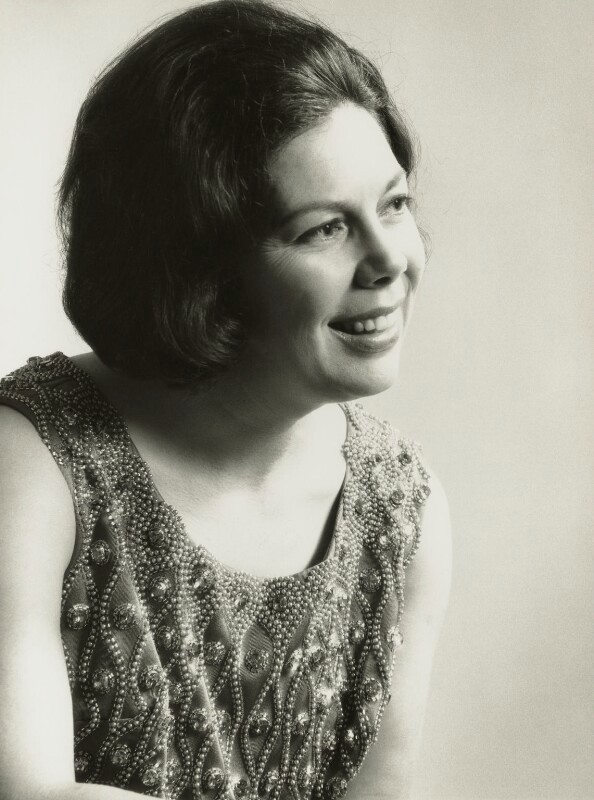
Dame Janet Baker
Dame Janet Baker’s 1968 recording of Hector Berlioz’s Les Nuits d’Été with Sir John Barbirolli and the New Philharmonia Orchestra on EMI stands as a pinnacle of her artistry, weaving together her lush mezzo-soprano with an almost supernatural ability to embody the cycle’s poetic and emotional breadth.
From the playful longing of “Villanelle” to the desolate yearning of “Au cimetière,” Baker navigates Berlioz’s evocative settings with a voice that feels like it’s confiding directly to the listener. Her phrasing is liquid, her diction crystalline, and her emotional palette shifts effortlessly from tender intimacy to soaring passion.
Critic David Cairns, in his review for The Sunday Times, called it “one of the greatest performances of the songs ever committed to disc,” praising Baker’s ability to capture the “feverish intensity” of Berlioz’s vision while maintaining an elegant restraint that lets the music breathe. It is a journey through love, loss, and longing, with Baker as a guide whose voice feels both timeless and deeply human.
Hector Berlioz: Les nuits d’été, Op. 7 (version for voice and orchestra) (Janet Baker, mezzo-soprano; New Philharmonia Orchestra; John Barbirolli, cond.)
From Seduction to Sorrow
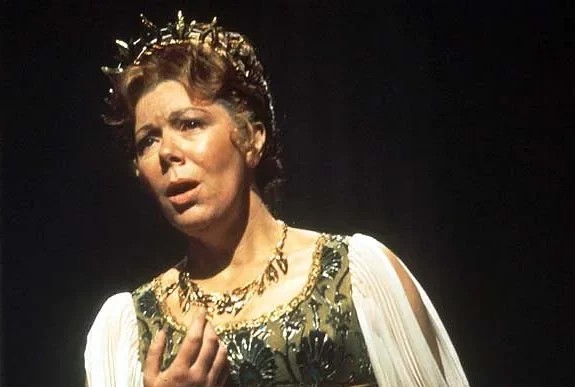
Janet Baker
Dame Janet Baker’s recordings and performances of Handel’s Julius Caesar are a radiant showcase of her mastery in Baroque opera. Her portrayal is a mesmerising blend of vocal agility and dramatic fire, bringing to life the Egyptian queen’s complex mix of seduction, vulnerability, and regal command.
As critic Alan Blyth wrote in Gramophone, Baker’s Cleopatra is “a performance of such vocal and emotional finesse that it sets a standard few can match,” highlighting her ability to make every phrase pulse with character and intent.
Baker’s crystalline diction and nuanced ornamentation convey heartbreak with devastating clarity, while her spirited sections sparkle with triumphant energy. The New York Times praised her “glorious vocalism and dramatic conviction,” as her rich, flexible, and utterly expressive voice anchors a definitive interpretation.
Janet Baker sings Handel: “Va tacito,” Julius Caesar
Heart of Solitude
Performed with the London Philharmonic Orchestra and Sir Adrian Boult on EMI, Dame Janet Baker’s 1970 recording of Brahms’ Alto Rhapsody is a profound testament to her ability to convey deep emotional currents. Baker captures the work’s brooding melancholy and spiritual yearning with a performance that feels like a private meditation made universal.
Her rich, velvety tone in the opening lines evokes the desolate wanderer with haunting immediacy, while her shift to radiant hope in the final section is nothing short of transcendent. Critic Edward Greenfield, writing in Gramophone, hailed her interpretation as “a deeply felt reading that pierces the heart.”
Baker’s voice carries the weight of Goethe’s poetry with a rare intensity, making this Rhapsody a definitive benchmark. Her gift for embodying complex emotions, from isolation to tentative redemption, cements her status as one of the greatest interpreters of Romantic vocal music.
Johannes Brahms: Alto Rhapsody, Op. 53 (Janet Baker, mezzo-soprano; John Alldis Choir; London Philharmonic Orchestra; Adrian Boult, cond.)
A Queen’s Farewell

Dame Janet Baker
“Dido’s Lament” from Henry Purcell’s Dido and Aeneas is a heart-wrenching masterpiece that captures the tragic essence of a queen’s quiet resignation and profound sorrow. In her recordings and performances, Dame Janet Baker delivers each phrase with a clarity that seems to suspend time.
Her delivery of the iconic line, “Remember me”, is both tender and devastating, a moment where her voice seems to carry the weight of inevitable loss. As critic Stanley Sadie noted in The Musical Times, Baker’s performance is “a revelation of controlled intensity,” with every note shaped to convey Dido’s dignity in despair.
Baker’s subtle dynamic shifts and impeccable diction draw the listener into Dido’s inner world, where grief and grace coexist. BBC Music Magazine described her interpretation as “breathless with admiration,” praising how she balances vocal purity with raw emotion. This performance showcases Baker’s ability to transform a brief aria into a profound dramatic moment.
For more of the best in classical music, sign up for our E-Newsletter